How Do Finite Difference and Finite Volume Methods Shape Modern Weather Forecasting?
When we think about weather forecasting, we often imagine it as a seamless process — an app’s prediction or the meteorologist’s report —…
How Do Finite Difference and Finite Volume Methods Shape Modern Weather Forecasting?
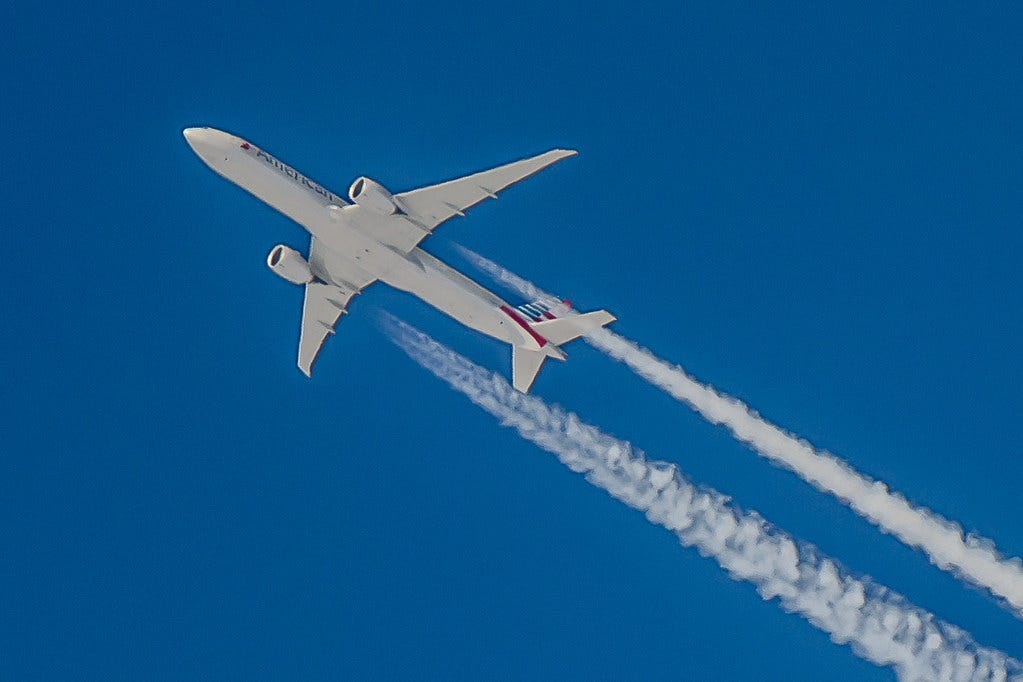
Photo by Mark König on Unsplash
When we think about weather forecasting, we often imagine it as a seamless process — an app’s prediction or the meteorologist’s report — but the science and computation behind it are extraordinary. How are mathematical techniques like the Finite Difference Method (FDM) and Finite Volume Method (FVM) shaping weather forecasting, and what makes computational engineering crucial to their success?
Understanding the Finite Difference Method (FDM)
The Finite Difference Method is a foundational approach used to approximate the derivatives that govern atmospheric dynamics. In weather models, the atmosphere is represented as a grid, with each point holding essential data such as temperature, wind speed, and pressure. The key challenge is to compute the changes in these variables over time, which is where FDM comes into play.
In simple terms, FDM replaces derivatives with differences between values at adjacent grid points. This method allows meteorologists to estimate how temperature, pressure, and other atmospheric conditions evolve as time passes. By using this technique, forecasters can better understand the dynamics at play and make more accurate predictions.
Exploring the Finite Volume Method (FVM)
While FDM provides a straightforward way to model changes in atmospheric variables, the Finite Volume Method offers unique advantages, particularly in terms of conservation. In FVM, the atmosphere is divided into control volumes, and meteorologists track the flow of energy, mass, and momentum across the boundaries of these volumes.
This method ensures that key principles of conservation are maintained, making it ideal for weather modeling. By focusing on the net change within each control volume, FVM helps capture complex interactions in the atmosphere, allowing for more robust simulations of weather patterns and phenomena.
The Role of Computational Engineering in Forecasting
The effectiveness of FDM and FVM in weather forecasting hinges on advanced computational capabilities. These methods generate a vast amount of calculations, which is where computational engineering becomes essential.
- High-Performance Computing (HPC): Modern weather forecasts rely on powerful computing systems that can process enormous datasets and perform complex calculations in real time. This capability allows meteorologists to deliver timely and accurate forecasts.
- Data Assimilation: This technique merges new observational data — such as satellite measurements and ground reports — with existing model outputs. By continuously refining predictions based on real-time data, meteorologists can improve the accuracy of their forecasts.
- Scalability and Efficiency: Weather models need to operate over large geographic areas and various atmospheric layers. Advanced computational methods allow these models to run efficiently, even as they simulate complex weather systems.
Why This Matters
The integration of computational engineering with FDM and FVM is vital for our understanding of weather and climate. Each successful forecast — from predicting a sunny day to issuing storm warnings — is a testament to the power of these mathematical techniques combined with advanced computing.
As technology continues to evolve, we may soon see even more precise and timely weather forecasts, helping us prepare for the unpredictable nature of the atmosphere. The collaboration of mathematics, engineering, and technology opens new doors in our quest to understand and anticipate the weather.
메타데이터
- post_id
- f7aa84e05f28
- slug
- how-do-finite-difference-and-finite-volume-methods-shape-modern-weather-forecasting-f7aa84e05f28
- url
- https://medium.com/@abin-m/how-do-finite-difference-and-finite-volume-methods-shape-modern-weather-forecasting-f7aa84e05f28
- canonical_url
- https://medium.com/@abin-m/how-do-finite-difference-and-finite-volume-methods-shape-modern-weather-forecasting-f7aa84e05f28
- author_url
- https://medium.com/@abin-m
- status
- ok
- fetched_at
- 2026-06-27 23:56:40