Is there a Jewish Mathematics?
A lot of people endorsed this absurd idea.
Is there a Jewish Mathematics?
A lot of people endorsed this absurd idea.

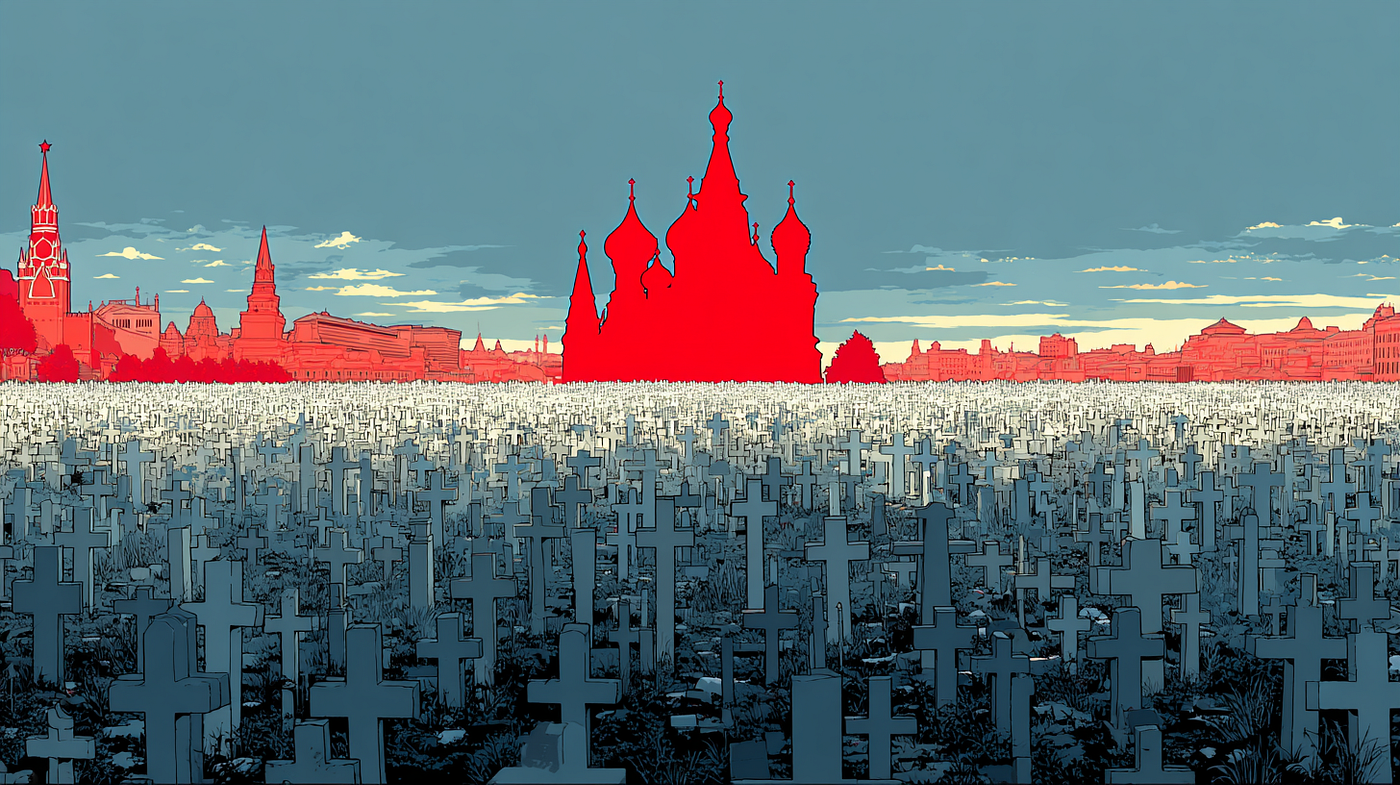
He’s got it all wrong. Image created with Copilot
Is there a Jewish mathematics? Are we even allowed to ask such a question? Of course we are. Just because the Nazis misused the term “German physics” doesn’t mean we should allow ourselves to be influenced by it. After all, people, nations, societies — they all possess and are proud of their cultural traditions. Just look at German philosophers, who, in their methods and ideas, differ radically from those of the Anglo-Saxons. Therefore, a cultural tradition could also influence the way mathematics is done.
Let’s remember the tragic trial of eliminating Einstein’s theories by declaring them typical of “Jewish Physics”, whereas the Germans have to stick to “German Physics” (Deutsche Physik). The initiators of this political movements were old-fashioned German physicists who believed that experiments and facts are more important than crazy ideas and pure mathematics. They didn’t succeed.
Back to mathematics. At least three men of distinction believed that Jews were doing mathematics in other ways than Gentiles. Theodor Lessing, Ernst Cassirer, and Felix Hausdorff thought about it around 1910. Lessing was an educator, Cassirer a cultural philosopher, and Hausdorff a mathematician. All three were Jewish. So one might assume they knew what they were talking about.
But they, too, fell for common clichés. Thus, Jews were classified as homeless (i.e., not rooted in reality) and inclined toward abstract thought. Their mathematics was, negatively stated: formal and empty of content; positively stated: intellectually free and not bound to any reality. Since set theory is quite abstract and detached and was developed by the Jew Georg Cantor, it follows that there is a typically Jewish mathematics.
Apart from the fact that mathematics itself requires both abstract and bold thinking, utterly independent of the individual practicing mathematics, the discussion suffers from one tiny but significant detail: Cantor was not Jewish at all.
Eric Temple Bell (“Men of Mathematics”) takes Cantor’s Jewishness for granted, while Ivor Grattan-Guiness (“Towards a Biography of Georg Cantor”) vehemently rejects this. Amir D. Aczel (“The Nature of the Infinite”) makes every effort to prove Cantor’s Jewish ancestry. At the same time, Herbert Mehrtens (“Jewish Mathematics?” in the catalog “10 + 5 = God” of the Jewish Museum Berlin) conclusively demonstrates that there is no evidence. So what now?
Cantor’s family originated in Denmark and fled to St. Petersburg during the English siege of their homeland, where Georg was born. Afterward, the family moved to Germany. Georg’s father was Protestant, his mother Catholic, and his wife Jewish. This only suggests that the family was quite liberal in its religious beliefs. After all, it was considered extremely courageous at the time for a Catholic to marry a Protestant (or vice versa).
The name “Cantor” means “singer” in Latin. Singing takes place in all churches, Catholic, Protestant, or Jewish. And the fact that Cantor was well-versed in Kabbalah also means nothing. Pop star Madonna too studies the Kabbalah, and this lady is a devout Catholic.
But what about the letter that Georg’s brother wrote to his parents on a typewriter in 1869, in which he acknowledged his Jewish past? There’s also something to think about here: Typewriters with lowercase letters only existed since 1875!
Conclusion: Mathematics is mathematics, regardless of cultural traditions. There is no such thing as Chinese or Malay mathematics. All mathematicians adhere to the same rules. One might as well ask whether the zodiac sign influences mathematical work. It does: Cantor was born under the sign of Pisces, which represents the infinite ocean. Cantor spent his entire mathematical career preoccupied with infinity. Erdös was born under the sign of Aries, which is said to approach problems and people carelessly and directly, but not to develop philosophical systems. Erdös did his mathematics in the same way. And Gödel was born under the sign of Taurus, which is said to proceed cautiously and hedge its bets on all fronts. That’s precisely what Gödel’s mathematics looks like.
One shaky hypothesis, three confirmations — is that enough?
메타데이터
- post_id
- f7c0331f72f6
- slug
- is-there-a-jewish-mathematics-f7c0331f72f6
- url
- https://medium.com/@peterripota/is-there-a-jewish-mathematics-f7c0331f72f6
- canonical_url
- https://medium.com/@peterripota/is-there-a-jewish-mathematics-f7c0331f72f6
- author_url
- https://medium.com/@peterripota
- status
- ok
- fetched_at
- 2026-07-14 18:53:39