The Man Behind Iran’s Power: Who Is Ali Khamenei and Why the World Watches Him
A story about the rise of Iran’s Supreme Leader and why his decisions shape the conflict between Iran, Israel, and the West.
The Man Behind Iran’s Power: Who Is Ali Khamenei and Why the World Watches Him
A story about the rise of Iran’s Supreme Leader and why his decisions shape the conflict between Iran, Israel, and the West.
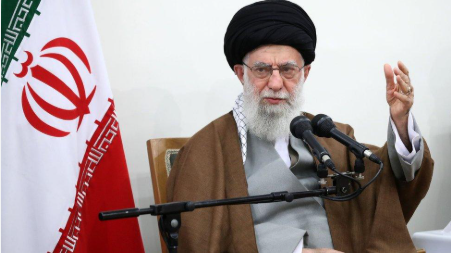
CAopied from www.google.com--The Quiet Corner —
The Man Behind Iran’s Power
When people talk about tensions in the Middle East, many countries and leaders are mentioned. Israel, the United States, Saudi Arabia, and Iran often dominate headlines. But behind Iran’s decisions stands one powerful figure who has shaped the country’s direction for decades.
His name is Ali Khamenei.
For more than thirty years, he has been the Supreme Leader of Iran, the highest authority in the country’s political and religious system. Presidents come and go, governments change, but the Supreme Leader remains the ultimate decision-maker.
To understand today’s tensions between Iran and Israel, and Iran and the United States, it helps to understand the story of this man and how he came to hold so much power.
A Childhood in Revolutionary Iran
Ali Khamenei was born in 1939 in the Iranian city of Mashhad. His family was religious but not wealthy. His father was a cleric, and from a young age Khamenei studied Islamic theology and religious law.
During the 1960s and 1970s, Iran was ruled by a king known as the Shah. The Shah had strong support from Western countries, especially the United States. He tried to modernize Iran rapidly, but many religious leaders and traditional communities opposed his rule.
Among the critics was a powerful cleric named Ruhollah Khomeini.
Khamenei became one of his supporters. This decision would shape the rest of his life.
The Revolution That Changed Everything
In 1979, Iran experienced one of the most dramatic political transformations of the 20th century.
The monarchy collapsed during the Iranian Revolution. Millions of protesters filled the streets, and eventually the Shah left the country.
Ayatollah Khomeini returned from exile and established a new Islamic government.
This new system was very different from most political systems in the world. It combined democracy with religious leadership. While the country still elected a president and parliament, the real authority belonged to the Supreme Leader.
Khamenei quickly became part of the new political elite.
From Revolutionary to President
After the revolution, Iran entered a period of turmoil. One of the biggest challenges was the Iran–Iraq War, one of the longest and bloodiest wars in the region.
During this period, Khamenei rose rapidly in Iran’s leadership.
In 1981, he became the President of Iran, serving two terms until 1989. At the time, the presidency was an important position, but it was still secondary to the Supreme Leader.
That leader was Ayatollah Khomeini.
But when Khomeini died in 1989, Iran faced a critical question: who would lead the country next?
Becoming the Supreme Leader
After intense political discussions, Iran’s leadership chose Ali Khamenei as the new Supreme Leader.
Many observers were surprised by this decision. Khamenei was not considered the most senior religious scholar at the time. However, he had strong political support within the revolutionary system.
Once he became Supreme Leader, his influence expanded dramatically.
He now controlled:
- Iran’s armed forces
- The Revolutionary Guard
- National security decisions
- Key appointments across government
In Iran’s political structure, the Supreme Leader has the final word on major issues.
Iran and Israel: From Cooperation to Rivalry
One surprising fact about Middle Eastern history is that Iran and Israel were not always enemies.
Before the 1979 revolution, the two countries actually maintained quiet cooperation. Iran sold oil to Israel and maintained diplomatic contacts.
But after the revolution, everything changed.
Iran’s new leadership viewed Israel as an illegitimate state and strongly opposed its policies toward Palestinians. The new government also adopted a broader goal of challenging Western influence in the region.
Under Khamenei’s leadership, Iran became one of Israel’s strongest regional rivals.
The Rise of a Regional Power Strategy
One of the key strategies associated with Khamenei’s leadership is often called the “Axis of Resistance.”
Iran built relationships with various groups and governments that opposed Israel and Western influence.
These include:
- Hezbollah in Lebanon
- Hamas in Gaza
- Allied militias in Syria and Iraq
Through these partnerships, Iran expanded its influence across the Middle East.
Supporters of Iran say this strategy protects the region from foreign domination. Critics argue it increases instability and fuels conflicts.
Israel’s Concerns
For Israel, Iran’s growing influence raised serious security concerns.
Israeli leaders believe Iran’s military expansion and missile development pose a major threat. Another major issue is Iran’s nuclear program.
Iran says its nuclear program is meant for peaceful purposes such as energy and medical research.
However, Israel fears that Iran could eventually develop nuclear weapons. Because of this concern, Israel has carried out intelligence operations, cyberattacks, and airstrikes aimed at slowing Iran’s nuclear progress.
This long-running rivalry has often been described as a shadow war.
The United States and the Regional Balance
The United States plays a central role in this geopolitical rivalry.
For decades, the U.S. has been one of Israel’s strongest allies. Military cooperation, intelligence sharing, and economic support form the foundation of this partnership.
At the same time, relations between Iran and the United States have been tense since the 1979 revolution.
Sanctions, diplomatic conflicts, and disagreements over Iran’s nuclear program have defined the relationship.
Khamenei has often criticized U.S. policies in the region, accusing Washington of trying to dominate Middle Eastern politics.
Why the World Watches Khamenei
Because of his position, Khamenei’s decisions influence events far beyond Iran’s borders.
When tensions rise between Iran and Israel, analysts around the world pay close attention to his speeches and statements. His words can signal whether Iran is preparing for confrontation or seeking restraint.
In many ways, he represents continuity in Iran’s political system.
Presidents change every few years, but the Supreme Leader provides long-term direction for the country’s strategy.
A Leader Shaping the Region
After more than three decades in power, Khamenei remains one of the most influential leaders in the Middle East.
His leadership has seen:
- Major regional conflicts
- Negotiations over Iran’s nuclear program
- Economic sanctions and diplomatic crises
- Expanding regional alliances
Supporters view him as a defender of Iran’s independence and identity. Critics see him as a leader whose policies have increased regional tensions.
Either way, his influence on Middle Eastern politics is undeniable.
Why His Story Matters
Understanding Ali Khamenei’s role helps explain many of the conflicts shaping the Middle East today.
The tensions between Iran and Israel, the debates about nuclear power, and the broader struggle for influence in the region all connect to the decisions made by Iran’s leadership.
Whether one agrees with his policies or not, Khamenei has been a central figure in global geopolitics for decades.
And as long as he remains Supreme Leader, his decisions will continue to shape the future of the Middle East.
메타데이터
- post_id
- f7e186c9ecc6
- slug
- the-man-behind-irans-power-who-is-ali-khamenei-and-why-the-world-watches-him-f7e186c9ecc6
- url
- https://medium.com/the-quiet-corner/the-man-behind-irans-power-who-is-ali-khamenei-and-why-the-world-watches-him-f7e186c9ecc6
- canonical_url
- https://medium.com/the-quiet-corner/the-man-behind-irans-power-who-is-ali-khamenei-and-why-the-world-watches-him-f7e186c9ecc6
- author_url
- https://medium.com/@swetasingh881
- status
- ok
- fetched_at
- 2026-06-20 20:29:01