I Reverse-Engineered the Exact Prompt Structure Behind Every Viral UGC Photo You’ve Seen This Year
Four layers. Six fields. One formula that produces phone-camera realism every time.
I Reverse-Engineered the Exact Prompt Structure Behind Every Viral UGC Photo You’ve Seen This Year
Four layers. Six fields. One formula that produces phone-camera realism every time.

I downloaded 200 viral UGC-style AI photos this year. Mirror selfies, car selfies, café food shots, locker room snaps, blurry coffee table photos.
187 of them follow the same four-layer prompt structure. Once you see it, you can’t unsee it.
The other 13 are real photos.
UGC aesthetic photos have taken over Instagram, TikTok, and brand campaigns in 2026. Influencer-style ads. Fake “candid” testimonials. Lifestyle content for products that don’t yet exist. The aesthetic is doing what no amount of polished studio photography ever did. It converts.
The default move is to stack “photorealistic, ultra-detailed, 8K, DSLR” tags and hope for the best. All wrong. The viral UGC look gets engineered backwards. Add imperfections deliberately, and the model produces realism by accident.
Here are the four layers, in the order I add them to every prompt.
Layer 1: Why Mundane Subjects Beat Glamorous Ones
The first instinct is to describe an attractive subject doing something interesting. That instinct kills the photo.
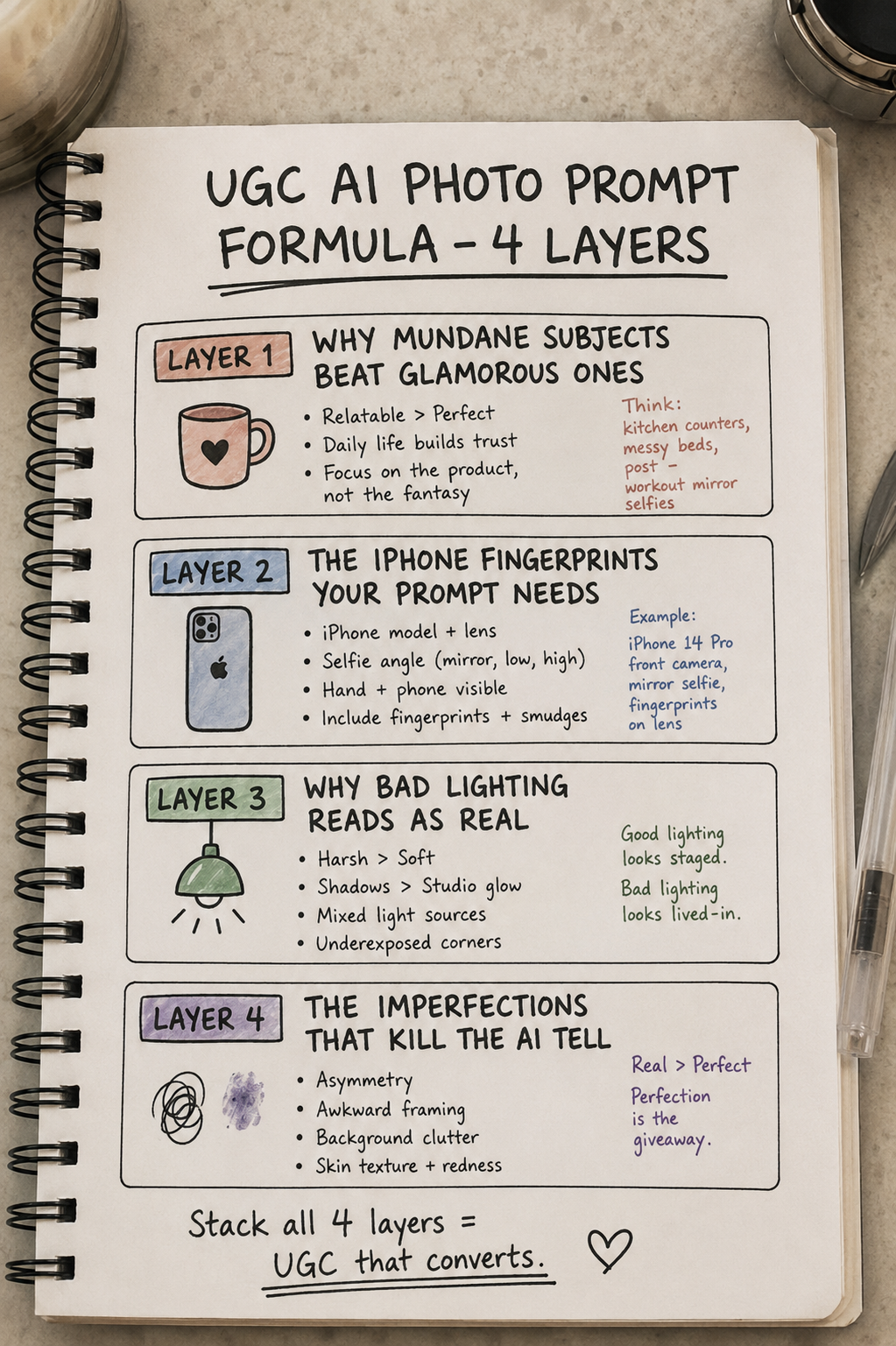
Viral UGC photos feature subjects who look like the person next to you on the bus. Average build. Hair that hasn’t been styled. Clothes that are slightly oversized or slightly unflattering. Mid-blink, mid-bite, mid-yawn. Never the perfect frame. Always the frame taken 0.3 seconds before or after the perfect one.
Subject slot ingredients:
- Age (specific number: 27, 31, 38, not “young”)
- Hair detail (frizzy, flyaways, slightly greasy, hat-head)
- Clothing (oversized hoodie, wrinkled t-shirt, mismatched socks visible)
- Body language (slumped, mid-motion, awkward angle)
- Expression (mid-talk, half-blink, eating, distracted)
Example subject line:
A 28-year-old woman with frizzy brown hair in a slightly oversized
gray hoodie, mid-bite of a microwave burrito, half-distracted expression
That one line beats 90% of UGC subject prompts because it commits to being unremarkable. Midjourney defaults to glamour. You have to override it line by line.
Layer 2: The iPhone Fingerprints Your Prompt Needs
This is where prompters sabotage themselves with “shot on Canon EOS R5” or “shot on cinema camera.” Those keywords pull the model toward magazine-quality output. You want the opposite.
The camera slot identifies the device, the position, and the camera flaws. The flaws especially.
Camera slot ingredients:
- Device model (iPhone 12, iPhone 13 mini, iPhone 14 Pro)
- Front camera vs back camera (front for selfies, back for everyday shots)
- Camera flaws (slight motion blur, lens smudge, dirty front glass)
- Hand position (phone held low, phone above eye level, phone at waist)
- Visible artifacts (dome light reflection on the lens, hand visible at frame edge)
The iPhone naming matters. Different iPhone generations produce different image signatures, and the model has absorbed this from training data. “iPhone 12 front camera” produces a different look from “iPhone 15 Pro back camera.”
Example camera line:
shot on iPhone 12 mini front camera, phone held just below chin level,
slight motion blur on her right arm, faint lens smudge in the lower-right corner
Layer 3: Why Bad Lighting Reads as Real
Studio lighting is the AI tell that kills more UGC prompts than any other single element. A perfectly lit subject reads as commercial photography. A badly lit subject reads as real life.
The trick is naming the bad lighting with specificity. Not “harsh lighting.” Specifically: which light, from which direction, at which color temperature.
Lighting slot ingredients:
- Source type (overhead fluorescent, dome light, gas station signage, refrigerator interior light)
- Direction (overhead, side-key, from below, from behind)
- Quality (harsh direct, washed out, partially blocked)
- Color cast (green from fluorescent, warm from sodium street lamp, blue from a phone screen)
- Conflict (mixed temperatures, source visible in frame)
Example lighting line:
harsh overhead fluorescent washing out her forehead, slight green color
cast in the highlights, ceiling tile reflection visible at top of frame
The phrase “color cast” alone is worth more than “realistic lighting” stacked five times. Color casts are what real cheap cameras produce. Real cheap cameras are what people use for UGC photos.
Layer 4: The Imperfections That Kill the AI Tell
This is the layer almost everyone skips, and it’s the most important one. The imperfection slot is where you tell the model what kind of image artifact you want.
Real phone photos have artifacts. JPEG compression. Slight chromatic aberration. Low-light noise. Banding in gradients. Slightly crushed shadows. These artifacts are invisible until they’re gone, and once they’re gone, the photo screams AI.
Imperfection slot ingredients:
- Compression (JPEG compression artifacts in shadows, banding in gradients)
- Noise (low-light noise in shadows, ISO grain)
- Sharpness (slight motion blur, soft focus on edges, slight chromatic aberration)
- Color (slightly desaturated, slight color cast, blown highlights)
- Format hints (
[--style raw](https://docs.midjourney.com/docs/style) on Midjourney v7, "no filter," "unedited")
Example imperfection line:
visible JPEG compression in the shadow areas, slight chromatic aberration
on the window frame, low-light noise in the darker corners, slightly
crushed blacks
Add these even when they “shouldn’t” be there. Especially then.
The Full Formula and Three Worked Examples
Stitched together, the four layers produce one structured prompt. Here is the master skeleton:
[Layer 1: Subject + Action]
[Layer 2: Camera + Device + Hand position]
[Layer 3: Lighting + Direction + Color cast]
[Layer 4: Imperfections + Artifacts]
[Tags: --ar 9:16 --style raw --v 7]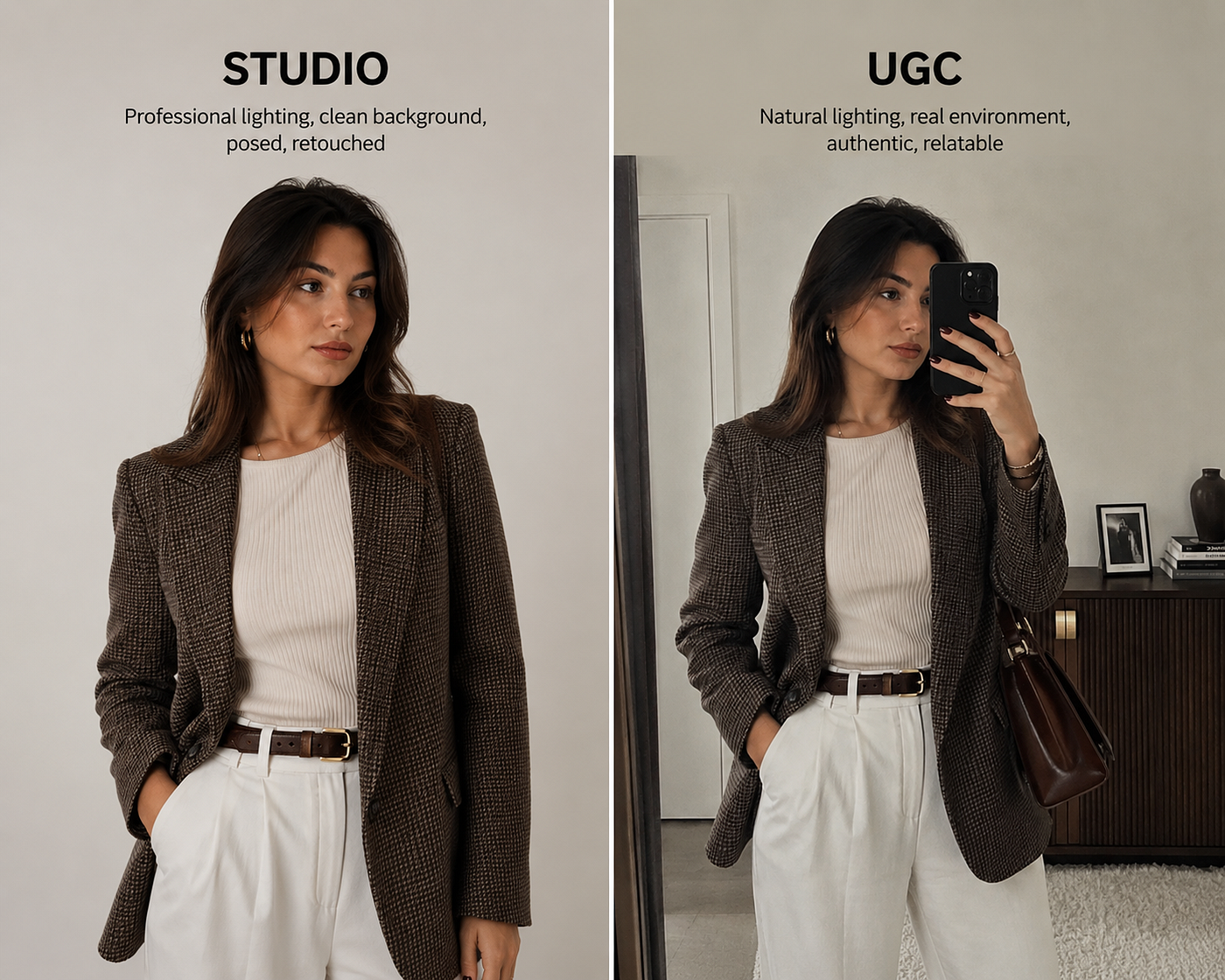
And here is the skeleton filled out across three of the most common UGC photo types.
Example 1: Gym mirror selfie
A 24-year-old woman in a gray sports bra and black leggings, mid-turn
mirror selfie at a crowded commercial gym, phone covering half her face,
locker room mirror smudged with sticker residue and fingerprints, shot
on iPhone 12 mini front camera, harsh overhead fluorescent lighting
washing out the highlights, slight motion blur on her free arm, mild
lens distortion at the frame edges, JPEG compression visible in the
shadows, slightly green color cast from the overhead bulbs, casual
unposed body language, gym equipment visible in soft background, no
filter --ar 9:16 --style raw --v 7
Example 2: Car selfie at a gas station
A 31-year-old man, brown stubble, faded baseball cap, sitting in the
driver's seat of a Honda Civic at night, dim ambient light from a
Shell gas station sign through the windshield, mid-bite of a fast
food wrap, half-eaten wrapper resting on his lap, phone held in his
left hand just below eye level, dome light visible at the top of the
frame, shot on iPhone 13 front camera, slight chromatic aberration
around the gas station sign, low-light noise in the shadows, slightly
warm color cast from the dome bulb, unposed expression mid-chew, no
filter --ar 9:16 --style raw --v 7
Example 3: Café food photo (no person in frame)
An iced matcha latte in a plastic cup on a marble café table, half-eaten
chocolate croissant on a small white plate beside it, a phone face-down
on the table, a wrinkled napkin under the croissant, shot from a slight
high angle on iPhone 14 front camera, harsh window light from camera-left
blowing out the marble surface, slight haze and lens smudge in the
lower-right corner, ice cubes melting and condensation on the cup, soft
motion blur where a hand was just removed from frame, no filter
--ar 4:5 --style raw --v 7
Each example uses the same four layers. The variables change. The structure doesn’t.
Negative Prompts: What Kills the UGC Look Instantly
Some words pull the model so hard toward “professional photography” that no amount of imperfection will save the image. Strip them from your positive prompt, or list them in your negative prompt slot:
- professional photography
- studio lighting
- high resolution, 8K, 4K
- sharp focus
- perfectly posed
- DSLR, mirrorless, Canon, Sony
- bokeh, shallow depth of field
- beautiful, stunning
- cinematic
- magazine quality
- portrait mode
Anything that sounds like a photographer would put it on their portfolio website. Strip all of it.
The opposite holds for positive prompts. Anything that sounds like a phone settings menu (HDR off, Live Photo enabled, front-facing) helps. Anything that sounds like a forensics report (specific device, specific lens flaw, specific light source) helps even more.
Why This Pattern Will Outlast 2026
The UGC aesthetic isn’t a trend. It’s the visual signature of how people actually take photos when they aren’t performing. As long as humans have phones in their pockets, this aesthetic will keep mutating, but it won’t disappear.
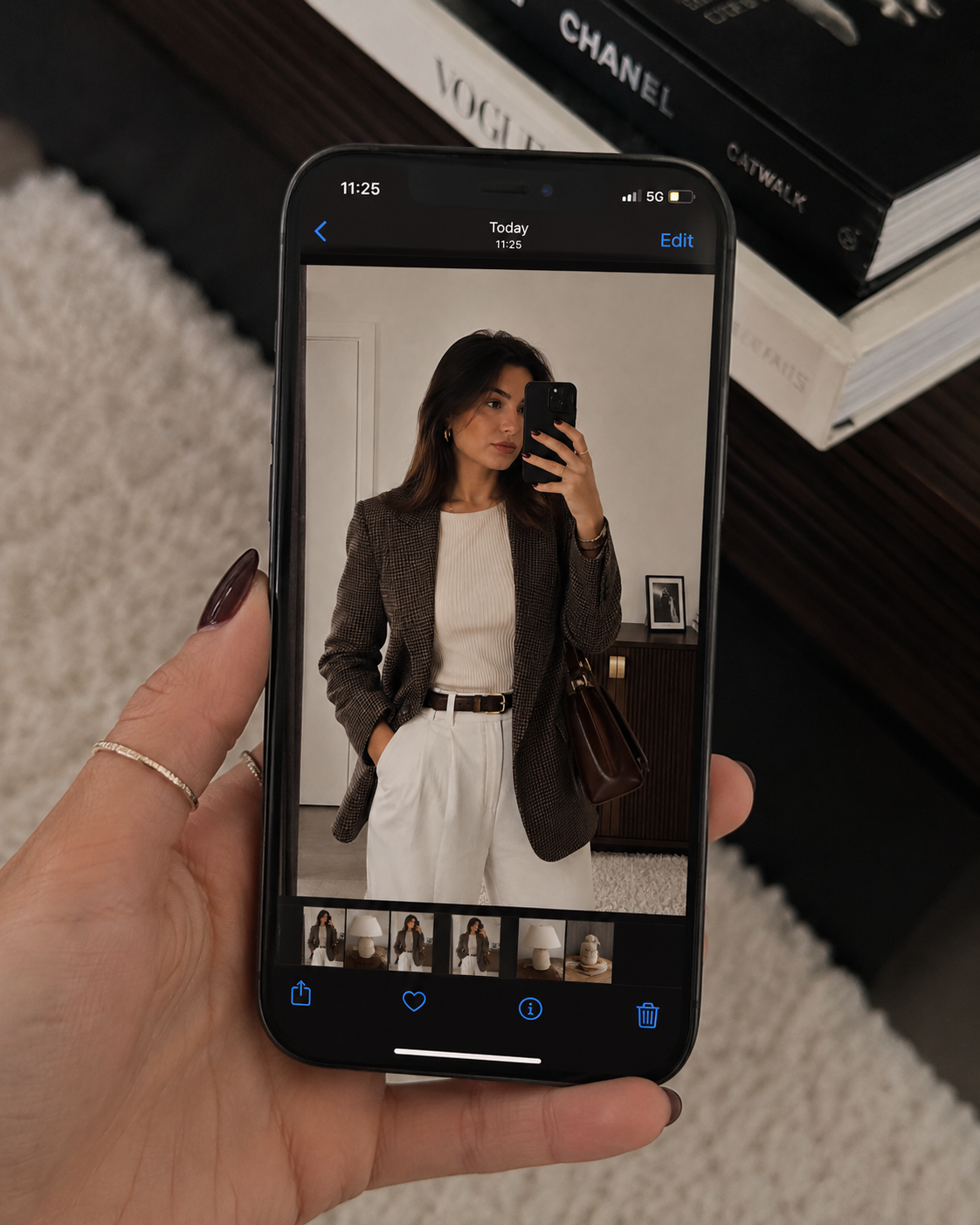
The skill that matters is layer-thinking. Anyone who can decompose a viral image into structural layers can replicate any aesthetic on the platform, not just UGC. Studio fashion. Skater POV. Food blog. Dating app profile. All of them have a four-to-six layer skeleton waiting to be reverse-engineered.
Train the eye to see layers. The prompts will write themselves.
Ready For This Game?
I write weekly on AI image prompting, viral content systems, and the prompt structures behind what’s actually working right now.
**Join the monthly AI newsletter →** for teardowns like this one, dropped in your inbox every Friday. No fluff, no upsells. Just the methods that work.
UGC isn’t an aesthetic. It’s a stack of imperfections, and once you can name each one, you can replicate any viral photo on your feed.
메타데이터
- post_id
- f7f5fadad8e1
- slug
- i-reverse-engineered-the-exact-prompt-structure-behind-every-viral-ugc-photo-youve-seen-this-year-f7f5fadad8e1
- url
- https://medium.com/@james-palm/i-reverse-engineered-the-exact-prompt-structure-behind-every-viral-ugc-photo-youve-seen-this-year-f7f5fadad8e1
- canonical_url
- https://medium.com/@james-palm/i-reverse-engineered-the-exact-prompt-structure-behind-every-viral-ugc-photo-youve-seen-this-year-f7f5fadad8e1
- author_url
- https://medium.com/@james-palm
- status
- ok
- fetched_at
- 2026-06-09 15:37:30






