That Painless Lump in My Breast: The 20 Days I Didn’t Tell Anyone
My mother, Rubi, is 57. She’s practical, resilient, and not the type to panic.
PATIENT JOURNEY | CANCER AWARENESS
That Painless Lump in My Breast
For 20 days, I didn’t tell anyone
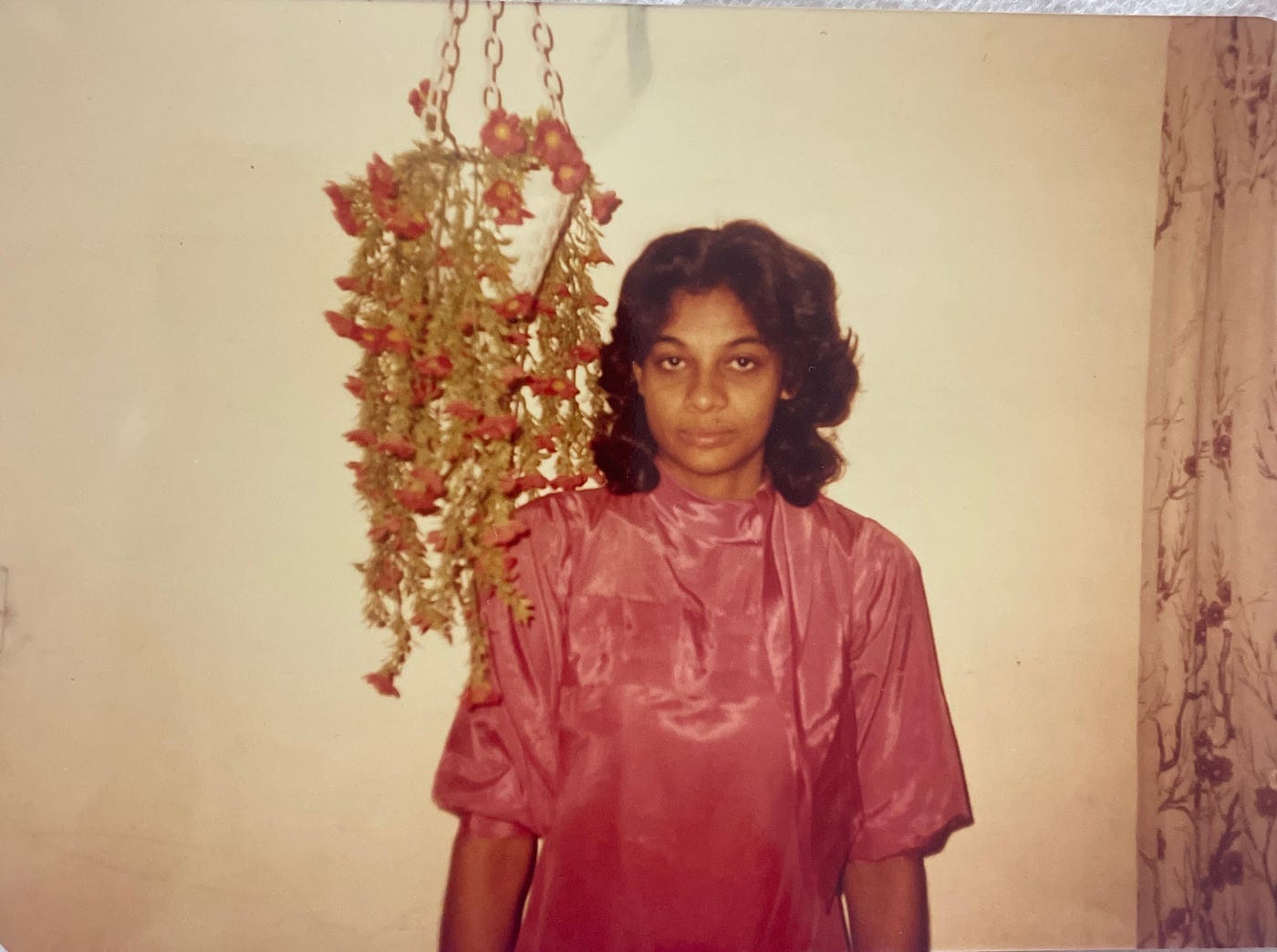
My mother Rubi, at age 19
The Hunch That Wouldn’t Go Away
My mother, Rubi, is 57. She’s practical, resilient, and not the type to panic. So when she found a lump in her left breast in April 2026, she did what many of us would do: she hoped.
She told herself it was probably just tissue. Or fat. A clump that would dissolve on its own. For 20 days, she carried this secret, praying silently, checking the lump each morning as if it might have vanished overnight. It didn’t hurt. And because it didn’t hurt, so she hoped that it was nothing.
That was her first lesson one she learned from her friend later. A cancerous lump often doesn’t hurt.
When Silence Breaks
She finally told my brother. Not in a dramatic way, but quietly. He said what she wanted to hear: It’s probably nothing, but let’s get it checked.
Later that evening he called to tell me. I am her daughter, and despite working in healthcare, I found myself hoping my brother was right that it was nothing.
That’s when the family WhatsApp group exploded. Siblings from different cities, different countries, all typing the same thing: “She has to get it checked! Now!”
A GP visit led to a referral to oncology. That word oncology made it real. But still, there was a waiting period. A few days before seeing a specialist, Rubi visited a close friend who had just had breast cancer surgery and was in the recovery phase.
My mother asked her: “How did you know it was something to worry about?”
Her friend replied: “My daughter, a doctor, made me do self-exams since I turned 50. Last month, I felt a pea-sized lump. It didn’t hurt.”
Then she looked at my mother and said: “Yours doesn’t hurt either? That’s not a good sign. Don’t wait.”
That conversation changed everything.
The First Real Step
On the way home, my mother told her son: “We need to go now.” He drove her straight to a clinic, asking for a mammogram that same day. The radiologist there advised waiting for a specialist, but the urgency had finally landed.
At home, I decided to involve my husband who is a doctor working with pediatric cancer patients. He suggested that we take her to a breast surgeon instead of waiting. She was seen the next day.
The surgeon examined her, ordered a mammogram, breast ultrasound, and blood tests.
The mammogram report said this:
“A well-defined, rounded, dense spiculated mass lesion is present in the left breast, upper outer quadrant, showing associated architectural distortion and trabecular thickening.”
At this point we knew that something was there. But it probably hadn’t spread. Her blood work looked good. Her lungs, abdomen, and pelvis already scanned were clear.
The Cost of the First Clues
With all the fear and uncertainty, there was another reality to navigate: the cost.
From that first GP visit to the surgeon consultation and imaging, the total out-of-pocket expense was 200 USD.
That’s it. That’s what it cost us to go from a hidden lump to knowing she had a suspicious lesion that needed expert care.
The Diagnosis That Came with Hope
The surgeon referred her directly to a cancer hospital. There, they did the biopsy and full blood work. On May 14, the result came back:
Invasive ductal carcinoma. Breast cancer. The most common type.
But here’s what the report also said:
- Grade 2: (moderately abnormal, not aggressive)
- Strongly hormone-positive (ER 90%, PR 80%): responds well to hormone therapy
- HER2 negative: no need for targeted drugs at the moment
- No spread detected: abdomen, lungs all clear
The oncologist looked at her and said: “Your chance of long-term disease-free survival is high...”
Afte hearing this, we didn’t cry from fear. We cried from relief.
How She Is Now
My mother is in good spirits. She has access to every bit of information and support we can find. She has been given topical medication to prepare the area for surgery.
She is scheduled for breast-conserving surgery (lumpectomy) on June 2nd, with a sentinel node biopsy to check the first lymph node. She will meet the anesthesiologist on June 1st. And radiation begins June 16th.
What I Want to Share
Looking back, the hardest part was not the diagnosis itself. It was those days of silence, uncertainty, and hope that somehow felt safer than knowing. But knowing gave us something hope alone never could: a plan.
If you are a woman over 40, or any age, really, please do two things:
- Do your self-exams. Not because you want to find something. But because if you find something, you want it to be caught at an early stage.
- Do not wait. Do not hope it’s nothing. A painless lump is not a free pass.
And if you are a family member reading this: when someone tells you they have a lump, don’t just calm them down. Get them checked.
This is the first article in a series documenting my mother’s cancer journey. Next, I will cover the surgery, the real costs, and how we are protecting her mental health through every step.

***Amna Riaz is the co-founder of [Proficure](https://www.proficure.org)*, a patient navigation organization in Turkey. They support international patients in navigating the Turkish healthcare system.
Their services are free of charge for all patients because they believe that everyone should have access to timely and reliable healthcare.
메타데이터
- post_id
- f7fadd189c29
- slug
- painless-breast-lump-breast-cancer-story-f7fadd189c29
- url
- https://medium.com/health-away-from-home/painless-breast-lump-breast-cancer-story-f7fadd189c29
- canonical_url
- https://medium.com/health-away-from-home/painless-breast-lump-breast-cancer-story-f7fadd189c29
- author_url
- https://medium.com/@amna.riaz
- status
- ok
- fetched_at
- 2026-06-14 17:09:17





