“You need to design the conditions for great work to happen”
Product Design Director Jess Karle on being delusional enough to build, disciplined enough to raise the bar, and how to create environments…
“You need to design the conditions for great work to happen”
Product Design Director Jess Karle on being delusional enough to build, disciplined enough to raise the bar, and how to create environments for great work

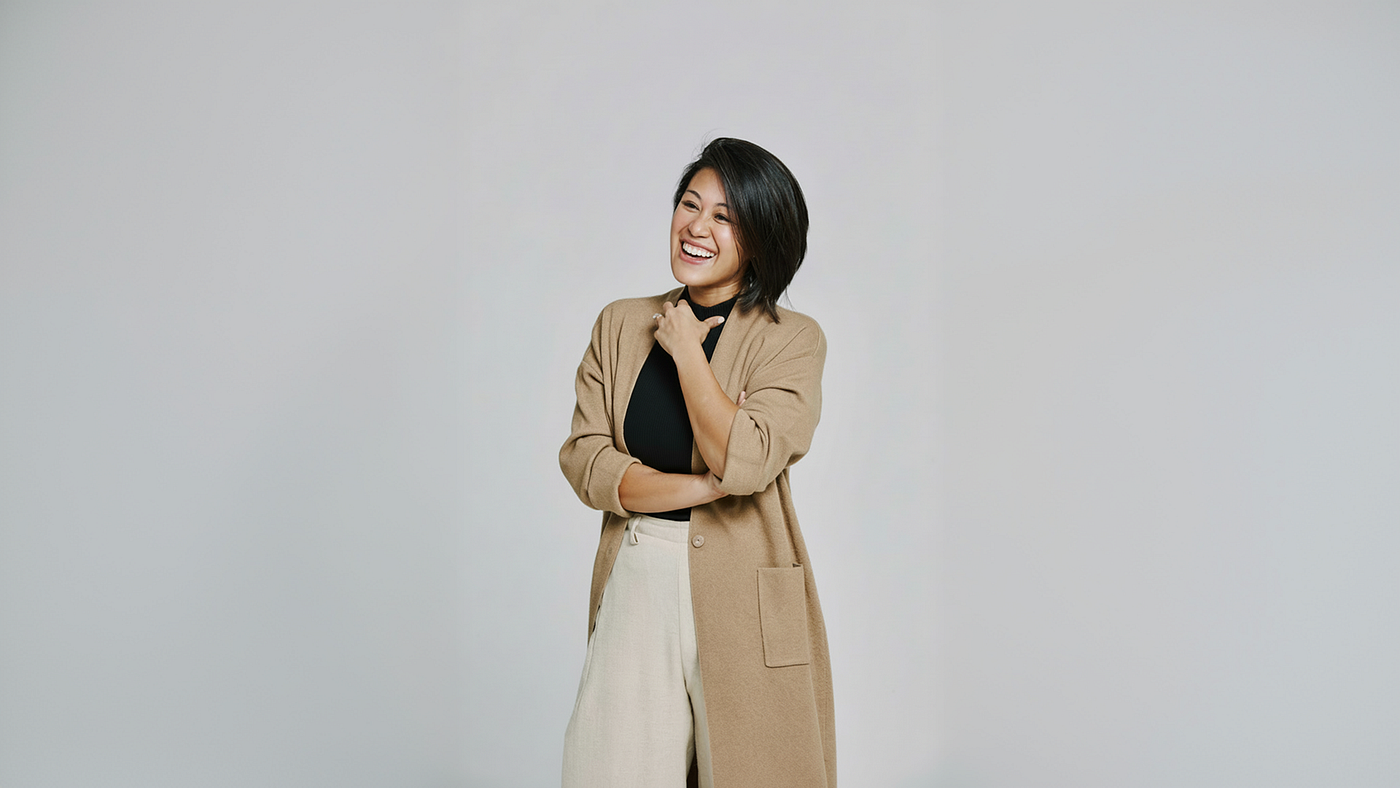
Product Design Director Jess Karle published a book and founded a company before she came to work at Faire — for the second time. With an entrepreneurial spirit, Jess’s career path has spanned a wide range of roles and areas of focus: architecture and interior design, graphic design, product design, authorship, and more. But what’s kept her grounded is a consistent throughline: designing best-in-class customer experiences, and creating the conditions for teams to do their best work. That passion brought Jess back to Faire — first as an interim Head of Design and later as a manager turned “super IC,” which eventually led to her current role leading product design for the Retailer Growth pillar.
We sat down with Jess to learn more about what drives her work, how she’s transitioned from founder to IC to manager roles, and why designers should always hold a high quality bar.
What do you do at Faire?
I lead design on the Retailer Growth pillar. We’re responsible for creating a retailer’s first impression of Faire — we welcome new retailers to the platform and help them feel like Faire is right for them. We work on everything from sign-up through first-order conversion. We partner with teams across the organization: creative, growth marketing, sales, and core retailer and discovery teams to create a guided, personalized journey for new retailers that scales as they grow into existing retailers on the platform.


A snapshot of Faire in 2019 — our office reception florals never disappoint. A panel with design leaders from Faire, Everlane, Airbnb, and Lyft on “Designing a Better Tomorrow,” a theme that feels even more relevant in today’s AI era.
What did your career journey look like before coming to Faire?
Long and winding! When I look back on my career arc so far, a consistent theme is designing experiences that make people really feel something — inspired, seen, valued — and meeting customers where they are in both the digital and physical worlds.
I started my career in architecture and interior design. So much of my early experience designing physical spaces translated into designing digital experiences. Whether you’re designing a space you experience every day, like your home, or a place to experiment and change, like a retail space, the goal is to make people feel seen and feel something — joy, community, delight, memories. And, if the end of the journey is a buying journey, hopefully, helping a customer purchase something that they love.
Then I went back to grad school and got my MFA in Graphic Design. I became interested in design-run businesses and co-wrote a book called *Kern and Burn* with Tim Hoover, which led to opportunities in the early days of startups.
I joined design-driven companies like General Assembly, Paperless Post, and Everlane, where I started on the brand side, and eventually moved into product design. I got my product design education at Paperless Post, where there was a really great culture of letting folks learn on the job. I didn’t even know what a wireframe was, and my manager was like, “You’ll figure it out!” I was at Everlane in 2016 — the glory days of direct-to-consumer companies building robust tech experiences in-house. We built a custom e-commerce site and point-of-sale system to create magical, connected customer experiences online and offline. At the time, there wasn’t any tech that worked for our needs, and it’s wild to see how far the retail industry has come with products like Shopify and Faire, which now offer fully integrated solutions.

Everlane’s first New York store on Prince Street. We built a custom e-commerce and point-of-sale system to create a seamless experience across online and offline. Photo: Naho Kubota/Everlane
After that, I freelanced for a while and consulted with Faire briefly as interim Head of Design in 2018–2019. Talking with our CEO Max about the opportunity at the time, I was immediately sold on everything — the team, the company, the vision. I was supposed to stay for just three weeks, and I ended up staying for almost 10 months. I left because I really wanted to try my hand at starting my own business and knew that if I stayed at Faire, I might never make the jump to building something from scratch. I launched my own startup: a shopping platform called Companion, which helped people find products for their homes through shoppable “scenes.” We curated inspiration, advice, and products from people you could trust.
[embed]Companion’s shoppable editorial brought together storytelling and commerce in a single, cohesive experience. For one of the featured Curator stories, we visited multidisciplinary designer Alex Proba in her colorful and playful Portland home — watch the video.
What brought you back to Faire a second time?
When we decided to shut down Companion in 2022, there was really only one place I considered working at again: Faire. The combination of an amazing leadership team, strong business, and the opportunity to design real-world experiences tied to in-product experiences was the perfect Venn diagram and environment for my expertise across product and retail to really shine. At Faire, our work empowers brands and retailers to strengthen the unique character of local communities. Their products and space are crafted with intention, storytelling, and beauty, and Faire gives them the tools to pursue their entrepreneurial dreams and scale their businesses in a meaningful way — that’s a powerful motivator to wake up to every day.
What did you learn from building your own business?
Building a company directly translates into skills that will help you operate successfully in a fast-paced, ambiguous environment. The best teams don’t wait for direction — they think and act like founders. They’re biased to action and open to change. It’s not just hard skills and the ability to build a great product — you also need to be able to sell a vision and get people on board with what you’re building.
I always say, “You have to be somewhat delusional to will something into existence.” Maintaining that idealistic, aspirational, dream big, get sh*t done attitude is super important, especially as the business and team grow and the organizational complexity grows. A founder’s mindset allows you to stay nimble, question why things are the way they are, and push for greatness.
“You have to be somewhat delusional to will something into existence.”
When you rejoined Faire, what was it like transitioning from being a founder to leading a team going back to an IC role?
There was a lot of change: I closed a business, had a baby, and joined a new company in the span of months, and I felt so grateful to have Faire’s support along the way. Transitioning from founder to manager felt very refreshing, as some of the weight of the constant question “will this business succeed or not?” was lifted directly from me, and I could focus on empowering the team to create great work with more stability day-to-day so I could simultaneously focus on learning and growing as a parent.
When I transitioned back into an IC role, I was pleasantly surprised by how much I loved it. The IC role has all the same things I loved about leading a team and building a business, with a different emphasis and altitude: cross-functional pod leadership, influencing through the work itself, connecting strategic dots across the org, and a high level of accountability for the end product we ship. As an IC, your accountability is the work. As a leader, your accountability is the people doing the work — your team. I want to make sure my team is empowered to do the work that they need to do. I help guide them and ask the right questions. At the end of the day, if they’re successful, I’m successful.
The throughline through it all: change is the only constant — the advantage is learning how to grow faster than it. Navigating that change with a growth mindset has helped me build resilience and see every unknown as an opportunity to learn.

Prototype exploring how motion can communicate the value of payment terms during onboarding, and an example of how we’re pushing the “last mile” of craft. Design: Cristi Wallace
What makes a great design leader in your perspective?
Great design leaders ground themselves in the customer experience and apply consistent pressure to make it better. “How can we simplify? How can we make things easier for our customers?” Great design is simplification: remove what doesn’t matter so what does can shine.
We’re rapidly evolving the ways we work, but the goal is the same: how do we build and ship best-in-class products that deliver impact for our customers? During this transformation, the first and last 20% of the experience is where I’m really pushing the team to focus. What are we building and why? Make sure the underlying foundations and systems scale, and then dial up the “last mile” of craft — interaction, polish, delight.
Great design leaders also create a culture grounded in trust and growth. I do my best to show up every day and create an environment where great design can happen alongside growth. Design leadership is a craft. It requires the same level of urgency, dedication, clear communication, and expectation setting. You need to design the conditions for great work to happen.


Visiting some of our favorite retailers during a holiday Greenpoint shop crawl — Big Night, Tula House, and a stop for a slice at Paulie Gee’s.
What’s been one of your biggest lessons as a design leader?
As you gain experience, your risk isn’t being wrong — it’s becoming too sure you’re right. The longer you’ve worked, the more you develop a set of biases and ideas about the “right way” to do something. You likely already know the solution that will get 90% of the way there. As a leader, the question becomes: how do you create space for others to get to their own solutions — to be thoughtful and go broad, not just get to the first right answer for efficiency’s sake? One of my biggest lessons has been around letting myself be surprised. I don’t want to become too set in my ways. When people have space and time to develop their thinking and intuition, we end up exploring incredible new possibilities.
“Your risk isn’t being wrong — it’s becoming too sure you’re right.”
What are you excited to work on next from a leadership perspective?
With AI tools opening new ways of working, I’m really excited to explore how we’ll collaborate differently across functions. As designers, we can’t do it alone. We need strong partnerships with engineering, design, data, product, and other teams to create great products together. One opportunity is to figure out how to build influence — and this happens at all altitudes. Right now, I’m really energized by this idea of how to help the organization scale design principles and up-level our product intuition around quality and customer experience insights.
It’s going to require a growth mindset, because this will break down the barriers of traditional ways of working with design and engineering. We’ll have to get very comfortable with ambiguity — and that’s where a founder’s mindset will be key.
Want to join a design team that’s exploring AI workflows while serving the world’s best customers — independent brands and retailers? Apply for open roles at Faire: https://www.faire.com/careers
메타데이터
- post_id
- f80de4d8a2ad
- slug
- you-need-to-design-the-conditions-for-great-work-to-happen-f80de4d8a2ad
- url
- https://craft.faire.com/you-need-to-design-the-conditions-for-great-work-to-happen-f80de4d8a2ad
- canonical_url
- https://craft.faire.com/you-need-to-design-the-conditions-for-great-work-to-happen-f80de4d8a2ad
- author_url
- https://medium.com/@FaireDesign
- status
- ok
- fetched_at
- 2026-06-09 15:37:30