Language Models vs World Models(LeWorldModel) !!
The advent of the Transformer triggered a paradigm shift in AI that extended far beyond the realm of language. However, the next paradigm…
Language Models vs World Models(LeWorldModel) !!

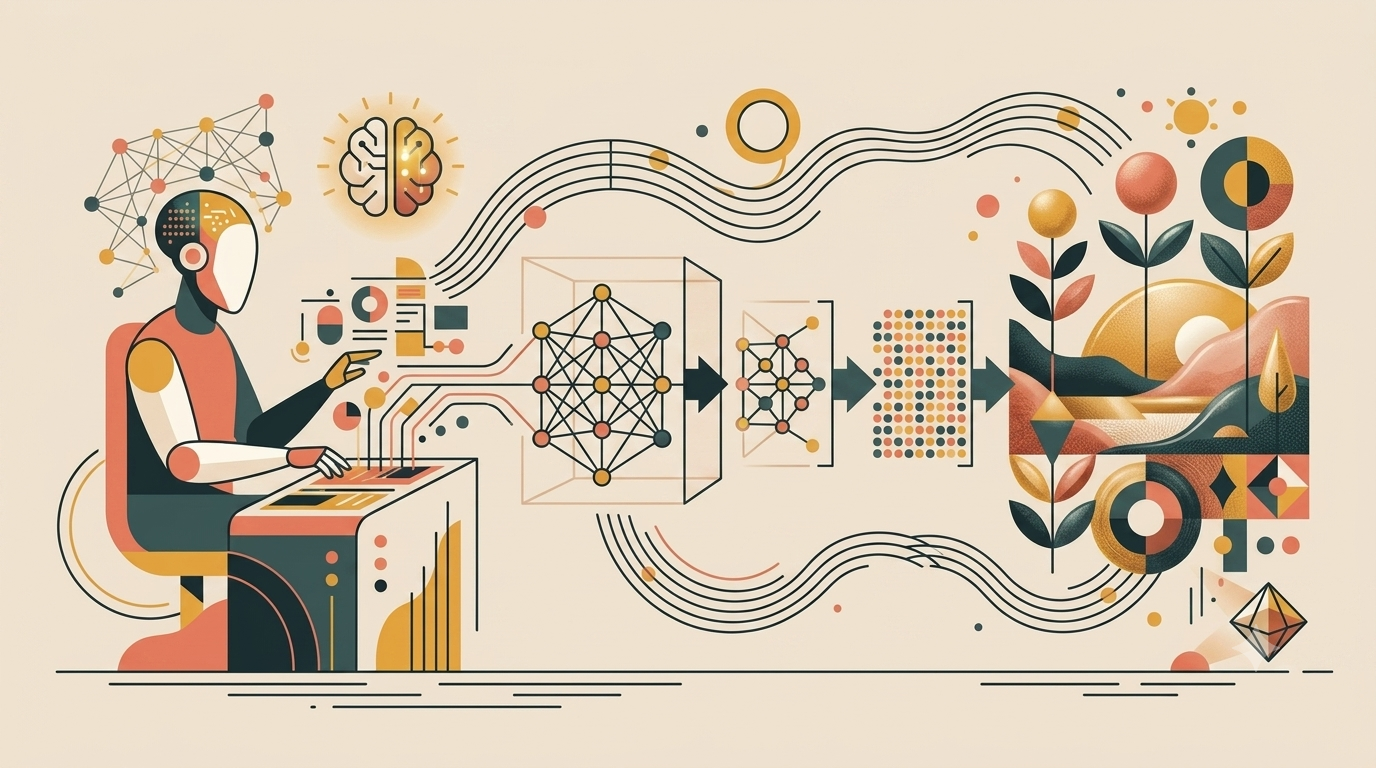
The advent of the Transformer triggered a paradigm shift in AI that extended far beyond the realm of language. However, the next paradigm shift likely lies in “World Models.”
Below, I have asked the AI to outline two potential scenarios for the “Language Models vs. World Models” landscape over the next decade!
Grok
Language Models vs. World Models: Two Scenarios for the Next 10 Years (by ~2035)
Here are two plausible scenarios for the future relationship between Language Models (LLMs) and World Models (such as Yann LeCun’s JEPA architecture), based on current trends as of 2026.
Scenario 1: Hybrid Integration Dominates (Most Likely Realistic Scenario)
- Language Models remain as the “surface interface,” while World Models become the “core intelligence.”
- LLMs will continue to excel at natural language understanding, knowledge retrieval, and text generation — serving as the user-facing front end (e.g., conversational agents like today’s ChatGPT).
- JEPA-style World Models will handle physical world understanding, planning, and deep reasoning behind the scenes. Using hierarchical representations, they will predict “what could happen next” in an abstract way and correct the hallucinations or logical errors of LLMs.
- What it looks like in 10 years:
- World Models will power robotics and autonomous systems (self-driving cars, home robots). They will be far more efficient (e.g., LeWM demonstrated 48× faster planning with much smaller models).
- LLMs will mainly “instruct” the World Model. Example: When you say “make me coffee,” the World Model will simulate the physics and generate the action plan.
- Timeline: Practical JEPA implementations accelerate between 2026–2028, with hybrid AGI-like prototypes emerging around 2030. Scaling laws will apply to both, but World Models will show superior data efficiency and energy efficiency.
Why this is probable: Pure LLMs have clear limitations in physical understanding and long-term planning, but their strength in handling vast text data is too valuable to discard. Most companies are expected to combine both approaches.
Scenario 2: World Model–Led Shift (LeCun’s Optimistic Vision)
- LLMs become auxiliary tools or even outdated technology, while JEPA-style World Models take the lead.
- The fundamental inefficiencies of next-token (or next-pixel) prediction become obvious — error accumulation, poor common-sense reasoning, and lack of true world understanding.
- World Models learn predictive representations directly in embedding space from video, sensor data, and multimodal inputs. They will support hierarchical planning, active learning, and even self-models (understanding what matters to the agent).
- What it looks like in 10 years:
- By 2030, systems approaching cat-level to human-level intelligence in areas like persistent memory, reasoning, and complex action planning.
- Major breakthroughs in robotics and scientific discovery.
- LLMs shrink into specialized language output modules. Massive LLM training budgets shift toward more efficient World Model training.
- Timeline: Breakthroughs led by groups like LeCun’s AMI Labs around 2027–2029, with World Model–based AI becoming the standard (both open-source and commercial) by 2035.
Why this could happen: Biological intelligence is centered on world models, not language. If recent advances (such as solving representation collapse in LeWM) continue, World Models could clearly surpass the limits of LLM scaling.
Common Uncertainties
- Technical challenges (stable long-horizon planning, sim-to-real transfer).
- Regulatory and energy constraints.
- Whether pure World Models win outright or hybrid systems prevail will depend on compute availability and data access.
Overall Outlook: LeCun’s critique that “language models alone are insufficient” is increasingly validated. A clear shift toward World Models is inevitable, but full replacement is less likely than deep integration. The next 10 years will be a transformative period for AI, and both scenarios (or a mix of them) could partially materialize.
Gemini
Based on Yann LeCun’s vision of JEPA (Joint-Embedding Predictive Architecture) and his critique of current Large Language Models (LLMs), here are two scenarios for the next 10 years regarding the evolution of Language Models vs. World Models.
Scenario 1: The “Embodiment” Breakthrough via World Models
(LLMs become the “Interface” for the World Model)
In this scenario, the spotlight shifts away from LLMs as the “brain.” Instead, World Models that handle non-linguistic, abstract representations (like JEPA) become the core of AI.
- The AI in 10 Years: AI will learn physical laws, object permanence, and causality directly from video and sensor data without human labels. Robots will inherently understand “common sense” — for instance, knowing that a glass will shatter if dropped or that liquid flows.
- The Role of LLMs: Language models will be relegated to a “thin translation layer” sitting atop the World Model. While they will still handle dialogue and instructions, the actual thinking, planning, and problem-solving will happen within the World Model based on physical intuition.
- The Result: The race for AGI (Artificial General Intelligence) shifts from “Chatbots” to “Autonomous Physical Agents” capable of performing complex tasks in homes and factories.
Scenario 2: The Hybrid “Dual-Process” Architecture
(Coexistence of Symbolic Logic and Intuitive Understanding)
This scenario acknowledges LeCun’s critiques but integrates the “high-level abstraction” of language with the “low-level reality” of World Models.
- The AI in 10 Years: AI will operate with two distinct engines. One is an “Intuitive Engine” (System 1) like JEPA that predicts world dynamics, and the other is a “Logical Engine” (System 2) like an evolved LLM that handles mathematics, ethics, and formal logic.
- Key Evolution: The “Hallucinations” common in today’s LLMs will be eliminated because the World Model acts as a “reality check.” Before the AI speaks, it runs a simulation in its World Model to verify if the statement is physically or logically possible.
- The Result: AI evolves from a “stochastic parrot” into a “Digital Scientist.” It becomes capable of complex engineering and scientific discovery because it can ground its linguistic reasoning in a deep understanding of physical reality.
Conclusion: The Decisive Shift of the Next Decade
As Yann LeCun emphasizes, the next 10 years will be defined by how we expand Self-Supervised Learning from text to video and sensory data.
- The Limit of LLMs: We are running out of high-quality text data. Scaling up current LLMs further yields diminishing returns in terms of actual “intelligence.”
- The Potential of World Models: A single second of high-definition video contains more information than thousands of pages of text. Once AI learns to digest the “structure of the world” through this data, it will finally acquire the common sense it currently lacks, marking the transition from “generative AI” to “intelligent systems.”
Note: To generate the response above, I provided the following X (Twitter) post as a reference for the current discussion.
[embed]
메타데이터
- post_id
- f80f47786d05
- slug
- language-models-vs-world-models-f80f47786d05
- url
- https://medium.com/@outermostkt/language-models-vs-world-models-f80f47786d05
- canonical_url
- https://medium.com/@outermostkt/language-models-vs-world-models-f80f47786d05
- author_url
- https://medium.com/@outermostkt
- status
- ok
- fetched_at
- 2026-06-13 07:35:29