The Tortured World of Malaphors
Sometimes two figures of speech get tangled together and we learn about seeing a carrot at the end of the tunnel
The Tortured World of Malaphors
Sometimes two figures of speech get tangled together and we learn about seeing a carrot at the end of the tunnel
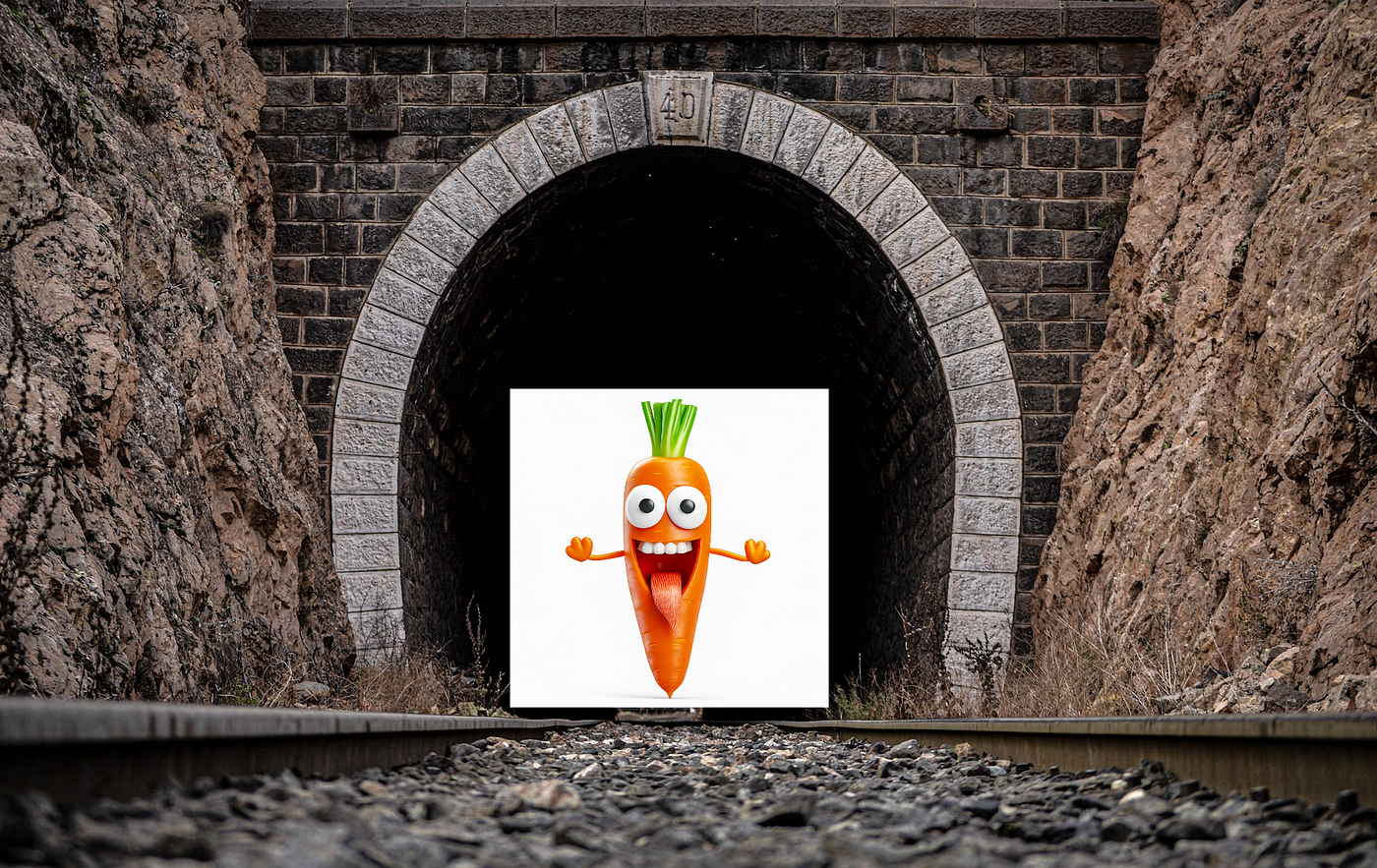
Railway Train Tracks Tunnel — Free photo on Pixabay
Idioms and aphorisms decorate our language wonderfully, but they can also be a trap for the unwary when one gets mashed up with another. Such a blending of sayings is called a malaphor or an idiom blend.
So, beware the dreaded malaphor; it lurks in the recesses of the mind ready to strike unexpectedly and usually to hilarious and embarrassing effect.
The Origin of the Malaphor
Author Lawrence Harrison gave us the word malaphor in a Washington Post article in 1976. He blended two words, “malapropism” and “metaphor.”
The malapropism is the misuse of a word. So we had the amusing instance of former Australian Prime Minister Tony Abbott intending, we assume, to use the word “repository” but instead saying, “No one, however smart, however well-educated, however experienced . . . is the suppository of all wisdom.”
Quite the bummer of a mistake.
The metaphor is used to compare two unlike things. In Of Mice and Men, John Steinbeck gave us “Well, you keep away from her, ‘cause’ she’s a rattrap if I ever seen one.”
And poet Bruce Lansky gave us this lovely metaphor rhyme:
“Poor as a church mouse.
strong as an ox,
cute as a button,
smart as a fox.
“Thin as a toothpick,
white as a ghost,
fit as a fiddle,
dumb as a post.
“Bald as an eagle,
neat as a pin,
proud as a peacock,
ugly as sin.”
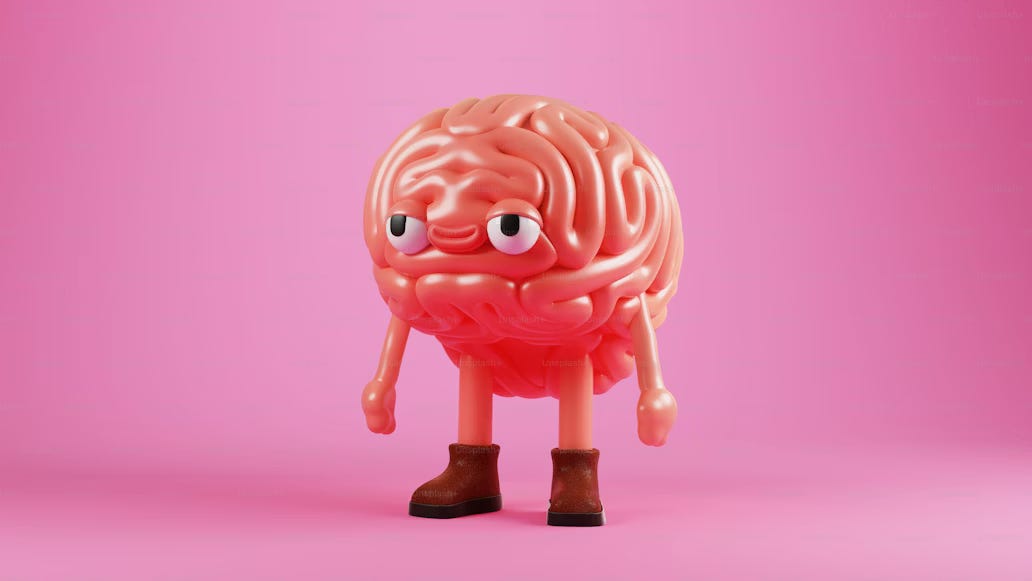
Actual image of a brain about to deliver a mixed metaphor — YASA Design Studio, A pink background with an image of a brain photo — Illustration Image on Unsplash
Mixed Metaphors
Some people seem strangely gifted at the tangled eloquence that produces a profusion of jumbled sentences. They take two or more metaphors and mash them together in a word salad that can bring on giggles.
It seems to be an affliction whose market has been cornered by British politicians. So, we get the following gems:
- “I don’t like it. When you open that Pandora’s box, you will find it full of Trojan horses,” spoken by Britain’s Foreign Secretary Ernest Bevan in 1948.
- “It would open up a can of worms and a legal minefield about freedom, religion and equalities legislation . . . It may open up old wounds and put people into the trenches; no one wants that.” British Member of Parliament David Burrowes in 2012.
- “I’m kickstarting a drive to get employee ownership into the bloodstream.” MP Nick Clegg, 2012.
But surely, these are very amateurish attempts to grab the golden candle in the mixed metaphor competition. They’re going to have to do much better to knock Sir Boyle Roche (1736–1807) off his pedestal as world champion mixed metaphorist.
The Irish politician once stood in the Irish House of Commons and delivered this priceless jewel: “Mr. Speaker, I smell a rat; I see him forming in the air and darkening the sky; but I’ll nip him in the bud.”
[embed]
Malaphors: The Cream of the Litter
Apologies for the slight digression into mixed metaphors but I got steered into a blind alley without a paddle. Those linguistic hiccups were too good to ignore.
So, back to malaphors.
Linguists say that there’s a subtle difference malaphors and mixed metaphors; so subtle, in fact, that they never seem to get around to explaining the disparity.
However, cognitive scientist Douglas Hofstader in an article in the Michigan Quarterly Review had a stab at a definition:
“Malaphors are to be contrasted with mixed metaphors, in which each phrase remains intact and it is only their juxtaposition that is strange.”
It seems to the writer that mixed metaphors are combinations of complete and entirely different idioms that produce funny nonsense, whereas malaphors blend parts of similar sayings to also create comical rubbish that almost sounds as if it makes sense.
Lacking a clear distinction we’ll have to take the word of those people who diligently collect malaphors that they are the genuine deal.
We have to thank Richard Norquist (ThoughtCo), Docforce, and Richard Lederer for collecting these; as Norquist notes “each one a pearl worth its weight in gold.”
- The sacred cows have come home to roost with a vengeance.
- I can read him like the back of my book.
- If it ain’t rocket surgery, don’t fix it.
- You’ve opened that can of worms now lie in it.
- You are just scratching the tip of an iceberg.
- A bird in the hand is worth two with one stone.
- Burning the midnight oil at both ends.
- You hit the nail right on the nose.
- She really stuck her neck out on a limb.
- It’s all peaches and roses.
- That was a breath of relief.
- We will pull no stops unturned.
- When I saw his name in the paper, two and two just clicked.
And, that brings down the day on this bit of frivolity so let’s call it a curtain.
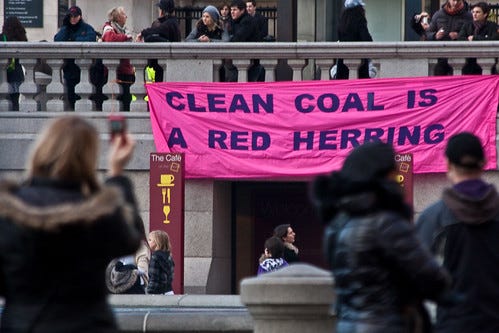
Garry Knight on Flickr All sizes | A Different Scuttle Of Fish | Flickr — Photo Sharing!
Bonus Factoids
Dundrearyism is a similar verbal trip to malaphors. It is named after a dim-witted character in Tom Taylor’s 1858 play My American Cousin. Lord Dundreary uttered such classics as “Birds of a feather gather no moss.”
A “malapert” is a “boldly disrespectful to a person of higher standing” (Dictionary.com). For example, journalist James Reston said of U.S. President Nixon “He inherited some good instincts from his Quaker forebears but, by diligent hard work, he overcame them.”
Malaphorisms can occur in a single word. We can thank cognitive scientist Douglas Hofstader for these examples: “It was pretty upsettling.” “Does he have any other quirkadilloes?” “This computer is completely kapunct.”
Sources
“The Good the Bad & the Ugly.” studylib.net, undated.
“Malaphors: ‘It’s as Easy as Falling off a Piece of Cake.” Alison Tunley, rosettatranslation.com, July 16, 2019.
“What Are Malaphors?” Richard Nordquist, ThoughtCo, February 12, 2020.
“The Big List of Malaphors.” Docforce, undated.
“To Err is Human: To Study Error-Making is Cognitive Science.” Douglas Hofstadter, Michigan Quarterly Review, Vol. 28, №2.
© Copyright Rupert Taylor 2026
[embed]Read or Die — Publication Rules Updated August 2024 Guidelinesmedium.com
메타데이터
- post_id
- f833b501e2dc
- slug
- the-tortured-world-of-malaphors-f833b501e2dc
- url
- https://medium.com/read-or-die/the-tortured-world-of-malaphors-f833b501e2dc
- canonical_url
- https://medium.com/read-or-die/the-tortured-world-of-malaphors-f833b501e2dc
- author_url
- https://medium.com/@ruperttaylor493
- status
- ok
- fetched_at
- 2026-08-02 09:08:29