How I Got Boosted in My First Month on Medium
What I learned, and how one post changed everything.
How I Got Boosted in My First Month on Medium
What I learned, and how one post changed everything.
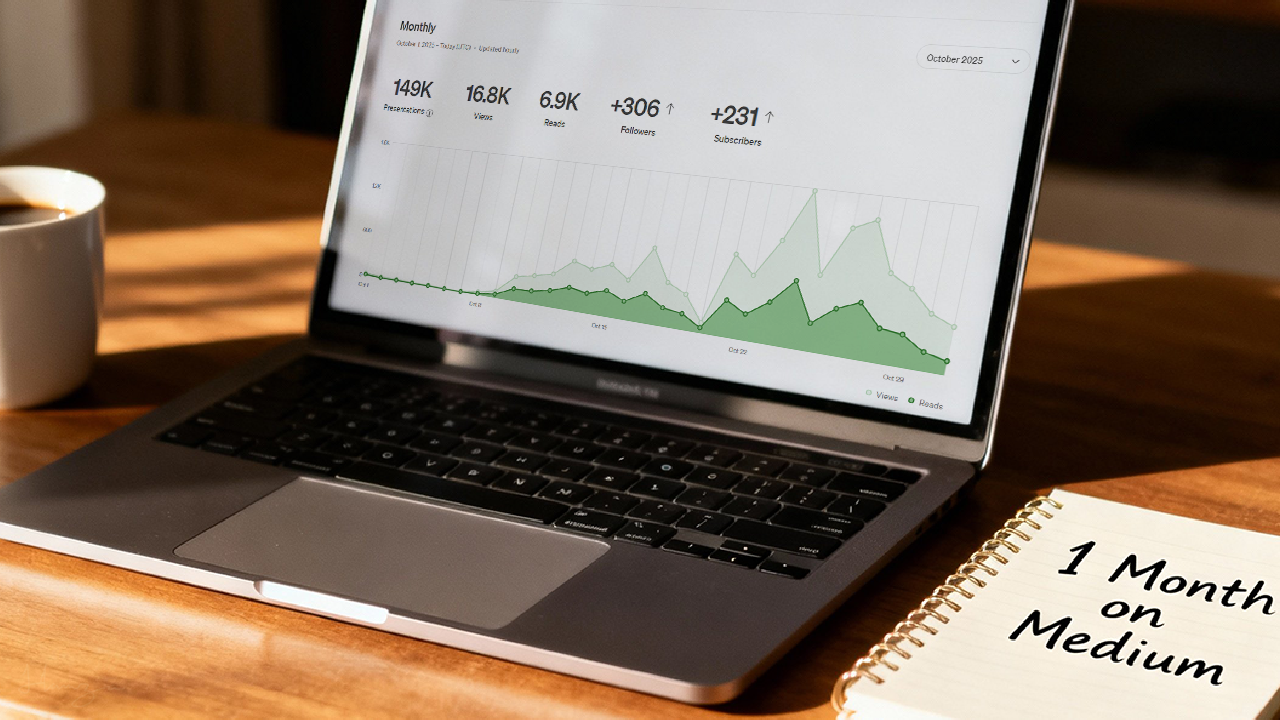
AI-Generated Image by the Author
This isn’t what I usually write about. I’m an AI Engineer, and most of my writing revolves around AI, data, and coding. But since my first month on Medium just wrapped up, I thought it would be nice to share what I did, what I learned, and what actually worked. Hopefully, this helps anyone who’s just starting out here.
A Bit of Background
Before Medium, I used to write AI-related posts on my personal website, though not consistently. I also have a small YouTube channel where I share tutorials and AI projects. So content creation isn’t new to me.
Last summer, the Medium Partner Program (MPP) finally added my country, Tunisia, to the supported list. At that time, I wasn’t very active, but my brother Ahmed Boulahia, also an AI Engineer, started his own Medium blog. Watching his progress gave me the push I needed to start mine.
Getting Started
I began by importing two of my older blog posts, the ones that felt most suitable for Medium. However, those articles were a bit outdated, and the format didn’t really fit Medium’s style (more on that later).

I left things as they were for about a week. Then I decided to take it more seriously, to treat this as a real platform, not just a reposting space. So I joined the Medium Partner Program, hoping it would give me that extra motivational boost.
My First Medium Post (After Joining MPP)
At the time, I was working on a project involving AI agents with LangChain/LangGraph. I had already made a LangGraph crash course on YouTube, so I turned it into a summarized written version.
This was my first real Medium post.
I wrote it in less than a day, just to test the waters and get a sense of how Medium’s algorithm works. The stats? Pretty similar to my two imported blogs.

Testing a Different Type of Content
I spent the rest of the summer caught up with personal stuff. Then, in mid-September, LangChain announced a new version, and I thought, “why not switch things up?” I wrote a short post covering the update, more of an AI news piece than my usual tutorial/educational style.
My main concern at this stage was reach.
I knew that if I could increase reach, other metrics (views, reads, earnings) would follow, because I already trusted the quality of my writing.
However, the reach improved slightly, but still not as much as I’d hoped.

Going Deeper with Concepts
Since my day-to-day work involves designing and building AI agents, I thought, “why not share some core design patterns that make agents more robust and efficient?”
This post was more conceptual than technical. It didn’t include much code, just principles and reasoning.
The performance improved again, slowly but steadily.
At this point, I had three new posts and could see an upward trend in my dashboard… but the revenue was still far from promising.

The Post That Changed Everything
Then came the turning point.
Since the concepts from my previous post were still relevant, I decided to write another one, but this time showing how to implement agentic patterns in code using LangGraph.
I also published it through a popular AI-related publication, hoping it might reach more readers.
At first, the numbers looked similar to my previous posts.
But then something unexpected happened, I received this email from Medium:
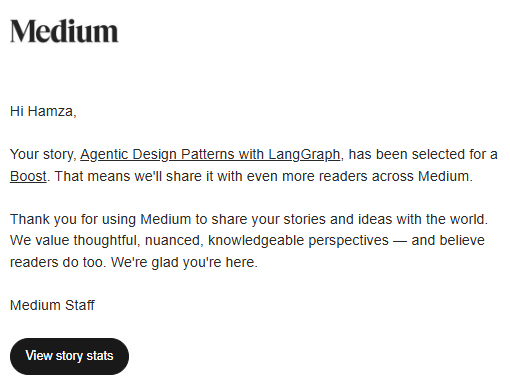
From that moment, the stats increased dramatically.
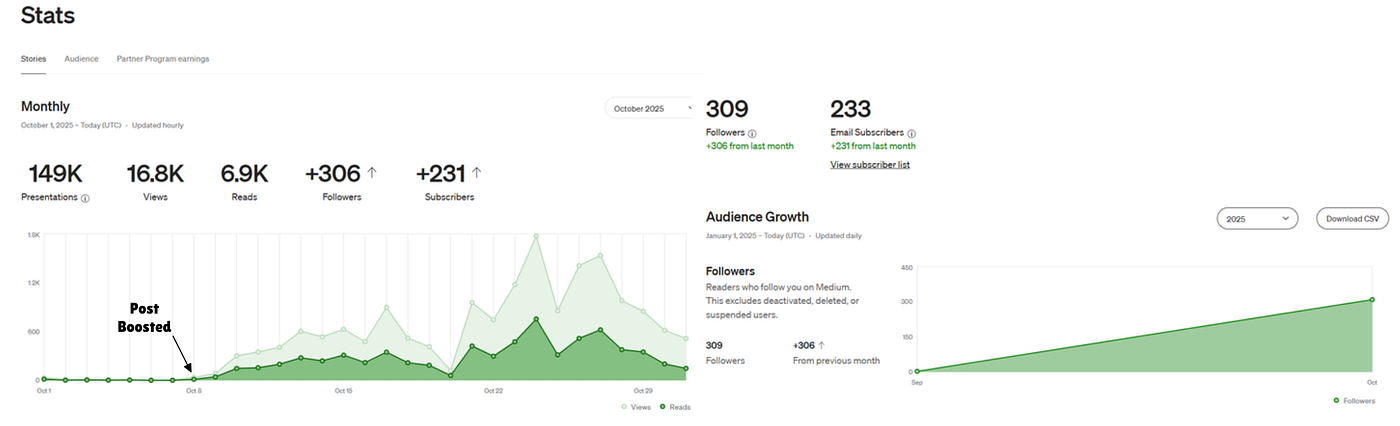
Discovering What “Boosted” Means
I knew that publications could feature posts, but I didn’t realize that Medium itself could boost them.
Turns out, boosted posts are manually selected by Medium’s editorial team, not by an algorithm.
So I did some research on how boosting works, and here are the main takeaways I gathered from the Medium Help Center and my own observations.
These apply not only to tech articles, but to any kind of content:
- Always add a personal touch, your own interpretation, insight, or experience.
- Content that feels AI-generated, mechanical, or low-effort is discouraged, so authenticity and personal reflection are key.
- Simply rewording or explaining existing AI concepts & news won’t get Boosted. Bring a fresh angle, like ethical implications, future scenarios, unexpected parallels, or lessons from hands-on experiments.
- Avoid writing like a tech influencer or product promoter. Curators dislike content that reads as self-serving or hype-driven.
- Good formatting and editing increase readability, and can make or break Boost eligibility.
- Your title, subtitle, and cover image should clearly convey what the story is about.
- A Boosted AI story is rarely “breaking news”, but it could be a timeless insight framed through today’s events.
More details and posts examples on the following page:
What Happened Next
After that experience, I experimented with different post types: Tutorials, news, opinions, and explanations.
And it worked, I got two more posts boosted.

You can never predict for sure whether a story will get boosted. But from my small sample, here’s what I noticed:
- Topics that appeal to a wider audience are more suitable for boost.
- Include images, charts, and memes when appropriate. It’s even better when you’re the one creating the figures you include.
- Always use a Medium-friendly format (short paragraphs, clean layout) for a better readability.
- Write something you would genuinely enjoy reading.
The Biggest Lesson
After reading countless posts and experimenting myself, I realized that the best Medium articles share one thing in common:
Compelling storytelling & skimmable structure.
That’s it. That’s the distilled formula.
I won’t go into detail here, but if you’d like me to write a dedicated post about how to structure and format for Medium readers, let me know in the comments. You can also refer to the following posts, I personally found them insightful:
[embed]If You Can’t Explain Your Article to a Stranger, Don’t Publish It The coffee shop testmedium.com
[embed]5 Years of Writing With AI: 5 Powerful Tips Save yourself, use these tipsmedium.com
Final Thoughts
I emphasize “Medium boosts” a lot because they truly change the game.
Getting boosted doesn’t just increase revenue, it grows your audience, followers, and visibility in a way that organic reach rarely can.
But the best part? While striving for that boost, you’ll find yourself improving as a writer, learning how to tell better stories, edit more clearly, and connect with readers more authentically.
This journey has been tech-flavored because… well, that’s just who I am. But the lessons apply to any niche.
If you’re starting out on Medium, especially as a coder or engineer, don’t just post and pray. Instead, lean into the trial-and-error mindset you already use every day in your work. Treat your writing like an experiment: ship, measure, learn, iterate.
And if you have questions, drop them below! I read every comment. — Hamza
Leave a comment and follow me for insights on AI, ML, and coding. You can also check out my work and socials: Website | YouTube | GitHub | LinkedIn | X
메타데이터
- post_id
- f83ea91f2748
- slug
- how-i-got-boosted-in-my-first-month-on-medium-f83ea91f2748
- url
- https://medium.com/write-a-catalyst/how-i-got-boosted-in-my-first-month-on-medium-f83ea91f2748
- canonical_url
- https://medium.com/write-a-catalyst/how-i-got-boosted-in-my-first-month-on-medium-f83ea91f2748
- author_url
- https://medium.com/@hamzamlwh
- status
- ok
- fetched_at
- 2026-07-28 03:23:09