Splatoon Raiders — Review
Splatoon Raiders is the first spin-off in the Splatoon series. As its first single-player focused game, it leaves behind its traditional…
Splatoon Raiders — Review
Played on the Nintendo Switch 2
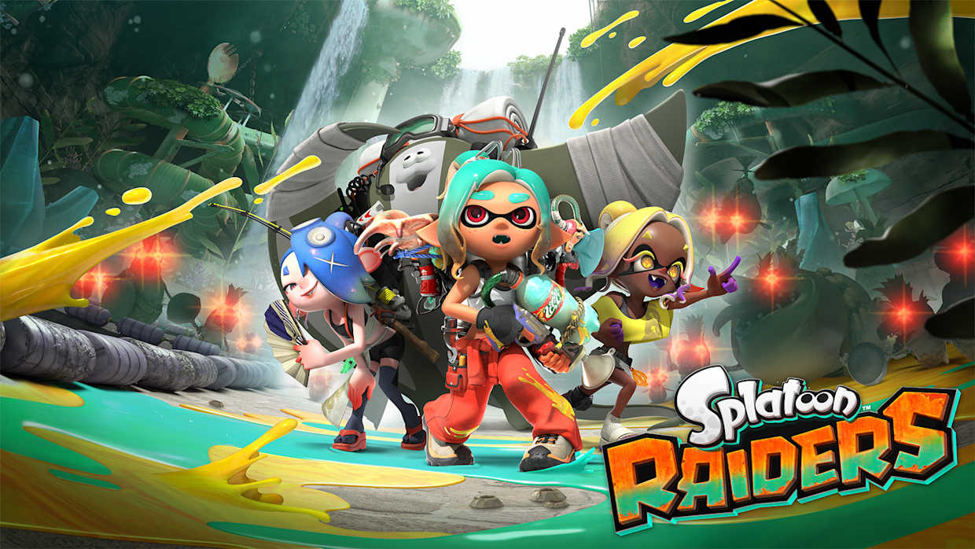
Splatoon Raiders is the first spin-off in the Splatoon series. As its first single-player focused game, it leaves behind its traditional multiplayer PVP gameplay and instead focuses on an expanded story adventure, one that reaches further beyond the story mode that the Splatoon games normally come with.
[embed]
I first experienced Splatoon via Splatoon 2 on the original Nintendo Switch, both completing the story mode and logging in a bunch of hours in ranked multiplayer, along with also finishing the Octo Expansion DLC. But when it came to Splatoon 3, I only finished the story mode and didn’t touch much of the multiplayer — the core mechanics felt too similar to Splatoon 2 for me to get re-invested in the game. I also skipped out on the Side Order DLC as well.
With Splatoon Raiders, I tried out the demo at a local Best Buy and experienced some of the gameplay differences, so I decided to give it a shot to see if it could revive the Splatoon passion in me. I did end up finishing the game — well “most” of it by the time this review goes up.
So — how is the game?
Note: Even though this is a single-player focused game, this game has multiplayer elements where your friends can join you via co-op to help out and play alongside you. I’m not much of a co-op guy though and I didn’t try out the co-op mode, so this review isn’t going to discuss the multiplayer elements, though I’ve heard it’s pretty nice and seamless.
Premise
Deep Cut, the singing group featured in Splatoon 3, takes a helicopter ride to the Spiralhite Islands to search for treasure, but end up crash-landing onto the islands due to unforeseen fog. Despite so, they aim to push forward and further look for the treasure, enlisting you, the mechanic who piloted the helicopter, to help explore the islands and salvage whatever can be found.
Gameplay
Mechanics
If you’re not already familiar with the core gameplay mechanics of Splatoon, here’s a brief rundown:
- You’re a kid who can transform into a squid — known as an inkling
- When in kid form, you use ink-based weaponry to both attack the enemy and paint the ground
- Weapons include ranged options like a sniper rifle or various guns (but in a much more kid-friendly fashion), or more close-up options like a paint brush, a bucket to throw paint out, a paint roller, and more
- Your movement is affected by what’s on the ground — if it’s your paint or dry, you can move in it normally, if it’s your opponent’s ink then you move slower
- In squid form, you can traverse through your ink much faster, among other new traversal options. Switching to squid form in ink is also how you refuel your ink
The base mechanics of Splatoon are already very strong and it carries over here to Splatoon Raiders, making a fairly seamless transition between the games, and also a good way for new players to be introduced to Splatoon gameplay.
The mainline Splatoon games also have special weapons that serve as ultimate attacks. Here, specials exist as well, but different from the original games. The ultimate attacks in this game come as a chargeable assist from the Deep Cut member you choose to bring along with you. These are very strong attacks that take a while to charge up, but unleash devastating damage.
The mainline Splatoon games also had a secondary weapon system for items like bombs and turrets — this secondary weapon system exists in the form of Gadgets. The mechanic can equip 1 of 3 overall gadget tanks (Speed/Power/Tactical) and initially equip 2 of the gadgets from that type. Gadgets range from mobility options like a hookshot to zip out of the immediate area, to a powerful multi-slash attack, to deploying multiple turrets, and more. Each gadget can be further customized with improvements — for example the Blast Boot, which gets you out of the immediate area via an explosive jump, can have its distance and explosion damage customized — note that you are limited to a number of modifications, though that limit can be expanded.
Both weapons and gadget modifications can be acquired through rewards in the levels, while gadgets can be manufactured at base, so your progression of upgrading and unlocking stuff is based on how much you play the game, and getting to experiment with what you find.
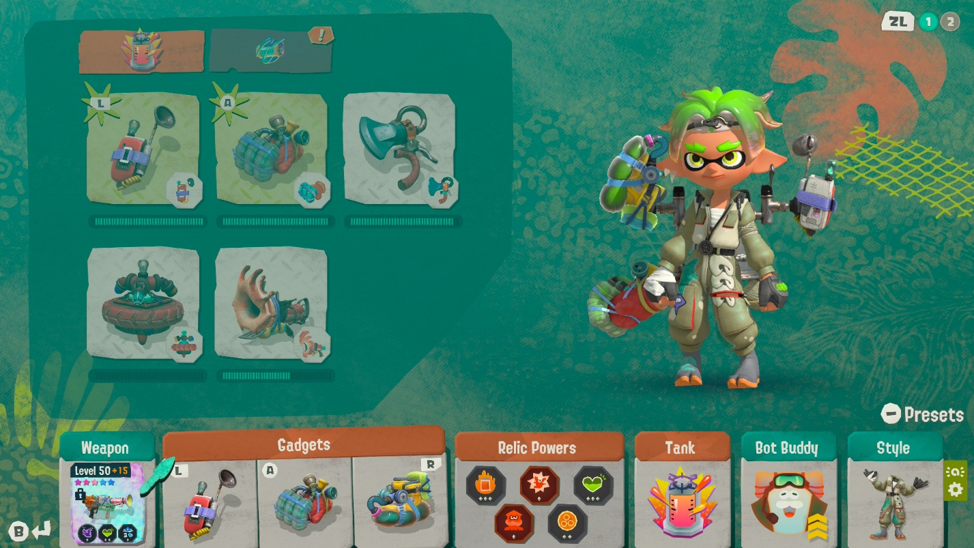
This was the build I eventually settled on for my late-game gameplay
With these all together, you have quite a bit of customization to experiment with and find your playstyle, or even change it based on the level. I swapped between main weapons, Deep Cut members, tank types, and gadgets within the tank types throughout the whole game, which is something I traditionally don’t do as I like to stick with one build the whole game, so this game does a good job at that.
Levels
Splatoon Raiders features around 50 levels in its main campaign, ranging from various level types and increasing in difficulty as you progress. The level structure that shows up the most is the standard “get to the goal” level, which is the most reminiscent of the mainline Splatoon’s story mode levels. Other level types include navigating a wide map to collect a golden egg quota, going through a 3-stage time-limited gauntlet while collecting eggs akin to Splatoon’s Salmon Run , and specialized challenges, along with additional unlockable levels that teach you how to use gadgets while also providing upgrade points for customization. Each main area also comes with a story boss as well.
Some of these level types are interesting — the specialized challenges are fun and feel unique such as reaching the goal as quickly as possible, and the big boss battles are pretty fun as well — but others can be boring like the map-wide golden egg collection, which requires re-treading areas of the map in order to collect eggs to reach the threshold.
One notable issue I have is that the “reach the goal” levels across the main story feel repetitive. New mechanics aren’t introduced as much as you go through, and there’s minimal platforming, so levels very much “go here, beat some enemies, move on” on repeat. When this is the main level type, it gets pretty boring and repetitive. It would be more fun if it was more challenging but…
Difficulty
Throughout the majority of the main story, the game was very easy.
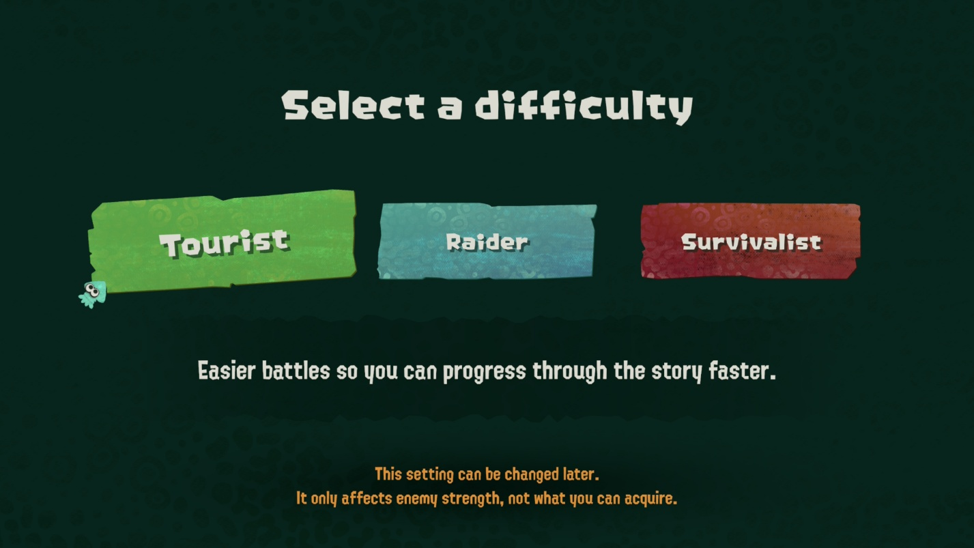
Calling the easiest difficulty Tourist mode is very funny, but also I think if you need Tourist mode for reasons outside of being a young child or for accessibility reasons, you need to git gud at video games
I started off on Raider difficulty which is supposed to be the normal difficulty, but found myself breezing through the game. So eventually I switched to Survivalist, and while it was a bit harder (the main difference being you take more damage), it was still pretty easy.
After you complete an area, all levels in that area have a harder version with more rewards. So looking for a challenge, what ended up happening was that I would go do the revamped levels which were indeed harder and more fun, but it came at an expense of overleveling and making the main story levels even easier, so I had to eventually stop doing them in order to ensure the story wasn’t even more of a cakewalk than it already was. There was also the element of repetitiveness coming through from replaying the levels as well.
I do wish the Survivalist difficulty was better tuned to make the main story levels more challenging and keeping it fresh, as I still managed to breeze through most of the game on Survivalist. That said, I think the difficulty scaling might work out better for newer players of the series.
Main Story Ending + Post-Game
Unlike most of the story, I think the main story ending and the post-game start to fix things up and show off Splatoon Raiders in a much better way.
The main story ending features several of those time-limited gauntlets, but also extended to include even more floors. These definitely posed more of a challenge and had me actually need to focus on my gameplay in order to survive and make it through. The final boss itself was still relatively easy, but the set piece and the boss itself is pretty wild and crazy in a fun way — oddly enough it gave me Final Fantasy 7 Remake ending vibes which I just recently finished.
The post-game is also where the meat of the concept seems to come together better. The official post-game features numerous 3-stage gauntlets leading to a final boss on the 100th stage followed by an endless mode after, and the difficulty is turned much higher than before. You’re also given more customization options, being able to further customize attributes of individual weapons and upgrading gadget mods to be more powerful and consume fewer mod slots.
The difficulty of the post-game section is where I had the most fun, trying to sort out what my optimal build should be while also improving my own gameplay to get better. It’s also much more chaotic, with many more enemies who are tankier, forcing me to account for these changes in my builds. I was able to beat levels while being ~20 levels underleveled, which was pretty fun. By the time I’m writing this review, I’ve gotten to floor 90 but am taking a break, as the grind to get strong enough to beat the further levels had its repetitive nature start to seep in, but it’s definitely more fun and challenging than the main game. This is probably where you’re hearing more about the rogue-like elements of the game, and it almost feels like this should have been the main game, even though I’m not usually a fan of rogue-like games.
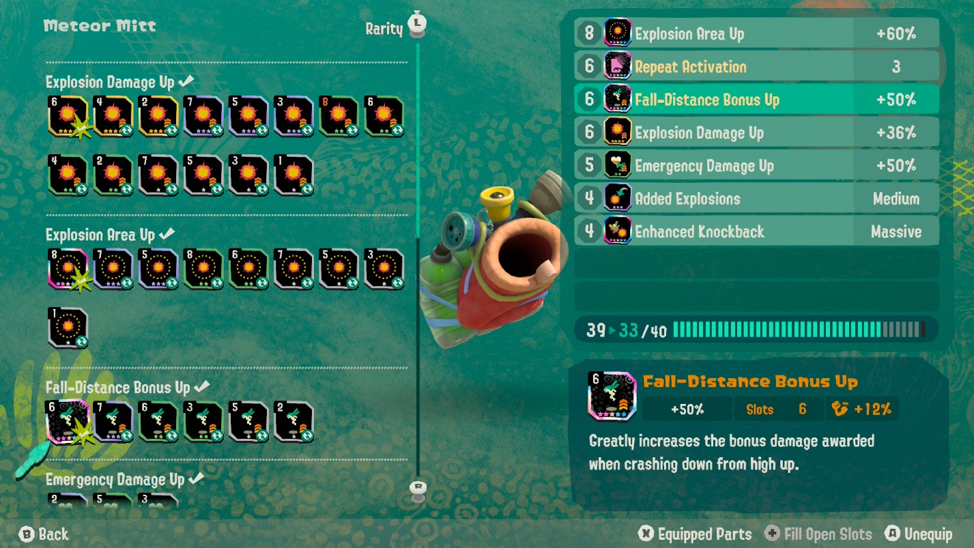
Starting to add crazier and stronger upgrades to my gadgets
Gameplay Summary
Overall, I find the gameplay to be a bit polarizing. The core mechanics of the game are very strong, with the new gadgets and customization options helping to keep things fresh, and the endgame + postgame encouraging much more focused thought and gameplay to succeed, with a pretty fun finale. But for most of the main game, it’s fairly easy to get through to the point where it feel repetitive, and the levels themselves aren’t interesting enough to help with that. It’s a bit of a shame because the fundamentals of the Splatoon Raiders loop are there, but they’re used in environments that don’t maximize its potential until the late/post game. To me, it feels like you need to either already be a big Splatoon fan who loves the gameplay, or someone who’s new to the franchise where the gameplay can stay fresh.
Narrative
The main narrative is fairly simplistic and straightforward. As with other Splatoon games, the details come from lore collectibles where you can learn about what previously happened in the Spiralhite Islands, along with additional info about the current state of Splatsville from Splatoon 3 and more about the Deep Cut Trio.
Speaking of the Deep Cut Trio, this game shine more light on them, letting them express themselves further than their comic relief role in Splatoon 3’s story. Whenever you choose them as part of your build, you build affinity with them, getting short dialogue scenes where they appreciate your support which leads to improved version of their ultimate skills.
The Spiralhite islands themselves are a weak point here though. The aesthetics of the lands aren’t particularly interesting, and are re-used frequently in each of the 3 zones, adding to that repetitive element.
The cutscenes in this game are also much more animated, with everyone getting more facial expressions and animating much further than in previous Splatoon games. It’s pretty neat to see these visual improvements, though cutscenes are noticeably at 30 FPS compared to the rest of the game’s locked 60 FPS.
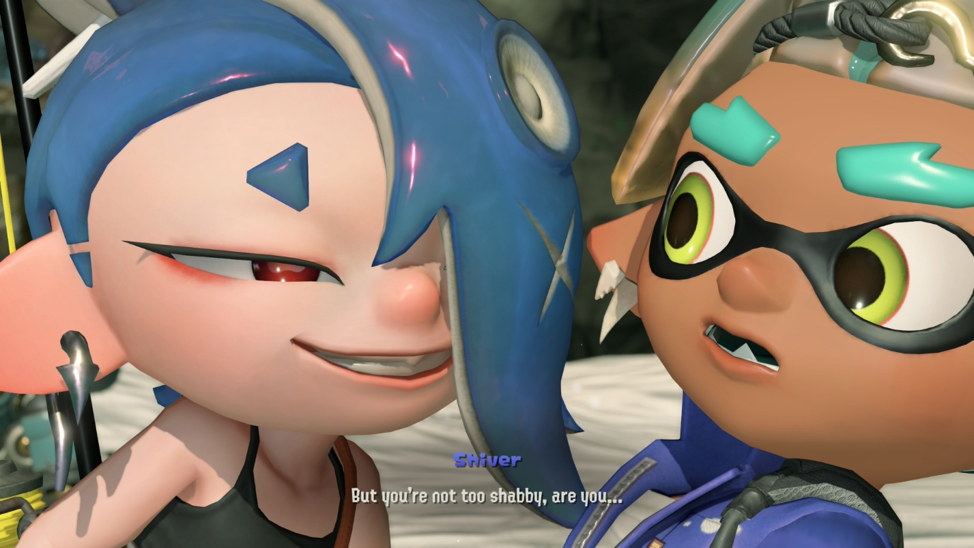
Social media sure likes her more expressive animations…
Music
Overall, the music is much more subdued compared to the mainline Splatoon games, so there aren’t as many standout tracks.
The one that I want to shout out is the final boss theme from the main story as probably the one song that caught my attention, which is pretty driving and honestly fits the mood of the final boss well. Spoilers ahead in the video below.
[embed]This is a re-creation of the final boss theme since the OST is not out yet — also spoilers in the video
Amiibo
Splatoon Raiders comes with 3 amiibo, one for each member of Deep Cut. Each one provides an exclusive outfit themed after that member.
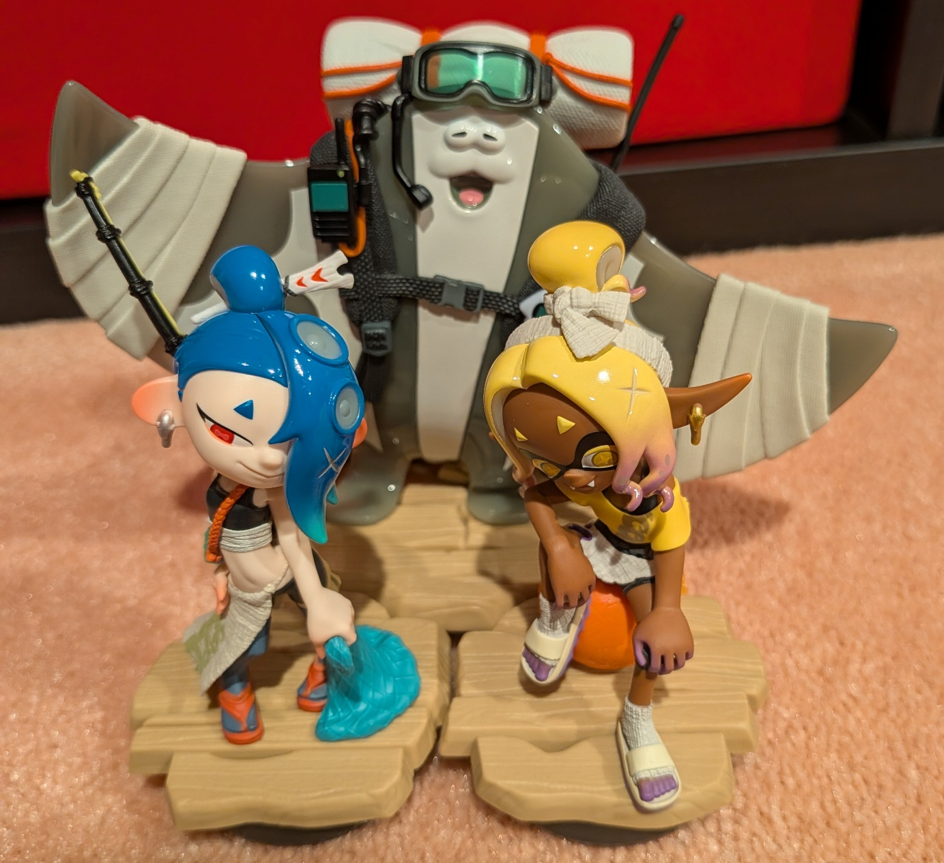
Overall, they’re pretty nice amiibo and high quality, probably the best Splatoon amiibo so far. I also like how the bases of the amiibos line up with each other.
Verdict
My opinions on Splatoon Raiders are mixed. The story, while light, is fun, and the core gameplay is very fun when the levels support it, such as the post-game gauntlet stages and the boss fights. But the main levels themselves feel much more repetitive, both aesthetically and with how the core gameplay doesn’t change as much between levels. Once you get decently good enough at the mechanics, the difficulty becomes a non-factor for the main game, even on the hardest difficulty. It almost feels like the main game is just a prologue to where the true strengths of the game lie in, with how much more fun I had in the post-game with its tough gauntlets and expanded customization options compared to the main story.
All that said, this is coming from someone who, while I enjoyed my time with Splatoon 2 early on, had lost some interest in the Splatoon formula by the time Splatoon 3 came out. And while there are changes here that definitely kept me more interested and engaged in the game compared to Splatoon 3, the fundamentals are still very present, which is a good thing for gameplay continuity and familiarity, but maybe a bit too present to feel fresh.
Despite my criticisms of the game, I would still say that I had a net positive time with the game, though it is heavily carried by the main story ending and the post-game. I do think I will eventually try to reach level 100 of the post-game dungeon at some point. And at the end of the day, I do appreciate the team trying out more experimental spin-offs — it’s good to test out the waters and see the reception, with online reception being more positive than mine.
For those who already have Splatoon experience that might have fallen off and want a fresher experience, you’ll get some of that here, but probably not as much as you hope. But I think for those who are looking to get into the Splatoon series, this is a pretty good entry point to get into the series, with learning the mechanics and getting better at the core gameplay of Nintendo’s most successful new IP.
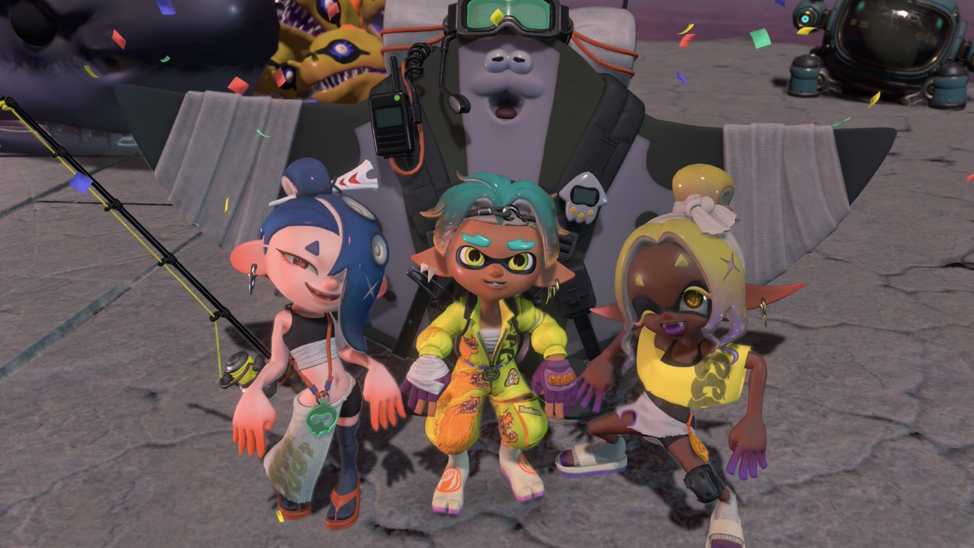
The Deep Fam
메타데이터
- post_id
- f83f71ca2cd0
- slug
- splatoon-raiders-review-f83f71ca2cd0
- url
- https://medium.com/@rondoublea/splatoon-raiders-review-f83f71ca2cd0
- canonical_url
- https://medium.com/@rondoublea/splatoon-raiders-review-f83f71ca2cd0
- author_url
- https://medium.com/@rondoublea
- status
- ok
- fetched_at
- 2026-08-11 21:47:26