The Environmental Cost of Red Meat
How our love of meat may be harming the planet
The Environmental Cost of Red Meat
How our love of meat may be harming the planet
Meat plays a central role in Western diets, especially in countries like Australia. However, growing research suggests that large-scale meat consumption may have serious environmental consequences — from greenhouse gas emissions to water use.
Meat at the centre of modern diets
In many industrialised countries, meals often revolve around meat. Steak, burgers, sausages and fried chicken are staples of everyday diets.
Even in unusual situations, people still choose meat. In the United States, death row prisoners choosing their final meal overwhelmingly request meat-based dishes such as steak, pork chops or hamburgers.
Although this group may not represent the general population, their choices highlight the powerful cultural role meat plays in modern diets.
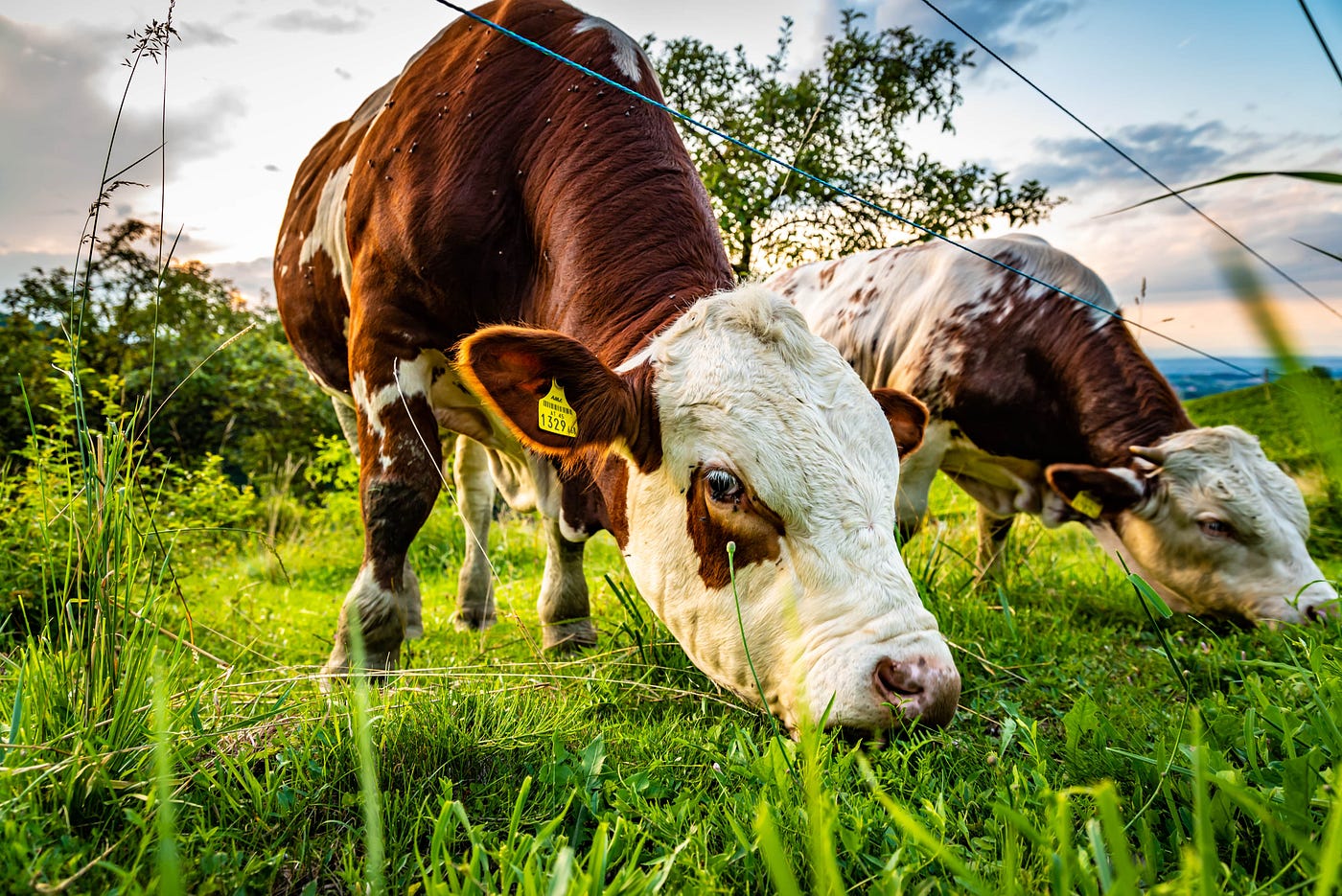
Livestock farming supports global meat consumption.
Humans evolved to eat meat and plants
Humans are omnivores. Early fossil evidence shows that our ancestors consumed animals, and our teeth are adapted to process both plant and animal foods.
- Canines and incisors help tear food
- Molars and premolars help grind food
This biological structure allows humans to eat a wide range of foods.
Australia’s appetite for meat
Australia has one of the highest meat consumption rates in the world.
According to a report by the **CSIRO** the average Australian consumes:
- 35 kg of beef per year
- 21 kg of pork
- 36 kg of chicken
- 13 kg of lamb

This equals around 290 grams of meat per person per day.
To meet this demand, Australians consume roughly:
- 16 million sheep
- 8–9 million cattle
- 5.6 million pigs
- Nearly 500 million chickens
Why meat remains popular
Meat is a rich source of essential nutrients, including:
- protein
- iron
- zinc
- vitamin B12
- omega-3 fatty acids
Cultural traditions also play an important role. In Australia, meat is central to food culture through traditions such as barbecues and meat pies.
The Australian red meat industry alone is worth around $15 billion each year.
The hidden environmental footprint
espite its popularity, meat production has a significant environmental impact.
According to the **United Nations Food and Agriculture Organization**:
- Livestock production accounts for 18% of global greenhouse gas emissions
- Livestock farming uses over 8% of global freshwater resources
Livestock also make up 20% of the total biomass of land animals, contributing to habitat loss and soil erosion.
[embed]
Are we eating more meat than ever?
While beef and lamb consumption have slightly declined since the 1960s, Australians now eat two to four times more pork and chicken per person.
Overall, meat production continues to increase, and global demand for livestock products keeps rising.
Rethinking our red meat footprint
As concerns about climate change grow, more people are beginning to question the environmental impact of their diets.
Reducing red meat consumption is increasingly discussed as one way individuals can lower their environmental footprint.
The question remains: are we ready to rethink our relationship with meat?
메타데이터
- post_id
- f858e1d8d633
- slug
- the-environmental-cost-of-red-meat-f858e1d8d633
- url
- https://medium.com/@zzha3321/the-environmental-cost-of-red-meat-f858e1d8d633
- canonical_url
- https://medium.com/@zzha3321/the-environmental-cost-of-red-meat-f858e1d8d633
- author_url
- https://medium.com/@zzha3321
- status
- ok
- fetched_at
- 2026-06-24 23:31:39