Key Aspects of S1000D
To understand why one might choose S1000D anyway, here are its strengths:
Key Aspects of S1000D
To understand why one might choose S1000D anyway, here are its strengths:
- It’s an international specification (developed by ASD, AIA etc.) used widely in aerospace, defence, maritime.
- Modular / reusable data: uses Data Modules (DMs), metadata, XML tags, so each unit of information is self-contained, version controlled.
- Common Source Data Base (CSDB): allows many vendors/OEMs to deliver content modules which can be stored centrally, reused, updated.
- Interoperability: because of the strict and well-defined metadata, coding, module structure, exchange among different systems/users is possible.
- Output flexibility: from the same modules, you can generate different deliverables (IETM, PDFs, printed manuals, web versions) with consistency.
Where Indian Standard (JSG 0852) May Be Better (in Indian / Local Context)
Given the features above, here are the ways in which Indian IETM standard might be better suited than S1000D **for many Indian defence or local industry projects**:
Advantage
Explanation
Lower cost of implementation
Less investment in specialized software (CSDB, XML authoring tools), licenses, and specialized manpower. This makes Indian standard more affordable.
Faster deployment
Because the tooling and requirements are simpler (SQL + HTML viewer, basic authoring), rolling out IETM is easier and quicker. Less complexity in metadata definitions, XML schemas, etc.
Lower skill / training threshold
Personnel with basic web/HTML/SQL knowledge can manage, maintain, update content. S1000D requires more expertise in XML, schema, module metadata, complex authoring environments.
Fits Indian infrastructural / procurement context
Many OEMs, defence bidders, shipyards in India may not already have CSDB servers or standards for S1000D flow. Indian standard aligns with what is already more common or easier to adopt locally.
Conclusion: When Indian Standard is “Better”
So, summarizing: Indian IETM (JSG 0852) is “better” when:
- Budget is constrained
- There is no need for frequent module sharing with foreign entities
- Training / manpower availability is limited in XML/S1000D pipelines
- The project/documentation size is High to moderate, or the lifecycle doesn’t demand high reuse or rigorous international interoperability
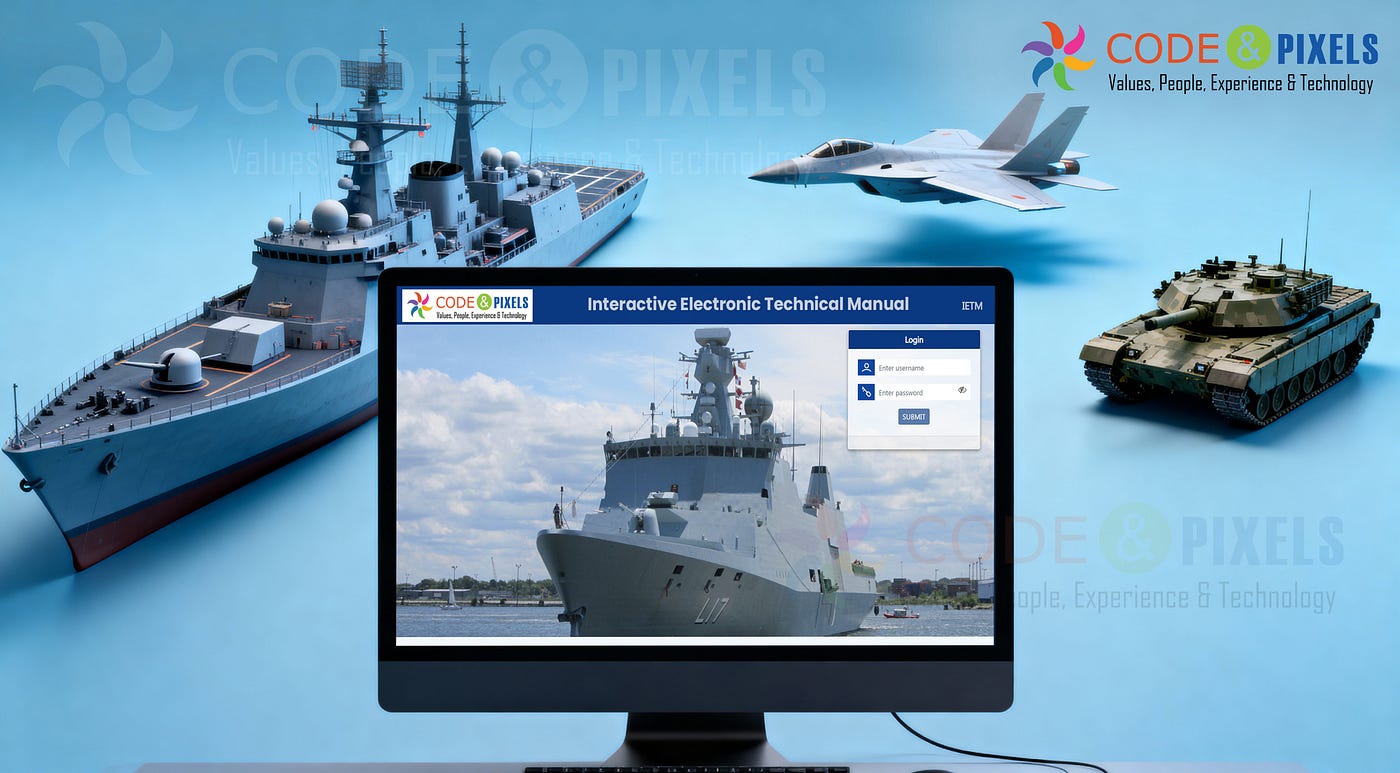
Here’s a comprehensive comparison chart between S1000D and Indian IETM Standard (JSG 0852) — designed in a way that you can directly use it in presentations, tenders, or technical proposals (especially for defence, shipbuilding, or PSU projects).
메타데이터
- post_id
- f85e8434f623
- slug
- key-aspects-of-s1000d-f85e8434f623
- url
- https://medium.com/@e-learningsoftware/key-aspects-of-s1000d-f85e8434f623
- canonical_url
- https://medium.com/@e-learningsoftware/key-aspects-of-s1000d-f85e8434f623
- author_url
- https://medium.com/@e-learningsoftware
- status
- ok
- fetched_at
- 2026-07-16 19:42:55