When the Mine Comes, Health Leaves: Lessons from Sijimali
At dawn on April 7, 2026, gun-wielding police encircled a tiny Adivasi village in the Rayagada district of Odisha state. Before dawn…
When the Mine Comes, Health Leaves: Lessons from Sijimali
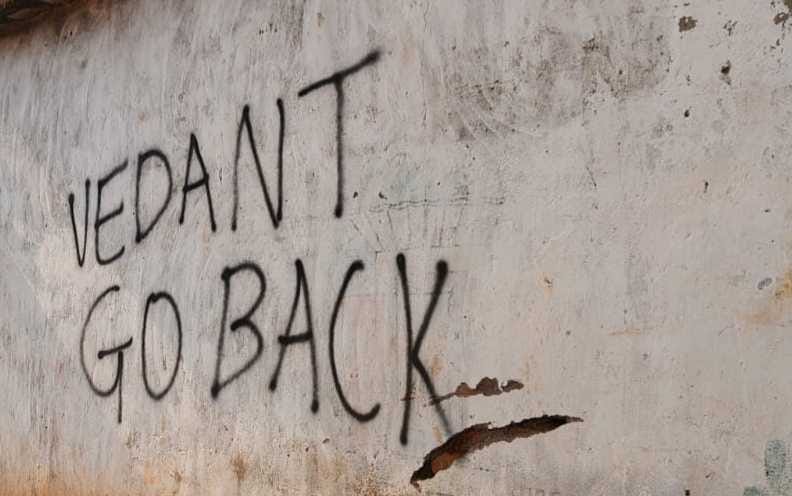
(A picture shared by the interviewee during our conversation.)
At dawn on April 7, 2026, gun-wielding police encircled a tiny Adivasi village in the Rayagada district of Odisha state. Before dawn, authorities cut off power. Officers broke down doors and fired tear gas shells. The fumes killed one cow. Several men and women sustained injuries. According to official reports, law enforcement conducted the operation to facilitate road construction, citing legal grounds amid ongoing protests. Word went around that there was unrest in a village. Whichever version, the April 7 fights and the overflow to April 8 left dozens of people injured on both sides, including several police members. It was not only a breakdown of law and order. It was the result of a governance process that, in three years, seems to have taken community consent as a procedural requirement but not a substantive one.
The conflict started in 2023, when the Odisha government granted Vedanta Limited a lease of 1,549 hectares in the Sijimali hills to mine bauxite. There were 708 hectares of forested land out of this. The reserve has an estimated 311 million tonnes of bauxite. At least 140 Adivasi families in Malipadar and Sijimali were identified to have to be displaced. The communities did not dispute the number but questioned the basis on which the displacement was justified. Land is more to them than a home. Their water, food, and livelihoods are maintained by the ecological system. The other factors that led to the next security escalation and tensions were pressure during the land lease process and the forcible construction of roads.
The Sijimali bauxite geology is also used as a natural water store. More than 200 perennial springs channel monsoon rainfall year-round through the rock, supplying drinking water and irrigation to neighboring villages, as community mapping and accounts confirm. The government requires an Environmental Impact Assessment, which is meant to explain in detail what will be destroyed and what will be saved by the project before any large-scale mining project is initiated. These were also not springs that were assessed by Vedanta. The Sal, Tamarind, Amla, and Bahada forests, which provide ecological cover and family income, were also not recorded. The Siali leaf picking and honey picking, which are major sources of cash income to the tribal families, were not recorded. Similar issues and criticisms have been raised on the draft assessment through the independent reports and submissions of the public hearings on the undercounting of water sources and livelihood dependencies. Policy cannot protect what is not covered by a formal assessment.
This is one aspect that the traditional health policy does not consider a lot. Sijimali is not just an ecological resource. It is a holy place. Adivasi people of this land draw no separation between land, water, forest, and spiritual life. The Adivasi have a god, “Teej Raja”, who is thought to be in a cave at the summit of the hill. In a systematic review of The Lancet Planetary Health in 2023, land dispossession through industrial extraction was always identified as resulting in depression, grief, anxiety, and suicide ideation among Indigenous people worldwide. The epidemiologists associate the short-term compounded impact of surveillance, forced migration, and recurring security operations with long-term cardiovascular and metabolic disease, which is now understood to be toxic stress. All this does not show up in the district health records of Rayagada. In that absence, there is no neutrality. It embodies a failure of measurement of real implications.
Mostly affected villages report women being unable to leave their homes in search of drinking water. During the months of heightened security development, pregnant women in affected villages reported bring unable to access antenatal care services due to movement restrictions. The families sustained themselves on one meal a day. These are not the results of the mining project itself. They were the fruits of the administrative measures in the months preceding it, of the enormous pre-deployment of security forces, of the restrictions on movements, and of the banning of civic meetings, all caused by the need to push the project on the ground. Being denied access to food, water, and health care is not a collateral consequence of policing. It is an administrative choice health outcome that has to be documented and reported as such.
India has three reforms to make in the resource governance structure. Firstly, the environmental approvals of projects in the forested and planned areas should require an independent health impact assessment, which should be prepared before the approval and which should document the present population health, and the expected effects on the water, food supply, and access to healthcare. Second, the resettlement plans must be based on livelihood continuity and access to drinking water, but not on physical replacement of property. Third, Gram Sabha consent processes in areas of the Fifth Schedule will have to undergo audit by an entity that does not have a direct conflict of interest in the project facilitation by the district administration.
All of this does not demand that India has to make a choice between developing minerals and the welfare of the tribes. It consists of a procedure that is honest enough to inscribe the real cost of extraction and its health cost as well, before its degrading localities rather than after.
The timing of these events, coinciding with World Health Day, was not lost on the Adivasi people of India. They are not the only ones to observe the discrepancy between the constitutional right to health as a principle and the reality of health in everyday life. This is a policy matter to bridge this gap. And governance issues can be solved.
Disclaimer: All views expressed in the article belong solely to the author and not necessarily to the organization.
메타데이터
- post_id
- f862f32ef7c7
- slug
- when-the-mine-comes-health-leaves-lessons-from-sijimali-f862f32ef7c7
- url
- https://medium.com/@researchercharanmnanda/when-the-mine-comes-health-leaves-lessons-from-sijimali-f862f32ef7c7
- canonical_url
- https://medium.com/@researchercharanmnanda/when-the-mine-comes-health-leaves-lessons-from-sijimali-f862f32ef7c7
- author_url
- https://medium.com/@researchercharanmnanda
- status
- ok
- fetched_at
- 2026-07-11 21:25:18



