Quiet Kyoto Itinerary: A Gentle Guide to Temples, Gardens, and Hidden Places
A slower way to experience Kyoto beyond the famous photo spots.
Quiet Kyoto Itinerary: A Gentle Guide to Temples, Gardens, and Hidden Places
A slower way to experience Kyoto beyond the famous photo spots.
Quiet Kyoto Itinerary: A Gentle Guide to Temples, Gardens, and Hidden Places
Most people visit Kyoto with a checklist.
See Fushimi Inari.
Visit Arashiyama Bamboo Grove.
Take photos in Gion.
Eat matcha parfaits.
Buy souvenirs.
None of those things are wrong.
But after living in Japan – or simply returning more than once – you begin to notice something surprising.
The Kyoto that stays with you is rarely the busiest one.
Instead, it’s the tiny garden where nobody spoke.
The temple where only birds interrupted the silence.
The quiet street where an old shop owner smiled without saying much.
Kyoto isn’t a city that reveals itself quickly.
It rewards people who slow down.
This guide isn’t about seeing more.
It’s about seeing better.
Why Kyoto Can Feel Surprisingly Exhausting
Many first-time visitors imagine Kyoto as peaceful.
In reality, it can feel overwhelming.
Popular attractions are crowded from early morning.
Buses become packed.
Restaurants have long waits.
Everyone seems to be rushing toward the next famous landmark.
Ironically, the search for “traditional Japan” often becomes one of the busiest travel experiences imaginable.
That’s why many travelers leave Kyoto thinking,
“It was beautiful… but I was exhausted.”
The city isn’t the problem.
The pace is.
A Different Way to Experience Kyoto
Instead of trying to visit ten places in one day, choose three.
Stay longer.
Sit longer.
Walk without headphones.
Notice the sound of gravel beneath your shoes.
Watch sunlight move across wooden floors.
Listen to the wind moving through bamboo.
In Japan, beauty often appears in moments that aren’t planned.
The less you rush, the more Kyoto begins to unfold.
Morning: Begin With Silence
Early morning is Kyoto’s greatest luxury.
Before tour buses arrive, temples feel completely different.
The air is cooler.
The streets are quieter.
Even the light feels softer.
Choose one temple – not five.
Spend at least thirty minutes there.
Don’t worry about taking photos immediately.
Walk first.
Observe later.
You’ll probably notice details most visitors miss:
・Moss glowing after morning dew
・The smell of cedar wood
・The sound of temple bells echoing through empty gardens
・Leaves moving in complete silence
Sometimes doing less creates stronger memories.
Spend Time in Japanese Gardens
Many visitors walk through gardens in just a few minutes.
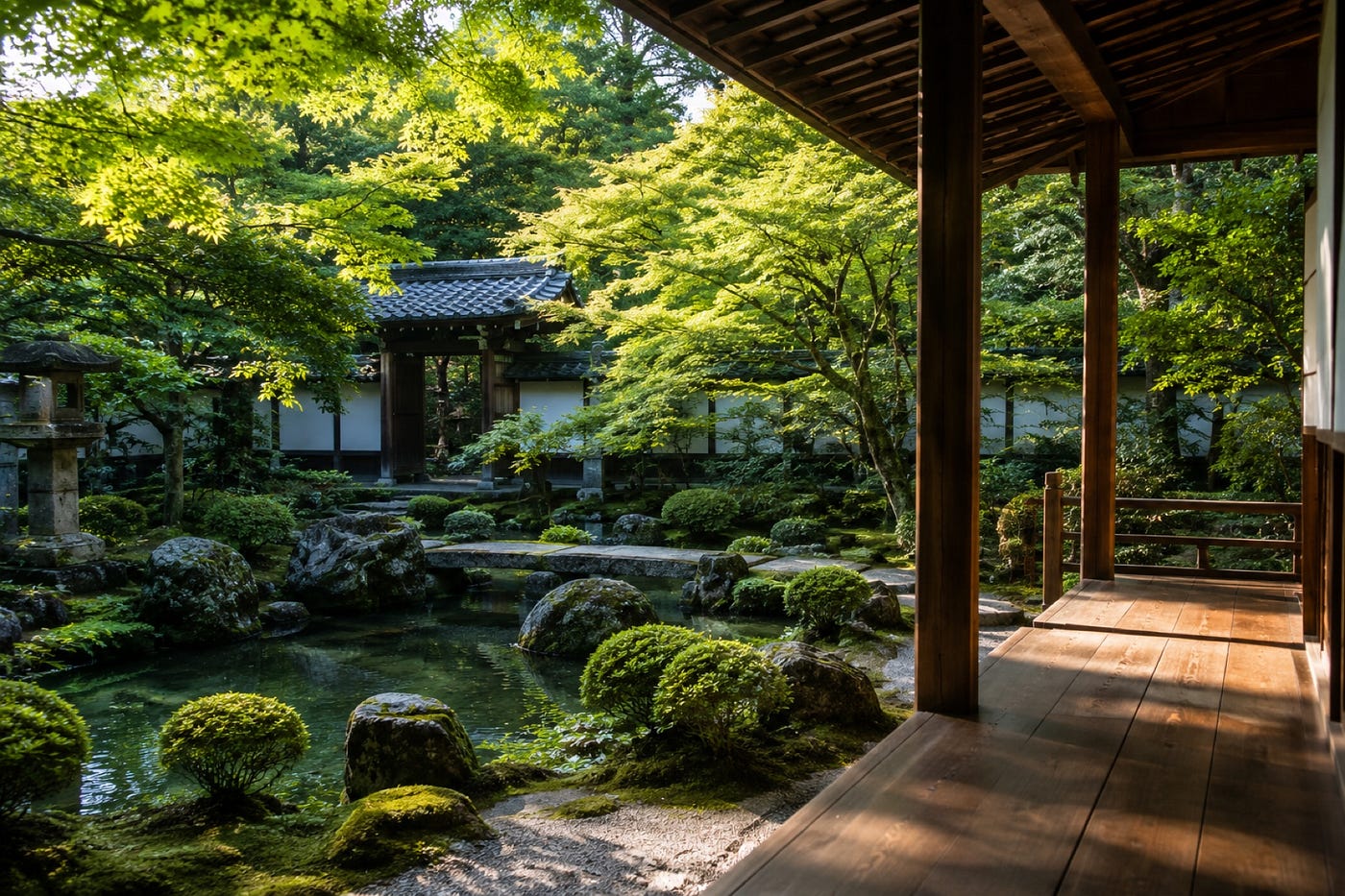
But Japanese gardens weren’t designed to be rushed.
They’re meant to be observed.
Sit on a wooden veranda.
Look at the same landscape for ten minutes.
At first, nothing seems to happen.
Then gradually you notice shadows changing.
Birds landing.
Ripples in the pond.
Clouds reflected in still water.
Japanese gardens teach something modern life often forgets:
Not every beautiful experience needs constant stimulation.
Sometimes stillness is enough.
Wander Without a Destination
One of Kyoto’s greatest hidden attractions isn’t hidden at all.
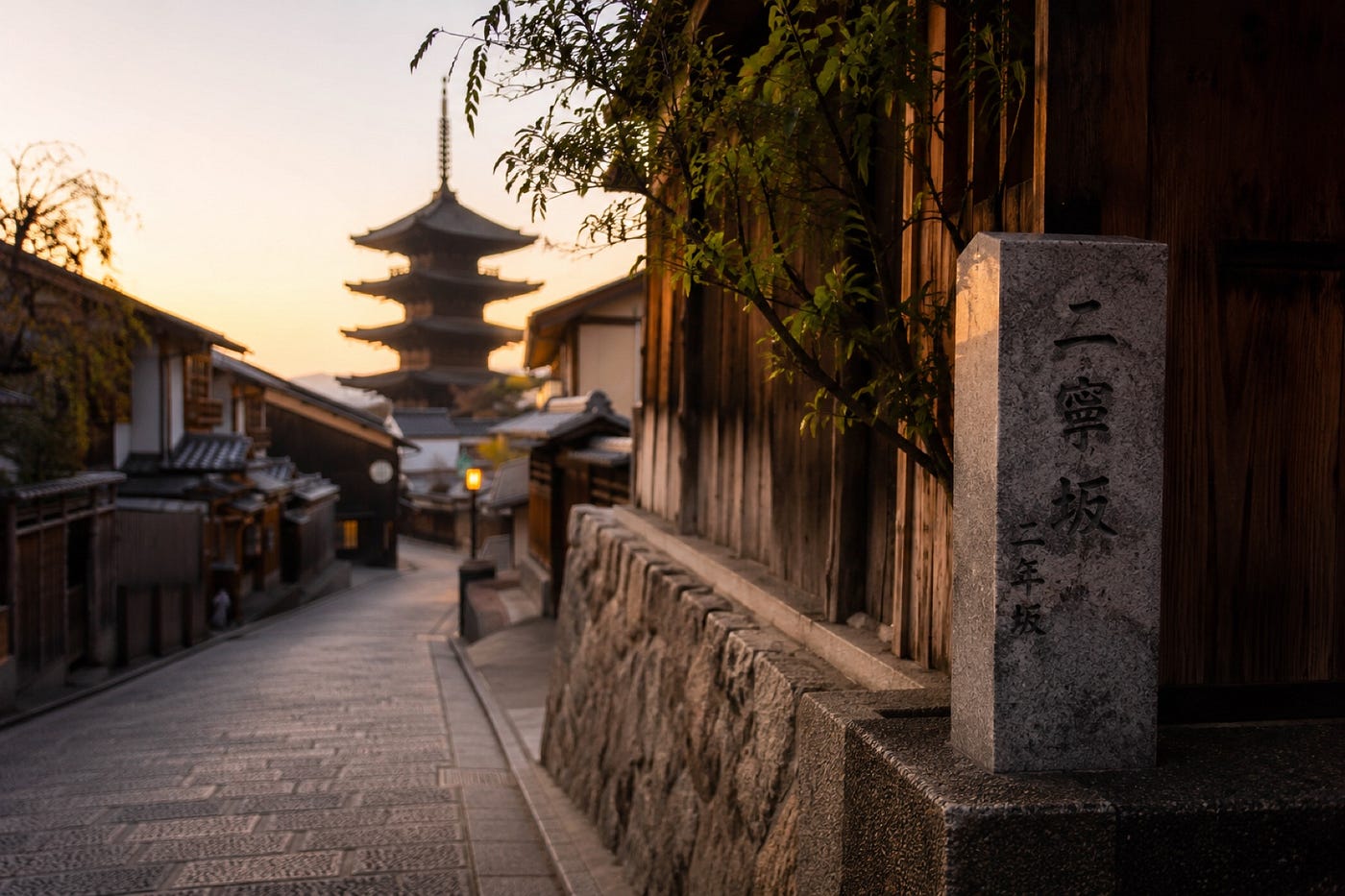
It’s simply the streets between famous places.
Leave Google Maps for a while.
Take a side street.
Cross a small bridge.
Walk through a quiet residential neighborhood.
You may discover:
・A tiny neighborhood shrine
・An old tea shop with only a few seats
・Handmade pottery displayed outside a workshop
・Cats sleeping beside wooden fences
・Small flower arrangements outside traditional homes
None of these appear on “Top 10 Kyoto” lists.
Yet these ordinary moments often become travelers’ favorite memories.
Hidden Places Worth Slowing Down For
Kyoto has countless peaceful corners if you’re willing to look beyond the most photographed attractions.
Otagi Nenbutsu-ji
Hundreds of unique stone statues with surprisingly human expressions make this temple feel warm rather than grand.
Instead of impressive architecture, you’ll remember the personalities carved into every face.
Murin-an Garden
This small Meiji-era garden is one of Kyoto’s quiet treasures.
Streams flow gently through carefully designed landscapes.
Many visitors spend an hour here simply watching the water.
Shōsei-en Garden
Located surprisingly close to Kyoto Station, this garden is often overlooked.
It offers beautiful seasonal scenery without the crowds found elsewhere.
Yoshimine-dera Temple
Located in Kyoto’s western mountains, this temple rewards visitors with panoramic views and peaceful walking paths.
It requires more effort to reach – but that’s exactly why it remains quiet.
Eat Slowly, Too
Kyoto cuisine isn’t fast food.
Whether you’re enjoying tofu, seasonal vegetables, matcha sweets, or traditional kaiseki, allow yourself time.
Instead of eating while planning the next attraction, simply enjoy the meal.
Notice the presentation.
The handmade ceramics.
The changing seasonal ingredients.
In Japan, food isn’t only about taste.
It’s also about attention.
A Simple One-Day Quiet Kyoto Itinerary
7:30 AM
Visit one temple before the crowds arrive.
9:00 AM
Enjoy breakfast at a small local café.
10:30 AM
Spend time in a Japanese garden.
12:30 PM
Have a relaxed seasonal lunch.
2:00 PM
Walk through quiet residential streets.
4:00 PM
Visit one lesser-known temple or shrine.
6:00 PM
Watch sunset along the Kamo River.
Evening
Finish with tea instead of another sightseeing stop.
You may visit fewer attractions than other travelers.
Yet you’ll probably remember far more.
What Kyoto Quietly Teaches
Many people think travel is about collecting experiences.
Kyoto suggests something different.
Maybe meaningful travel isn’t about how much you see.
Maybe it’s about how deeply you notice.
The city gently reminds us that slowing down isn’t wasting time.
Sometimes slowing down is the experience itself.
That lesson stays with many visitors long after they’ve returned home.
Not because Kyoto asked them to become someone new.
But because, for a few quiet hours, it gave them permission to stop rushing.
And perhaps that’s one of the greatest souvenirs Japan has to offer.
Final Thoughts
If this is your first trip to Kyoto, don’t worry about seeing everything.
Kyoto has existed for over 1,200 years.
It doesn’t expect you to understand it in a weekend.
Leave something for next time.
Sit a little longer.
Walk a little slower.
Because the Kyoto you’ll remember most probably won’t be the place with the longest line.
It will be the moment when, for just a few minutes, the city became completely still – and so did you.
References
・Japan National Tourism Organization (JNTO). Kyoto Travel Guide.
・Kyoto City Tourism Association. Official Kyoto Travel Information.
・Marc Peter Keane. Japanese Garden Design.
・Leonard Koren. Wabi-Sabi: for Artists, Designers, Poets & Philosophers.
・Donald Richie. The Inland Sea.
・John Dougill. Kyoto: A Cultural History.
메타데이터
- post_id
- f86e4ff307e5
- slug
- quiet-kyoto-itinerary-a-gentle-guide-to-temples-gardens-and-hidden-places-f86e4ff307e5
- url
- https://medium.com/@softjapanguide-mk/quiet-kyoto-itinerary-a-gentle-guide-to-temples-gardens-and-hidden-places-f86e4ff307e5
- canonical_url
- https://medium.com/@softjapanguide-mk/quiet-kyoto-itinerary-a-gentle-guide-to-temples-gardens-and-hidden-places-f86e4ff307e5
- author_url
- https://medium.com/@softjapanguide-mk
- status
- ok
- fetched_at
- 2026-08-11 00:44:36