How Singaporeans Can Buy Property in Johor Bahru: A 2026 Step-by-Step Guide
Everything a Singapore buyer needs to know about costs, financing, and the state consent process — before the RTS Link opens.
How Singaporeans Can Buy Property in Johor Bahru: A 2026 Step-by-Step Guide
Everything a Singapore buyer needs to know about costs, financing, and the state consent process — before the RTS Link opens.
Buying property in Johor Bahru has become one of the most talked-about moves for Singapore-based investors and second-home buyers in 2026. Being a JB property owner myself, I often get asked about this and I wanted to share more.
With the Johor Bahru–Singapore RTS Link targeted to open at the end of the year and the Johor–Singapore Special Economic Zone (JS-SEZ) drawing investment into the city core, more Singaporeans are looking across the Causeway than at any point in the past decade. But the buying process is different from purchasing in Singapore, and the costs changed significantly on 1 January 2026. This guide walks through exactly how a Singaporean or Singapore PR can buy a JB condominium, step by step.
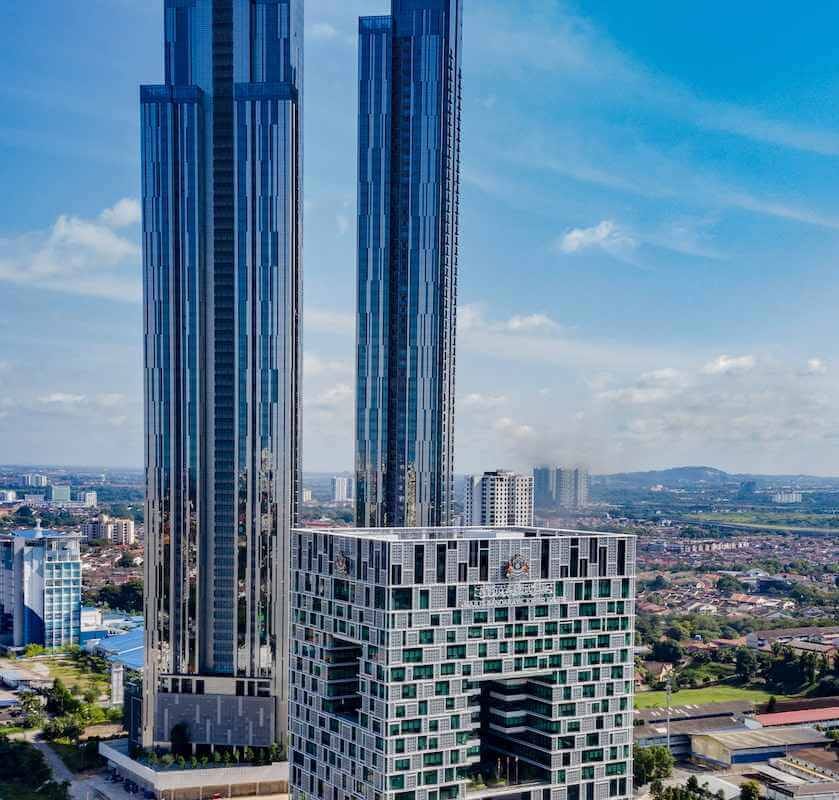
Astaka Condo in Johor Bahru — popular with Singaporean buyers
Step 1: Confirm You Are Eligible to Buy
Singaporeans and Singapore PRs can freely buy strata-titled condominiums in Johor, provided the property is priced above the state’s minimum threshold for foreign buyers, which is RM1,000,000 in Johor.
A common myth is that you need a Malaysia My Second Home (MM2H) visa to own property. You do not — MM2H is a long-term residency programme, not a prerequisite for ownership. Landed homes (houses on individual titles) are tightly restricted for foreigners in Johor, which is why the vast majority of Singapore buyers focus on condominiums and serviced residences.

Johor–Singapore Special Economic Zone (JS-SEZ)
Step 2: Budget for the True All-In Cost
The purchase price is only part of the picture. As a foreign buyer, you should budget for four main additional costs:
- Stamp duty: a flat 8% of the property value. This is the single biggest change for 2026 — the rate doubled from 4% to 8% for non-citizens on 1 January 2026 under Budget 2026. Singapore PRs of Malaysia are treated differently, but Singaporean citizens pay the full 8%.
- Legal fees: roughly 1.25% on the first RM500,000 and 1% on the balance, plus service tax and disbursements.
- Johor state consent fee: 3% of the property valuation, with a minimum of RM30,000 — the highest of any Malaysian state.
- Loan stamp duty: 0.5% of the loan amount, if you are financing.
As a worked example, a RM2,000,000 condominium carries approximately RM220,000 in total upfront costs — around 11% of the purchase price — on top of your down payment. Knowing this figure before you start prevents unpleasant surprises later.
Step 3: Arrange Your Financing
Malaysian banks do lend to Singaporeans, though on tighter terms than they extend to residents. Understanding how Malaysian mortgage rates are set — and what rate you can realistically expect as a foreign buyer — is essential to budgeting your monthly cost.
How Malaysian mortgage rates work
Nearly every home loan interest rate in Malaysia is anchored to the Overnight Policy Rate (OPR), the benchmark rate set by Bank Negara Malaysia (BNM), the central bank. Since August 2022, banks price new floating-rate home loans off a Standardised Base Rate (SBR), which is pegged directly to the OPR and is identical across all banks. When BNM moves the OPR, every bank’s SBR moves by the same amount, one-for-one. Your actual rate is the SBR plus the bank’s individual spread (its margin), which is determined by your credit profile, the loan-to-value ratio, and the property type.
In plain terms: Your effective rate = OPR + bank spread. The OPR is the part set by the central bank; the spread is the part you negotiate with the bank.
The current rate environment (mid-2026)
As of July 2026, the OPR sits at 2.75%. BNM cut it from 3.00% in July 2025 — the first reduction since 2020 — and has held it steady at every meeting since, marking roughly a full year of stable rates. Economists broadly expect the rate to hold at 2.75% through the rest of 2026, though some flag the possibility of a modest 0.25% increase later in the year if inflation runs hotter than forecast.
For borrowers, this means effective mortgage rates in Malaysia currently fall in the region of roughly 3.8% to 4.5% for well-qualified applicants, depending on the bank’s spread and your profile. This is a relatively stable and historically moderate rate environment, which gives buyers predictability in planning monthly instalments.
What financing looks like for a Singapore buyer specifically
- Loan-to-value (LTV): Foreign buyers typically secure 60% to 70% financing. Note that the “up to 70%” figure is a maximum, not a default — first-time foreign applicants with no Malaysian banking history often start closer to 50–60%, so a larger down payment or demonstrated savings can strengthen your case.
- Loan tenure: Up to 30 years with most lenders, though some cap foreign borrowers at 25 years.
- Best-positioned banks: Lenders with Singapore or Hong Kong operations tend to run the smoothest cross-border approvals. OCBC is often cited as having the most developed Singapore–Malaysia corridor, since income verification between its SG and MY arms is handled internally. HSBC, Standard Chartered, UOB, Maybank, and CIMB are also active with foreign applicants.
- Fixed vs. floating: Malaysian “fixed” rates are only fixed for a promotional period (usually 3–5 years) before converting to floating — unlike a US-style 30-year fixed. With the OPR low and expected to stay stable, most investors opt for floating-rate packages, some of which offer flexi features that let you park extra cash against the loan to reduce interest.
- Documentation: Banks generally require proof of income, and will not accept employment letters older than 3 months or tax returns older than 6 months.
Because foreign financing terms are less generous than in Singapore, a meaningful share of Singapore buyers purchase in cash for simplicity — but with rates stable and the ringgit favourable, financing remains an attractive way to preserve capital.
Step 4: Sign the Sale and Purchase Agreement
Once you have selected your unit and agreed on a price, you sign the Sale and Purchase Agreement (SPA) and pay the deposit. Your appointed Malaysian lawyer prepares and handles the documentation, which is drafted in English. This stage formally commits both parties to the transaction.
Step 5: Apply for State Authority Consent
Every foreign property purchase in Johor requires written consent from the state authority under the National Land Code. Your lawyer submits this application on your behalf. Approval typically takes three to six months, so it is important to build this timeline into your expectations rather than assuming a Singapore-speed completion.

Step 6: Complete the Purchase and Collect Your Keys
Once state consent is granted, you pay the stamp duty, complete the Memorandum of Transfer (MOT), and register the title in your name at the Land Office. At completion, the property is legally yours and you take vacant possession.

Why Singapore Buyers Are Moving Now
Three tailwinds are drawing Singapore buyers into the JB market in 2026.
The RTS Link is targeted to begin passenger service by the end of 2026, cutting the cross-border commute between Bukit Chagar and Woodlands North to roughly five minutes of rail travel. As of April 2026, around 90% of construction was reported complete.
The JS-SEZ, officially launched in January 2025, spans an area nearly five times the size of Singapore and is drawing manufacturing, technology, and services investment into the corridor. Real estate consultancy JLL reported that JB serviced-apartment transaction prices rose 20.4% in Q2 2025 compared with the 2024 average, supported by SEZ spillover and infrastructure upgrades.

Finally, the favourable SGD–MYR exchange rate means Singapore buyers continue to enjoy substantial value relative to comparable Singapore property. The common thread among analysts is that early movers — those who buy during construction rather than after the RTS begins running — are best positioned as infrastructure premiums build toward completion.
Frequently Asked Questions
Do Singaporeans need an MM2H visa to buy property in Johor? No. MM2H is a residency programme, not a requirement for property ownership. Any eligible foreigner can buy a strata-titled condo above the state minimum price.
What is the minimum price for foreigners buying in Johor? RM1,000,000 for most residential strata property, though this is set by the state and can change.
How much is stamp duty for a Singapore buyer in 2026? A flat 8% of the property value for non-citizens, effective 1 January 2026.
How long does the whole process take? For a sub-sale (resale) unit, typically three to six months from signing the SPA to completion, largely driven by the state consent timeline.
This article is general information, not legal or tax advice. Foreign ownership rules, stamp duty rates, and state fees change and vary by state and individual circumstances. Always confirm your exact costs and eligibility with a licensed Malaysian property lawyer and tax advisor before committing to a purchase.
If you are interested in buying JB property, do reach out. I am not a property agent but I can introduce you to a couple of reliable ones.
메타데이터
- post_id
- f879ea601c1f
- slug
- how-singaporeans-can-buy-property-in-johor-bahru-a-2026-step-by-step-guide-f879ea601c1f
- url
- https://medium.com/@ashleylim/how-singaporeans-can-buy-property-in-johor-bahru-a-2026-step-by-step-guide-f879ea601c1f
- canonical_url
- https://medium.com/@ashleylim/how-singaporeans-can-buy-property-in-johor-bahru-a-2026-step-by-step-guide-f879ea601c1f
- author_url
- https://medium.com/@ashleylim
- status
- ok
- fetched_at
- 2026-08-22 01:00:32