Why do we label others?
What do psychologists say about one of the oldest habits of the human mind?
Why do we label others?
What do psychologists say about one of the oldest habits of the human mind?
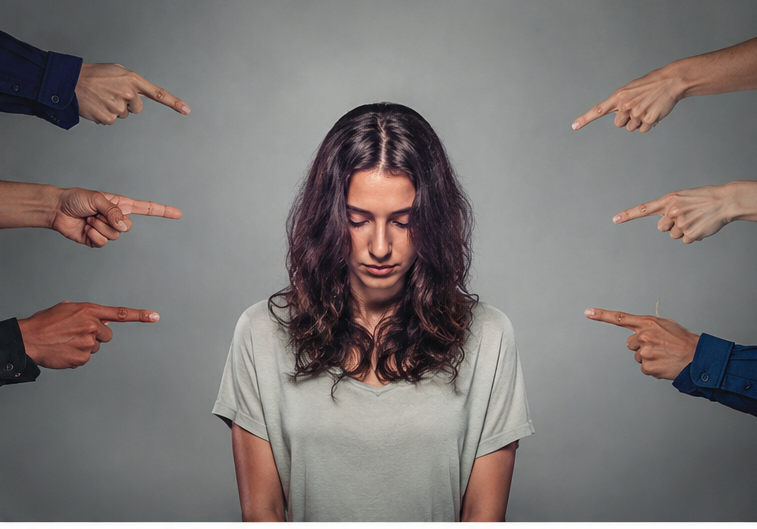
AI Generated!
“She’s lazy.” “She’s selfish.” “She’s a radical feminist.” “She’s a patriarchal.” “She’s toxic.” We hear and use these words every day. But can humans really be summed up in one word? Or is labeling more about our minds than about others? Psychologists believe that labeling is one of the oldest and most natural activities of the human mind, but it can also be a source of many misunderstandings, prejudices, and social conflicts.
What is labeling? In psychology, labeling is the process by which we generalize a characteristic, behavior, or belief to a person’s entire identity. For example: A person lies once. We conclude: “He’s a liar.” A person gets angry in an argument. We conclude: “He’s an aggressive person.” The human mind loves to simplify. Labels do this for us.
The history of labeling This behavior is much older than modern psychology. In early societies, humans had to make very quick decisions: • Friend or foe? • In-group member or stranger? • Trustworthy or dangerous? This quick categorization increased the chances of survival. The human brain evolved to categorize people into different groups. The problem is that the modern brain still uses the same old mechanism, even when the issue is not that simple.
Why does the brain love labels?
-
Save mental energy Analyzing each person in detail takes time and energy. Labels are mental shortcuts. Instead of recognizing the complexity of a person, the mind says: “He is this type.” and closes the file.
-
Reduce ambiguity The human brain does not like ambiguity. Labels create a sense of certainty. Even if they are wrong.
-
Strengthen group identity When we label others, we are actually defining the boundary between “us” and “them.” This leads to: • Ethnic prejudice • Political prejudice • Religious prejudice • Culture wars .
What types of personalities are more likely to label? Everyone does this to some extent. But research shows that some people are more likely to label. People with low tolerance for ambiguity These people like everything to be clear and definite. Complexity makes them anxious. So they categorize people more quickly.
People with black and white thinking For these people: • Good or bad • Right or wrong • Friend or foe There is no such thing as a gray area.
People with strong group bias The stronger a person’s group identity, the more likely they are to label other groups.
People under stress When we are tired, anxious, or under pressure, our brains take more mental shortcuts. As a result, quick judgments and labeling increase.
In which cultures is it most common? Labeling exists in all cultures. But its intensity and form vary. Traditional Societies In many traditional societies, people’s identities are defined more by: • Gender • Family • Religion • Ethnicity • Social class . As a result, social labels are more pronounced.
Polarized Societies As a society becomes more politically or culturally polarized, labeling increases. Instead of engaging in dialogue, people tend to put each other into predetermined categories.
The Age of Social Media Perhaps today we see more labeling than ever before. Why? Because social media: • Accelerates judgment. • Divides people into two polarities. • Substitutes short messages for deep understanding. Online, one sentence is enough to permanently label someone.
The Danger of Labeling The biggest problem is that humans are far more complex than our labels suggest. A person can: • Be kind and make mistakes. • Be successful and vulnerable. • Be logical and emotional. But labels remove this complexity.
What do psychologists recommend? Before we label someone, it’s best to ask ourselves: • Have I mistaken a behavior for the person’s entire personality? • Do I have enough information? • Could there be another explanation? Sometimes psychological maturity lies not in quick judgment, but in tolerating the complexity of people.
Conclusion Labels may be one of the most natural functions of the human brain. But being natural does not mean being right. The more we grow, the more we realize that people cannot be summed up in one word. Perhaps true wisdom begins when, instead of asking: “What is his label?” We ask: “What is his story?”
메타데이터
- post_id
- f87c7460dde6
- slug
- why-do-we-label-others-f87c7460dde6
- url
- https://medium.com/@amraan.changwani/why-do-we-label-others-f87c7460dde6
- canonical_url
- https://medium.com/@amraan.changwani/why-do-we-label-others-f87c7460dde6
- author_url
- https://medium.com/@amraan.changwani
- status
- ok
- fetched_at
- 2026-06-23 03:48:11