ONE STEP CLOSER TO POLLUTION FREE WATER
Halic, also known as the Golden Horn in Europe, got its name from the Greek mythology.
ONE STEP CLOSER TO POLLUTION FREE WATER
Halic, also known as the Golden Horn in Europe, got its name from the Greek mythology.
Zeus, the king of gods in Olympus, fell in love with the king of Agros daughter Io. Hera, the wife of Zeus, becomes furious and turns Io into a cow and she places a fly onto her head. And that’s how the legend started. This is also the same legend that created Bosphorus. When Io tries to run away from the fly she breaks the ground and it fills with water. And like that Halic takes the name Bosphorus (meaning the cow passage). Io eventually comes to Halic and stays there. A baby girl is born on a hill. She is called Keros, short for Keroessa, which means ‘’ horn’’. This name is given to the place we now know as Halic. Because the land is seen as sacred, people also began calling it ‘’The Golden Horn’’.
Halic was always known as the Golden Horn in the middle ages. Some historians think that the reason of Halic being really rich is because there was a lot of trading taking place there. Like how the Nil gives life to Mesopotamia Halic gives life to Istanbul. To be in control of a place like Halic is like to be in control of the worlds whole trade system.
WHAT HAPPENED?
In the year 1911, when industries started to develop in Turkey some machines started to appear in the shores of Halic, mainly using electricity and coal to work these constructs polluted the air. After that more and more factories and work places started to appear thus polluting Halic.
On the other hand, there were a lot of domestic waste centers that connected to Halic. People who lived in Halic got disturbed by the smell of all the waste.
Every year 263.000 m3 (232 thousand tons!) of waste fill Halic. Basically, Halic became full of waste. The place that was so clean and holy suddenly turned into a cesspool.
ECOLOGICAL LESSONS FOR A FAIR CITY
The first known intervention to this situation was in 1940. We used cleaning boats to clean the Halic mud. The collected mud gets transported to the Marmara Sea. By 1994, the Golden Horn had become a political problem awaiting a critical solution.
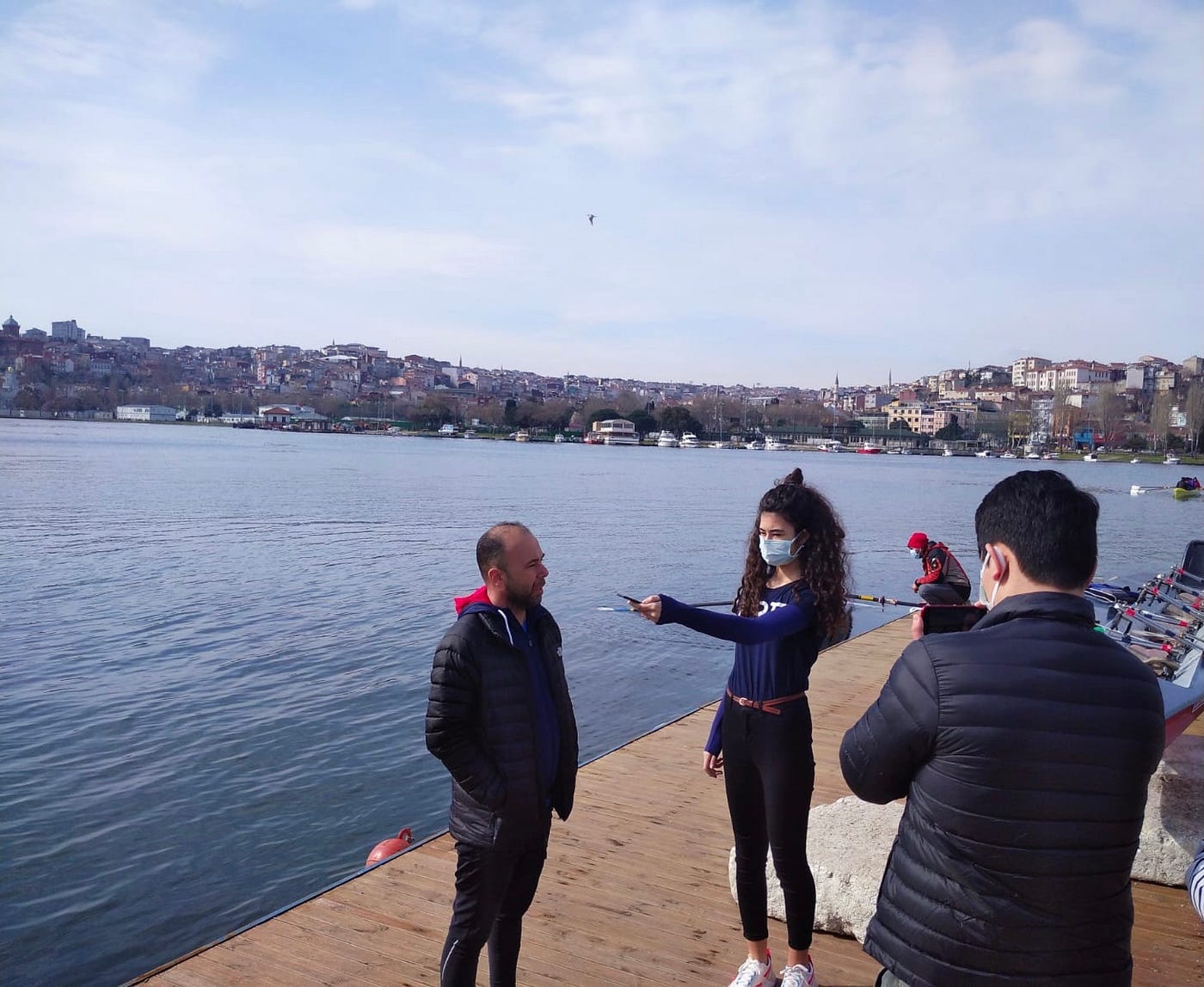
Istanbul Metropolitan Municipality in the 1994 the environmental management company (ISTAC) with more than 40 researchers started a project named the golden horn. They found the sources that has been polluting the golden horn by tacking 20 samples of the water and from the mud. They then proceeded to find ways to get rid of the pollution. They found ways to get rid of the mud or evaluate it. For the first time in turkey they made a mud dam. The solids in the mud stays in the dam while the mud goes in and returns as clean water to the Golden Horn. The mud that is stored in the dam area today has become one of Turkey’s largest entertainment centers (Istanbul Vialand Theme Park). Everyday 11million cubic meters of clean and fresh water from Bosphorus enters the golden horn. As a result of the prevention of waste water, it was observed that algae formed at the place where the streams connect to the golden horn. When a contaminated water environment is cleaned the formation of algae is a sign that life has started. Now there is 48 kinds of fish that lives in the gulf of golden horn. It has become one of the wetlands where migratory birds lodge and one can even practice water sports. This project in the golden horn was deemed worthy of first prize in the metropolis awards given by the world metropolitan municipality union in 2002, considering their efforts to revitalize the historical environment on the shores of the Golden Horn.
BEING A METROPOLITAN CITY AFTER THE 21ST CENTURY
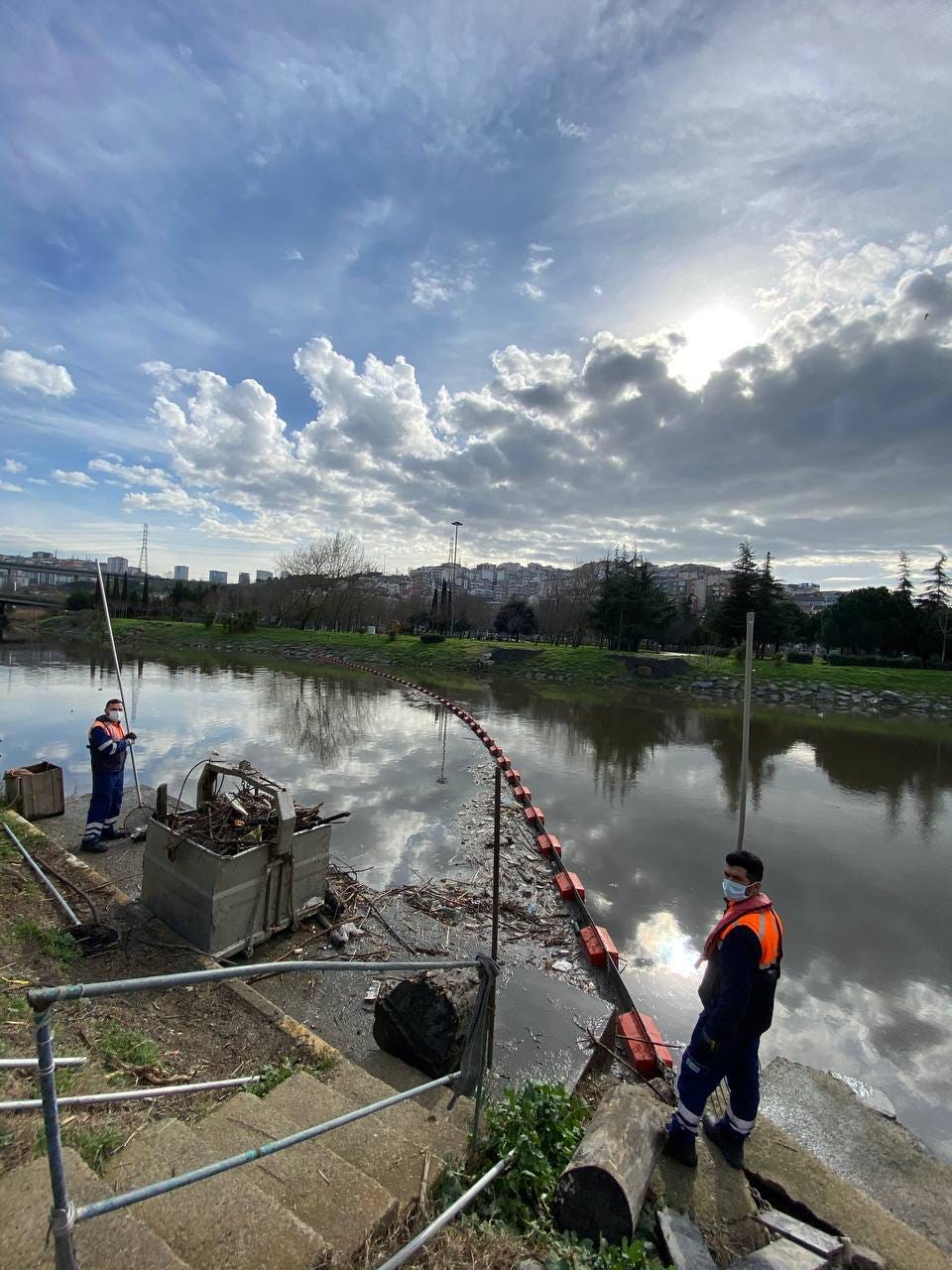
For the past 15 years Golden Horn has been expanding. Istanbul has two seas, which passes through the Bosphorus and has the Golden Horn. In order to preserve the beauty of our Istanbul, the city cleans the sea surface, the sea itself and the beaches where 16 million people live and were about 50 million tourists come and go. The city knows how important the waters are. ISTAC scanned 515 meters of ground from 83 different points, found the waste and send it to recycling companies. And they ensured that this method is sustainable. 5 million square meters of sea surface is cleaned with sea surface cleaning boats (DYT), which are completely developed and produced domestically.
Water pollution problems are solved with solutions applied at the local level first, then at the regional level and lastly at the global level.
Water is our past, present and our future. Take care of our water!
메타데이터
- post_id
- f87f4a4d4ecc
- slug
- one-step-closer-to-pollution-free-waters-f87f4a4d4ecc
- url
- https://medium.com/@ucarbegum/one-step-closer-to-pollution-free-waters-f87f4a4d4ecc
- canonical_url
- https://medium.com/@ucarbegum/one-step-closer-to-pollution-free-waters-f87f4a4d4ecc
- author_url
- https://medium.com/@ucarbegum
- status
- ok
- fetched_at
- 2026-07-28 10:24:52