Traditional Lunar Nodes: Working with the North and South Nodes Traditionally

Disclosure: This post contains affiliate links. If you buy through them, I earn a small commission at no extra cost to you — and it keeps the lights on here at 4phases.com.
The Lunar Nodes Aren’t What Modern Astrology Told You They Were
Here’s the thing about the traditional lunar nodes — they got a makeover somewhere in the twentieth century, and not a good one. Somewhere between Dane Rudhyar and the New Age paperback rack, the North Node became your “soul’s destiny” and the South Node became your “karmic baggage.” Sounds dramatic. Sells books. But it’s not what Ptolemy said. It’s not what William Lilly said. It’s not what any of the classical authorities said. And after forty-plus years working with traditional astrology, I can tell you: the old way is sharper, more practical, and a lot less fuzzy. Let me show you how to actually work with the nodes the traditional way.
What the Traditional Lunar Nodes Actually Are
First: the nodes aren’t planets. They’re not even points in space you can visit. They’re mathematical intersections — the spots where the Moon’s path crosses the ecliptic (the Sun’s apparent path around Earth). The North Node is where the Moon crosses going north. The South Node is exactly opposite. They’re always in opposition. Always.
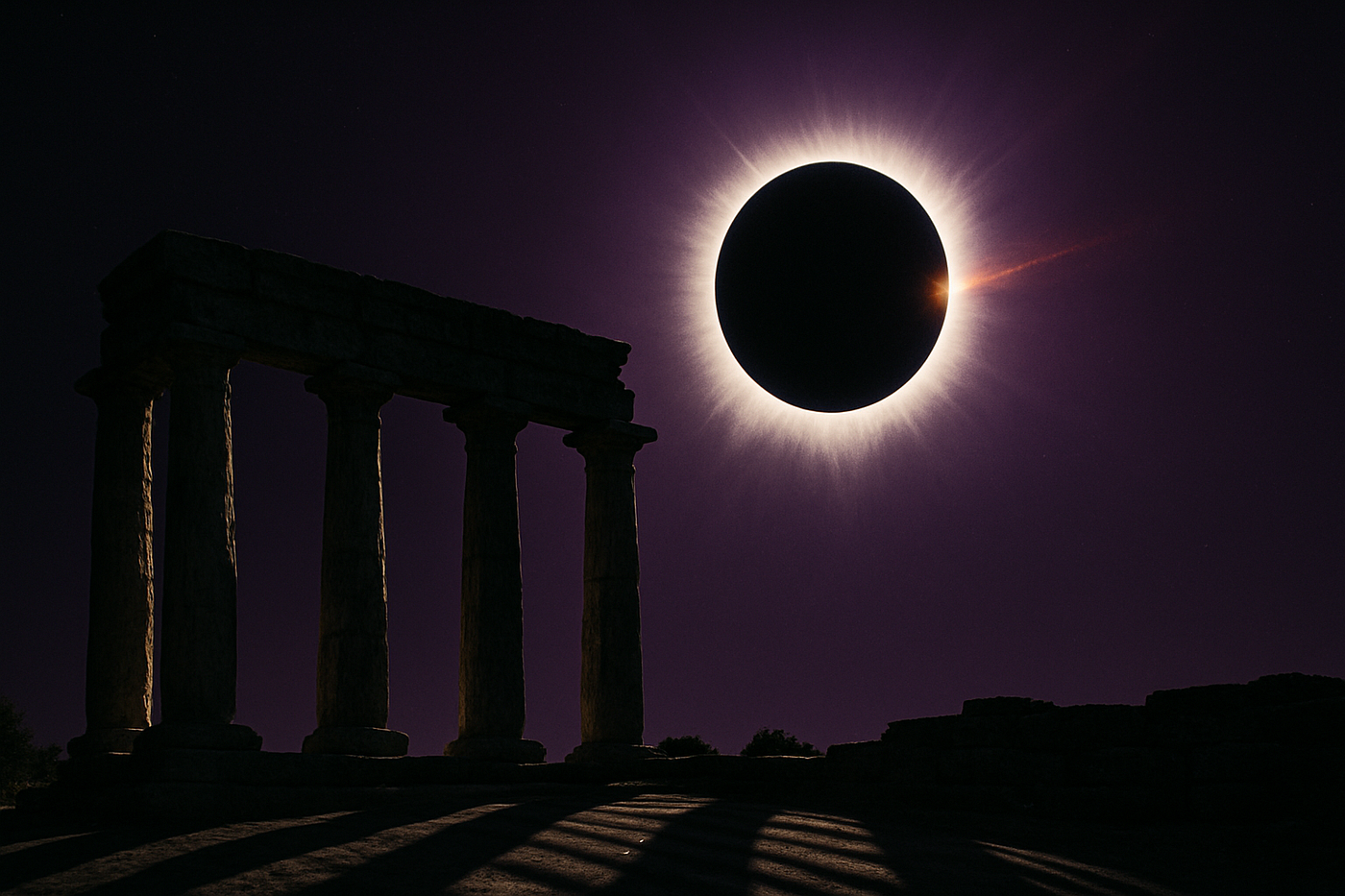
Traditional astrology calls them the caput draconis (Head of the Dragon, North Node) and cauda draconis (Tail of the Dragon, South Node). The dragon image is ancient — the nodes eat the Sun and Moon during eclipses. That’s not poetry. That’s the actual mechanism: eclipses only happen near the nodes. Which is exactly why, right now with the eclipse season building through Cancer and Leo, the nodes deserve your full attention.
The classical take on their nature? The North Node is broadly benefic — it increases and amplifies whatever planet it touches. The South Node is broadly malefic — it decreases, drains, and destabilizes. That’s it. That’s the core of it. No past lives required.
What You’ll Need Before You Start
You don’t need a lot of gear for this. But you do need the right setup.
- A birth chart calculated with the True Node or Mean Node — either works for natal work; I prefer Mean Node for its consistency, but traditional sources predate the distinction, so don’t lose sleep over it.
- Whole Sign Houses. Seriously. Placidus and Koch were not around when Dorotheus was writing. Use the system the technique was built for.
- A copy of William Lilly’s *Christian Astrology* — the section on nodes in horary is compact but essential.
- Your natal chart, printed or on screen. You need to see the whole thing at once.
- Patience with yourself. This is one of those techniques that clicks suddenly, usually around 2 a.m., and then you can’t unsee it.
And if you don’t have your birth chart yet — go get one. Right now. Free. Grab your free birth chart here and come back. I’ll wait. The whole rest of this article makes more sense with your actual chart in front of you.
Lead Magnet: Your free birth chart from 4phases.com is calculated using traditional whole-sign houses with all seven classical planets in place. It’s the right foundation for everything we’re talking about here. Get yours free →
Step-by-Step: Working with the Traditional Lunar Nodes in a Natal Chart
Step 1 — Find the Nodes and Note Their Signs
The nodes move backwards through the zodiac — retrograde, always, roughly 18 months per sign. Your North Node sign tells you the sign’s qualities the North Node amplifies. Your South Node is the opposite sign, draining or releasing those qualities. Write both down. Don’t interpret yet. Just note them.
Traditional sources don’t assign “life themes” to the node signs the way modern astrology does. They note the sign because the sign’s essential nature modifies what the node amplifies or drains. A North Node in Leo amplifies solar, Leo-flavored things. A South Node in Aquarius drains and destabilizes Saturn-flavored, Aquarius things. Keep it that concrete.
Step 2 — Identify the Houses They Occupy
In Whole Sign Houses, the node sits in a whole house, full stop. No cusping, no interceptions to wrestle with. The house tells you the life area being amplified (North Node) or drained (South Node).
North Node in the 10th? Career and public reputation tend to get a boost — things accumulate and build there. South Node in the 4th? Home, family, and private life can feel like a drain or a release point — energy tends to dissipate in that sector rather than accumulate. This is not “your career is your destiny.” It’s more like: the North Node house is where the bucket fills up; the South Node house is where it leaks.
The angular houses — 1st, 4th, 7th, 10th — matter most. A node in an angular house has more clout than one buried in a cadent house. That’s basic accidental dignity logic.
Step 3 — Find the Lord of Each Node’s Sign
This is the step most people skip, and it’s where the real information lives. In traditional astrology, the planet that rules the sign a node occupies becomes the node’s dispositor — its lord. That planet’s condition in the chart tells you how well the node can function.
North Node in Leo? The Sun is its dispositor. Find the Sun in your chart. Is it in a good house? In dignity? In good condition? If the Sun is strong, the North Node’s amplifying effect has fuel behind it. If the Sun is weak — combust, in fall, tucked away in the 12th — the North Node in Leo is running on fumes. The promise is there; the delivery is compromised.
This is the same logic we use for any planet in the chart. Annual profections work the same way — the lord of the year is only as good as its natal condition. The nodes are no different.
Step 4 — Note Any Planets Conjunct the Nodes
A planet within about 5–8 degrees of a node gets the full treatment. Conjunct the North Node, a planet’s significations are amplified and increased — for better or worse depending on the planet’s nature. Conjunct the South Node, those same significations are drained, scattered, or turned loose in ways that can be destabilizing.
Jupiter conjunct North Node? Jupiter’s natural abundance gets a megaphone. Mars conjunct South Node? Martian energy — anger, drive, ambition — tends to dissipate or create chaos rather than focus. Saturn conjunct North Node is interesting: it can mean steady accumulation, but with a Saturnine slowness and weight. Don’t panic if a benefic hits the South Node; just know that planet’s gifts tend to flow outward rather than accumulate.
Step 5 — Watch the Nodes in Transits and Profections
Transiting planets crossing the nodes are significant — especially the traditional seven. When a transiting planet conjuncts your natal North Node, it activates that amplifying quality temporarily. When it hits your South Node, there’s often a release, a loss, or an outflow of the planet’s significations.
Eclipses — which only happen near the nodes — are the big guns. The coming eclipses in Leo and Pisces this summer are serious business precisely because eclipse energy is concentrated, fast, and often irreversible. If an eclipse conjuncts a natal planet, you feel it. If it conjuncts your natal nodes, you’re getting double dragon energy — and not the good arcade-game kind.
The Nodes in Horary — A Different Animal
In horary astrology, the nodes function as modifiers rather than significators. Lilly is pretty clear on this: the North Node with a significator tends to strengthen and enlarge the matter; the South Node tends to corrupt or reduce it. It’s a thumb on the scale, not a separate character in the story.
I’ve seen this play out in practice. When a horary significator is conjunct the North Node, the matter tends to come to fruition with less struggle than you’d expect. South Node conjunction? Even a technically favorable chart can disappoint. Horary has a real track record, and the nodes are part of why it works — they’re not decorative.
Common Mistakes That’ll Send You Down a Rabbit Hole
Treating the nodes like planets. They’re not. They don’t rule signs. They don’t have houses. They modify; they don’t signify on their own.
Importing the “destiny vs. karma” framework. That’s a twentieth-century invention, not classical doctrine. It’s not useless — it’s just not traditional. If you want to use it, fine, but flag it as modern interpretation and keep it separate from your traditional analysis.
Ignoring the dispositor. The lord of the node’s sign is the key that unlocks what the node can actually do. Skip this step and you’re reading half the page.
Over-weighting the nodes at the expense of the planets. The seven traditional planets are the engine of the chart. The nodes are the road conditions. Don’t confuse one for the other. If you want to understand why traditional astrologers keep the focus on the seven planets, my piece on traditional retrograde meaning gives you a good sense of the framework.
Using intercepted-house logic with nodes. If you’re working in Whole Sign Houses — and you should be — this problem doesn’t arise. But if you wander into Placidus and start worrying about intercepted nodes, you’ve already left the traditional framework behind.
Troubleshooting — When the Nodes Don’t Seem to Mean Anything
If you’ve done all five steps and the nodes feel inert in a chart, check three things.
- Are any planets actually conjunct them? If not, the nodes are background radiation rather than foreground signal. They matter most when they’re activated by a conjunction.
- Is the dispositor strong enough to carry weight? A debilitated dispositor means the node’s amplifying quality has no vehicle. It’s a gas pedal connected to nothing.
- Are you in a profection year that activates the node’s house? If the profected Ascendant hits the house containing the North or South Node, that year tends to bring node-flavored events to the surface. Check your annual profection — it’s the easiest way to time when natal factors wake up.
What to Expect When You Work This Way
Here’s what I can tell you from four decades of looking at charts this way: the traditional lunar nodes are quieter than their modern reputation suggests, and that’s a feature, not a bug.
They’re not the loudest thing in most natal charts. They don’t override the planets. But when they’re active — conjunct a natal planet, hit by a major transit or eclipse, activated by profection — they punch hard. The North Node amplifies what’s already there. The South Node loosens what’s already shaky. That’s consistent. That’s predictable. That’s what makes it useful.
I had a client years ago — North Node conjunct Jupiter in the 2nd house, dispositor Sun in decent condition in the 11th. Every time Jupiter transited the North Node, something financial opened up for her. Not magically, not without effort — but the timing was unmistakable. The South Node conjunct Saturn in the 8th? Losses and endings in shared resources and inheritances, every time Saturn was activated. Nothing mystical about it. Just the mechanism working.
The Wikipedia entry on lunar nodes gives you a solid astronomical grounding if you want to understand the geometry before you interpret the astrology. I always recommend knowing what the thing actually is before you tell someone what it means.
A Book That Gets This Right
If you want to go deeper on the traditional lunar nodes in both natal and horary work, Benjamin Dykes’s translations of the classical sources are where you go. His edition of Bonatti’s *Book of Astronomy* covers the nodes in a way no modern book does — in the actual words of someone who believed in and used this system every day.

Book of Astronomy — Guido Bonatti (trans. Benjamin Dykes)
The most complete classical source on traditional astrology in English — nodes, planets, houses, elections, horary. This is the phone book of traditional astrology, and I mean that as the highest possible compliment.
It’s dense. It’s not a beach read. But if you want to know what Bonatti actually said about the Head and Tail of the Dragon — not what some 1990s astrologer said Bonatti said — this is the only place to go. I also keep it on the same shelf as my recommended eclipse-season reading, because the two subjects are inseparable.
The Short Version, If You’ve Already Scrolled Here
Traditional lunar nodes: not planets, not karma, not destiny. They’re mathematical points that amplify (North) or drain (South) whatever they touch. Work them through their sign, their house in Whole Sign, their dispositor, and any conjunct planets. Watch them in transits, profections, and — especially — eclipses.
It’s a quieter, more concrete reading than the modern approach. And in my experience, it’s a more honest one.
Start with your own chart. Get the free birth chart from 4phases.com, find your nodes, walk through the five steps above, and see what you notice. I’d love to hear what you find — drop it in the comments.
Want this in your inbox? Subscribe to the 4phases.com weekly newsletter — traditional astrology, current sky, no mystical hand-waving. Just what the planets are doing and what to do about it. Sign up and grab your free birth chart at the same time →
메타데이터
- post_id
- f8930e1f722a
- slug
- traditional-lunar-nodes-working-with-the-north-and-south-nodes-traditionally-f8930e1f722a
- url
- https://medium.com/4-phases-astrology/traditional-lunar-nodes-working-with-the-north-and-south-nodes-traditionally-f8930e1f722a
- canonical_url
- https://medium.com/4-phases-astrology/traditional-lunar-nodes-working-with-the-north-and-south-nodes-traditionally-f8930e1f722a
- author_url
- https://medium.com/@bnbliss
- status
- ok
- fetched_at
- 2026-08-01 08:42:06