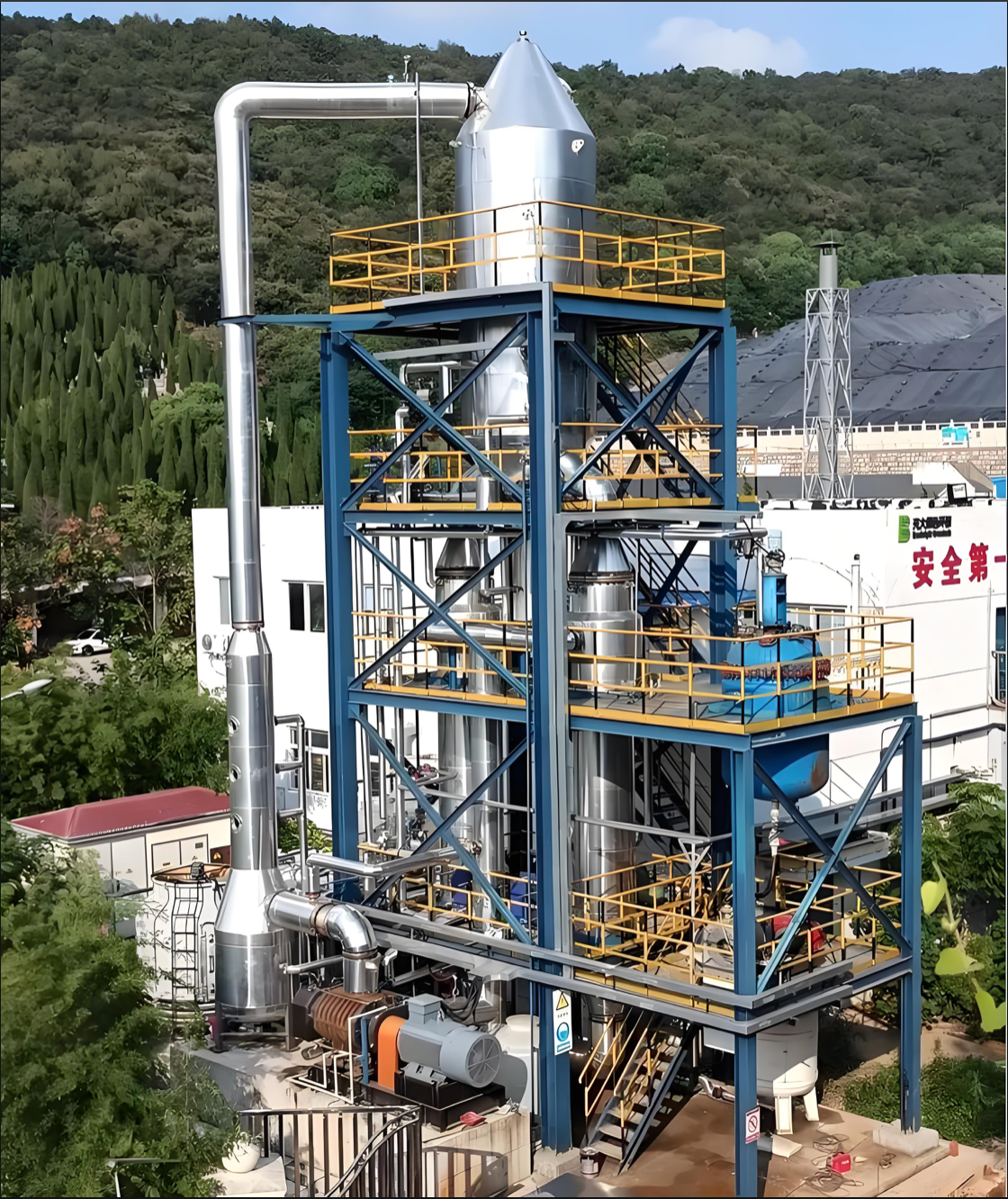
Evaporation technology TVR vs. MVR, which one to choose?
Hello everyone, I am your old friend, specializing in those “boiler tanks” in the food chemical industry — especially crystallizers and…
Evaporation technology TVR vs. MVR, which one to choose?
Hello everyone, I am your old friend, specializing in those “boiler tanks” in the food chemical industry — especially crystallizers and evaporators. We all know that in these industries, evaporation and concentration are a real “big spender”, especially in terms of energy consumption. How and how much we save directly determines the cost competitiveness of our products. Today, let’s talk about two popular “steam-saving” technologies: thermal vapor recompression (TVR) and mechanical vapor recompression (MVR), and make a cost-effective “calculation” and selection guide.
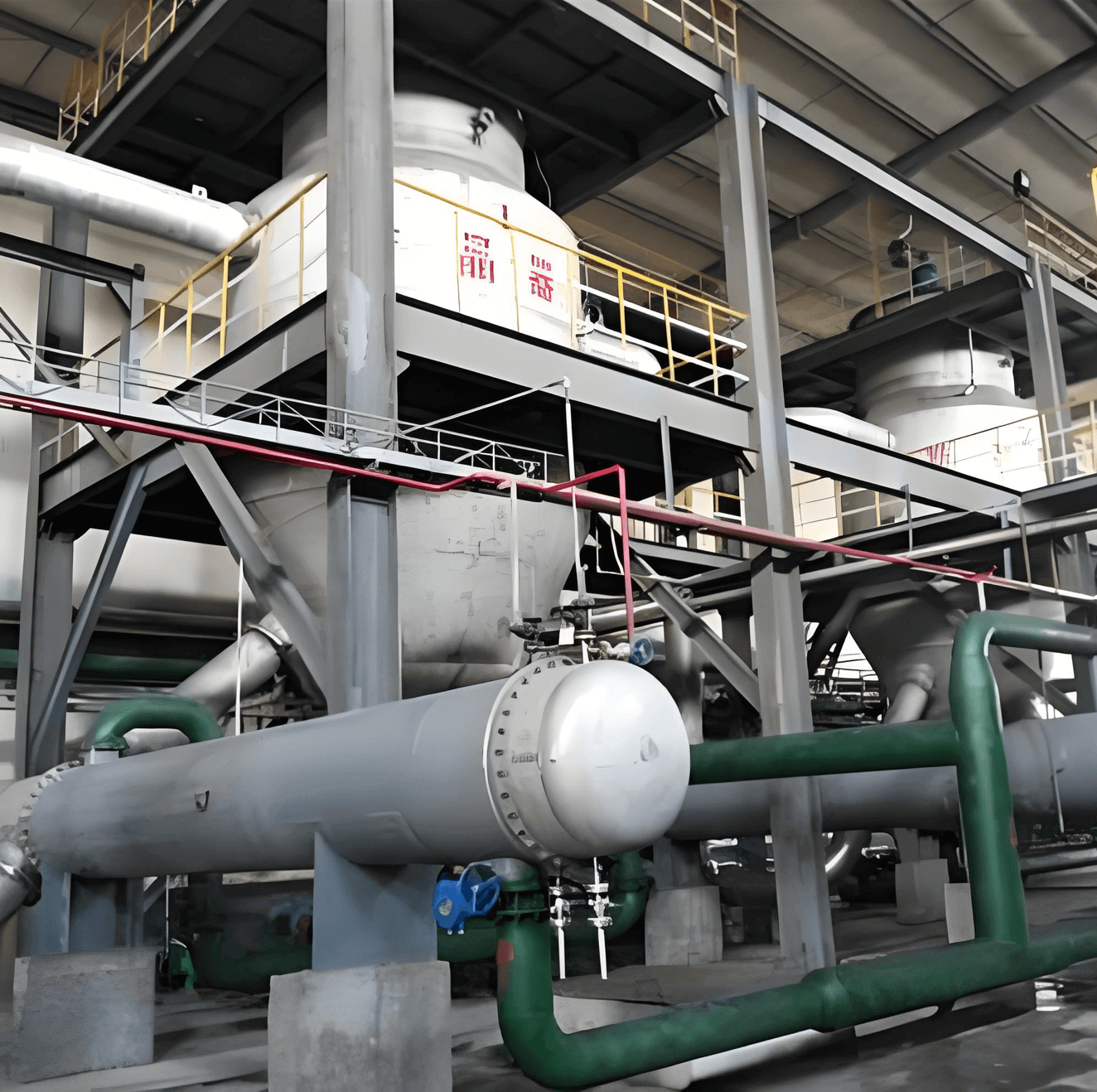
MVR crystallizer
How can you save money by recompressing steam? To put it simply, whether it is TVR or MVR, their core idea is to find a way to reuse the waste heat of the evaporated “secondary steam”.
TVR (Thermal): It is like a “steam booster”. It uses a small amount of high-pressure fresh steam (called “working steam”) to “suck” the secondary steam in through the nozzle. After “mixing”, the pressure and temperature will increase, and then it can be returned to the furnace for reuse. It’s like a “hybrid” technology that uses small and broad skills. This technology mainly consumes fresh steam, has low equipment investment, simple structure and low maintenance costs. Operating costs are directly affected by steam prices.

MVR crystallizer
MVR (Mechanical): This is even more powerful. The compressor (that is, the “big motor”) is directly used to “pump up” the secondary steam, forcing it to high temperature and pressure, turning it into a qualified heat source. It pursues “self-sufficiency” and basically no longer needs fresh steam. MVR mainly consumes electricity. Its advantage is that its energy consumption is astonishingly low. The operating cost mainly depends on the electricity price. But correspondingly, its equipment investment is very high, and the core compressor and motor are expensive. What is an MVR evaporator? Principles and industrial applications.
Cost-effectiveness PK: One relies on “skills” and the other relies on “brute force” From the perspective of energy consumption, MVR is the main power consumer and can reduce steam consumption to almost zero, making the operating cost very competitive. TVR mainly consumes steam and can save 30% to 50% of steam, but it cannot completely eliminate dependence on fresh steam.
From a monetary perspective, assume that fresh steam costs $30/ton and the electricity price is $0.1/kWh. For some projects with large evaporation volume, MVR may have to pay hundreds of thousands or even millions of dollars more to buy equipment in the initial stage, but it is normal to save the initial investment in two or three years. The operating costs are low, but the initial investment is huge. TVR is relatively “moderate”, with low equipment investment and short payback period, but operating costs will fluctuate as steam prices rise. If your steam is very cheap, or it’s just a small project, TVR may be a more “savoury” choice.
Selection Guide: Don’t blindly pursue “tallness” Which one to choose is not based on which one is “more advanced in technology”, but depends on your “work at hand” and “money in your pocket”.
Look at the evaporation capacity (scale): If the evaporation capacity is very small (such as a few tons of water per hour), TVR is the first choice. The investment in MVR is too high and is not cost-effective. Large-scale projects with an evaporation capacity of several hundred tons/hour require MVR, otherwise the operating costs will drag you down.
Look at the secondary steam temperature rise requirements (temperature difference): If your solution has a high boiling point and requires a very high temperature rise from the compressor to meet the requirements, the efficiency of the MVR will drop rapidly. The temperature rise that TVR itself can provide is limited. If the temperature rise is large, the effect will be poor. Let you understand the difference between MVR evaporator and traditional evaporation methods.
Look at the characteristics of the solution (“fouling” and “corrosion”): MVR’s compressor is a “squeamish big baby”. If your secondary steam is severely corrosive or easy to scale, it requires very expensive special materials (such as titanium alloy) or a complex cleaning system, which will drive up the MVR investment to the point of collapse. At this time, TVR may be more solid.
In general, if you want to significantly reduce operating costs in the next ten years, and your project is large enough, MVR is definitely a “once and for all” solution worth spending money on. If you just want to make a frugal renovation on the existing basis, or have limited funds, TVR is the “little helper” that is “short-term, fast,” and returns quickly.
There is no “standard answer” to this matter, only the “best for you” solution, which requires detailed analysis of specific issues. Don’t listen to the salesman’s lies. The best way is to understand your own working conditions and energy consumption costs clearly.
Thank you for watching, and we hope it can help resolve the issues you are facing.
Vanoo is a company headquartered in Shanghai, China, dedicated to the research, development, and application of energy-saving, environmentally friendly technologies and equipment for the food and chemical industries.
If you want to learn more, The secret to saving money in the food and chemical industry: multi-effect evaporation. please click to read.”
메타데이터
- post_id
- f89d81908724
- slug
- evaporation-technology-tvr-vs-mvr-which-one-to-choose-f89d81908724
- url
- https://medium.com/@dylanlian9/evaporation-technology-tvr-vs-mvr-which-one-to-choose-f89d81908724
- canonical_url
- https://medium.com/@dylanlian9/evaporation-technology-tvr-vs-mvr-which-one-to-choose-f89d81908724
- author_url
- https://medium.com/@dylanlian9
- status
- ok
- fetched_at
- 2026-07-15 05:43:31