Black Rain Over Iran: When Geopolitics Falls on Civilians
From Tehran to Hiroshima, history reminds us that when leaders wage war, ordinary people inherit the poison.
Black Rain Over Iran: When Geopolitics Falls on Civilians
From Tehran to Hiroshima, history reminds us that when leaders wage war, ordinary people inherit the poison.
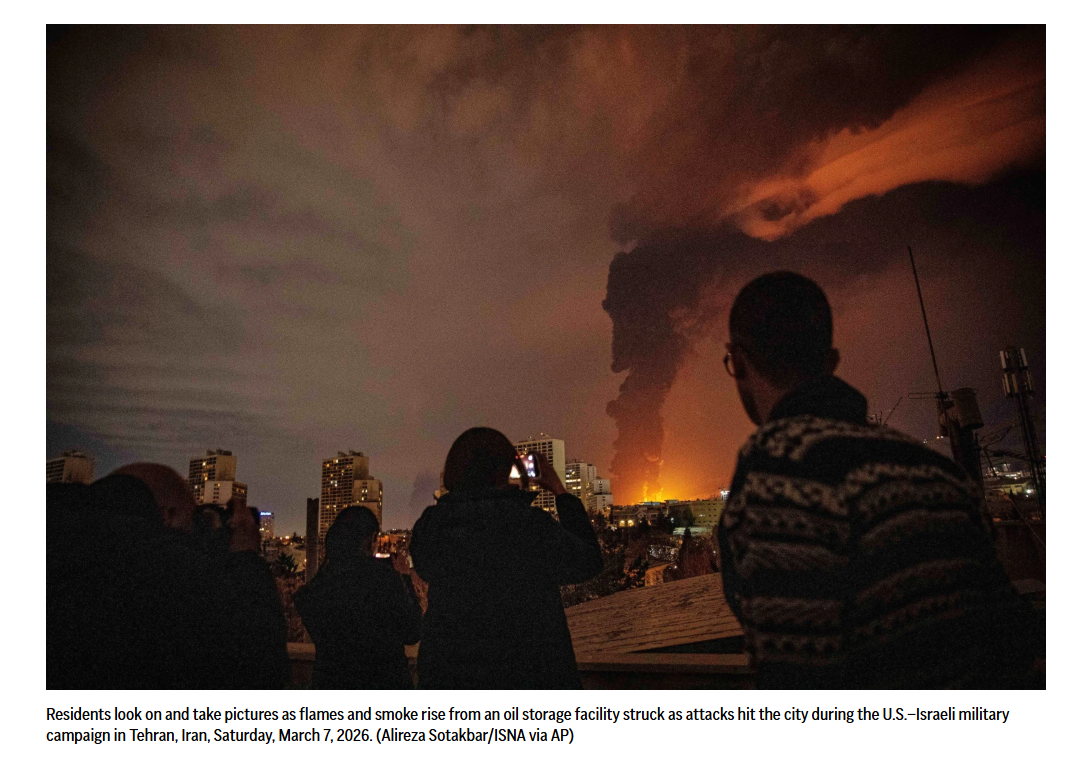
When leaders choose war, why does the sky punish ordinary people?
A child in Tehran did not order an airstrike. A mother filling water bottles did not plan a military response. A student revising for exams, a taxi driver stuck in traffic, an old man opening his shop, none of them wrote foreign policy.
And yet, when war begins, it is often ordinary people who breathe it first.
That is why the reports of “black rain” over Tehran feel so disturbing, not just as a news headline, but as a warning about what modern warfare really does to human life.
In recent weeks, after strikes hit oil depots and fuel infrastructure around Tehran, massive fires sent thick black smoke, soot, sulfur compounds, and toxic hydrocarbons into the sky. Scientists explain that when these particles rise into the atmosphere and mix with moisture or rain-bearing clouds, they can fall back to the ground as dark, contaminated rainfall, what people are now calling black rain. Experts quoted by Nature, The Guardian, and Reuters say such rain can carry harmful pollutants that irritate the skin, damage the lungs, contaminate water, settle into soil, and threaten crops and public health.
So yes , this is science. But it is also tragedy.
Because this is what war looks like when it leaves the battlefield and enters the air, the water, the body, the Unborn.
And history has seen this before.
After the atomic bombings of Hiroshima and Nagasaki, survivors spoke of another terrifying phenomenon, black rain. In those cases, the rain was mixed not just with ash and soot, but with radioactive fallout. The people who survived those bombings, known as the Hibakusha carried that suffering for decades, cancers, trauma, stigma, chronic illness, and fear passed across generations. The radioactive black rain of 1945 is not scientifically identical to what Tehran is experiencing today, but the human lesson is painfully similar, war never ends when the explosion ends.
And this is where the moral question becomes impossible to ignore.
When leaders speak of “strategy,” “retaliation,” and “national interest,” do they ever imagine a child being told not to touch the rain?
Health agencies and experts say people in affected areas should stay indoors, avoid direct rain exposure, keep drinking water covered, wash exposed skin, reduce smoke inhalation, and use a well-fitted mask such as an N95 if they must go outside. These are necessary precautions. But they also reveal something heartbreaking, the common man is once again being handed survival instructions for a war he never chose.
And perhaps that is the deepest wound of all.
Not only can innocent people lose their homes, peace, and future to geopolitics , now even the sky above them can become hostile.
So before we debate power, alliances, deterrence, and revenge, maybe we should ask a simpler question.
If the innocent must inhale the consequences of every war, then who exactly is war ever protecting?
Written by a human, with AI-assisted research and editorial support.
메타데이터
- post_id
- f8a1b1cbbdcf
- slug
- black-rain-over-iran-when-geopolitics-falls-on-civilians-f8a1b1cbbdcf
- url
- https://medium.com/@theobservatory111/black-rain-over-iran-when-geopolitics-falls-on-civilians-f8a1b1cbbdcf
- canonical_url
- https://medium.com/@theobservatory111/black-rain-over-iran-when-geopolitics-falls-on-civilians-f8a1b1cbbdcf
- author_url
- https://medium.com/@theobservatory111
- status
- ok
- fetched_at
- 2026-08-30 04:50:19