How Ireland Dragged the EU Into Recession
Uncover the hidden forces behind Dublin’s economic shock and its ripple effects across Europe.
How Ireland Dragged the EU Into Recession
Uncover the hidden forces behind Dublin’s economic shock and its ripple effects across Europe.

Image used from statista
I’ve been watching the markets for a while now, and I have to be honest with you, what’s happening right now feels different. Not in a “this is normal volatility” way, but in a “several things are breaking at the same time” way. And when I sit down and actually connect the dots, it’s hard not to feel a little uneasy.
So let’s talk about it. Properly. No sugar-coating.
The Headline Number That Got Everyone Talking
So Eurostat, the EU’s statistics body, dropped its revised GDP numbers for the first quarter of 2026 last week, and honestly, the figure caught a lot of people off guard. The EU economy actually shrank by 0.1% quarter on quarter. That’s a real downgrade from the modest 0.1% growth Eurostat had originally projected back in late April.
My first reaction, and I think a lot of people’s first reaction, was to read this as just more proof that Europe’s economy is stuck in neutral. But when you actually dig into where this number is coming from, the story gets a lot more specific and honestly, a lot more interesting.
One Country Basically Wrecked the Whole Continent’s Number
Here’s the part that really surprised me. Almost this entire downward revision traces back to a single country, Ireland. Ireland’s GDP apparently shrank by a jaw-dropping 12.1% in the first quarter of 2026. That’s not a typo, and that’s not a rounding error. That’s a genuinely massive contraction for any economy to post in three months.
And here’s the kicker. If you simply remove Ireland from the EU-wide calculation, the rest of the bloc actually grew by around 0.2%, which is even slightly better than what Eurostat had originally forecast. So in plain terms, one small country with an outsized economic footprint single-handedly dragged the entire EU’s growth figure into negative territory.
A Quick Reality Check Before We Go Further
I want to pump the brakes for a second here because a couple of things need to be said clearly. First, technically speaking, a recession usually means two straight quarters of negative growth, so it’s a bit early to officially call this a recession for the EU.
That said, there’s a real chance the second quarter could also come in negative, especially with all the disruption from the Iran conflict still working its way through global markets.
Second, it wouldn’t really be fair to put this entirely on Ireland’s shoulders. Ireland only makes up roughly 3% of the EU’s total GDP. The only reason its swing could move the entire bloc’s number is because the rest of the EU wasn’t exactly firing on all cylinders to begin with.
If the broader European economy had been growing strongly, Ireland’s wobble wouldn’t have mattered nearly as much. So this is really a story about Ireland exposing how fragile the EU’s overall growth picture already was.
Why Ireland’s Numbers Are So Weird in the First Place
This is where things get genuinely fascinating, and honestly, a little absurd once you understand the mechanics. The core reason behind Ireland’s wild GDP swings comes down to pharmaceutical companies. A lot of major pharma giants set up their manufacturing operations in Ireland purely for tax reasons. Ireland’s corporate tax rate sits at 12.5%, which is one of the lowest in the world, well under the 21% rate in the US.
But it gets cleverer than just a low tax rate. These pharma companies sell drugs manufactured in Ireland to their own subsidiaries in the US and elsewhere at inflated prices. That makes it look like all the profit is being generated in Ireland, while the US and other subsidiaries appear to make little to no profit, sometimes even a loss on paper.
Less profit on paper in higher-tax countries means less tax owed overall. It’s a pretty smart accounting trick if you think about it, even if it does distort national economic data in the process.
How a Trump-Era Tax Law Accidentally Made This Worse
Here’s something I found genuinely ironic. This whole pattern of shifting profits through Ireland was actually encouraged, even if unintentionally, by corporate tax reforms Trump introduced during his first term, specifically the Tax Cuts and Jobs Act. That law created something called GILTI, short for Global Intangible Low Taxed Income, which was supposed to crack down on US multinationals dodging taxes by booking profits overseas.
But because of various exemptions baked into the law, the effective GILTI rate usually ends up around 10 to 12%, roughly half the standard 21% US corporate rate. That gap created a clear incentive for multinationals to keep production offshore rather than bring it home. And that’s exactly why pharmaceutical exports from Ireland to the US started booming after 2017. The law meant to fix the problem ended up reinforcing it instead.
The Tariff Scare That Triggered a Frontloading Rush
Now here’s where last year’s story comes in, and it directly explains this year’s crash. Early last year, Trump signaled he might slap tariffs on Irish pharmaceutical exports, with the stated goal of bringing manufacturing back to American soil.
For pharma companies, this was a genuinely scary prospect. Tariffs wouldn’t just make it harder to sell into the US market, the biggest pharmaceutical market on earth, they’d also undercut the whole strategy of selling to their own US subsidiaries at inflated prices, since higher prices combined with tariffs would mean even higher costs.
So what did these companies do? They rushed to export as many drugs as possible from Ireland to the US before any tariffs could kick in. This is called frontloading, and it wasn’t unique to pharma either, it happened across the broader US economy as importers scrambled to stockpile goods ahead of expected tariffs.
The result for Ireland was a genuine export surge, and since exports count directly toward GDP, Ireland’s GDP shot up by 8.8% in the first quarter of 2025 alone. That single surge accounted for something like 40% of the entire EU’s headline GDP growth that year. Ireland basically carried Europe’s growth story on its back for a while.
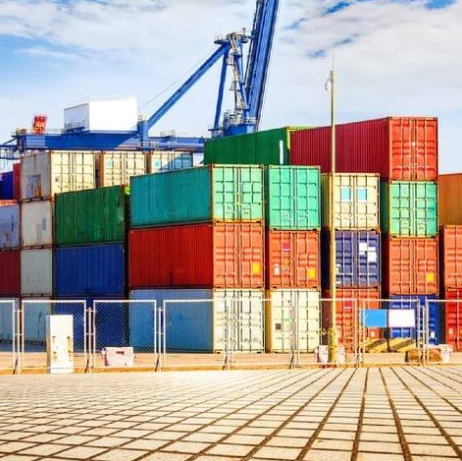
Image used from chemobiologicals
Why the Boom Turned Into a Bust
Fast forward to now, and the picture has flipped completely. It’s become pretty clear that Trump’s tariffs aren’t going to be nearly as disruptive as everyone originally feared. Part of that is legal, since most of the broader “Liberation Day” tariffs got struck down by the Supreme Court, forcing the administration to look for other, legally shakier ways to achieve the same goal.
But the bigger reason is that pharmaceutical trade between the EU and US is actually covered under the EU-US trade deal, which caps tariffs on Irish pharma exports at a much more manageable 15%, nowhere near the headline 100% tariff figure that got floated for pharmaceutical imports generally.
On top of that, most of the big pharmaceutical names, companies most of us would recognize from our own medicine cabinets, have quietly negotiated their own arrangements with the White House, agreeing to invest certain amounts in the US in exchange for reduced tariff exposure.
So, in the end, the disruption Big Pharma braced for in early 2025 just didn’t materialize the way they expected. Naturally, they’ve gone back to business as usual. Irish exports to the US have settled back down to roughly where they were in 2024, and Ireland’s GDP has followed the same path right back down. The same export boom that propped up the EU’s growth numbers last year is now the exact reason behind this year’s bruising contraction.
What’s Actually Happening Inside Ireland’s Real Economy
This next part is something I think gets lost in all the headline noise, and it’s honestly the most reassuring part of this whole story. While Ireland’s headline GDP number looks disastrous, that figure doesn’t really reflect what’s happening on the ground for actual people living and working there. Ireland’s statistics office tracks a separate measure called Modified Domestic Demand, which strips out all these globalization and multinational distortions and focuses purely on personal spending, government spending, and domestic investment.
That measure actually rose by 0.6% during the same quarter. Personal spending was up 0.6% as well, and sectors outside the multinational bubble grew by 0.4%. Meanwhile, the multinational-dominated sectors, the ones driving all this volatility, contracted by a staggering 27.1% in the same period. So you’ve got a tale of two economies here: a real, steady domestic economy quietly ticking along just fine, and a headline GDP figure being yanked around wildly by accounting decisions made in pharmaceutical boardrooms thousands of miles away.
My Take on What This Really Means
Putting it all together, here’s what I see: Ireland just posted the steepest economic contraction anywhere in the EU for this quarter, easily outpacing other countries that also saw small declines. But I don’t think this tells us much at all about the real health of either Ireland’s economy or Europe’s broader economy.
What it really tells us is how unreliable headline GDP figures become when a tiny country hosts an outsized chunk of global pharmaceutical manufacturing purely for tax reasons.
I genuinely think this should make all of us a little more skeptical the next time we see a dramatic swing in Irish GDP data, whether it’s shockingly good or alarmingly bad. The real story is usually buried underneath, in numbers like domestic demand and consumer spending, not in the headline figure that grabs all the attention.
I won’t pretend I know exactly how this plays out from here. Nobody really does. But the pattern here feels less like genuine economic distress and more like an accounting quirk getting mistaken for a continental crisis.
What do you think? Should statistical authorities start reporting Ireland separately from the rest of the EU to avoid these kinds of misleading headlines? I’d genuinely like to hear your take, drop your thoughts in the comments and let’s talk about it.
Reference
메타데이터
- post_id
- f8b5e0272ec3
- slug
- how-ireland-dragged-the-eu-into-recession-f8b5e0272ec3
- url
- https://medium.com/geopolitics-beyond/how-ireland-dragged-the-eu-into-recession-f8b5e0272ec3
- canonical_url
- https://medium.com/geopolitics-beyond/how-ireland-dragged-the-eu-into-recession-f8b5e0272ec3
- author_url
- https://medium.com/@quotesnjokes07
- status
- ok
- fetched_at
- 2026-06-20 20:29:01