On Thought and Life Beyond Completion — No Completion, Only Update
Summary
On Thought and Life Beyond Completion — No Completion, Only Update

Summary
Writing is not the completion of thought, but a save file that stores a momentary pause outside the mind. Preservation, publication, and evaluation are not progress. What matters is resuming from that point and continuing to revise one’s questions and perspectives. In a mode of thinking that rejects telos — an endpoint or final goal — meaning and value are never fixed. What remains essential is only the fact that the movement continues, as it does for all life.
Socrates left no written texts behind. What he seems to have rejected was not record-keeping itself, but the fixing of questions into a “final version.” A question, by nature, wavers, is challenged, distorted, and reshaped through dialogue. That ongoing motion is what thinking is. An answer, at best, is nothing more than a pause screen. Writing is the technology that saves that pause screen outside the mind. The moment it is saved, thought temporarily freezes.
A text is a frozen specimen of thought. That does not make it harmful. The problem begins when we attach labels to the specimen such as “complete,” “finished,” “a result,” “a good stopping point.” In most cases, texts are saved, distributed, and evaluated, and this entire process is somehow mistaken for progress. But circulation does not advance thought. At best, it just moves inventory.
In this sense, writing closely resembles save data in a game. Saving is necessary, but it is not the goal. The only meaning of a save point lies in resuming play from there. Staring at a save point as proof of how far you’ve come, or showing it to others, does not move the game forward even a single step. In real intellectual life, this confusion is surprisingly common. Saved positions become goals, and the same area gets replayed over and over.
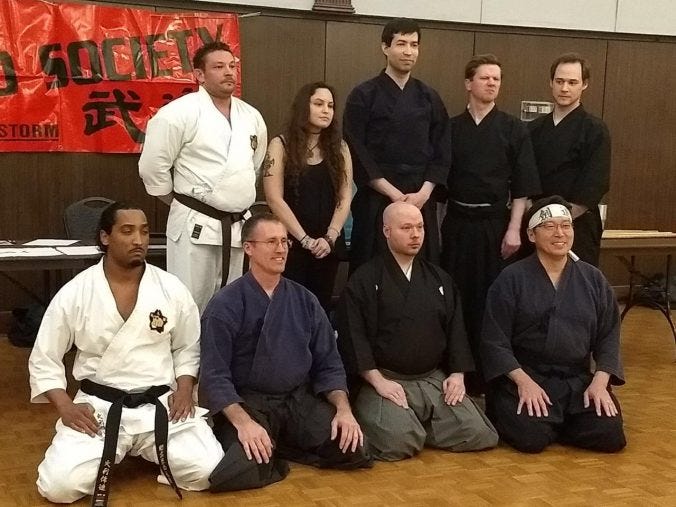
Western thought has often been structured, since ancient Greece, around the idea of telos — a purpose or final endpoint. One sets a goal in advance, optimizes toward it, reaches it, and then stops thinking. In this framework, “completion” or “publication” becomes the ending. The concept of ‘dō’, as in disciplines like judo or aikido, operates in a different dimension altogether. In martial arts, tea ceremony, or calligraphy, there are no certificates of completion. There is only the strange fact that the practice somehow continues today as well. No endpoint is set, and no external evaluation function is installed.
The absence of a telos does not mean nihilism. It simply means that meaning is not fixed. Because meaning is unfixed, learning and thinking have no stopping condition. Questions like “Is this useful?” or “Is this evaluated?” become secondary byproducts that attach themselves later. What matters is only whether the activity is continuing.
This view is closer to a sandbox game than an RPG. There are no explicit quests and no ending. Without victory conditions, defeat is not defined either. One could call it meaningless. But precisely because it is meaningless, comparison and competition become unnecessary.
I have no intention of rejecting the externalization of thought through writing. On the contrary, whether through diaries, social media, academic papers, or books, almost no one can sustain thought without externalizing it in some form. Writing stabilizes thought temporarily and constructs a provisional foothold for moving forward.
Writing can trigger the advance of thought, but it does not guarantee progress by itself. Progress occurs only when what has been written becomes a stepping stone that updates one’s questions or perspectives. If nothing is updated, it is merely storage.
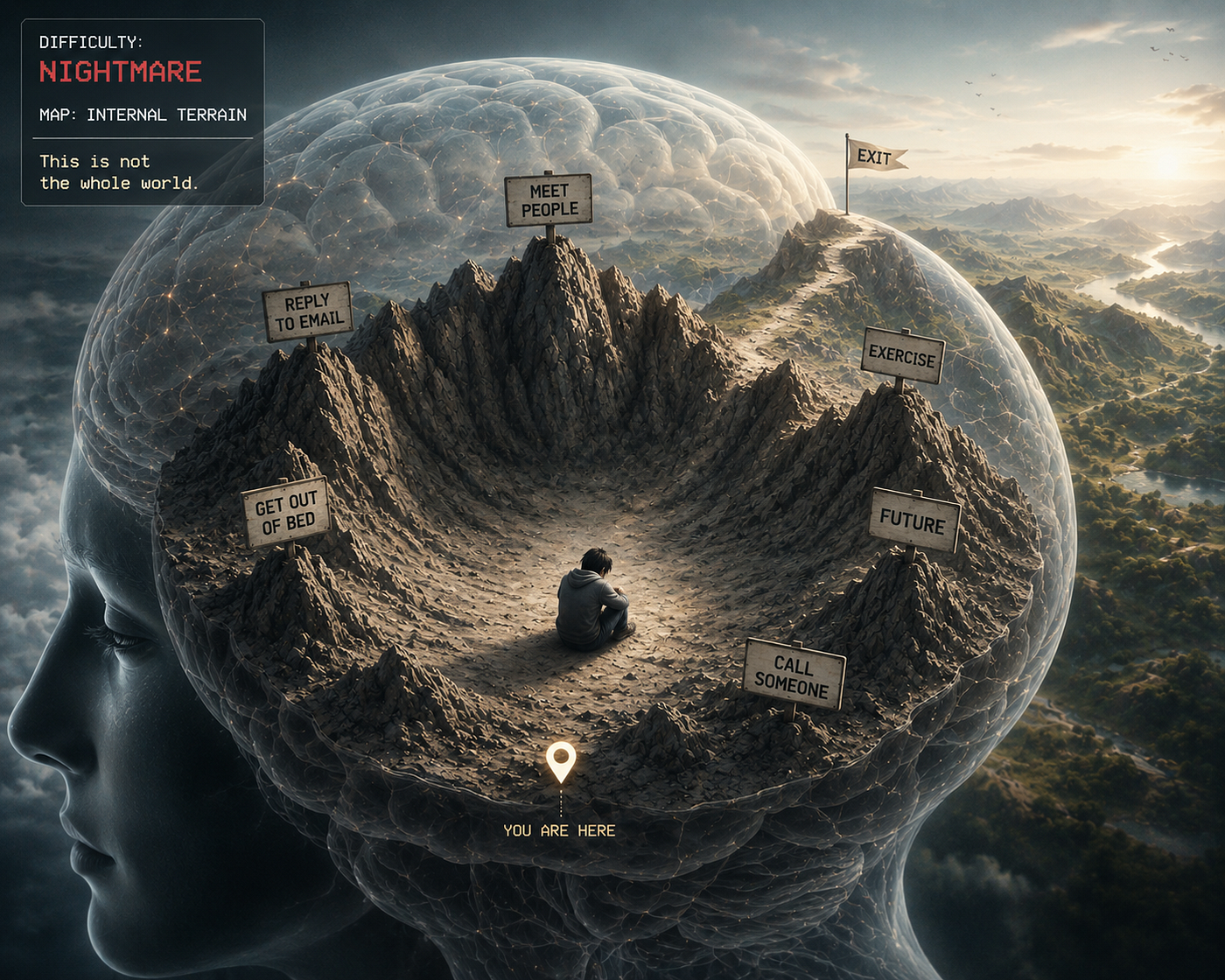
A text is nothing more than save data. What matters is not mistaking saving or publishing for the ending. One must resume from there and continue. Redraw the map. Shift the viewpoint. Keep updating the questions.
The Way, as understood in practices like martial arts, belongs to a different dimension altogether from externally assigned values or purposes. Its essence lies in remaining within a movement that has no endpoint. In that state, questions such as “What is this for?” or “Does it have meaning?” recede into the background.
What is required is neither reason nor justification, but only the fact that the movement is continuing — as is the case with all life.
Originally published at https://konomura.substack.com.
메타데이터
- post_id
- f8f03673560c
- slug
- on-thought-and-life-beyond-completion-no-completion-only-update-f8f03673560c
- url
- https://medium.com/@knagat/on-thought-and-life-beyond-completion-no-completion-only-update-f8f03673560c
- canonical_url
- https://medium.com/@knagat/on-thought-and-life-beyond-completion-no-completion-only-update-f8f03673560c
- author_url
- https://medium.com/@knagat
- status
- ok
- fetched_at
- 2026-06-27 18:20:27