How ACP Sheet Cladding Performs During Extreme Summer Conditions
Extreme summer temperatures are no longer occasional design considerations. In many Indian, Middle Eastern and tropical urban environments…
How ACP Sheet Cladding Performs During Extreme Summer Conditions
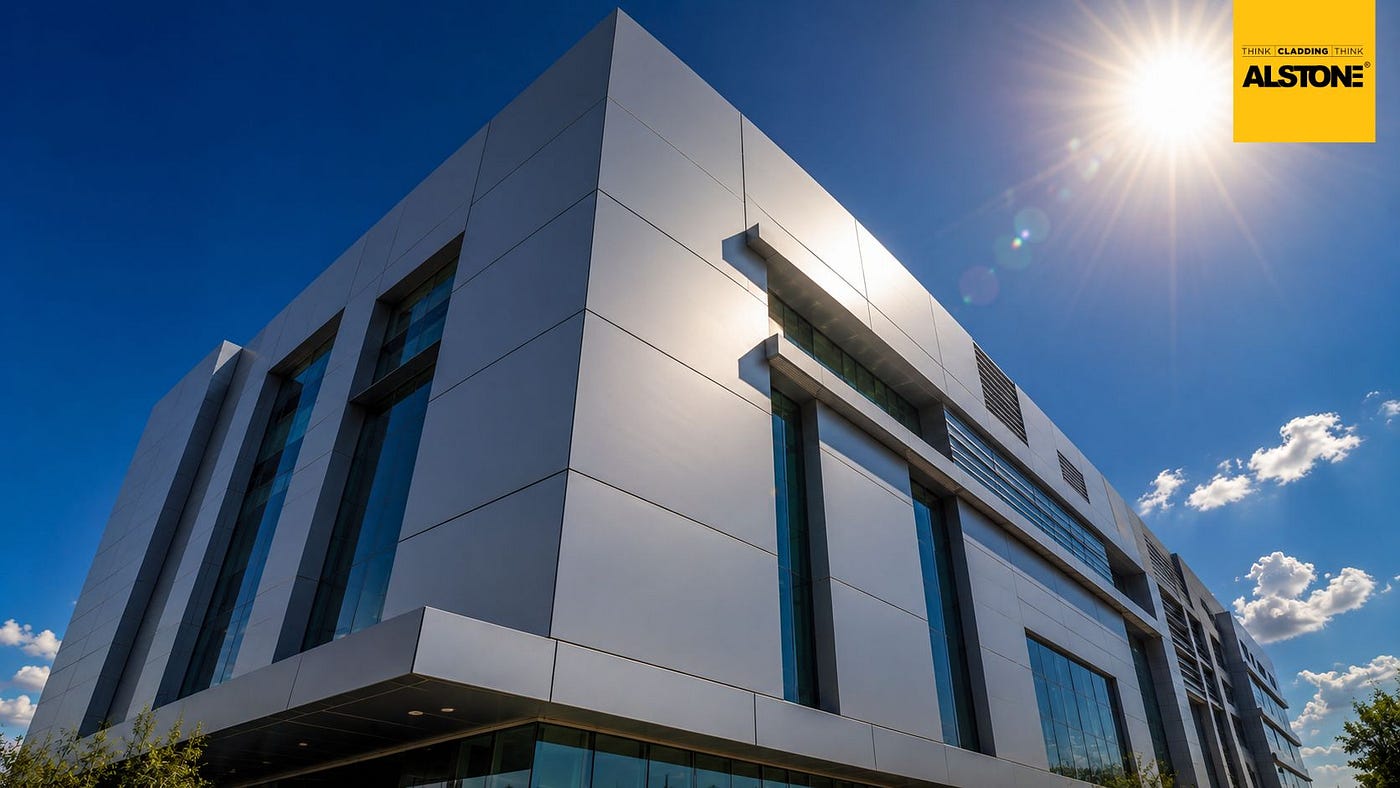
Extreme summer temperatures are no longer occasional design considerations. In many Indian, Middle Eastern and tropical urban environments, facade surfaces now remain exposed to intense solar radiation for prolonged periods throughout the year. South- and west-facing elevations regularly record surface temperatures between 70–80°C during peak afternoon exposure, particularly in high-density cities where reflected heat from glass, concrete and paved infrastructure amplifies thermal stress.
Under these conditions, facade failure rarely begins with dramatic structural collapse. It starts gradually through coating breakdown, thermal distortion, joint stress, panel waviness and rising heat transfer into occupied spaces. A cladding system that performs adequately in moderate climates may struggle under continuous expansion-contraction cycles caused by extreme summer conditions.
This is where ACP sheet cladding demonstrates its technical value. ACP is not simply a decorative outer skin. It is an engineered facade system designed to manage thermal movement, regulate surface heat behaviour, resist ultraviolet degradation and maintain dimensional stability under aggressive climatic exposure. Its performance depends on the coordinated interaction between aluminium skins, core composition, coating chemistry, ventilated cavity design and subframe engineering.
When specified and installed correctly, ACP systems can significantly reduce facade heat accumulation, improve indoor thermal comfort and maintain long-term structural consistency even under sustained high-temperature exposure.
Thermal Performance During Extreme Summer Conditions
ACP sheets consist of two aluminium skin layers bonded to a central core material, typically PE, FR mineral-filled, or A2 non-combustible core.
Aluminium has high thermal conductivity, which means it absorbs and redistributes heat quickly. However, it also has relatively low thermal mass, allowing heat to dissipate faster instead of remaining trapped within the facade system.
The core layer acts as a thermal interruption between the external and internal aluminium skins, helping reduce conductive heat transfer into the building envelope.
In extreme climates:
- Ambient temperatures may reach 45–48°C
- Dark facade surfaces can exceed 70°C
- Reflective ACP finishes often remain significantly cooler
- Ventilated ACP systems reduce heat accumulation behind the facade
This becomes particularly effective in ventilated rainscreen systems where an air cavity behind the ACP panels creates stack-effect ventilation. Heated air rises naturally through the cavity and escapes from the upper openings while cooler external air enters from below.
In high-solar-load climates, this passive airflow mechanism can reduce heat accumulation behind the facade significantly compared to non-ventilated wall assemblies. The result is lower substrate wall temperature, reduced conductive heat transfer into occupied spaces and lower peak cooling demand during afternoon hours when HVAC systems experience maximum stress.
UV Resistance and Surface Coating Stability
Long-term summer performance depends heavily on the ACP coating system.
The two most common coating technologies are:
- PVDF (Polyvinylidene Fluoride)
- Polyester coatings
PVDF coatings provide superior resistance to ultraviolet radiation due to their stable fluoropolymer chemistry. They offer:
- Better colour retention
- Reduced chalking
- Improved gloss stability
- Longer weathering life in high-solar-exposure climates
Polyester coatings are more economical but generally experience faster fading and surface degradation under prolonged UV exposure.
Surface finish also affects thermal behaviour. ACP panels with higher Solar Reflectance Index (SRI) values absorb less heat and maintain lower surface temperatures during peak summer conditions.
Light-coloured and reflective finishes typically perform better thermally than dark matte surfaces.
Core Composition and Energy Efficiency
The internal core material influences both thermal stability and overall facade performance.
Standard PE Core
- Lightweight and easy to fabricate
- Moderate thermal interruption
- Faster heat propagation under high temperatures
FR Mineral-Filled Core
- Improved dimensional stability
- Reduced heat transfer
- Better resistance to thermal deformation
A2 Non-Combustible Core
- Higher mineral content
- Superior thermal stability
- Minimal distortion during thermal cycling
When ACP is installed within a ventilated rainscreen assembly, the system contributes to lower HVAC demand by reducing direct heat transfer into occupied spaces.
This can improve:
- Indoor thermal comfort
- Cooling efficiency
- Peak summer energy performance
Thermal Expansion and Structural Stability
Residential ACP sheets are commonly fabricated in standard 8x4 feet dimensions. At this size, thermal expansion becomes a critical design consideration.
Aluminium expands and contracts continuously during summer due to changing surface temperatures. Without proper movement accommodation, facades may experience:
- Buckling
- Oil-canning
- Joint distortion
- Surface waviness
- Delamination near edges
To prevent these issues, ACP facade systems are engineered with:
- Expansion joints
- Floating fixing systems
- Slotted fixing holes
- Flexible aluminium subframes
The subframe design is equally important because it distributes thermal stress across the facade while allowing controlled panel movement.
Properly engineered ACP systems remain dimensionally stable even under prolonged thermal cycling.
Post-Summer Humidity and Monsoon Performance
In tropical climates, facades exposed to extreme summer heat are often subjected immediately afterward to monsoon humidity.
ACP systems generally perform well during this transition because aluminium naturally forms a protective oxide layer that resists corrosion.
Well-designed ACP facades also include:
- Ventilated cavities
- Drainage pathways
- Pressure-equalized joint systems
- Controlled moisture management detailing
These features help prevent moisture ingress and maintain facade durability after extended summer exposure.
ACP vs. HPL and Aluminium Honeycomb Panels in Summer
Compared to HPL cladding, ACP dissipates heat more quickly because aluminium releases accumulated thermal energy faster than dense laminated surfaces. HPL systems generally possess higher thermal mass, which means they can retain absorbed heat for longer durations after sunset.
ACP responds differently. Its lower thermal mass allows facade temperatures to reduce more rapidly during evening cooling cycles, particularly when combined with ventilated cavity systems.
Compared to Aluminium Honeycomb panels, ACP offers greater fabrication flexibility and more practical adaptability for residential and mid-rise commercial facades.
While Honeycomb panels provide exceptional rigidity, ACP delivers a balanced combination of:
- Thermal responsiveness
- Structural stability
- Lightweight construction
- Fabrication efficiency
- Climate adaptability
Final Thoughts
Extreme summer exposure tests every component of a building envelope. Facades are expected to withstand continuous UV radiation, thermal expansion, elevated surface temperatures and seasonal transitions into high humidity without compromising structural stability or thermal efficiency.
ACP sheet cladding performs effectively in these environments because it operates as a complete engineered system rather than a standalone surface material. The aluminium skins manage rapid heat redistribution, the core layer reduces conductive transfer, the coating system protects against UV degradation and the ventilated cavity dissipates accumulated thermal energy before it reaches the structural wall.
Its long-term success, however, depends heavily on specification quality. Core composition, coating chemistry, fixing methodology, cavity detailing and subframe engineering all determine whether an ACP facade continues performing after years of thermal cycling.
As cities continue experiencing longer heat waves and rising urban heat-island effects, facade systems will increasingly be evaluated based on thermal resilience and climate adaptability rather than appearance alone. Properly engineered ACP cladding remains one of the most technically balanced facade solutions for buildings operating under sustained extreme summer conditions.
메타데이터
- post_id
- f8f95ac8acef
- slug
- how-acp-sheet-cladding-performs-during-extreme-summer-conditions-f8f95ac8acef
- url
- https://medium.com/@alstonecladding/how-acp-sheet-cladding-performs-during-extreme-summer-conditions-f8f95ac8acef
- canonical_url
- https://medium.com/@alstonecladding/how-acp-sheet-cladding-performs-during-extreme-summer-conditions-f8f95ac8acef
- author_url
- https://medium.com/@alstonecladding
- status
- ok
- fetched_at
- 2026-06-09 15:37:30