ASEAN Factories Are the Hidden Gem of Global Industrial Sourcing
When most global buyers think about manufacturing, they think about China. And for good reason — China built one of the most remarkable…
ASEAN Factories Are the Hidden Gem of Global Industrial Sourcing
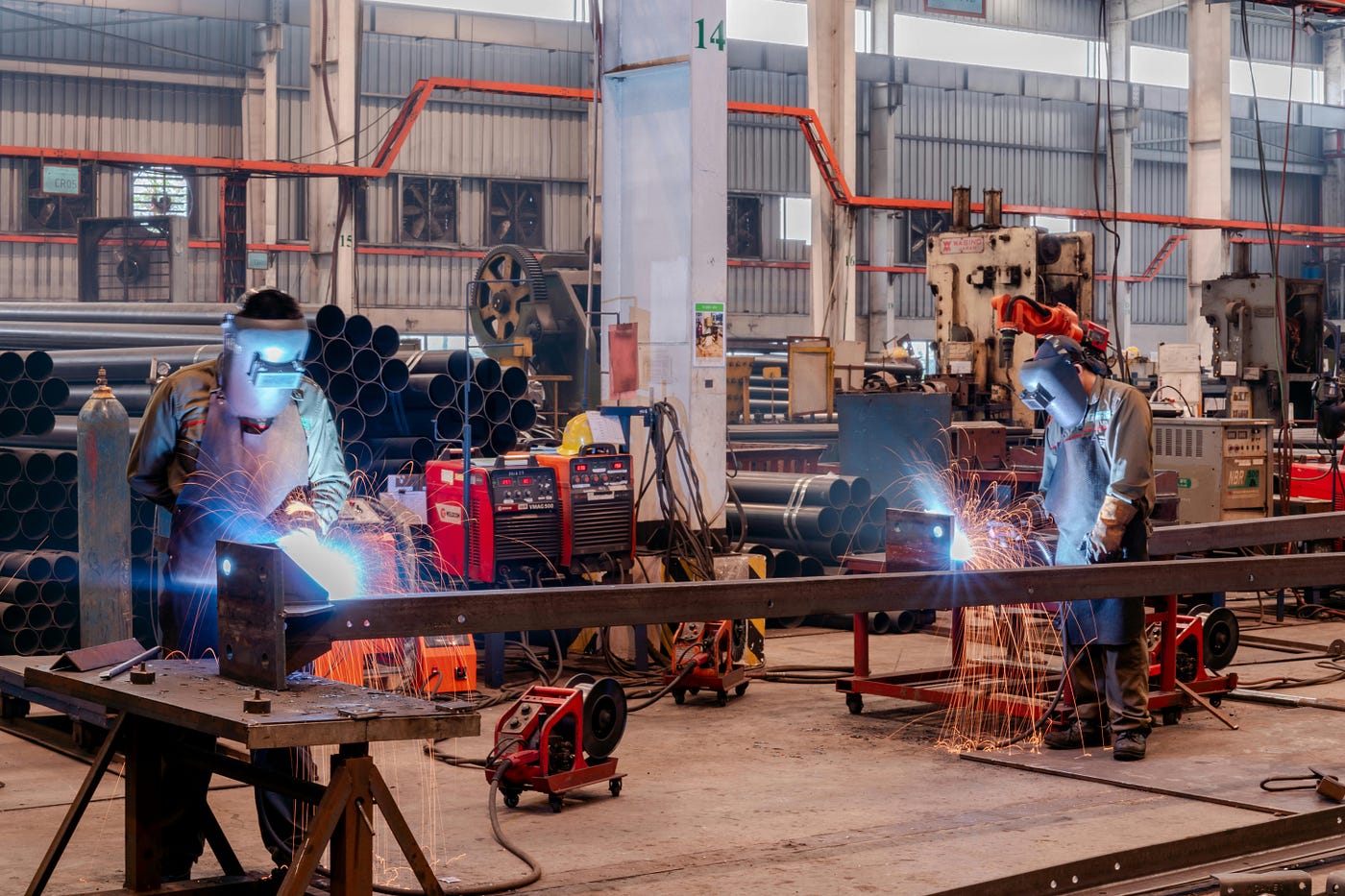
While the world argues about tariffs and trade wars, smart procurement teams have quietly discovered what ASEAN insiders have known for years: Southeast Asia is the most underrated manufacturing region on earth.
When most global buyers think about manufacturing, they think about China. And for good reason — China built one of the most remarkable supplier ecosystems in history. But that story is changing. Companies still locked into a China-only sourcing strategy are quietly paying a premium for the privilege.
The alternative? ASEAN — the Association of Southeast Asian Nations. A bloc of ten countries covering 670 million people, $3.6 trillion in combined GDP, and a manufacturing base that has been growing quietly and systematically for over two decades.
This is not a trend piece. This is a practical guide to understanding why ASEAN suppliers represent one of the most significant underutilized opportunities in global procurement — and how to access them without getting burned.
Why ASEAN, and Why Now?
The timing is not accidental. Three converging forces are pushing global supply chains toward Southeast Asia simultaneously — and each one reinforces the others.
1. The China Plus One Imperative
The US-China trade war that began in 2018 never really ended. It evolved. Companies that diversified early into Vietnam, Thailand, and Malaysia built a resilience buffer that protected them through tariff escalations, pandemic lockdowns, and shipping disruptions. Those who didn’t are now playing catch-up — often at elevated cost.
China Plus One is no longer a strategic option. For many industries, it has become baseline risk management. And ASEAN is where that “+1” almost always lands.
2. Labor Costs Have Permanently Shifted
China’s manufacturing wages have increased roughly 300% over the past fifteen years. Thailand, Vietnam, Indonesia, and the Philippines offer labor costs that are 30–60% lower — with skill levels in certain sectors that are genuinely competitive with Chinese counterparts.
3. Infrastructure Is Ready
This is the point most Western buyers don’t appreciate until they visit. Thailand’s Eastern Economic Corridor (EEC) is a world-class industrial zone. Vietnam’s northern manufacturing belt has attracted Samsung, Intel, and LG for a reason. Malaysia’s Penang is often called the “Silicon Valley of Asia” due to its electronics cluster. The infrastructure conversation has changed.
“The question is no longer whether ASEAN can manufacture it. The question is whether you can find the right supplier — and verify them before committing six figures.”
The ASEAN Supplier Landscape: Country by Country
ASEAN is not monolithic. Each country has developed distinct industrial strengths.
🇹🇭 Thailand Strengths: Automotive parts, rubber & polymers, food processing equipment, industrial machinery, electronics. Key advantage: Deep Tier-2/3 supplier network; BOI incentives; ISO compliance widely adopted.
🇻🇳 Vietnam Strengths: Electronics assembly, PCB, textiles, footwear, furniture, steel fabrication. Key advantage: Youngest workforce in the region; lowest wage base; strong FDI inflows.
🇲🇾 Malaysia Strengths: Semiconductors, medical devices, aerospace components, palm-based chemicals. Key advantage: English proficiency; mature IP law; halal-certified supply chains.
🇮🇩 Indonesia Strengths: Natural resources, mining inputs, textiles, consumer goods, agri-processing. Key advantage: Largest domestic market in ASEAN; nickel and mineral exports booming.
🇵🇭 Philippines Strengths: Electronics, automotive wiring harness, garments, BPO-linked manufacturing. Key advantage: Strong English; electronics export infrastructure; US FTA history.
What Makes ASEAN Suppliers a “Hidden Gem”
The phrase gets overused. But in the context of ASEAN sourcing, it’s genuinely apt — because the barrier that keeps most buyers away is not quality or capability. It’s discoverability and verification.
They Don’t Self-Promote the Way Chinese Suppliers Do
Alibaba built an entire ecosystem around Chinese supplier visibility. Thai, Vietnamese, and Indonesian manufacturers have no equivalent. Many of the best factories in the region — the ones supplying Tier-1 multinationals — have no English website, no Alibaba listing, and no export sales team. They operate entirely through referrals, trade shows, and industrial associations.
This is a moat. It keeps out casual buyers, and it keeps prices reasonable.
Quality Standards Are Quietly World-Class
Thailand’s automotive supply chain feeds Toyota, Honda, and BMW. Malaysia’s medical device sector meets FDA and CE standards. Vietnam’s electronics suppliers build for Samsung. The quality floor in ASEAN is higher than most Western buyers assume — they just haven’t been to the factories.
You’re Accessing an Arbitrage That Won’t Last Forever
Because ASEAN suppliers are less competed-for than Chinese alternatives, buyers who do find them often access better-than-market pricing. The window won’t stay open indefinitely. As more global buyers discover ASEAN, competition for the best factories will increase and prices will follow.
The Real Challenge: Verification and Trust

Here’s the honest part. ASEAN sourcing is not without risk — and the risks are specific.
Unlike China’s established export ecosystem, ASEAN suppliers often have less experience with international trade documentation, L/C procedures, and English-language contract enforcement. Without proper verification, a good factory can still become a bad sourcing relationship.
The critical due diligence checklist before any ASEAN supplier engagement:
- Business Registration Verification — Confirm the entity via local registry (DBD in Thailand, Ministry of Industry in Vietnam). Check incorporation date, paid-up capital, and director history.
- Factory Audit — In-person or third-party. Verify production capacity, worker headcount, equipment age, and quality control procedures. Many suppliers overstate capacity.
- Certifications Review — ISO 9001, IATF 16949 (automotive), ISO 13485 (medical). Request certificates and verify the issuing body directly.
- Reference Buyers — Ask for 2–3 existing international clients. Serious factories will have them. If they can’t provide any, that’s a signal.
- Sample Order Before Volume Commitment — Always. Negotiate full payment terms only after successful QC on a sample run of at least 100–200 units.
- Local Sourcing Agent — For new-market buyers, a locally embedded sourcing agent is the fastest way to skip 12 months of painful trial and error.
Thailand as a Strategic Base: A Closer Look
Among all ASEAN markets, Thailand stands out for foreign buyers targeting industrial and B2B sourcing — particularly for buyers from Europe, Australia, Japan, and the Middle East.
Thailand has the most mature Tier-2 and Tier-3 supplier ecosystem in mainland ASEAN. The automotive cluster alone has over 2,500 parts suppliers feeding Japanese OEMs. There is a deep bench of precision engineering, tooling, injection molding, and industrial fabrication companies that never appear on any global platform.
Thailand also offers a uniquely favorable environment for B2B sourcing:
- BOI incentives for foreign-invested manufacturing companies
- Eastern Economic Corridor (EEC) — 30,000 sq km industrial zone with bonded warehouses and special customs handling
- RCEP and AFTA membership — duty-free access across all 10 ASEAN countries plus China, Japan, Korea, Australia, and New Zealand
- Political stability relative to Vietnam and Myanmar for long-term supply chain commitments
How to Start Your ASEAN Sourcing Journey
The single biggest mistake foreign buyers make is treating ASEAN supplier discovery like a Google search problem. It doesn’t work that way. The best factories are found through:
Industry Associations and Trade Shows Thailand’s METALEX, Vietnam’s Manufacturing Expo, and Malaysia’s SEMICON are among the most productive supplier discovery venues in the region. Budget two days minimum and bring a local guide.
Government Investment Promotion Agencies Thailand BOI, InvestKL (Malaysia), and the Vietnam Investment Review maintain verified supplier databases for foreign buyers. These are free and consistently underutilized.
Local Sourcing Agents with Sector Expertise For buyers who don’t have time to build in-market knowledge, a sector-specialized local sourcing agent is the highest-leverage entry point. The key is finding an agent with actual factory relationships — not just a translation service.
Frequently Asked Questions
Why source from ASEAN instead of staying with Chinese suppliers? ASEAN offers competitive labor costs, geopolitical neutrality, and growing FTAs. For many product categories, total landed cost from ASEAN is now lower than China when you factor in US and EU tariff differentials.
What industries have the strongest ASEAN supplier ecosystems? Automotive parts (Thailand), electronics and PCB assembly (Malaysia, Vietnam), textiles (Vietnam, Indonesia), rubber and advanced polymers (Thailand, Malaysia), precision engineering and tooling (Thailand), semiconductor packaging (Malaysia).
How do I verify a supplier in Thailand or Vietnam? Five core steps: business registration check, factory audit, certifications review, reference buyer contacts, and a sample order before volume commitment. A locally embedded sourcing agent significantly reduces time and risk.
What is China Plus One and which ASEAN countries benefit most? A diversification strategy where companies maintain some Chinese capacity but shift a portion to reduce concentration risk. Vietnam leads in electronics FDI; Thailand dominates automotive; Malaysia leads in semiconductors and medical devices.
TUSKO connects foreign companies to verified ASEAN suppliers — with factory audits, business registration checks, and full introduction management. No cold leads. No unverified directories.

메타데이터
- post_id
- f9123ccf0bc2
- slug
- asean-factories-are-the-hidden-gem-of-global-industrial-sourcing-f9123ccf0bc2
- url
- https://medium.com/@tuskoconsultingglobal/asean-factories-are-the-hidden-gem-of-global-industrial-sourcing-f9123ccf0bc2
- canonical_url
- https://medium.com/@tuskoconsultingglobal/asean-factories-are-the-hidden-gem-of-global-industrial-sourcing-f9123ccf0bc2
- author_url
- https://medium.com/@tuskoconsultingglobal
- status
- ok
- fetched_at
- 2026-06-10 08:17:25



