Are We Sleepwalking Into World War III? Parallels and Differences Between 1914/1939 and 2026
As geopolitical tensions escalate and global conflicts reach their highest level since World War II, the world appears to be balancing on a…
Are We Sleepwalking Into World War III? Parallels and Differences Between 1914/1939 and 2026
As geopolitical tensions escalate and global conflicts reach their highest level since World War II, the world appears to be balancing on a precipice. History offers stark warnings about the fragility of peace — yet the nuclear shadow, economic interdependence, and modern institutions make the path to catastrophe fundamentally different from 1914 or 1939.
Introduction: A Century of Unlearned Lessons
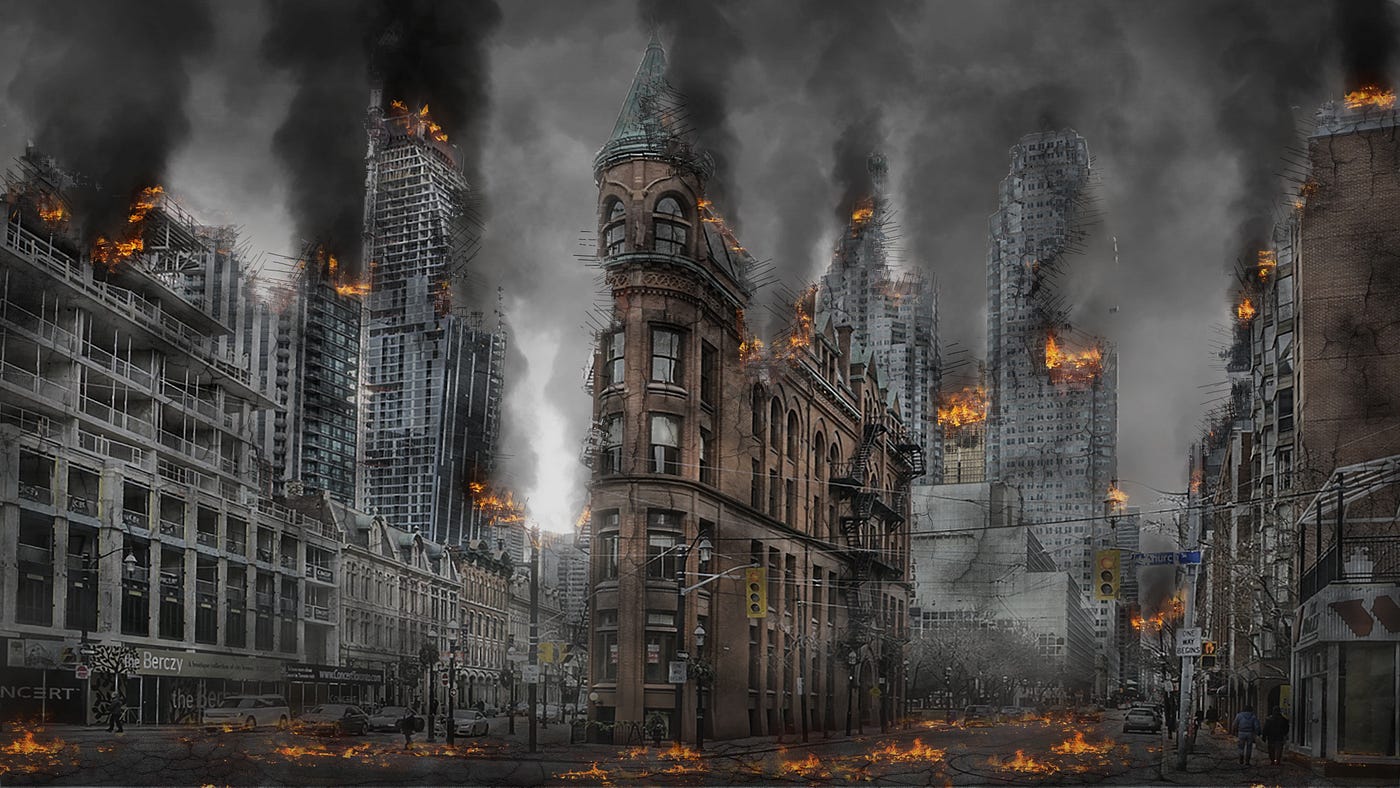
In the opening months of 2026, smouldering tensions between nations have suddenly flared into open conflict, threatening to spread further . From the US–Israel military campaign against Iran and Iran’s forceful response with dozens of missiles targeting Israel and US bases, to Pakistan’s large-scale airstrikes against Afghanistan, the global security map is alight with simultaneous flashpoints . Nine capital cities — Beirut, Damascus, Doha, Kabul, Kyiv, Moscow, Sanaa, Tehran, and Tel Aviv — were targeted in air strikes by state actors in 2025 alone.
The World Economic Forum’s Global Risks Report 2026 describes the world as “balancing on a precipice,” with “geopolitical and geoeconomic” risks dominating the risk landscape . The number of conflicts worldwide has reached its highest level since World War II, and traditional norms on nonaggression are rapidly degrading . Experts now identify geoeconomic confrontation and state-based armed conflict as the two biggest global risks, with half of surveyed leaders anticipating a “stormy” or “turbulent” outlook in the next two years.
This is not 1914. It is not 1939. But the parallels are unsettling, and the warnings from history demand our attention.
World War I: The Alliance Trap and the March to Catastrophe
The Numbers That Define the Great War
World War I, known as “The Great War,” was one of the deadliest conflicts in history . Over 70 million military personnel were mobilized between 1914 and 1918, with more than 8.5 million combatants killed and over 21 million wounded . Civilian deaths exceeded 6.6 million, bringing total casualties to over 40 million . Nearly 60 percent of those who fought died or were injured.
Military Casualties by Major Power (1914–1918) :
CountryDeadWoundedRussia1,700,0004,950,000France1,357,8004,266,000Germany1,773,7004,216,058Austria-Hungary1,200,0003,620,000Great Britain908,3712,090,212Italy650,000947,000Ottoman Empire325,000400,000United States116,516204,002
The Causes: A Web of Alliances and Miscalculation
World War I had a variety of causes, but its roots lay in a complex web of alliances between European powers . At its core was mistrust between, and militarization in, the informal “Triple Entente” (Great Britain, France, and Russia) and the secret “Triple Alliance” (Germany, the Austro-Hungarian Empire, and Italy).
The key drivers included :
- Imperialism: The most powerful players presided over worldwide colonial empires they wanted to expand and protect .
- Militarism: Great technological advances in firepower without corresponding advances in mobility created a “cult of the offensive” that favored striking first .
- Nationalism: Rising nationalist fervor, particularly in the Balkans, destabilized the European balance of power .
- The Alliance System: The web of alliances meant that a regional dispute could rapidly escalate into a continental war .
The immediate trigger was the assassination of Archduke Franz Ferdinand, heir to the throne of Austria-Hungary, by a Bosnian Serb nationalist during a visit to Sarajevo on June 28, 1914 . Austria-Hungary blamed Serbia for the attack. Russia backed its ally, Serbia. When Austria-Hungary declared war on Serbia a month later, their allies jumped in, and the continent was at war.
The Consequences That Sowed Seeds for Another War
By the war’s end, much of Europe was in ruins . The Treaty of Versailles, signed in a vengeful mood on the part of the Allied powers against Germany, imposed harsh terms: war guilt, heavy reparations (6.5 billion pounds), territorial losses, and strict military restrictions . Germany was forced to sign; it was not allowed to negotiate .
These terms humiliated Germany, fostered resentment, and fueled ultra-nationalism and revanchism . The treaty was a kind of dictated peace that, in its attempt to create lasting peace, actually ploughed the ground for the outbreak of war in 1939.
World War II: The Failure of Appeasement and the Rise of Aggression
The Deadliest Conflict in Human History
World War II (1939–1945) was the deadliest global conflict, fought between the Axis Powers (Germany, Italy, Japan) and Allied Powers (France, Great Britain, the US, Soviet Union, China) . Nearly 100 million people were mobilized, with between 62 million and 76 million deaths — accounting for roughly 3 percent of the world’s population . The Holocaust resulted in the systematic murder of six million Jews by Nazi Germany.
The Causes: Unresolved Grievances and Missed Opportunities
The Treaty of Versailles sowed the seeds. The peace treaty was unrealistic and unfair to Germany, causing economic hardship and creating a spirit of revenge . Germany was deprived of its colonies, forced to pay heavy reparations, and disarmed unfairly — its soldiers reduced from 400,000 to 100,000, with bases and weapons destroyed while other countries rearmed . This forced Hitler to adopt an aggressive foreign policy, making World War II inevitable.
The Policy of Appeasement emboldened the aggressors. Britain and France allowed Hitler to violate the Treaty of Versailles by permitting the Rhineland reoccupation (1936) and Sudetenland annexation (1938), underestimating his ambitions and delaying military readiness . They took no action when Italy invaded Ethiopia (1935), Japan occupied Manchuria (1931), or Hitler invaded Austria and Czechoslovakia . The Munich Agreement of 1938, where Britain and France signed in recognition of Germany’s occupation of the Sudetenland, was meant to be reconciliatory — but it only inspired Hitler to occupy the whole of Czechoslovakia .
The Immediate Trigger: On September 1, 1939, Germany invaded Poland, hoping Britain and France would not intervene because of their appeasement policy. Given a 48-hour ultimatum to withdraw, Hitler ignored it, and Britain and France declared war.
The Consequences: A New World Order
The war produced consequences unparalleled in human history :
- Human Cost: 70–85 million dead, 45 million wounded, and about 21 million displaced .
- Property Destruction: Complete destruction of fields, factories, workshops, and civilian homes .
- The Holocaust: Six million Jews murdered, along with millions of others .
- Emergence of Superpowers: The US and Soviet Union emerged as superpowers, marking the beginning of the Cold War .
- United Nations: Established in 1945 to promote international cooperation and prevent future conflicts .
- Nuclear Age: The atomic bombings of Hiroshima and Nagasaki introduced the nuclear age, leading to a prolonged nuclear arms race .
The Lessons from History: What We Should Have Learned
Lesson 1: Appeasement Leads to More Aggression, Not Peace
“The partition of Czechoslovakia in 1938 only fueled Nazi Germany’s appetite and resulted in a global war,” warn leaders who have studied these events . Concessions on unlawful territorial claims are a disastrous mistake — respect for territorial integrity is a fundamental principle of international law.
Today, this lesson is being tested repeatedly. Russia’s full-scale aggression against Ukraine, beginning on February 24, 2022, has shattered the post-World War II security architecture . Despite overwhelming odds, Ukraine has managed to repel the attack and liberate more than half of the newly occupied territory. But even after more than 950,000 Russian soldiers killed and wounded in action, Russia has not abandoned its aggressive plans.
Lesson 2: Economic Punishment Breeds Resentment and Conflict
The Treaty of Versailles demonstrated that punitive peace terms sow the seeds of future conflict . Sustainable peace requires integration and reconstruction, not just punishment.
Today, the global financial system faces similar tensions. Debt servicing burdens have hit 20-year highs, one quarter of developing countries still have lower per capita income than before the pandemic, and 3.4 billion people live in countries that spend more on interest payments than on health or education. As one analyst noted, sustainable development is “a shared responsibility, not a zero-sum game” . Yet the gap between what is needed and what is being done remains vast.
Lesson 3: Alliance Systems Can Trap Nations Into War
The web of alliances in 1914 transformed a regional assassination into a global war . In 2026, the world is again divided into competing blocs — NATO, BRICS+, and various regional defense pacts . The potential for miscalculation in a flashpoint region, such as the Taiwan Strait or Eastern Europe, triggering a broader confrontation remains a clear and present danger.
Lesson 4: Failed Institutions Make Conflict More Likely
The League of Nations, established to maintain peace after WWI, lacked universal membership (the US never joined), had no standing army, and failed to prevent Japanese aggression in Manchuria (1931) and Italian invasion of Abyssinia (1935) . Its failure emboldened fascist powers and contributed to the outbreak of WWII.
The United Nations was built on those lessons, with the understanding that “prevention, dialogue, and early political engagement remain the most effective tools for sustaining peace” . Yet in 2026, the UN faces its own challenges — veto paralysis, rising multipolarity, and a growing gap between ambition and capacity.
Lesson 5: Economic Interdependence Alone Does Not Prevent War
Pre-WWI trade did not prevent war; in fact, some believed that economic reliance would act as a deterrent — an illusion shattered in 1914 . Today, the highly globalized and interdependent world, while offering incentives for cooperation, is not a foolproof shield against conflict. Supply chain “decoupling,” the weaponization of trade through sanctions and tariffs, and the retreat from economic globalization are eroding the interdependence that once underpinned stability.
2026: The State of Global Conflict
The Numbers: A More Violent World
The Council on Foreign Relations’ 2026 Preventive Priorities Survey paints a picture of a more violent and dangerous world. Experts judged that twenty-eight of thirty conflict scenarios have a 50 percent chance or higher of occurring within the next twelve months.
The top five contingencies considered both highly likely and high impact :
- Increased conflict between Israeli security forces and Palestinians in the West Bank
- Renewed fighting in the Gaza Strip
- An intensification of the Russia-Ukraine war
- U.S. military operations escalating to direct strikes in Venezuela
- Growing political violence and popular unrest in the United States
Nine capital cities were targeted in air strikes by state actors in 2025 alone . Interstate conflicts range from long-running disputes — India and Pakistan’s conflict over Kashmir, Cambodia and Thailand’s territorial dispute — to the precedent-breaking direct conflict between the United States, Iran, and Israel.
The Flashpoints
The Middle East: The US–Israel coalition has officially launched a military campaign against Iran. Iran responded forcefully, firing dozens of missiles at Israel and US military bases. The death of Iran’s Supreme Leader Ali Khamenei has marked a new dangerous escalation .
South Asia: In late February 2026, Pakistan’s military carried out large-scale airstrikes against Afghanistan — one of the most serious confrontations between the two countries since the Taliban returned to power .
East Asia: A Chinese think tank’s security assessment identifies Taiwan as China’s biggest external security concern, with fears of rising support for Taiwanese independence, continued US arms sales, and Japan becoming more involved in Taiwan-related security matters . The South China Sea could become more volatile — even a minor incident involving Chinese and Philippine vessels could spiral into a much bigger confrontation .
The Russia-Ukraine War: Despite ongoing U.S.-led peace efforts, experts consider an intensification highly likely to occur in the next twelve months . Russia increasingly engages other rogue regimes like Iran and North Korea in the war, threatening not only European security but also the Indo-Pacific and the Middle East.
The Risks Beyond Traditional Conflict
China’s security assessment reveals that tomorrow’s biggest challenges may not always begin on the battlefield . Key concerns include:
- Technology and Supply Chains: Restrictions on advanced technology, semiconductors, and rare earth supply chains could become even bigger challenges.
- AI-Powered Cyberattacks: AI could make cyberattacks harder to stop, with attacks on critical infrastructure becoming one of the biggest security challenges.
- Global Economic Shocks: Fresh tariffs, commodity price swings, and global financial instability could affect growth worldwide.
- Economic Interdependence as Vulnerability: Chinese investments overseas are under pressure from terrorism and political instability in host countries.
Expert Warnings
The World Economic Forum’s Global Risks Report 2026 captures the anxieties of decision-makers rattled by the White House incumbent’s proven tendency to jolt allies and rivals alike with a muscular approach to trade and geopolitics — and Beijing’s readiness to respond in kind .
“A new competitive order is taking shape,” said Saadia Zahidi, managing director at the WEF. “We are witnessing the turmoil caused by kinetic wars, the deployment of economic weapons for strategic advantage, and growing fragmentation across societies” .
The Nuclear Shadow: A Fragile Deterrence
The defining difference between the pre-1945 world and today is the existence of nuclear weapons. The concept of Mutually Assured Destruction (MAD) has so far prevented a third world war. However, in 2026, this deterrence is strained by geopolitical tensions and the risk of proliferation.
Key concerns:
- Proliferation Risks: North Korea remains an unpredictable neighbour — an unexpected missile launch, nuclear test, or political crisis could rapidly change the security situation in East Asia .
- Erosion of Arms Control: The atomic bombings of Hiroshima and Nagasaki introduced the nuclear age, leading to a prolonged nuclear arms race during the Cold War . Today, arms control agreements are under strain.
- Miscalculation Risk: In a world of multiple flashpoints, the possibility of escalation through miscalculation or proxy conflict remains high .
The Differences: Why 2026 Is Not 1914 or 1939
1. Nuclear Deterrence
While not a guarantee of peace, the existence of nuclear weapons fundamentally changes the calculus of war. Direct conflict between major powers carries existential risks that did not exist in 1914 or 1939.
2. Deep Economic Interdependence
While interdependence is fraying, the global economy remains far more integrated than in the interwar period. The “decoupling” and “friendshoring” trends are real, but the cost of disruption is still significant for all parties.
3. International Institutions (Imperfect but Present)
The United Nations, despite its flaws, provides mechanisms for dialogue, mediation, and conflict resolution that simply did not exist in 1914 or 1939 . Regional bodies like ASEAN, the Shanghai Cooperation Organization, and BRICS+ offer additional platforms for cooperation.
4. The Evolution of Warfare
Conflict has shifted from purely kinetic warfare to a hybrid mix of economic coercion, cyber-attacks, disinformation, and proxy conflicts. As one Chinese think tank noted, “tomorrow’s biggest security challenges may not always begin on the battlefield” .
5. The Climate Dimension
Climate change, a factor absent from the 20th-century conflicts, now compounds security risks. Extreme weather, resource scarcity, and climate-induced migration are emerging as drivers of instability.
The Path Forward: Learning from History
Rebuilding Trust and Cooperation
The strategic value of organizations like BRICS+ and the Shanghai Cooperation Organization “lies not only in counterbalancing great-power dominance, but in constructing resilient networks of trust, interdependence and shared problem-solving” . In a multipolar century, these qualities may prove more decisive than raw power in preventing systemic breakdowns.
Strengthening International Institutions
As the UNRCCA Preventive Diplomacy Academy noted: “The League of Nations taught the world that good intentions are not enough without political will and effective mechanisms. The United Nations was built on those lessons, with the understanding that prevention, dialogue, and early political engagement remain the most effective tools for sustaining peace” .
Addressing Root Causes
World War II did not erupt in a vacuum — it was the culmination of unresolved structural tensions that had festered since the end of World War I, including unchecked ideological extremism, a collapsed balance of power, and resurgent economic nationalism . Today, addressing similar structural pressures — economic inequality, climate change, and great-power competition — is essential.
The Role of Citizens
In any conflict, no side can achieve genuine victory through force . Informed citizens who demand accountability, support multilateralism, and resist the polarizing logic of “with us or against us” are the most powerful force for peace.
Conclusion: A Choice, Not a Destiny
The world in 2026 is more violent than at any time since World War II, with multiple flashpoints threatening to escalate into broader conflict . Global military expenditure reached a record $2.7 trillion in 2024 — the tenth consecutive year of growth . Echoing the protectionist wave of the 1930s, global trade is showing signs of retrenchment .
Yet the tools to prevent catastrophe exist — in nuclear deterrence, in international institutions, in economic interdependence, in the collective will of citizens to demand peace.
The underlying ethos of initiatives like the Global Civilization Initiative and the Global Security Initiative — that “no single model of governance, development or security can dominate a diverse world” — offers a vital counterweight to the exclusionary logic that has historically driven great-power conflict .
“Sustainable peace requires more than deterrence; it demands an architecture of trust,” one analyst warns. “If we fail to learn the hard lessons of the 20th century, we may be condemned to relive them in the 21st — this time with consequences even more far-reaching”.
The ghosts of Sarajevo and the lessons of Munich serve as reminders: peace is not a passive state. It requires constant effort, vigilance, and moral courage. The question is whether the world in 2026 will find that courage before it is too late.
This article is based on historical analyses of World War I and World War II, the Council on Foreign Relations 2026 Preventive Priorities Survey, the World Economic Forum Global Risks Report 2026, and UN reports as of July 2026.
메타데이터
- post_id
- f9298cc18c44
- slug
- are-we-sleepwalking-into-world-war-iii-parallels-and-differences-between-1914-1939-and-2026-f9298cc18c44
- url
- https://medium.com/equality-includes-you/are-we-sleepwalking-into-world-war-iii-parallels-and-differences-between-1914-1939-and-2026-f9298cc18c44
- canonical_url
- https://medium.com/equality-includes-you/are-we-sleepwalking-into-world-war-iii-parallels-and-differences-between-1914-1939-and-2026-f9298cc18c44
- author_url
- https://medium.com/@ahmed.nawaz161
- status
- ok
- fetched_at
- 2026-07-13 06:23:13