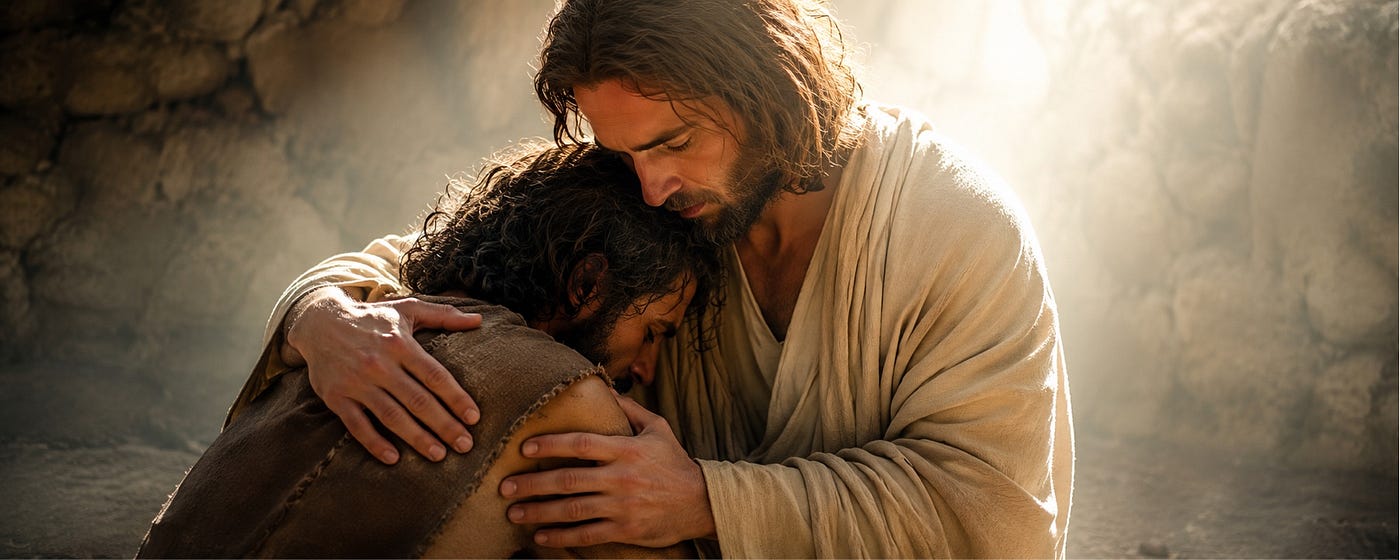
Canaan’s Misfortune
How an entire society’s rebellion was foreshadowed in their father.
Canaan’s Misfortune
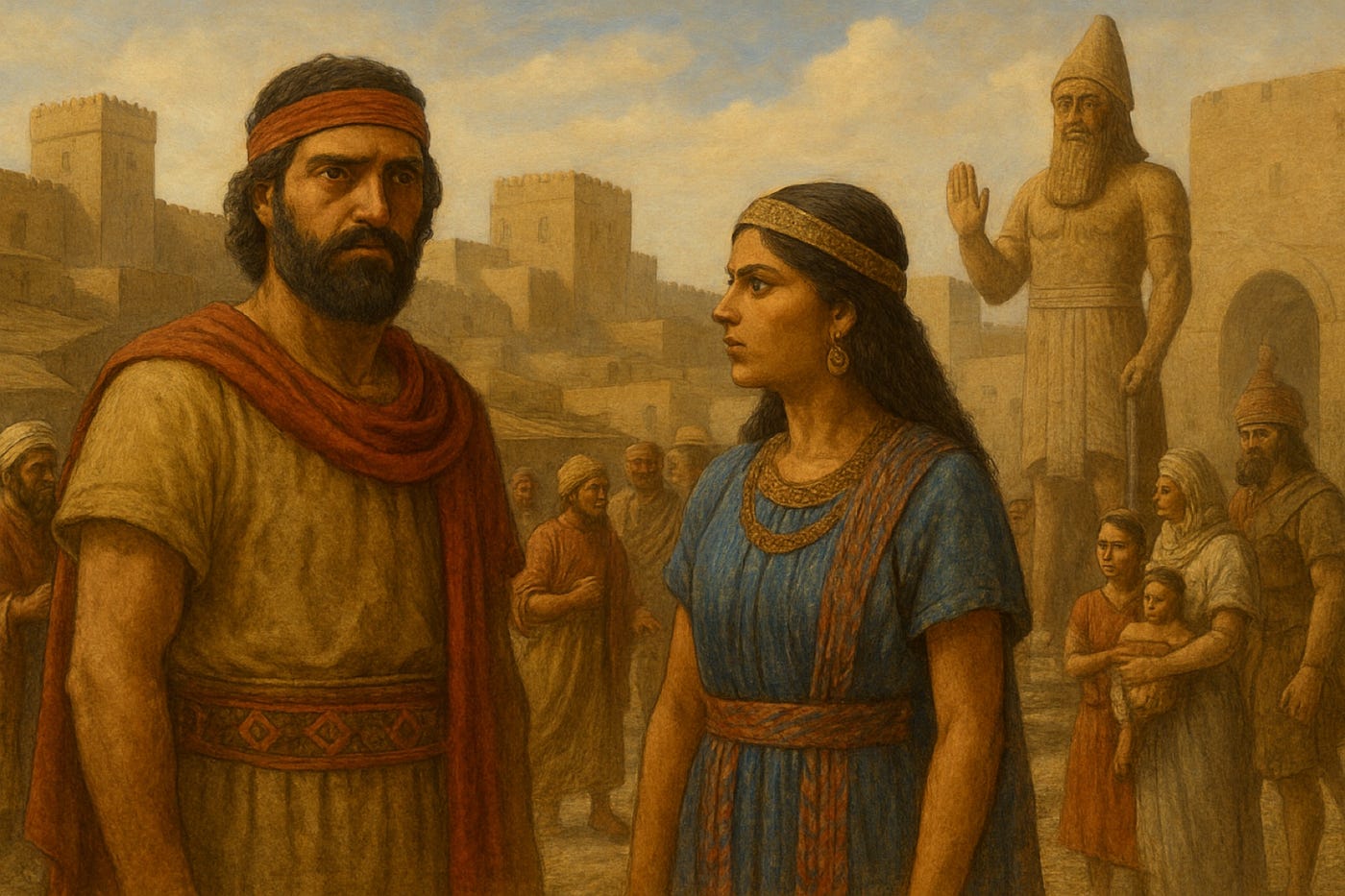
Quite often a skeptic would engage us on the question of Canaan: “Did God not order His people to wipe them out completely? Why would He request it, as well as give their lands to others?”
The first problem I find with this question is the assumption that we own anything in this world, for the Scripture says: “The earth is the LORD’S, and the fulness thereof; the world, and they that dwell therein.” (Psalm 24:1). However, if what they really seek is an answer to how just the dispossession of these natives was, then refer them to this article.
Genesis chapter 6 introduces us to a very interesting account in the history of Man, God is grieved because Man’s rebellion has become innate to him and despicable; the chapter briefly mentions something the Book of Enoch extensively narrates, how that some fallen angels corrupt the world, not only by evil knowledge and mystic arts, but also biologically: sleeping with women and producing genetically-hybrid children (Nephilim), who brutally & savagely perpetuate gross despicableness on the earth, without the slightest feeling of human conscience. God saves righteous Noah, his wife, his 3 sons, their 3 wives, and a number of paired animals through an Ark, as He judges the corrupted world with a deluge. God blesses Noah & his three sons, promising to never send a flood again upon the earth, concluding that wickedness is so inherent to human nature. But what does this have to do with the story of the Canaan conquest?
Firstly, the text says “There were giants in the earth in those days; and also after that, when the sons of God came in…” (Genesis 6:4) indicating that the flood was not the end of this hybrid race. Some of the groups listed as natives of Canaan were described to be these — in the English Bible, giants. The sons of Anak, of whom the 10 Israelite spies described themselves to be grasshoppers in comparison, and others like the Rephaim, Emim, and Zamzummim etc. As it turns out, the conquest of Israel against Canaan was judgment against these giant races also, who even if were not biologically-connected to the original fallen angels (as is the opinion of some) yet were no less possessed by the same operation of wickedness. The Canaanites were known to practice child sacrifice, cult prostitution, and other rituals condemned in the Bible (e.g., Leviticus 18:21 — 24). The command In Deuteronomy 7:1 - 5 and 20:16 - 18 to Israel to “utterly destroy” the Canaanite nations, we find to be one of religious-purity in the bid to remove idolatry from Israel’s midst (Deut. 7:4-5) rather than racial genocide as is often alleged, but deeper than that, the theological message conveyed in the severity of the command is one teaching the necessity of separating oneself from sin and the situations/conditions that enable it (Matthew 5:29–30).
In reality, there is a lot of hyperbolic language, semitic in usage, describing how much devastation the conquest was, just as today in describing a football match we might say one team demolished the other, yet we just mean “totally won” not literally destroyed their lives. For instance Joshua 11:23 says “Joshua took the whole land… and the land had rest from war.” and yet shortly afterwards in Joshua 13:1–6 God says “There remains yet very much land to possess.” The Bible depicts Israel’s war with the Canaanites from a theological perspective of a divine command against sin via warring against evil enemy groups, though not a literal genocide. Later the church would learn that our real enemy is not flesh & blood. Israel’s win in actuality rather involved partial conquest: in the battles; gradual infiltration: as they both had to live with some of them who remained alive, later even intermarrying; and then cultural transformation: as Israel’s faith in God & their religious system took dominance of the Canaanite lands, howbeit not by total destruction. The Canaanites today are a regio-cultural shared identity, not a single genetic or ethnic one: this means there is no country today independently housing them all, but many people within the nations of Israel, Lebanon, Syria, Palestine, and even as far as the Arabs, Persians & Greeks can trace their lineage to natives of the ancient land of Canaan.
Now let’s delve into the matter of Divine Justice and the Authority of Israel to possess Canaan.
The labour of the Patriarch

God met a man by the name Abram, calling him from the land of his origin and promised him Canaan. Abraham by trusting in God who owns all things (Gen 14:19) would journey to this unfamiliar land at the direction of God, settling there. God intended this land to be set apart unto Him by the nation He’d place there; through them He would systematically guide the whole world to the knowledge of Him, and send the Messiah, who is to remove the sin of the world. Abraham, by virtue of his devotion to God habitually sets up altars at points of his journey, unknown to him, he is consecrating the land unto God. By the time we’re in Genesis 13, we see that Abraham in seeking peace, makes a huge sacrifice for his nephew, by letting him have the far more aesthetically-pleasant & fertile land to inhabit (which unknown to him was Sodom & Gomorrah’s plains). God visits him with a message that all the land he sees would be given to him, as well as wherever his foot treads upon; and following this, the Bible says:
“Then Abram removed his tent, and came and dwelt in the plain of Mamre, which is in Hebron, and built there an altar unto the LORD.” - Genesis 13:18
What many may have missed in the text is that just as establishment of settlement & possession of property plays a role in naturalization, Abraham’s settling in many different places in the region that would later become Israel, and his purchase of property (Gen 23:1–16) was God’s way of giving him legitimate claim to the land as a future owner. He also interestingly raises altars unto God in all these different places He settles in, somewhat dedicating the nation of Israel to God, and declaring His sovereign lordship over the land. Abraham had both naturally & spiritually laid claim on Canaan, and it was his already, by promise and practically-speaking.
In actuality, all these happened while he was still a stranger on the land. He didn’t seek to gain it by conquest, but became a respectable member of the community. Abraham’s immediate son, Isaac, would also be told by the Lord to not leave the land, even when everyone else did for famine sake: God was establishing a generational ownership by settlement on this land; Isaac’s labour went deep into this land both in sowing & reaping a 100-fold; as well as in digging wells of water, many of which became for the other natives, as well as for himself. Again, they neither planned nor knew this, but God was controlling everything for their good. Isaac’s well had been for himself yet they were repeatedly seized by the community; and God was using this apparently discouraging experience for the patriarch to also establish a claim to the land, through what can now be understood to be the building of public infrastructure (Gen 26).
Jacob also, his wives, his twelve sons with their wives, servants & livestock would all live in that community before departure into Egypt. Canaan was home to this large clan of people swiftly becoming a nation. The night before their relocation to Egypt, about 215 years from the promise of God to Abraham in the same land, God confirms His word to Jacob about Israel’s return & becoming a mighty nation in that land. Although these men had done the work of declaring their legitimacy to the land of Canaan, as well as dedicating it to God, He wasn’t giving it to them just immediately; for in His justice the other natives had not exhausted their grace period in the use of it, despite their wickedness; and for this reason (amongst others) Israel goes into Egypt and spends a huge part of 400 years, as God had foretold Abraham.
“And he said unto Abram, Know of a surety that thy seed shall be a stranger in a land that is not theirs, and shall serve them; and they shall afflict them four hundred years; And also that nation, whom they shall serve, will I judge: and afterward shall they come out with great substance. And thou shalt go to thy fathers in peace; thou shalt be buried in a good old age. But in the fourth generation they shall come hither again: for the iniquity of the Amorites is not yet full.” - Genesis 15:13–16 (KJV)
For more on this, see HERE
The Noahic influence

So far, we have seen the biological origins/corruption of the Canaanite tribes; the entitlement by faith of the Patriarchs to the Land of promise, both legally & spiritually, but is there more.
Ever before any of these is a story taking place in Genesis 9 that provides a prophetic insight into Canaan’s calamity.
“And Noah began to be an husbandman, and he planted a vineyard: And he drank of the wine, and was drunken; and he was uncovered within his tent. And Ham, the father of Canaan, saw the nakedness of his father, and told his two brethren without. And Shem and Japheth took a garment, and laid it upon both their shoulders, and went backward, and covered the nakedness of their father; and their faces were backward, and they saw not their father’s nakedness. And Noah awoke from his wine, and knew what his younger son had done unto him. And he said, Cursed be Canaan; a servant of servants shall he be unto his brethren. And he said, Blessed be the LORD God of Shem; and Canaan shall be his servant. God shall enlarge Japheth, and he shall dwell in the tents of Shem; and Canaan shall be his servant.” - Genesis 9:20–27 (KJV)
Scholars disagree on what “saw the nakedness of his father” might mean. Some interpret it to have been a sexual misconduct, making reference to Leviticus 18; however I think that is very unlikely. The writer seems to place a direct contrast between with Ham did, and what the other brothers did: and by saying that as they turned their faces backward in covering up their father, they did not see their father’s nakedness (verse 23) it is clear to me that the writer intends a direct & literal understanding of what Ham did. By all indication, rather than preserve His drunken father’s dignity, he must have shamed him, especially as we are told that He informed his brothers (perhaps despitefully).
Was Canaan his son complicit in this error?
We are not told this, and I have always wondered why Noah would go over Ham, who erred, to curse Canaan, his son until I found it in the Word.
After the flood, God was going to repopulate the earth through Noah and his sons: Shem, Ham & Japheth; and just as he had done earlier with Adam, He blessed them:
“And God blessed Noah and his sons, and said unto them, Be fruitful, and multiply, and replenish the earth.” -Genesis 9:1 (KJV)
There have been cases where Man cursed man, and another man reversed it: for example Jacob cursed Reuben for his rebellion: “Unstable as water, thou shalt not excel…” (Genesis 49:4 KJV) Moses then came later and blessed him: “Let Reuben live, and not die; and let not his men be few.” (Deuteronomy 33:6 KJV); God may even bless a Man, yet for his disobedience have to discipline him (as in the case of Adam); but just like the story of Balaam showed, when God blesses, Man cannot reverse with a curse. And so, Noah couldn’t curse Ham who was already blessed by God (in the verse quoted above), but had to redirect his wrath on Ham’s son, Canaan. No! The curse was not upon Ham or the all the tribes coming from him, but upon Canaan; and this curse is not the cause of the suffrage of the black race & African people: there is something deeper at play within the text, which is primarily spiritual.
“And he said, Cursed be Canaan; a servant of servants shall he be unto his brethren. And he said, Blessed be the LORD God of Shem; and Canaan shall be his servant. God shall enlarge Japheth, and he shall dwell in the tents of Shem; and Canaan shall be his servant.” - Genesis 9:27 (KJV)
Notice that while Canaan was cursed, it is the God of Shem who is Most Blessed, and Shem’s blessing is in association with the God of His Covenant. Canaan was rejected for this covenant. because he despised authority (just like Reuben would do later), but Shem was chosen to carry the Blessing. Japheth is blessed also, not only that because of the Gospel, the commonwealth of Israel’s blessing is extended to its nations also, but even historically, the Japhethic people through the Grecian, Roman & European empires would dominate territories once occupied by Hamitic people.
The words of the blessing was primarily about the God of Shem expressing His divine purpose through Shem, even His eternal universal kingdom by the Christ (his descendant); Japheth, being in that blessing by extension, and the “enlargement of his tents” signifying his historical territorial dominion. Finally, the subjugation of Canaan, which is by the disobedient & rebellious system it would cooperate with (as we have discussed), is seen also in the socio-political dominance the other tribes would exercise over it. It is therefore no coincidence that Israel, descendants of Shem would displace the Canaanite tribes of their land. But God in His righteousness & mercy was patient with them to repent of their wickedness, even when it meant a season of discomfort for His own people in Egypt, until their sin had reached its maximum.
“Hear, O Israel: Thou art to pass over Jordan this day, to go in to possess nations greater and mightier than thyself, cities great and fenced up to heaven, A people great and tall, the children of the Anakims, whom thou knowest, and of whom thou hast heard say, Who can stand before the children of Anak! Understand therefore this day, that the LORD thy God is he which goeth over before thee; as a consuming fire he shall destroy them, and he shall bring them down before thy face: so shalt thou drive them out, and destroy them quickly, as the LORD hath said unto thee. Speak not thou in thine heart, after that the LORD thy God hath cast them out from before thee, saying, For my righteousness the LORD hath brought me in to possess this land: but for the wickedness of these nations the LORD doth drive them out from before thee. Not for thy righteousness, or for the uprightness of thine heart, dost thou go to possess their land: but for the wickedness of these nations the LORD thy God doth drive them out from before thee, and that he may perform the word which the LORD sware unto thy fathers, Abraham, Isaac, and Jacob.” - Deuteronomy 9:1–5 (KJV)
In conclusion, the Canaanites are dispossessed of the land after a long time of patience, by an action of divine judgment because of their extreme wickedness. This ordeal is first prophetically declared by Noah, concerning his sons. God fulfills this by using a nation of people whom He first gave the land by promise, and then also made them trans-generational settlers & possessors.
메타데이터
- post_id
- f946096f2fc7
- slug
- canaans-misfortune-f946096f2fc7
- url
- https://medium.com/@victoryolaleye/canaans-misfortune-f946096f2fc7
- canonical_url
- https://medium.com/@victoryolaleye/canaans-misfortune-f946096f2fc7
- author_url
- https://medium.com/@victoryolaleye
- status
- ok
- fetched_at
- 2026-07-15 10:20:56