How to Select the Right PP Rope Diameter for Different Applications
Choosing the correct PP rope diameter is important for getting the right balance of strength, weight, flexibility, handling, and…
How to Select the Right PP Rope Diameter for Different Applications
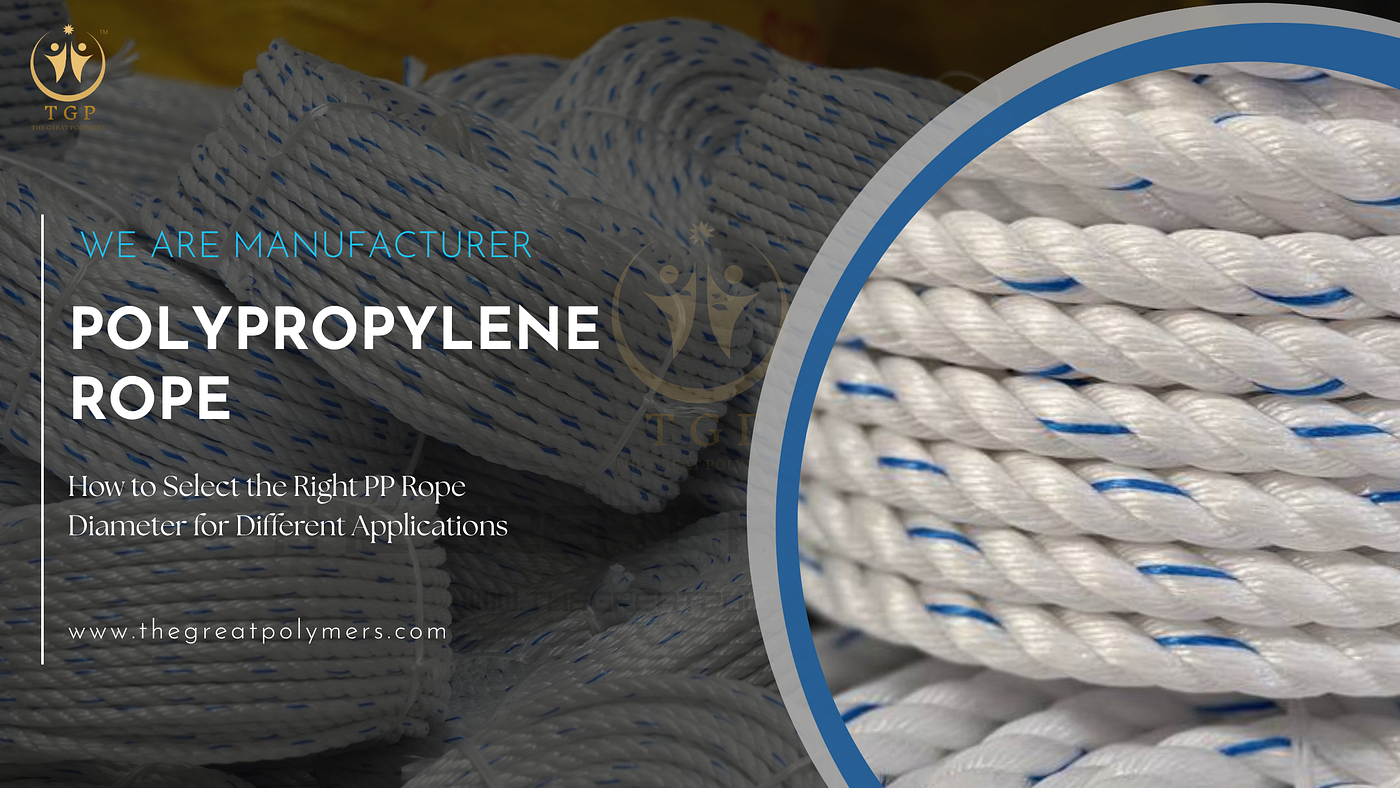
Choosing the correct **PP rope **diameter is important for getting the right balance of strength, weight, flexibility, handling, and performance. A rope that is suitable for agriculture may not be the best choice for packaging, marine handling, transportation, or industrial applications.
**PP rope** (Polypropylene Rope) is widely used because it is lightweight, flexible, has low water absorption, floats on water, and offers good performance for many general-purpose applications. However, selecting the right polypropylene rope diameter should depend on the intended application, rope construction, required strength, and operating conditions.
In this guide, we explain PP rope sizes, specifications, breaking strength, and how to select the right diameter for different applications.
What Is PP Rope?
**PP rope** or polypropylene rope, is manufactured from polypropylene material and can be produced in different diameters and rope constructions according to application requirements.
One of the main advantages of **PP rope** is its lightweight nature. Polypropylene also has low water absorption and generally floats on water, making it useful for selected marine, fishing, agricultural, packaging, transportation, and industrial applications.
PP rope can be supplied in different sizes, colours, constructions, and packaging options. The correct specification should always be selected according to the intended application rather than diameter alone.
PP Rope Specifications
Before selecting a **PP rope**, buyers should compare the technical specifications. Important parameters include diameter, weight, meter per kg, and breaking strength.
The following specifications represent available **PP rope** sizes:
How to Select the Right PP Rope Diameter?
Selecting the right **PP rope** diameter starts with understanding how the rope will be used.
A larger diameter generally provides higher breaking strength, but it also increases weight and material consumption. Therefore, choosing the thickest rope is not always the best solution.
Consider these factors before selecting a polypropylene rope size.
1. Understand the Application
First, identify what the rope will be used for.
For example:
- Transportation
- Marine handling
- Fishing applications
- Industrial utility
- General commercial use
Different applications have different requirements for strength, flexibility, handling, and durability.
2. Consider the Required Strength
Breaking strength is one of the most important specifications when selecting **PP rope**.
As diameter increases, the listed breaking strength in the specification table also increases. For example, the supplied specification shows a breaking strength of 300 KGF for 4 mm PP rope, while 32 mm PP rope is listed at 13,460 KGF.
However, breaking strength should not be confused with safe working load. Always consider appropriate safety factors and application requirements.
3. Consider Rope Handling
Diameter affects how easily a rope can be handled, tied, coiled, stored, and transported.
For lightweight tying and bundling applications, a smaller diameter may be more practical. Larger ropes may be selected where higher strength and greater physical robustness are required.
4. Consider Weight and Meter per Kg
**PP rope** specifications also provide weight per meter and meter per kg.
Smaller diameters generally provide more meters per kg, while larger diameters consume more material per meter.
This is important for buyers comparing rope quantities, packaging requirements, transportation costs, and overall consumption.
5. Consider the Rope Construction
Diameter alone does not determine rope performance.
Construction, number of strands, twisting, manufacturing quality, and material characteristics can affect strength, flexibility, knot performance, and handling.
Always compare ropes using complete technical specifications rather than diameter alone.
Choosing PP Rope Diameter for Different Applications
PP Rope for Transportation
For transportation-related tying and securing, rope diameter should be selected according to the material being secured, load requirements, tying method, and operating conditions.
The rope should provide adequate strength while remaining practical to handle during loading and unloading.
PP Rope for Marine and Fishing Applications
**PP rope** floats on water and has low water absorption, making it useful for selected marine and fishing applications.
Diameter should be selected based on the required strength, handling requirements, rope construction, and actual marine application.
For safety-critical marine operations, the rope specification and working load requirements should be verified before use.
PP Rope for Industrial Applications
Industrial applications can range from bundling and tying to general utility work.
The correct **PP rope** size depends on the required strength, frequency of use, handling conditions, and environment.
For demanding applications, buyers should compare breaking strength, construction, diameter, and application requirements before ordering.
PP Rope Diameter vs Breaking Strength
One of the clearest relationships in **PP rope** specifications is between diameter and breaking strength.
Based on the supplied product specifications:
- 4 mm: 300 KGF / 2.4 KN
- 8 mm: 1,019 KGF / 10 KN
- 12 mm: 2,129 KGF / 21.2 KN
- 16 mm: 3,823 KGF / 37.5 KN
- 20 mm: 5,710 KGF / 56 KN
- 24 mm: 8,157 KGF / 80 KN
- 28 mm: 10,808 KGF / 106 KN
- 32 mm: 13,460 KGF / 132 KN
This demonstrates why buyers should consider diameter and breaking strength together when selecting polypropylene rope.
Other PP Rope Specifications to Consider
Diameter is important, but it is not the only specification that matters.
Rope Construction
Different constructions can affect flexibility, handling, knotting, and strength.
Colour
PP rope can be supplied in different colours according to customer requirements, identification, application, or branding needs.
UV Stabilization
For outdoor applications, UV-stabilized polypropylene rope can be considered for improved resistance to prolonged sunlight exposure.
Packaging
Packaging should be selected according to rope length, customer requirements, storage conditions, and transportation needs.
Length
Buyers should compare total rope length, meter per kg, and packaging quantity when evaluating different products.
Why Choose the Correct PP Rope Diameter?
Selecting the correct polypropylene rope diameter can help achieve:
- Appropriate strength for the application
- Easier handling
- Better material efficiency
- Suitable rope weight
- Improved tying and bundling performance
- Easier storage and transportation
- Better cost control
- More suitable product selection
The objective should not be to select the biggest diameter available. Instead, choose the diameter and construction that meet the actual application requirements.
Why Choose The Great Polymers for PP Rope?
The Great Polymers manufactures **PP rope** / polypropylene rope for agricultural, marine, packaging, transportation, industrial, and general-purpose applications.
PP rope can be supplied in different diameters and specifications according to customer requirements.
For buyers, distributors, importers, and industrial users, important specifications such as diameter, weight, meter per kg, breaking strength, colour, construction, UV stabilization, and packaging can be considered when selecting the appropriate product.
For bulk or customized requirements, buyers should share their application and required specifications with the manufacturer to identify the suitable PP rope.
Conclusion
Selecting the right **PP rope** diameter is essential for achieving the right combination of strength, handling, weight, and cost for a particular application.
From Pipe industry, transportation, marine handling, fishing, and industrial applications, polypropylene rope is available in different diameters and specifications to meet different requirements.
The right selection should consider diameter, breaking strength, rope construction, weight per meter, meter per kg, UV stabilization, colour, packaging, and intended application.
For buyers looking for **PP rope** specifications, comparing technical data before purchasing can help identify the most suitable rope for the job.
When in doubt, share the application, required rope length, expected load, operating environment, and preferred construction with the manufacturer. This allows the rope specification to be selected more accurately.
Purchase Here
메타데이터
- post_id
- f9925bbd56fd
- slug
- how-to-select-the-right-pp-rope-diameter-for-different-applications-f9925bbd56fd
- url
- https://medium.com/@charmi.thegreatpolymer/how-to-select-the-right-pp-rope-diameter-for-different-applications-f9925bbd56fd
- canonical_url
- https://medium.com/@charmi.thegreatpolymer/how-to-select-the-right-pp-rope-diameter-for-different-applications-f9925bbd56fd
- author_url
- https://medium.com/@charmi.thegreatpolymer
- status
- ok
- fetched_at
- 2026-08-19 06:53:14


