What the Knowledge Worker Knew
AI is not just changing how expert work gets done; it is changing how judgement is produced, priced, and passed on
What the Knowledge Worker Knew
AI is not just changing how expert work gets done; it is changing how judgement is produced, priced, and passed on

Photo by Dav Hovhannisyan on Unsplash
On a quiet Tuesday, a junior consultant delivers a client-ready deck in two hours. The charts are neat. The storyline is coherent. The tone even sounds like the firm. A year ago, that would have taken a small team and a long night.
The awkward part is not the speed, but the question that follows. Did the deck reflect understanding, or merely orchestration?
In 1959, Peter Drucker introduced a phrase that would quietly reorganise how educated professionals thought about themselves. The “knowledge worker,” he argued, was something genuinely new in economic history, someone whose primary productive asset was not physical strength or manual dexterity, but what they carried in their heads.
The idea was elegant and durable. It survived the PC revolution, the internet, and the rise of the platform economy. For decades, the knowledge worker’s identity rested on a stable foundation: the things they knew how to do could not be easily replicated or transferred.
That foundation is now shaking; not collapsing, but shifting in ways the current commentary tends to understate. Synthesis is getting cheaper, and that changes what expertise can credibly charge for. It also changes how expertise gets built.
What made expert work expensive
For most of the twentieth century, knowledge work was expensive for a simple reason: it took a long time to produce someone who could do it well. The consultant who could walk into a struggling business and, within a week, identify the three things that actually mattered had not arrived at that capacity through talent alone. She had spent years on engagements that went sideways, on analyses that answered the wrong question. Client relationships taught her, sometimes painfully, the difference between what executives say they want and what their organisation actually needs.
That accumulated experience was not incidental to her value. It was her value.
Thomas Davenport and Laurence Prusak, writing on knowledge management in the late 1990s, were careful to distinguish between data, information, and knowledge, with knowledge defined as something that exists only inside human minds, shaped by experience, values, and contextual understanding. You can capture information in a document, but knowledge is harder. It requires the person.
This distinction underpinned the economics of professional services. The reason you hired a top consulting or law firm was not that it owned a proprietary database of better answers. It was that its people, through years of structured exposure, had developed judgement that did not travel easily across a wire.
Judgement, however, was never just a gift. It was also a muscle. It was built through calibration, through seeing how a plausible analysis fails in the real world, through learning what “wrong but convincing” looks like, and through absorbing the politics of what can and cannot be said in a room. That is why the training took time.
The agentic turn, and what it actually means
AI agents, meaning systems capable not just of generating text or images, but of initiating actions, working through multi-step problems, and operating with less constant human instruction, have arrived as more than a concept. Some of the talk is hype, but the direction is real. The meaningful shift is not that AI can write a competent first draft. It is that, under the right conditions, it can keep going, chaining steps together, and producing a stream of usable work while the human shifts from producer to editor, interpreter, and accountable reviewer.
Consulting offers a useful window into what this means because the industry is built around packaging and selling judgement. McKinsey’s Lilli, launched firmwide in 2023, is a serious illustration. It gives consultants query access to a large body of the firm’s accumulated knowledge and methods, then helps them search, synthesise, and draft in the firm’s style. Since the rollout McKinsey has reported wide internal adoption, more than 500,000 prompts a month, and up to 30 percent time savings in searching and synthesising knowledge.
Separately, Business Insider has reported that KPMG has been training junior consultants to manage teams of AI agents rather than perform all the underlying grunt work themselves. In April 2025, Business Insider also reported that BCG consultants had built tens of thousands of custom agents for client projects, in a bottom-up model that pushes tool creation closer to the frontline. The point is not simply that junior work becomes faster. It is that the traditional path through which junior people learned the work is being redesigned, deliberately in some firms and by accident in others.
Precision matters here. The speed gains are concentrated in the parts of knowledge work that were always, at some level, information retrieval, pattern application, and first-pass assembly. Finding relevant precedent, structuring data, drafting a model, producing a first storyline: these tasks required trained humans not because they demanded deep insight, but because the tools to automate them did not yet exist.
Historically, the insight came later, when a senior person looked at what the junior team had assembled and decided what it meant. AI has, in effect, automated more of the assembly. The output layer is being automated faster than the judgement layer is being rebuilt.
The question of what it means remains human, not because machines are incapable of meaning-making in some philosophical sense, but because no organisation has yet worked out how to hold a machine accountable for getting it wrong. That accountability gap is not a technical footnote. It is a governance problem, and it is where the real disruption is still arriving.
Automation removes the curriculum
The analyst who spent three years building financial models was learning to read them, to notice which assumptions drove the answer, to recognise when the numbers looked right and when they looked coached. The repetition had a purpose that the firm never quite articulated, because it did not need to. Everyone understood, implicitly, that the junior work was also the training. The repetition was education.
Automation removes the curriculum without necessarily replacing it. What we are left with, in many knowledge-intensive organisations, is a cohort of professionals asked to supervise and validate outputs they have not yet developed the experience to critique. They can spot an obvious error. What they may struggle to see is a plausible but subtly mis-framed analysis, one that answers the question as asked while missing the question that should have been asked. That discernment is still built through exposure, feedback, consequence, and time.
The risk is not dramatic incompetence. It is something quieter: a gradual narrowing of the gap between professional judgement and sophisticated autocomplete, unnoticed by organisations that measure speed and output volume rather than the quality of the underlying reasoning.
None of this means AI cannot teach. Used well, it can act as scaffolding. It can show alternative framings, generate sensitivity checks, explain why an assumption matters, and force a junior person to confront variants they would not have thought to test.
But scaffolds only teach if organisations insist on reconstruction. If the workflow rewards copy-and-paste, the tool becomes a shortcut. If the workflow rewards critique, the tool becomes a tutor. The same technology can produce either outcome.
Recent reporting on KPMG’s TaxSIM is revealing for this reason. The tool is being tested as a way to help tax professionals build judgement through simulations as AI takes over routine preparatory tasks. Whether such tools succeed is an open question, but the impulse is right: if the old curriculum disappears, the new one has to be designed.
The hype problem
The agentic story is still running ahead of operational reality in many firms. Organisations pilot agent-like workflows and discover that only a minority survive contact with production constraints: messy data, permissioning, edge cases, security concerns, compliance review, and the stubborn fact that real work rarely follows the clean path shown in a demo.
The failure mode is often mundane. The demo works, the workflow breaks on exceptions, and a human quietly resumes the work.
This is not an argument for complacency. It is an argument for precision. The transformation of knowledge work is real and accelerating. It is also uneven and slower in practice than it appears in announcements. Managing the gap between the two is itself a form of judgement.
There is also a less glamorous point that firms are still learning. AI does not run on magic. It runs on the quality of the organisation beneath it: its data, accumulated methods, documented decisions, permission structures, and habits of review. A firm with weak organisational intelligence does not become intelligent simply because it adds AI. It becomes faster at exposing what it does not know.
That is why the old distinction between data, information, and knowledge matters again. AI can move quickly across data and information. It can also synthesise patterns in ways that are useful and sometimes impressive. But when the underlying organisation has poor memory, weak taxonomies, unclear ownership, and thin review routines, the technology does not repair the institution. It amplifies its condition.
What remains scarce, and why it gets harder to build
If production is becoming cheap, especially the assembly of information, the generation of drafts, and the construction of preliminary analyses, then the question of what remains scarce becomes urgent. The answer is still framing, verification, and accountability. Each now comes with a twist that many organisations are underestimating.
Framing is the ability to locate the real question before answering the one on the slide. AI can produce ten plausible problem statements in seconds. It cannot reliably tell you which one matches the politics of the room, the history of the organisation, or the constraint nobody has said out loud. That remains human work, built from lived context and consequence.
Verification is getting harder, not easier, because AI changes the psychology of critique. In the old apprenticeship model, junior work often looked obviously fallible: messy spreadsheets, awkward charts, half-right drafts. People felt permitted to poke at it because the imperfections invited inspection.
AI outputs often arrive polished, confident, and well-structured. That surface fluency can create an illusion of correctness, especially for people who have not yet developed the habit of rebuilding the logic for themselves. They may learn to check facts. What they may struggle to challenge is a neat answer to the wrong question.
A messy spreadsheet announces its fallibility. A cleanly formatted slide deck with consistent fonts and a tidy executive summary does not. The junior analyst who would have caught the wrong assumption in a rough model may not think to look for it in something that already resembles a final product.
When that surface fluency turns out to be wrong, the issue stops being individual diligence and becomes organisational: who owns the call to challenge it, and who carries the consequence if nobody does?
Accountability remains the least discussed and most consequential shift. It is also the one that management theory is least prepared for.
The professional services model — consulting, law, audit — was built around a specific answer to the question of who is responsible. The partner signed the letter. The firm stood behind the work. That structure was expensive partly because it was human: trained people, whose reputations were on the line, applied judgement to problems and accepted the consequences when they got it wrong. Accountability was not a feature bolted onto the business model. It was load-bearing.
When work is distributed across a chain of human analysts, AI systems, internal knowledge bases, workflow tools, and client data, the question of who owns the call becomes genuinely murky. “The model suggested it” is not a governance structure. Neither is “the junior team reviewed the output.” What firms are discovering, slowly, because the failures have not yet been dramatic enough to force the conversation, is that speed and accountability are in tension in ways that the current tooling does not resolve.
When the knowledge firm changes species
This is why the change is larger than productivity. Knowledge firms are not merely becoming faster at producing documents, models, and recommendations. They are changing species.
The traditional knowledge firm converted human experience into judgement through apprenticeship, supervision, institutional memory, and reputational accountability. The emerging firm converts data, methods, prompts, workflows, and human review into outputs that resemble expert work. The question is whether the judgement layer evolves with the production layer, or whether the firm becomes impressively fluent while quietly thinning out the expertise on which its authority depends.
The phrase “species change” may sound dramatic, but it captures something important. The firm is no longer simply a container for professionals who know things. Increasingly, it is a socio-technical system that combines human experts, proprietary knowledge, AI tools, workflow design, and governance routines. That combination can be powerful. It can also be fragile if leaders mistake output for capability.
This is not a counsel of despair about AI. It is a counsel of precision about what is being traded away. The knowledge worker Drucker described was expensive partly because she was accountable. Her replacement, partial, gradual, and uneven, is fast and tireless and carries no such burden. Organisations that notice this early will have a structural advantage. Those that do not will find out the hard way, in a boardroom, after something has gone wrong.
The question Drucker did not have to ask
Drucker’s knowledge worker owned an asset that walked in the door every morning: expertise.
The modern twist is that we are starting to build close substitutes for many outward signs of that asset. These systems can retrieve, summarise, draft, compare, model, and propose at speed, and they never go home. They do not get tired and they do not leave for a competitor. They also do not accumulate the same kinds of lived consequence that once made human judgement scarce. But they can mimic many of the outward signals of competence, and that matters economically even if the imitation is imperfect.
What remains valuable is not simply “more knowledge.” It is judgement in the meaningful sense: the ability to frame the real question, to detect when a polished answer is resting on a bad assumption, and to take responsibility for a recommendation under uncertainty.
That has always been the core of what the best knowledge workers actually sold. The difference now is that the imitation is good enough to obscure the gap, until the moment when it isn’t. Managing that moment is, in the end, a problem of the old-fashioned kind. It does not yield to a better prompt.
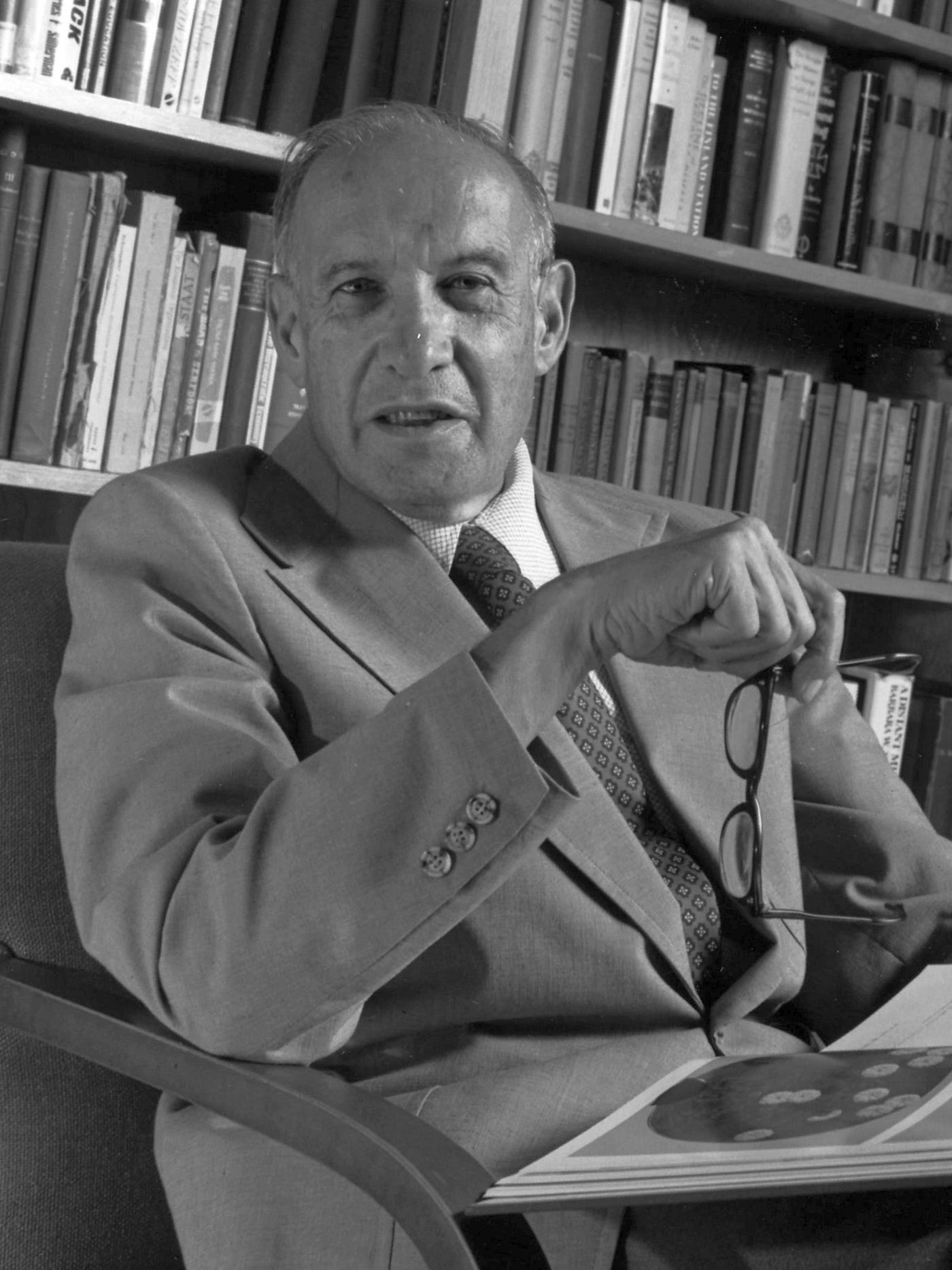
Photo by Jeff McNeill via Wikimedia Commons
Dr. Nicos Rossides is a CEO, educator, and author focused on management, education, and the practical implications of AI. He is Co-Founder and Chairman of the Advisory Board of listening247, a global insights firm, and a professor at Minjiang University’s International Digital Economy College. His books include two recent Routledge titles: Employee Engagement in Startups (2025) and AI-Powered Insight: Marketing Research Reconfigured (co-authored with Michalis Michael, May 2026).
메타데이터
- post_id
- f9b8dde6f42c
- slug
- what-the-knowledge-worker-knew-f9b8dde6f42c
- url
- https://medium.com/brain-labs/what-the-knowledge-worker-knew-f9b8dde6f42c
- canonical_url
- https://medium.com/brain-labs/what-the-knowledge-worker-knew-f9b8dde6f42c
- author_url
- https://medium.com/@nicos_33494
- status
- ok
- fetched_at
- 2026-06-10 22:22:12