Improving Postural Stability In Patients With Central Vestibular Disorder
Postural stability is the foundation of human movement, allowing us to navigate our environment, perform daily tasks, and maintain an…
Improving Postural Stability In Patients With Central Vestibular Disorder
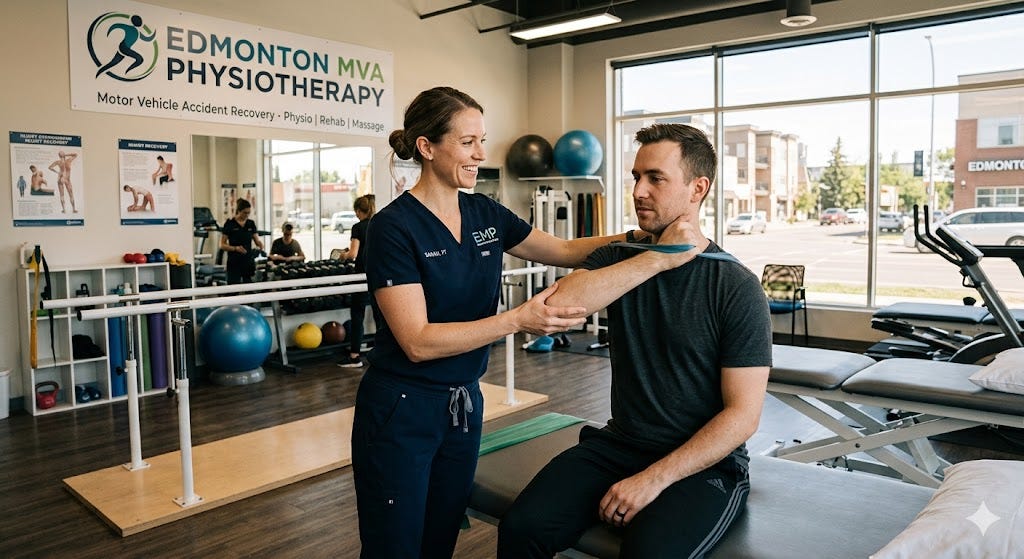
Postural stability is the foundation of human movement, allowing us to navigate our environment, perform daily tasks, and maintain an upright position against the force of gravity. However, for individuals diagnosed with a central vestibular disorder, this fundamental ability becomes compromised. Unlike peripheral vestibular issues that originate in the inner ear, central disorders stem from the brainstem, cerebellum, or cerebral cortex. Addressing these challenges requires a highly specialized approach to central vestibular disorder treatment that focuses on neuroplasticity and sensory integration.
In the heart of Alberta, many patients are turning to Vestibular Physiotherapy Edmonton to find relief. By combining clinical expertise with targeted exercises, it is possible to “retrain” the brain to process balance signals more effectively, even when the primary neural pathways are damaged.

Understanding the Central Vestibular System
The central vestibular system is the processing hub for balance. It receives information from the inner ears (vestibular), the eyes (visual), and the muscles and joints (proprioceptive). When a stroke, multiple sclerosis, or traumatic brain injury disrupts these pathways, the result is often profound instability.
Patients with these conditions often describe a sense of being “disconnected” from the ground. Because the brain cannot accurately interpret where the body is in space, it often defaults to a state of hyper-vigilance, leading to muscle stiffness and a high risk of falls. Effective central vestibular disorder treatment must therefore look beyond the “dizzy” sensation and focus on the motor outputs that keep us standing.
The Role of Sensory Reweighting
One of the primary goals of improving postural stability is “sensory reweighting.” In a healthy individual, the brain shifts its reliance between the three balance systems depending on the environment. For example, in the dark, the brain relies more on the feet and inner ear.
In patients requiring central vestibular disorder treatment, this shifting mechanism is often broken. Many patients become “visually dependent,” meaning they cannot balance if their eyes are closed or if they are in a busy environment like a grocery store. Vestibular Physiotherapy Edmonton specialists use specific protocols to force the brain to stop over-relying on vision and start trusting the signals from the feet and the vestibular nuclei.
Key Strategies for Improving Postural Stability
To achieve long-term stability, a multifaceted treatment plan is required. Here are the core pillars of a successful rehabilitation program:
1. Core and Axial Stability Training
Central disorders often lead to “trunk ataxia” or a lack of coordination in the torso. Treatment involves exercises that challenge the deep core muscles while the head is in motion. By stabilizing the “center,” the brain has a more reliable anchor point to reference when processing balance signals.
2. Habituation and Desensitization
Many patients suffer from motion sensitivity. Through central vestibular disorder treatment, patients are gradually exposed to the very movements that cause symptoms. Over time, the brain learns that these movements are not “dangerous,” and the postural swaying decreases.
3. Gaze Stabilization (VORX)
The Vestibulo-Ocular Reflex (VOR) is often impaired in central cases. If your eyes cannot stay fixed on a target while your head moves, your brain will perceive the world as “slipping,” which triggers a balance correction that isn’t needed leading to a stumble. Specialized Vestibular Physiotherapy Edmonton clinics use VOR training to ensure vision remains stable during gait.
4. Weight-Shifting and Limits of Stability
Patients with central issues often have a very narrow “base of support.” They are afraid to move their center of mass near their boundaries. Treatment involves safely practicing weight shifts to the front, back, and sides to expand these boundaries and reduce the fear of falling.
High Arches and the “Sensory Footprint”
An often-overlooked factor in postural stability is foot anatomy. Patients with high arches (Pes Cavus) have significantly less surface area in contact with the ground. This means the mechanoreceptors in the soles of the feet provide less feedback to the brain.
When a patient is already dealing with a central deficit, this lack of foot-to-ground feedback can be devastating. Within a comprehensive central vestibular disorder treatment plan, addressing the feet is vital. This might include:
- Grounding Exercises: Practicing balance on different textures to stimulate the nerves in the feet.
- Proprioceptive Training: Using foam pads or tilt boards to challenge the ankles.
- Orthotic Support: Filling the gap under a high arch to increase the sensory input to the brain.
The Importance of Consistency in Edmonton
Living in a climate with icy winters and uneven terrain makes balance even more critical. Seeking out Vestibular Physiotherapy Edmonton ensures that your rehabilitation is tailored to the real-world challenges you face daily. Whether it’s navigating the river valley trails or walking across a slippery parking lot, your therapy should mimic these environments.
The recovery journey for a central disorder is often longer than that of a peripheral one, such as BPPV. It requires patience and a commitment to neuroplastic change. However, with the right central vestibular disorder treatment, the brain can form new pathways (synaptogenesis) to bypass damaged areas.
Breaking the Cycle of Avoidance
Perhaps the most significant barrier to postural stability is “fear-avoidance behavior.” When a person feels unstable, they stop moving. This inactivity leads to muscle weakness and further degrades the vestibular system’s ability to calibrate.
The most successful central vestibular disorder treatment programs incorporate a psychological component, helping patients realize that “dizziness is not damage.” By moving through the discomfort under the guidance of a professional at Vestibular Physiotherapy Edmonton, patients can reclaim their independence.
Improving postural stability in the face of a central vestibular disorder is a complex but achievable goal. By focusing on sensory reweighting, gaze stability, and the biomechanics of the feet, patients can significantly reduce their risk of falls and improve their quality of life.
If you or a loved one are struggling with persistent swaying, unsteadiness, or the feeling of being “off-balance,” remember that specialized help is available. Seeking a dedicated central vestibular disorder treatment plan is the first step toward finding your center again. Through the expertise provided by Vestibular Physiotherapy Edmonton, you can transition from a life of caution to a life of confident movement.
메타데이터
- post_id
- f9d6f3f64d32
- slug
- improving-postural-stability-in-patients-with-central-vestibular-disorder-f9d6f3f64d32
- url
- https://medium.com/@turningpointphysiotherapy/improving-postural-stability-in-patients-with-central-vestibular-disorder-f9d6f3f64d32
- canonical_url
- https://medium.com/@turningpointphysiotherapy/improving-postural-stability-in-patients-with-central-vestibular-disorder-f9d6f3f64d32
- author_url
- https://medium.com/@turningpointphysiotherapy
- status
- ok
- fetched_at
- 2026-06-09 15:37:30