Tips on presenting (from a UX Designer)
In this post I lay out some tips on preparation, delivery and nerves you can use to help you with your next presentation.
Tips on presenting (from a UX Designer)
In this post I lay out some tips on preparation, delivery and nerves you can use to help you with your next presentation.
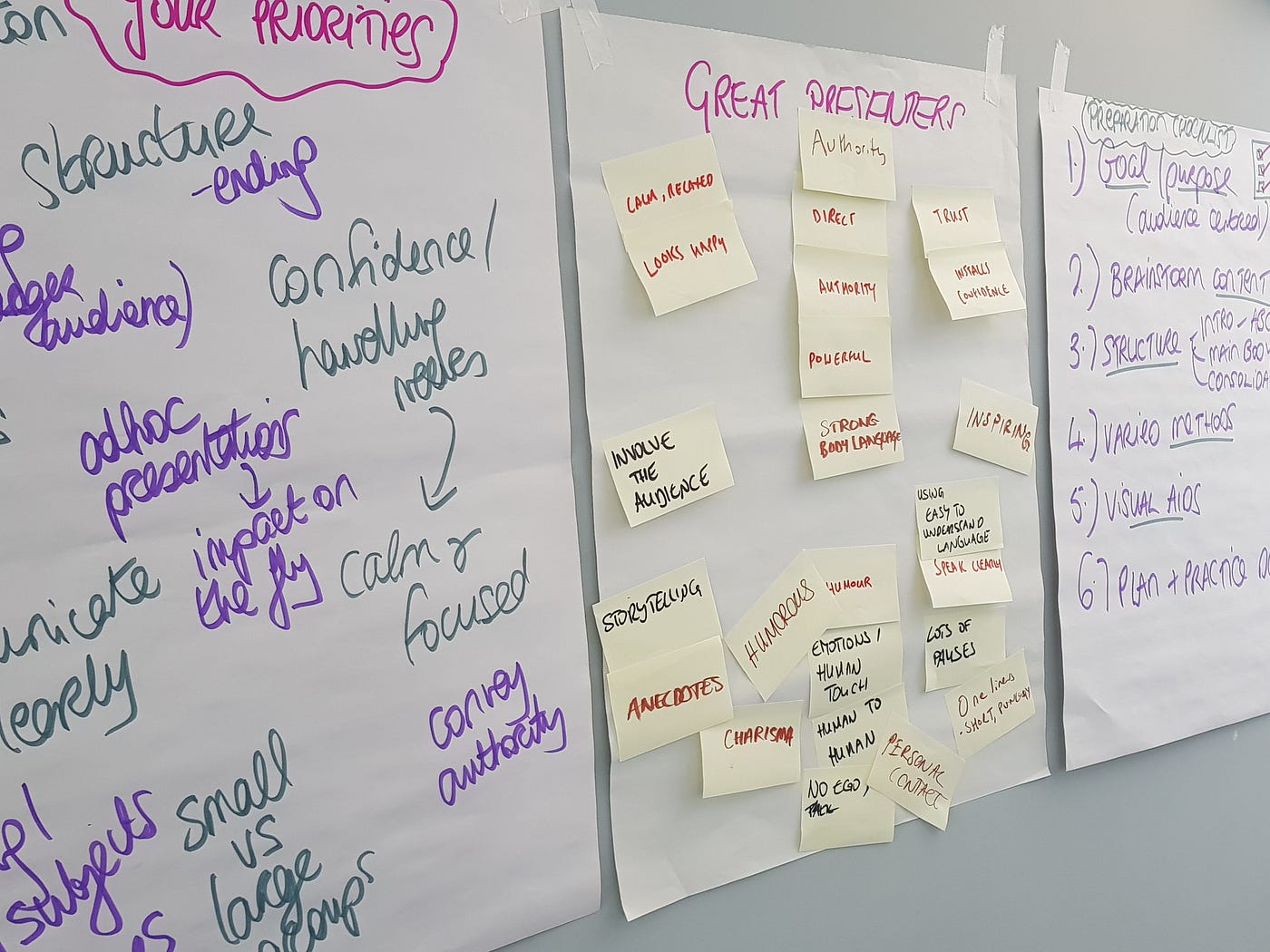
Preparation
I’m going to make a long speech because I didn’t have time to prepare a short one. — Winston Churchill
Goal & purpose. Think about what the goal is of your presentation. Consider the why, what, how and the what if. Keep the purpose of the presentation clear from start to finish.
Your audience. It’s actually not about it, it’s about your audience: what is important and useful to them? What keeps them awake at night?
> Don’t start in PowerPoint. Use mind maps to brainstorm and plan your content. This will allow you to be more creative with your ideas, add new ones in and get an overview of your content. You are the presentation, your slides are a visual aid.
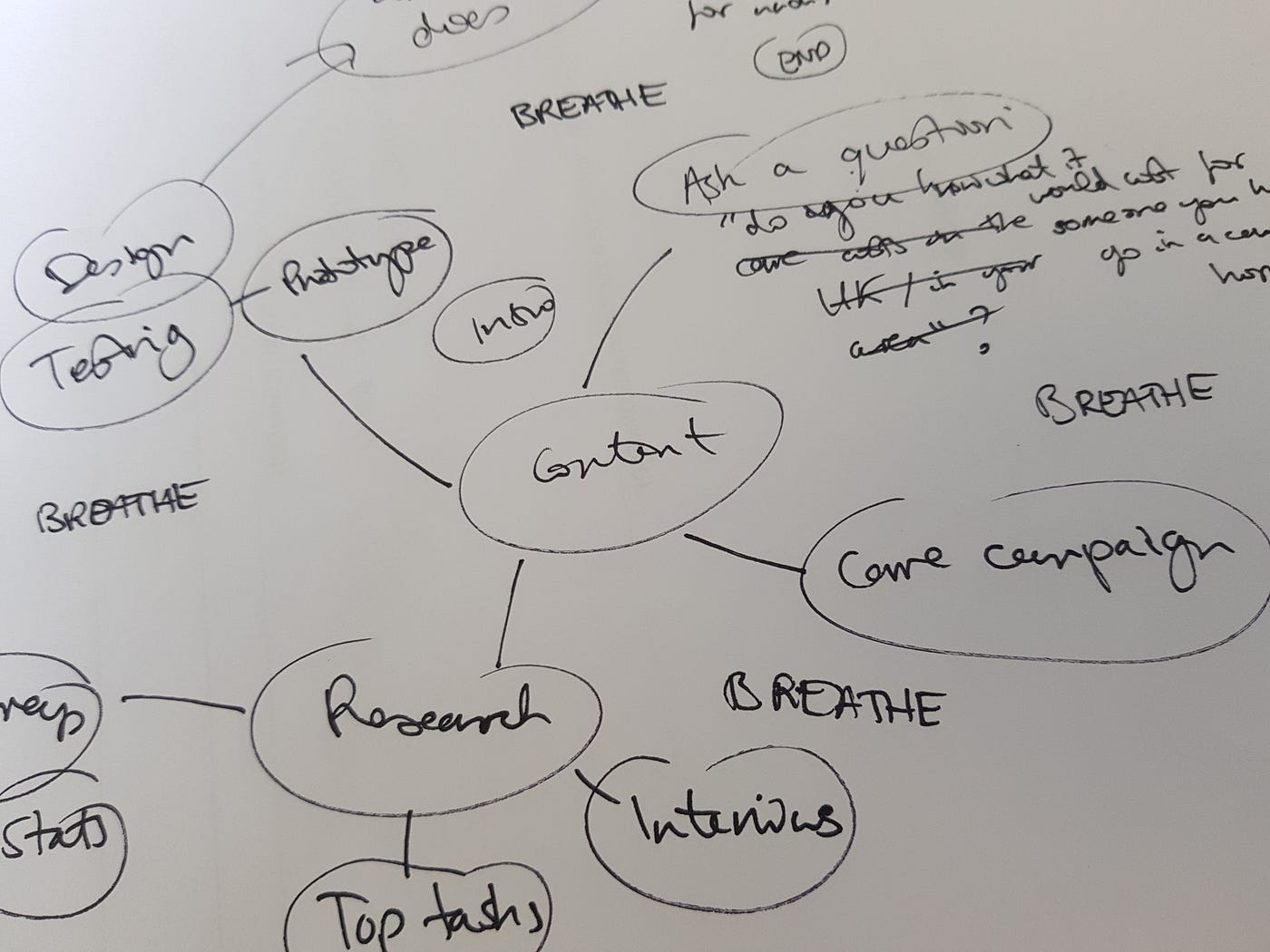
Mind maps are great for planning your content.
Beginning, middle and end. Tell them what your going to tell them, then tell them and finally tell them what you’ve told them.
Start with something attention grabbing, show your audience what they will gain/learn, provide a little bit about you and share the structure of your presentation.
End on something memorable, this could be a quote, a picture or something that brings your talk full circle like an ending to a story. Avoid “that’s it” or “we’ve run out of time”.
Less words. Don’t write what you are going to say on your slides. You need to trust that if you have prepared, you won’t forget what to say. The amount of text per slide should be able to fit on a t-shirt.
Visual aids. Visuals are more memorable than anything your audience might read. Use these as cues to help you remember what you are going to say.
Engage your audience. Even more memorable than visuals are things we have discussed or experienced (see William Glasser’s chart on how we learn below).
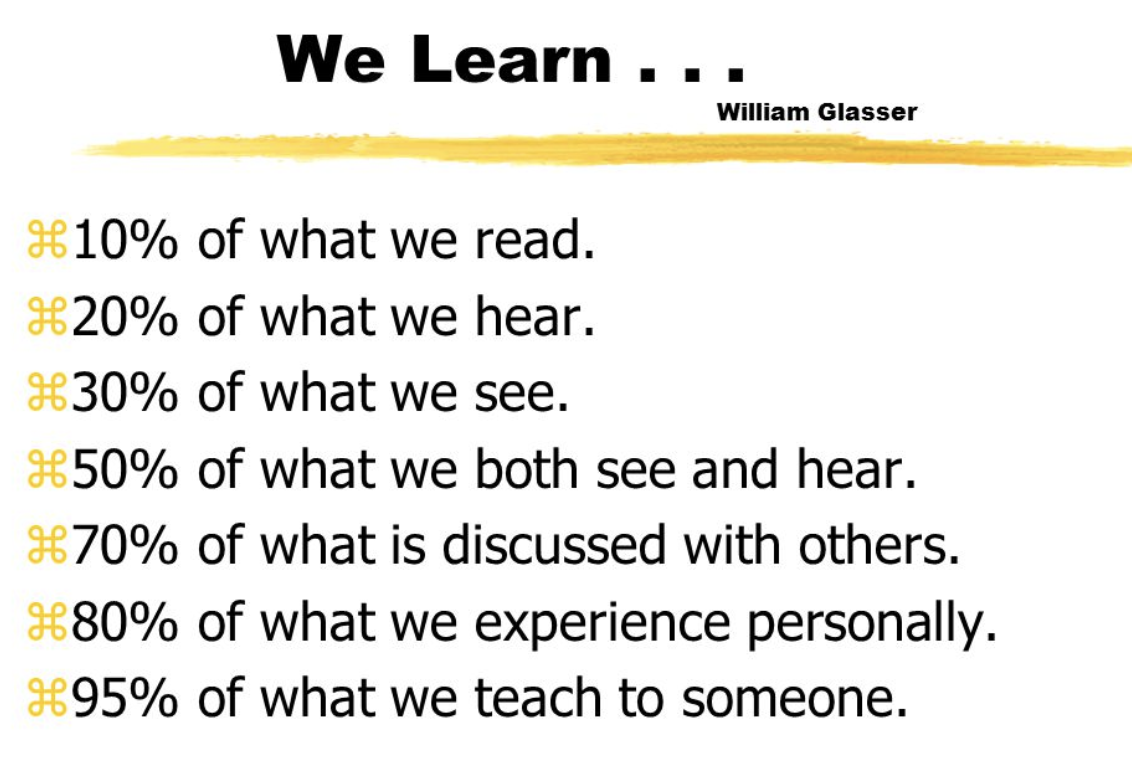
Remember visuals and experiences are more memorable than reading text on slides.
Ask your audience a question or give them physical objects to get them discussing and experiencing your topic.
If you are speaking to a large group you could ask them to turn to the person next to them to discuss a topic/question/experience. This will also keep people awake and interested in your presentation!
Practice speaking. Doing a run through (ideally a couple) of your presentation is so so important to iron out any obvious gaps or things that don’t sound quite right. Just hearing yourself say your content out loud before the real thing will also really help your nerves on the day.
Delivery & Style
Fake it til you make it.
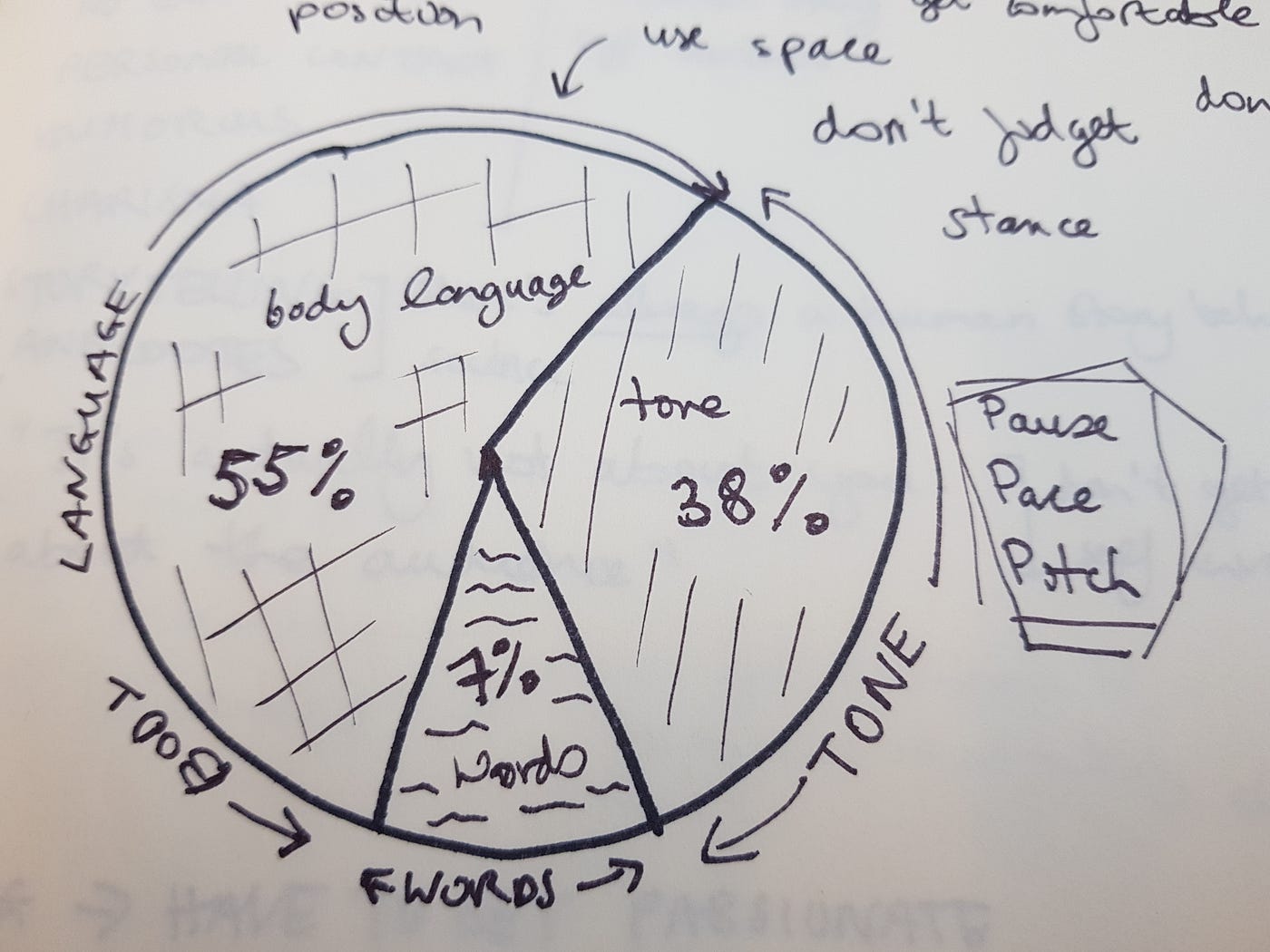
55% of communication is body language, 38% is your tone and your words make up 5%
Body language. Make eye contact, smile and get comfortable in the space. Hold a confident stance, grounded on both feet with open shoulders and avoid swaying or fidgeting. Amy Cuddy did a fantastic TED talk on the subject of body language and how it affects your confidence.
Cues. Use a range of aids to help you keep track of where you are, post its, cards, mind map diagrams or a printout of all slides on one page are really helpful to remind you of where you are and what’s coming next in your presentation.
Pitch. Pace. Pause. Vocal delivery is important and something I really had to work on. Make sure you are projecting your voice. Pretend there is someone right at the back of the room who is trying to hear you. Commit to your content and finish every word.
Inspire. You have to get passionate about your subject. Your knowledge of your topic (which comes with preparation) and your excitement installs confidence and will inspire others.
Storytelling. Be human. There is always a human story behind every science. If you are working with complex data, convey why it is important and link it back to your audience: people. You can use humour or anecdotes as well. Watch Michael Margolis explain how storytelling helps sell ideas.
Rule of 3. To make it more memorable, if you can use the rule of 3 and make 3 points and back these up with 3 things.
Replace ‘um’ with breathing. Become aware of saying ‘um’ too much as a filler when you are thinking about what to say next. Instead, take a breath.
Dealing with nerves
You don’t need to go nearly as fast as you think you do.
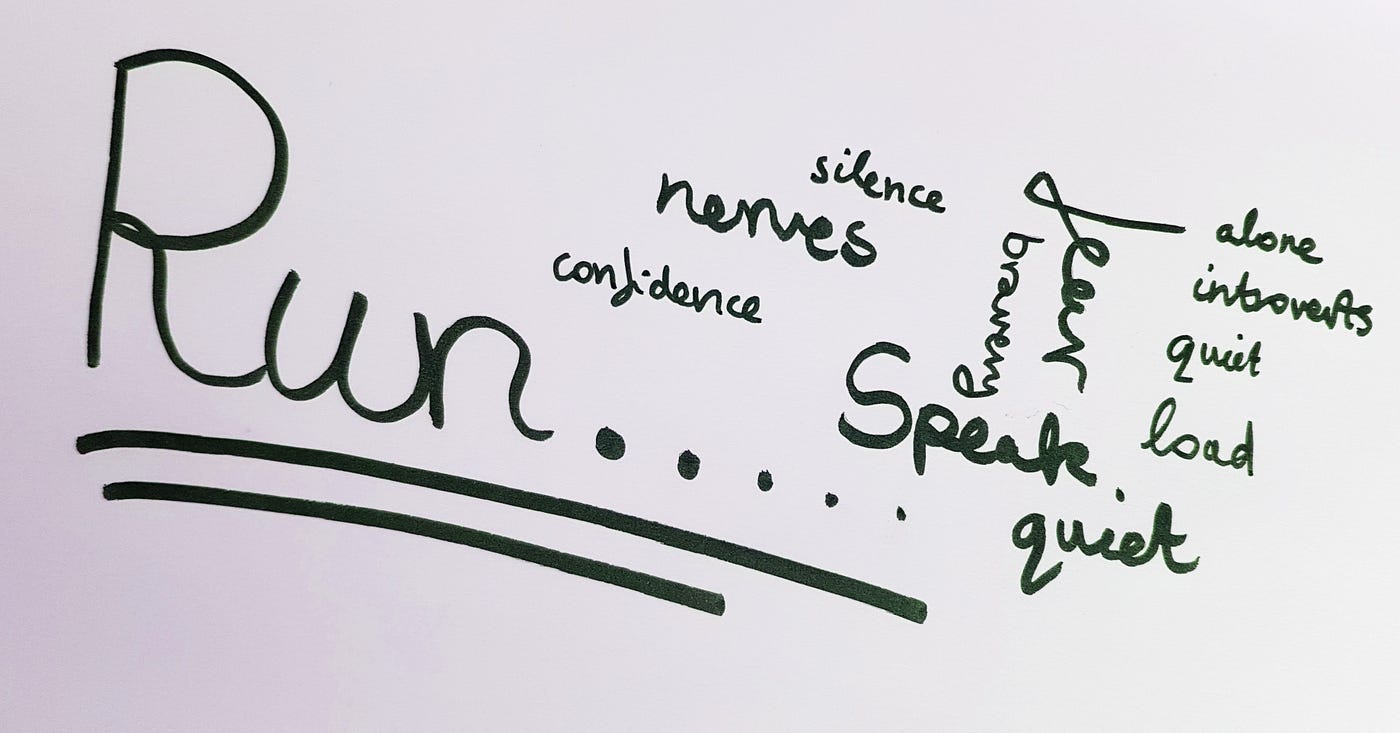
Some of my thoughts right before a presentation
Breathe. I’ll say it again: remember to breathe. This is so so important to help with your nerves. You can write “breathe” down in between each slide in your notes, to remind yourself to breath. Instead of saying ‘um’, be comfortable with gaps and silences and use that time to… you guessed it, breathe.
Mindfulness. Recognise and be aware of your nerves. Then make peace with them. Think of your nerves as a beach ball, the more you try to push them down, the quicker they bounce back up. Instead, picture the beach ball floating besides you and become comfortable with it being there.
Reframe your nerves. Tell yourself you are excited for the opportunity to share your project/idea/thoughts with your audience. Nerves come from a hot thought, a limiting belief such as “I’m not good enough”. Turn this around to actually “I am an expert in this, that’s why I have been asked to talk about this”.
Drinks. Take sips of water. I love coffee and usually can’t function without it but I find it makes me more anxious. I switch to camomile tea for the day to help calm my nerves.
Trust. Trust that people want you to do well (no one likes watching others struggle, it makes them feel anxious and nervous too!) and that you do know your stuff.
Slow. Lastly, I remind myself to suck it up (it’s never good to get too comfortable): speak clearly and go slowly.
A note to introverts
In our workplaces being an extrovert is favoured. In my personal experience as a UI and UX Designer, holding workshops, impromptu presentations, being vocal, opinionated and assertive is favoured and it is often those that hold these qualities that get promoted quicker. However, as many in the field are now becoming aware, introverts are important and come with their own strengths.
Introverts need to make sure they aren’t left behind or miss out on having their ideas heard by throwing themselves out there. Be brave, push yourself out of the comfort zone and practice every chance you get.
Susan Cain called it her: Year of Speaking dangerously in her TED talk The Power of Introverts. She shared how she took 7 years to write her book, this time she absolutely loved because it suited her introverted personality but when it cam to actually selling the book she really had to practice and be brave!
Stop aiming for perfection
Set your goal to good instead of perfect. For me, I realised a lot of it had to do with aiming for perfect: thinking everything I did and said had to be perfect with no room for criticism. Once I made peace with the idea that I will be getting things wrong, people may notice and that’s ok, it became a whole load easier. If you do forget one or two things you were going to say, don’t stress it — it doesn’t actually matter.
I hope some of these tips might be helpful to you. Please share any other tips or leave your comments.
[embed]
메타데이터
- post_id
- f9d7fb29f10d
- slug
- tips-on-presenting-from-a-ux-designer-f9d7fb29f10d
- url
- https://blog.prototypr.io/tips-on-presenting-from-a-ux-designer-f9d7fb29f10d
- canonical_url
- https://blog.prototypr.io/tips-on-presenting-from-a-ux-designer-f9d7fb29f10d
- author_url
- https://medium.com/@josephinejost
- status
- ok
- fetched_at
- 2026-07-16 10:34:34