AutoMapper vs Extension Method vs Mapperly
1. AutoMapper Pros:
AutoMapper vs Extension Method vs Mapperly
1. AutoMapper Pros:
- Reduces development time significantly.
- Minimal boilerplate code.
- Offers many built-in features like profiles, resolvers, conditional mapping, and more.
Cons:
- Uses reflection and expression trees, which makes it slower than direct mapping methods.
- Limited control over mapping logic.
- Missing properties are silently ignored unless explicitly configured, which can lead to subtle bugs.
- Best for: Projects where development speed is a priority and performance is not critical.
Example : Let’s assume we have two classes:
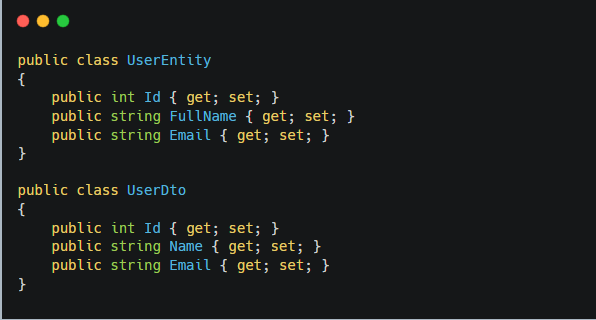
Now, we want to map UserEntity → UserDto.

2. Extension Method Mapping
Pros:
- Faster performance since it’s plain C# code without reflection.
- Full control over mapping logic, allowing custom transformations.
- Compiler errors appear if a property is missing, improving safety.
Cons:
- Can become repetitive and verbose in large domains.
- More maintenance effort as project size grows.
- Best for: Small projects or performance-critical sections of code.
Example :

3. Mapperly
Pros:
- High performance comparable to extension methods.
- Less boilerplate code compared to manual mapping.
- Compile-time generated C# code ensures type safety and gives warnings for unmapped properties.
- Attribute-driven and easy to read.
- Provides control over mapping while maintaining maintainability.
Cons:
- Newer tool, may require initial learning.
- Best for: Medium to large projects needing a balance of performance, safety, and maintainability.
Example :

Summery :

메타데이터
- post_id
- f9e30ec73d3b
- slug
- automapper-vs-extension-method-vs-mapperly-f9e30ec73d3b
- url
- https://medium.com/@rokoncse13044/automapper-vs-extension-method-vs-mapperly-f9e30ec73d3b
- canonical_url
- https://medium.com/@rokoncse13044/automapper-vs-extension-method-vs-mapperly-f9e30ec73d3b
- author_url
- https://medium.com/@rokoncse13044
- status
- ok
- fetched_at
- 2026-07-16 19:00:48