Political Marketing on the Internet: How Digital Tools Shape Modern Democracy? Part II
By Anna Przybylska
Political Marketing on the Internet: How Digital Tools Shape Modern Democracy? Part II
By Anna Przybylska
The algorithm for victory: Is AI an essential tool to win election?
In the previous post, we discussed how the Internet and social media have revolutionized the election campaigns. We saw how Facebook, TikTok, and X (formerly Twitter) have become digital “battlefields” for voters. Today, we cannot ignore the next stage of the revolution that is happening before our eyes, namely the development of artificial intelligence (AI) models. It shapes not only political communication, but also the way we think about democracy.

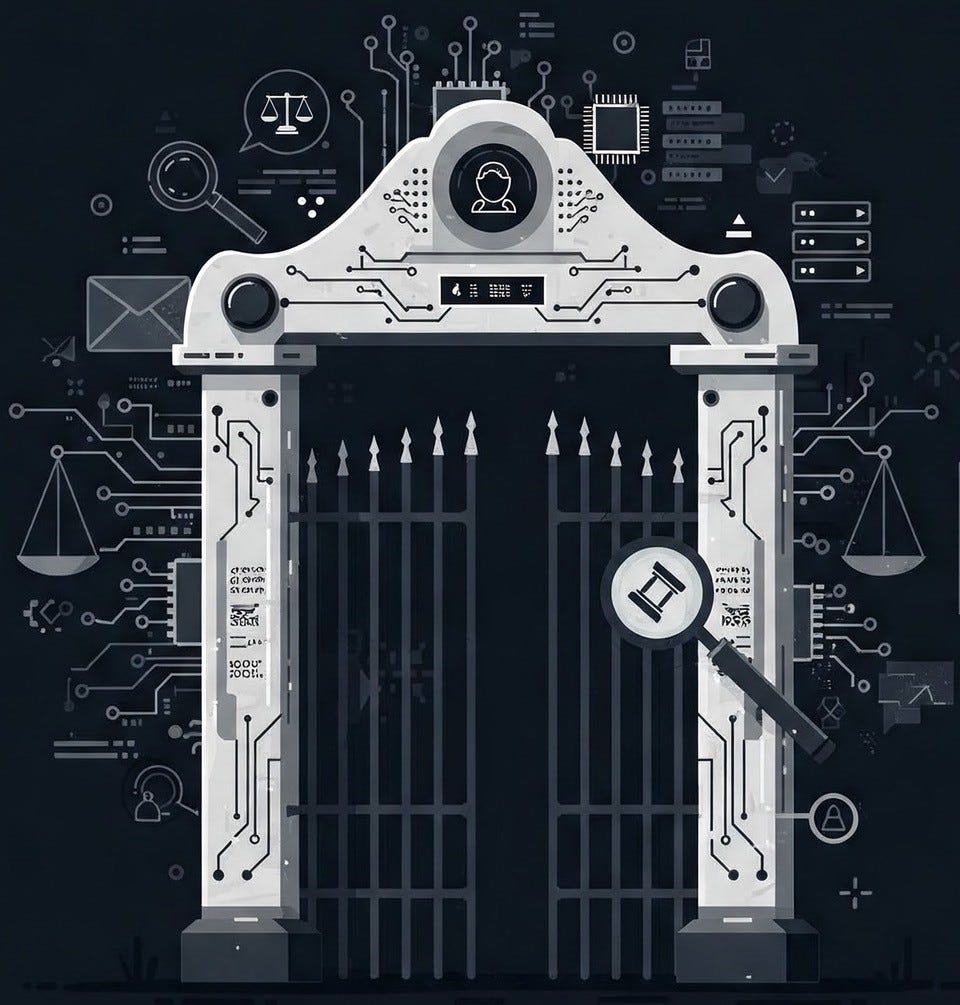
Image generated with ChatGPT
From Turing to ChatGPT: the development of machine learning
When scientist Alan Turing proposed a test in 1950 to determine whether a machine could “think like a human,” he probably did not imagine that his concept would become the foundation for training modern language models. From the first, not always entirely successful experiments, such as ELIZA at MIT in the 1960s, to modern systems, led by the most popular ChatGPT. The development of artificial intelligence is a story of constantly pushing the boundaries between technology and human thinking. The creation of OpenAI significantly impacted the popularization of AI. The organization was founded by Sam Altman, Greg Brockman, and Wojciech Zaręba. Their goal was to create technology that “will serve all of humanity.” The idea sounds noble, but we already know that AI can serve both as a tool for development and manipulation. It should be remembered that updates to artificial intelligence models are not just minor changes that improve the use of this tool, but improvements that allow for the generation of more accurate and advanced content.
AI Steve, the politician who never sleeps
One of the most interesting applications of artificial intelligence in political marketing is the use of chatbots, or virtual advisors, who can simultaneously conduct conversations with thousands of voters at the same time.
In the UK, AI Steve, an independent digital parliamentary candidate represented by businessman Steve Endacott, has become a high-profile example. It can conduct up to 45,000 conversations simultaneously, answering citizens’ questions on various topics and analyzing their opinions. AI STEVE advocates ideas such as reducing university tuition fees, raising taxes on online retailers, immigration, ecology, and inclusiveness. Endacott announced that if AI Steve were elected, he would physically attend Parliament sessions and vote according to voters’ feedback gathered through AI Steve.

Ultimately, the idea was unsuccessful, receiving 179 votes and coming last in its constituency. This experiment shows that the future of politics may no longer lie in rallies and debates, but in intelligent systems that communicate with voters 24 hours a day, 7 days a week.
Deepfake: a new era of political disinformation
Artificial intelligence can not only generate texts but also create realistic images and videos. This technology, known as deepfake, is becoming one of the most dangerous tools of disinformation.
In 2023, photos depicting the alleged arrest of Donald Trump went viral. Although they were created by AI, they looked so realistic that many internet users believed them to be real. A similar situation also concerns French President Emmanuel Macron, who was “photographed” during a fictitious protest.

Eliot Higgins, https://www.economist.com/the-economist-explains/2023/07/10/how-ai-image-generators-work
When users encounter deepfake content, they see a famous person and perceive the events as real, which can destroy a politician’s reputation within hours. That is why it is so important to require AI-generated content to be labeled so that recipients know that they are dealing with this type of material.
The use of AI in Polish election campaigns
In Poland, AI technology was used in the 2023 parliamentary campaign. Koalicja Obywatelska used AI-generated voices of Mateusz Morawiecki and Daniel Obajtek in political ads (reading their text messages). In this case, it was clearly indicated how the audio layer of this part of the ad was created.
On the other side of the political scene, Suwerenna Polska created a spot warning of a “catastrophic future” for Poland after a possible defeat if the opposition to the ruling camp came to power. In turn, MP Łukasz Mejza used artificial intelligence to generate fake profiles on social media, which, pretending to be real journalists, were supposed to increase the reach and reach potential voters.

Wirtualne media, https://www.wirtualnemedia.pl/suwerenna-polska-spot-sztuczna-inteligencja-donald-tusk,7169505043240577a
These situations show that we, as citizens, must be careful not to allow ourselves to be manipulated by those running campaigns. It is important to carefully check the content you view, for example, to see if there are any indications that the material was created using artificial intelligence.
AI-generated content, or the fake news factory
The NewsGuard research team has identified over 50 websites where all articles are created by artificial intelligence. Some of them featured false information about the death of then-US President Joe Biden or fictional speeches by politicians.
The danger is that these texts often look credible. That is why there is increasing talk of the need to introduce regulations to protect against disinformation. Sam Altman, head of OpenAI, spoke about this problem in Warsaw, pointing out that artificial intelligence can be a threat to democracy if there is no oversight of its use, especially in such an important area as politics.
How is the law responding?
In 2024, the European Union adopted the AI Act, the first comprehensively regulation on artificial intelligence. It divides AI systems into four levels of risk and prohibits those that violate civil rights, such as social scoring, and it imposes transparency obligations, e.g. in the area of deepfakes. In China, however, this system is the most widely used and accepted by society. The United States is taking a different path, working on an AI Bill of Rights that emphasizes data security, algorithm transparency, and human control over machine decisions.
AI in politics: innovation or threat?
Artificial intelligence is entering the world of politics faster than we are able to fully understand it. It can enhance campaign effectiveness, personalize messages, and improve contact with voters. At the same time, it poses a threat to truth, privacy, and democratic values. That is why it is so important to have an educated and aware society that understands this tool and analyzes the content it provides. Then their choice will not be guided by the created content.
메타데이터
- post_id
- f9feb2e31483
- slug
- political-marketing-on-the-internet-how-digital-tools-shape-modern-democracy-part-ii-f9feb2e31483
- url
- https://medium.com/@kwasn/political-marketing-on-the-internet-how-digital-tools-shape-modern-democracy-part-ii-f9feb2e31483
- canonical_url
- https://medium.com/@kwasn/political-marketing-on-the-internet-how-digital-tools-shape-modern-democracy-part-ii-f9feb2e31483
- author_url
- https://medium.com/@kwasn
- status
- ok
- fetched_at
- 2026-06-10 08:17:25