Stop Just Saving Money: A Practical Blueprint for Financial Literacy
Most people think they’re bad with money because they don’t earn enough.
Stop Just Saving Money: A Practical Blueprint for Financial Literacy
Most people think they’re bad with money because they don’t earn enough.
But that’s rarely the real problem.
I’ve seen people earning modest incomes build solid financial foundations, while others with much larger salaries still live paycheck to paycheck. The difference isn’t usually income — it’s behavior.
The good news?
You don’t need a finance degree, complicated spreadsheets, or a six-figure salary to start building wealth.
You just need a few simple systems and the discipline to follow them consistently.
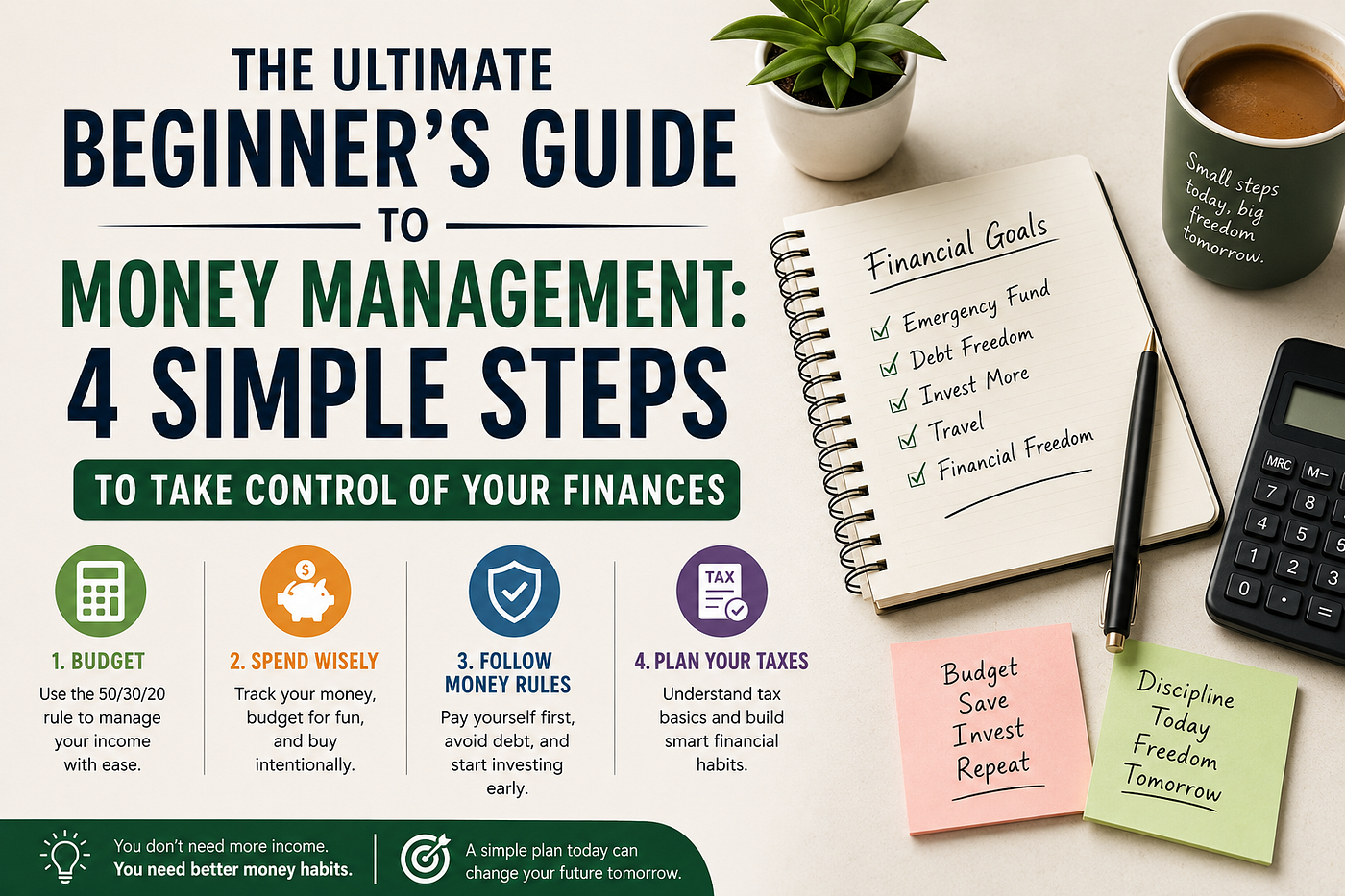
Here are four principles that can completely change the way you manage money.
1. Use the Simplest Budgeting System Possible
Many people quit budgeting because they make it too complicated.
Instead of tracking dozens of categories, start with the 50/30/20 rule:
- Needs — 50% Housing, groceries, utilities, healthcare, transportation
- Wants — 30% Dining out, shopping, entertainment, travel
- Savings & Goals — 20% Emergency fund, investments, retirement, debt payoff
That’s it.
The goal isn’t perfection. The goal is awareness.If your numbers don’t fit perfectly into these percentages, don’t panic. Think of them as guidelines, not strict rules.
A simple budget that you actually follow is infinitely better than a perfect budget you abandon after two weeks.
2. Stop Trying to Save Every Penny
You’ve probably heard advice like:
“Stop buying coffee.”
“Never eat out.”
“Cut all unnecessary spending.”
While this sounds smart, it often creates frustration.
People feel deprived, get tired of following strict rules, and eventually abandon their budget altogether.
A better approach is to build awareness.
For the next 30 days, track every purchase you make.
Not to judge yourself.
Just to understand where your money is actually going.
Most people are surprised by what they discover.
You’ll probably find subscriptions you forgot about, impulse purchases you barely remember making, or spending habits that don’t align with your priorities.
Another important rule: budget for fun.
Yes, fun.
Money management shouldn’t feel like punishment. If your budget includes room for entertainment, hobbies, and occasional treats, you’re much more likely to stick with it long term.
And whenever possible, focus on buying fewer, better things instead of more, cheaper things.
Quality often costs less in the long run.
3. Master These Money Rules Before 30
Some financial principles never go out of style.
Pay Yourself First
Most people save whatever is left over at the end of the month.
Unfortunately, there is usually very little left over.
Instead, automate savings as soon as you get paid.
Even if it’s only 10% of your income.
When saving becomes automatic, progress becomes automatic too.
Track Every Dollar
You don’t need to obsess over money.
But you do need to know where it goes.
People who track their spending make better decisions because they operate with facts rather than assumptions.
Avoid High-Interest Debt
Credit card debt is one of the biggest obstacles to financial freedom.The faster you eliminate high-interest debt, the faster you can redirect that money toward saving and investing.
Start Early
When it comes to investing, time matters more than timing.
A small amount invested consistently over many years can outperform a much larger amount invested later.
Compound growth rewards patience.The earlier you start, the more powerful it becomes.
4. Learn Basic Tax Planning
Taxes intimidate a lot of people.
They shouldn’t.
Taxes are simply part of managing money responsibly.
At a basic level, there are two types:
Direct taxes — taxes paid directly on income or assets.
Indirect taxes — taxes included in the goods and services you purchase.
A few simple habits can make tax season much easier:
- Keep financial records organized.
- Save important receipts and documents.
- Understand your tax bracket.
- Take advantage of legal deductions and benefits available to you.
- Plan ahead instead of scrambling at the last minute.
The goal isn’t to avoid taxes.
The goal is to pay the correct amount while making informed financial decisions.
Final Thoughts
Building wealth is often much less exciting than social media makes it seem.
It’s not about secret investments.
It’s not about getting rich overnight.
And it’s definitely not about buying the latest luxury item to look successful.
Real wealth is usually built quietly.
Through budgeting.
Through consistency.
Through avoiding unnecessary debt.
Through saving and investing month after month, year after year.
If you only take one action today, make it this:
Set up an automatic transfer from your paycheck into a savings or investment account.
Start small if you need to.
What’s important is getting started.
Because the habits you build today will determine the financial opportunities available to you tomorrow.
What money lesson do you wish you had learned earlier in life? Let me know in the comments.
메타데이터
- post_id
- fa130e616a98
- slug
- stop-just-saving-money-a-practical-blueprint-for-financial-literacy-fa130e616a98
- url
- https://medium.com/@praxilonpulse/stop-just-saving-money-a-practical-blueprint-for-financial-literacy-fa130e616a98
- canonical_url
- https://medium.com/@praxilonpulse/stop-just-saving-money-a-practical-blueprint-for-financial-literacy-fa130e616a98
- author_url
- https://medium.com/@praxilonpulse
- status
- ok
- fetched_at
- 2026-07-08 21:20:17