7 Writing Classes Ranked from Worthless to Life-Changing
A totally biased but brutally honest ranking of writing classes
7 Writing Classes Ranked from Worthless to Life-Changing
A totally biased but brutally honest ranking of writing classes
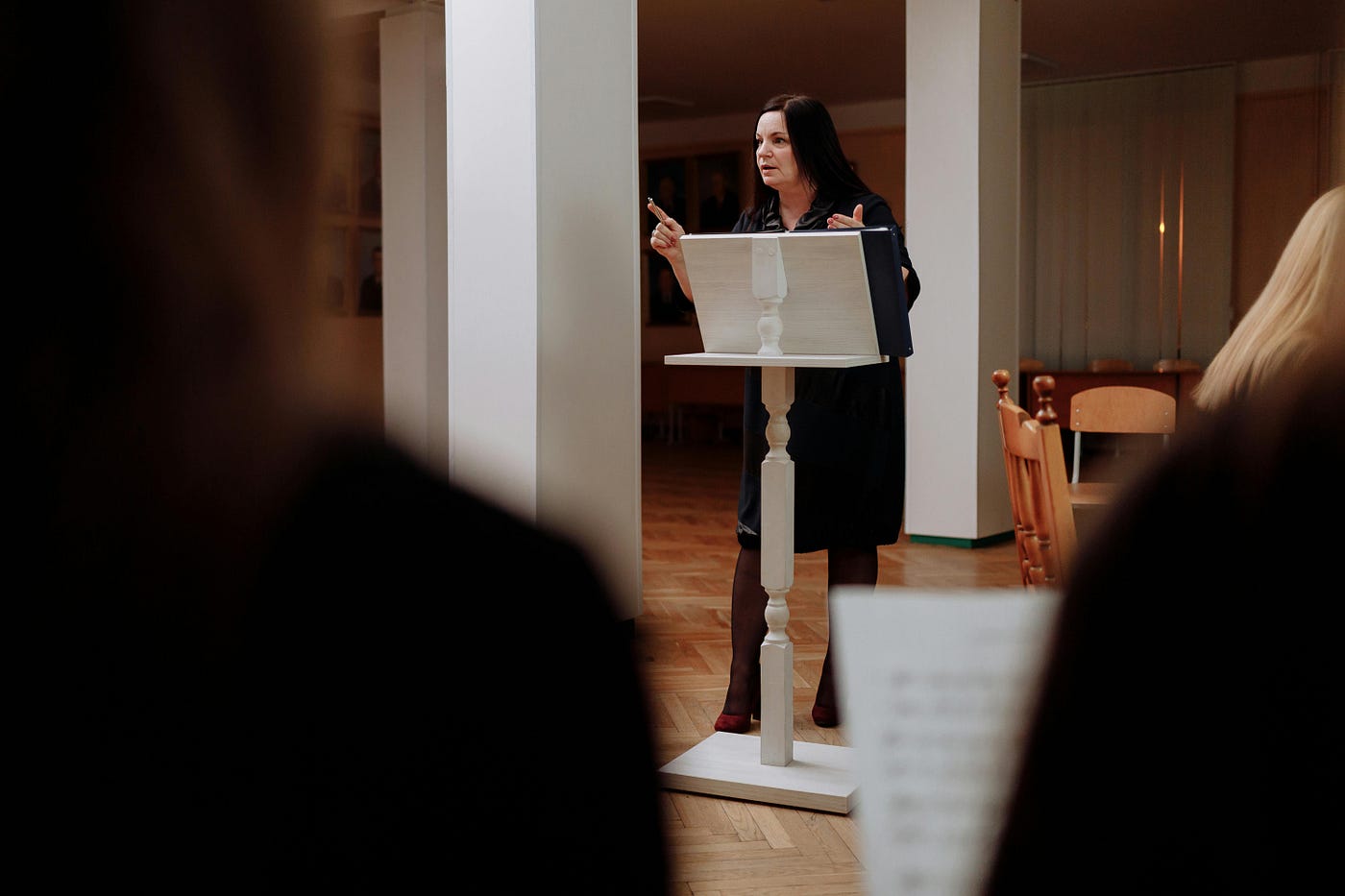
Photo by Thirdman
Writers are endlessly curious. We want to know the secret to crafting unforgettable characters, writing page-turning plots, and finishing that elusive draft. So, we sign up for classes, courses, and workshops, and attend author talks at libraries, universities, and bookstores. Some end up being exactly what we needed. Others… well, let’s just say they left us with less than we hoped for.
After years of sitting in lecture halls, conference rooms, and Zoom classes (online classes before Zoom was an option), I’ve seen it all. Here’s my honest take on seven types of writing classes ranked from the truly worthless to the absolutely life-changing.
1. The Endless Grammar Refresher (Worthless)
I once took a one-day course from an extended learning program at a university that promised to “elevate my writing instantly.” I imagined it would cover story techniques or voice. Instead, we spent hours discussing sentence structure and flow and debating the Oxford comma (when someone asked about it).
Now, I love grammar as much as the next writer; I’m a geek and find it interesting. I didn’t hate the course, but no one ever sold a novel because their commas were flawless. These classes can polish your sentences until they gleam, but if you don’t know how to build tension, create a compelling character arc, or resolve a story problem, the grammar won’t matter. Plus, let’s be honest, today we have programs like Grammarly that will help you with that In fact, I have it running now, and it catches comma issues or repetitive issues and tells me (you started the last three sentences with I), so there is less need for grammar classes unless you enjoy it.
If you are looking for grammar refresher courses, I recommend:
Grammar for Writers: Level Up Your Prose (Hugo House, online): One-session class focused on mechanics that matter for story: verb tense, clarity, sentence flow, etc. Not dry grammar jargon; more about helping your prose sound like you mean it. It’s good because it’s short (one session), so it won’t cover everything, but great as a refresher.
**Gotham Writers Workshop — Grammar 1: The Basics / Grammar 2: Expertise and Finesse:** These are more structured grammar intensives. If your writing has recurring grammar/punctuation issues, these help you fix them with guided work and examples. Costs are higher. Time-intensive (even for short intensives). Best if you want real polish.
Verdict: Necessary at the very beginning of your writing journey if you lack grammar skills, but a dead end if you’re aiming for storytelling mastery.
2. The “Just Write More” Lecture
For years, I was part of the Romance Writers of America, a writing organization. Every month, we’d gather for a chapter lunch and listen to a published author talk for about 45 minutes. These were accomplished writers with several books under their belt, and I loved hearing their stories. They were inspiring!
But here’s the truth: these talks didn’t teach writing. They were pep talks, often sprinkled with anecdotes about the author’s journey. As much as I enjoyed them, I usually left with nothing concrete to apply to my own work, except the desire to be like that author someday.
And to be fair, those talks weren’t designed to teach craft. But if you came looking for practical tools, you left empty-handed.
Verdict: Worth a listen for inspiration, but don’t expect it to transform your writing.
3. The Critique-Only Workshop
This one feels productive — you bring in your pages, everyone gives feedback, and you leave with a stack of notes. But often, that’s all you get: a patchwork of opinions. One person says your pacing is too slow, another says it’s too fast, and someone else tells you to change your protagonist completely.
Without a framework for why something works or doesn’t, you end up spinning in circles. Feedback without craft instruction is like your frustrating GPS that keeps recalculating and sending you back the way you came — you’re moving, but not necessarily forward, and often you’re retracing your steps.
Another problem with these workshops is that they tend to be long, sometimes lasting half a day, but the time dedicated to your work might be as little as 15 or 20 minutes, depending on the number of participants. You can learn from other manuscripts being critiqued, but let’s be honest, you’re there to work on your story, not everyone else’s.
Verdict: Helpful for motivation, and not completely useless, but demoralizing without a guiding hand.
4. The Celebrity Masterclass
We’ve all seen them — big-name authors offering slick video courses. They’re fun to watch, and sometimes you catch a nugget of wisdom. But mostly, they’re inspirational reels dressed up as classes. I paid for Masterclass for one year, but was disappointed that all it was was an author speaking — something I could have gotten by watching an interview online.
So, I watched a few because I’d paid for them. And I enjoyed them. Who doesn’t like to listen to Malcolm Galdwell speak or Margaret Atwood or Judy Blume?
But it was like watching a cooking show. You admire the chef’s skill, maybe even pick up a tip, but you’re not suddenly a five-star chef when the episode ends.
Verdict: Inspiring but not transformational. Not recommended unless you are already a writer and like to listen to other authors talk.
5. The Weekend Bootcamp
Imagine this: it’s Saturday morning, you’re sitting in a hotel conference room with twenty other writers, armed with coffee, a notebook, and a promise that by Sunday night, you’ll have your novel planned or even started.
By hour three, your brain is buzzing with exercises: write a character sketch, create a one-page outline, brainstorm your theme. By the end of the weekend, you’ve got pages of notes and maybe a scene or two. You leave fired up, ready to conquer your book. The bootcamp was a success!
Then Monday comes. The momentum fades, the exercises sit in your notebook, and you’re back to writing alone without guidance. Weekend bootcamps can be a fantastic spark, but without ongoing support, they rarely turn that spark into a sustained flame.
However, on the spectrum of worst to best, I’d say these are solid and would rank them as 6 or 7 on a 10-scale.
If you’d like to try a weekend bootcamp, you might try these (I am not personally familiar with them, but searched the internet and they looked good):
**Writing Away Refuge**: A weekend intensive (usually Sat-Sun) via Zoom: perfecting first pages, query/pitch work, logline/tagline development, private consults. Offers accountability + agent/pitch focus plus community all compacted into a weekend. No long-term commitment.
**Creative Weekend/Drop in Retreats**: In-person or sometimes “digital detox” weekend retreats with fellow writers, prompts, dedicated writing time, inspiration and community. I wish there were more information on this one, but it looks interesting. It states that if “someone needs a change of scenery and immersive time away, these are ideal. You get focused time plus creative recharge.”
Verdict: Energizing in the moment, but often short-lived unless you are self-disciplined. Probably worthwhile.
6. The MFA Program
An MFA is a mixed bag. For some, it’s a life-altering experience with mentorship, workshops, and dedicated time to write. For others, it’s an expensive detour that doesn’t teach commercial or genre fiction and leaves you with more debt than direction. How do I know? Sixty thousand dollars in student debt, and a university degree that allows me to put M.F.A at the end of my name.
Would I do it again? Yes, but not because it made me a better writer. I was already a multi-published author when I returned to college to get my MFA. But it allowed me to teach, and that has been a dream come true. I love to teach and talk about writing of all types as a university professor.
This doesn’t mean I would recommend it to writers for the reasons I mentioned above: the cost and the fact that it will not bring you closer to publication.
If your dream is to teach creative writing or write literary fiction, an MFA can be valuable. If you want to publish a romance, thriller, or fantasy novel, you may not find the tools you need there.
If you want to enroll in an MFA program, here are a few to consider:
**SNHU — Southern New Hampshire University**: I taught here for a couple of semesters, and it’s a great program, plus it’s100% online MFA in Creative Writing, no residency required. Strong for genre writers; they let you complete a novel, and also teach about the business side of writing and publishing. Cost is moderate to high per credit; being fully online means you’ll want to be self-motivated and stay connected.
**University of Texas at El Paso (UTEP)**: Fully online MFA in Creative Writing. No residency required. Good option if you want fully remote with quality faculty; strong workshop + manuscript focus. Depending on your state, the cost or tuition & fees may vary. Also, online only means different networking opportunities than an in-person or hybrid program.
**University of California, Irvine — MFA in English (Fiction & Poetry): **A well-regarded full MFA. If I could have, I would have attended this one, but for various reasons, I chose not to apply. They have small cohorts, high faculty attention, taught workshops, and the requirement to produce a book-length manuscript. It’s one of the “big name” programs in SoCal. Application is competitive; it’s a multi-year commitment; usually requires residency; funding/assistantship competition.
Verdict: Potentially transformative — but not for everyone, especially if you don’t want to invest the time and money.
7. The Guided, Year-Long Program (Life-Changing)
The most effective writing classes are structured, guided, and supportive. They don’t just drop tips and inspiration — they walk with you through the process: from generating an idea to drafting and then revising, with accountability built in. This is where the real magic happens, because you don’t just learn about writing, you actually produce pages, chapters, and eventually a full draft.
What makes this kind of class life-changing is the transformation: writers go from “someday I’ll write a novel” to actually holding a completed manuscript. It’s the difference between being a hobbyist and a writer who finishes a novel.
Over the years, I tried almost every kind of class, and I realized that what writers need is the best of all those approaches woven together: the inspiration of talks, the focus of bootcamps, the depth of MFA study, and, most importantly, the structure and accountability to carry them from idea to “The End.” That combination is life-changing because it turns participants from writers who dream about writing books into those who finish them.
That’s why I believe long-form, process-driven programs are the most valuable kind of writing class. They don’t just teach you about writing — they get you writing and finishing a book.
If you’re looking for this kind of step-by-step, long-form guidance, my 12-Month Novel Writing Program is one example of how it can work. I designed it by pulling together the best elements I learned from author talks, bootcamps, and even MFA study, then building in the structure and accountability that actually help writers finish. It’s not the only program of its kind, but it’s the model that finally turned me into a novelist — and it may do the same for you.
· **The 12-Month Novel Writing Program**: designed for writers who don’t just want inspiration — they want results. Twelve months of brainstorming, outlining, drafting, and revising a novel. With structure, feedback, and steady encouragement, writers don’t just start a book, they finish one.
Verdict: The kind of class that can truly change your writing life is the one designed to make you a writer.
Should You Invest in Writing Classes?
Yes, of course. We are not born knowing how to write well. But not all writing classes are created equal. Some are fun diversions, others help in small ways, but the ones that truly matter are the ones that equip you to finish your novel and give you the confidence to keep going.
No matter which kind of class you try, the key is to keep learning and — most importantly — keep writing. If you’re ready to move past inspiration-only talks and start building the skills (and discipline) to finish your novel, choose a program that fits your goals and really helps you accomplish them.
Interested in writing a novel? Join my 12 Month Novel Writing Program. This structured class will provide lessons, exercises, writing support, monthly live sessions, group discussions, accountability, editing and publishing tips.
메타데이터
- post_id
- fa3a07c8e05a
- slug
- 7-writing-classes-ranked-from-worthless-to-life-changing-fa3a07c8e05a
- url
- https://medium.com/@juliaamante/7-writing-classes-ranked-from-worthless-to-life-changing-fa3a07c8e05a
- canonical_url
- https://medium.com/@juliaamante/7-writing-classes-ranked-from-worthless-to-life-changing-fa3a07c8e05a
- author_url
- https://medium.com/@juliaamante
- status
- ok
- fetched_at
- 2026-08-03 18:05:50