Relationships Are Not Hard Work
Men who believe otherwise are usually the ones who get taken advantage of
Relationships Are Not Hard Work
Men who believe otherwise are usually the ones who get taken advantage of

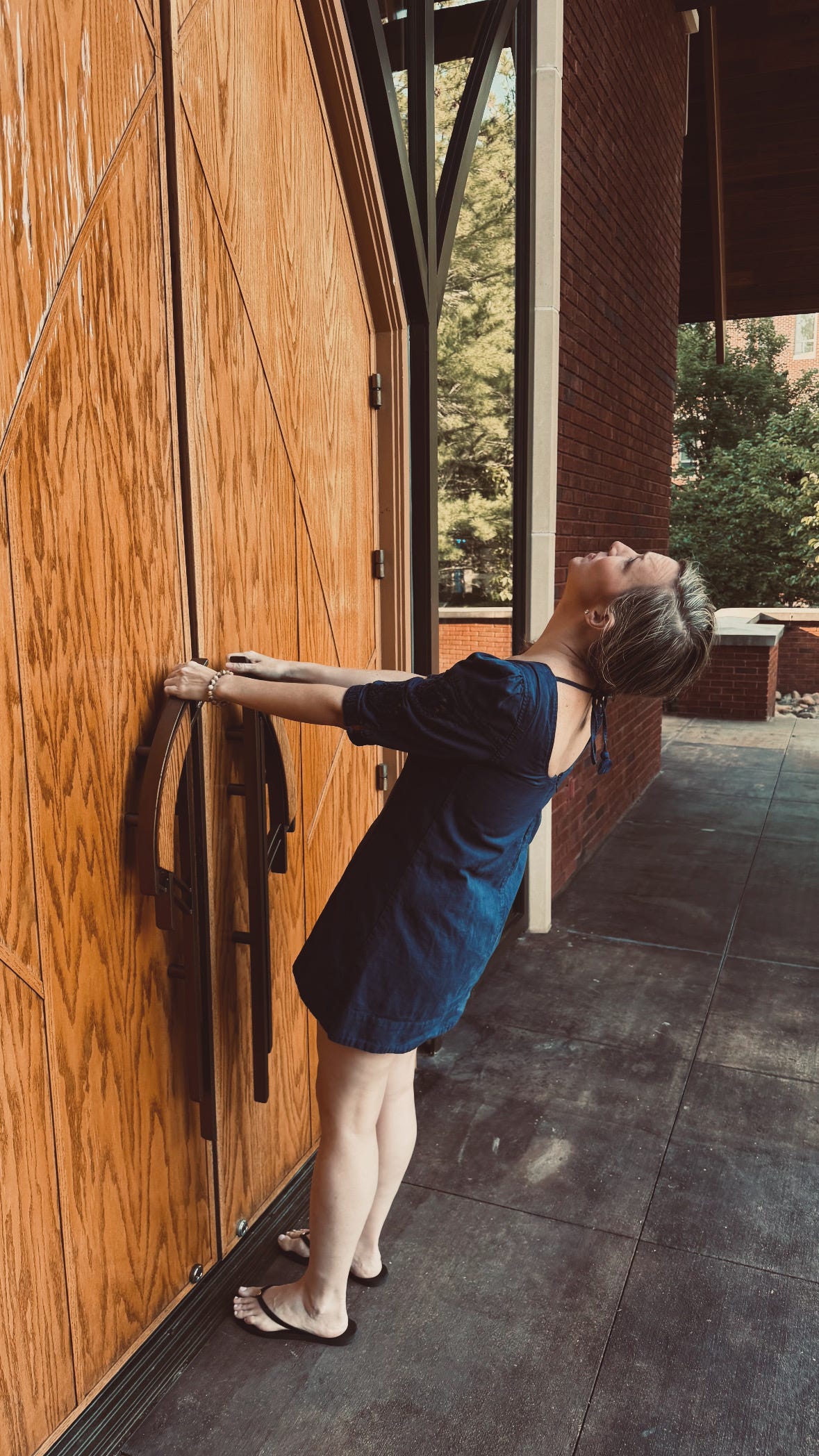
Author selfie for the algo and also to prove I am not a bot.
Relationships are not hard work, and if you believe they are, that belief is not only a huge problem for you but it is a trap that can cause you to become the victim of manipulation time and time again.
I believe this net most often closes over men who are trying to be good. Which is the irony of it. A modern man can hold a value — he doesn’t want his wife posting herself in bikinis online, he doesn’t want an open marriage — and the value itself gets read as control. Not a belief he chooses to live by and partner through. A cage he’s putting her in. A modern woman may feel disrespected by her partner’s digital life or library and she’s the worst thing a woman can be — jealous.
The system of judging anything as right or wrong in relationship seems to be dead.
Still, to his credit in many ways, this man persists.
The thinking goes like this: I am going to commit to this. I am going to climb the mountain of it. I am going to stay, I am going to fix what breaks, I am going to become everything that is needed.
It sounds like devotion.
Maybe it is devotion. But it isn’t devotion to her. It definitely isn’t to what will be the best for the long term energetic of the relationship.
It is simply devotion to working hard. That feels like checking a box to men who often see their worth through service.
But it starts to repel her, and the man involved never understands why, because no one told him that being with and fixing not the same energy.
Climbing and working and constant, exhausting cycles of repairing (whatever that means) are not the same as presence.
Consider what a woman actually needs from a partner when she is educated, employed, healthy, emotionally stable, capable of essentially taking care of herself. She’s an adult.
There is really only one thing. No friends, it’s not the long list of bullshit the polarity coaches and man-o-sphere bots tell you.
She needs his full presence, especially when things are painful.
That is the whole of it.
And the trap is that a man who is oriented toward being good will convert her emotions and any problem she is grappling with into a job. He starts managing her the way he manages work. When things get hard, he applies effort, the way effort has always served him.
He does the hard work that the online bots explain to him is involved in relationship. And then he gets exhausted, and he taps out in cycles, and somewhere in there he begins to see her as the source of the difficulty. So predictable. Even though it is an entire energetic he created through bad orientation.
His energy goes bad. He gets strange and depleted and quietly resentful. Like a grumpy teenager. She becomes, in his nervous system, the thing that is hard.
And sometimes she never asked him for any of it. That is a story we rarely hear communicated — the woman that leaves her marriage because she’s just tired of feeling like the hard thing. Because she’s tired of being in this weird wheel with hard working Todd who can’t see her at all. Even though in his mind he is constantly trying to solve their problems.
There is often a parallel trap on the other side.
Women are handed a steady stream of material telling them that whatever they are unhappy about is their partner’s doing.
Just click around this platform. It is everywhere, and it is easy to absorb. I find myself constantly batting it away. So when a man has already volunteered to take responsibility for her entire emotional landscape, the arrangement completes itself. Her failures start to feel like his failures.
Her dissatisfaction has a name now, and the name is him. The pattern has two people fueling it.
He becomes all bad. She becomes all hard.
Two people cooperating, without meaning to, on the same false premise: that he is supposed to fix it and carry it.
I believed relationships were hard work for a long time. Everyone told me they were.
I no longer believe it.
It is, in fact, one of the larger problems I encounter. I do not know a single partnered client who is genuinely happy a decade in, still having sex, still interested, who holds the belief that the relationship is supposed to be inherently hard, supposed to hurt, supposed to take everything out of them.
Now.
Relationships can be emotionally painful. The more intensity and attraction and sex you have with someone, the more you get the equal and opposite charge on the other side.
That person will trigger you.
The heat and the friction arrive together; they are the same current. What matters is what you do with the trigger. If you can use it to pull yourself into growth, to stay with the emotion and move through it rather than drowning it in your old material or fleeing it, then that person becomes the most powerful agent of change in your life. But not because they took responsibility for changing you. Not because of some shitty repair script you both agreed to memorize from your latest improve your connection program either.
Because they stayed present with you in the emotion. Presence changes. Effort inflames.
And outside of those charged emotional moments (in my curriculum we call them sitting in the soup), a relationship should make your life net easier. Read that ten times.
More hands in the kitchen. More money in the bank. More touch. More verbal affirmation. More capacity, not less. It should be easier to have the partner than to not have them. That is the baseline a good relationship clears in my book. I hope in yours as well.
If you believe your partner should be a weight you drag through life, that everything requires constant hard work, you will either make them into that weight or sort for someone who expects to become it.
What about when someone slips into victimhood?
So often the story is that one partner changed. Todd or Karen devolved. Then they “had to” shift into this hard work of support.
Which is odd because I have coached a handful of clients that lost a magnificent partner to a long term illness and the person suffering was still a net gain. They were a fighter. They were present, even in illness. Hard times do not entitle anyone to become an energy vampire, as my teens say.
When one person begins to weaponize their illnesses, their circumstances, whatever is going wrong, when they stop taking care of themselves and become a drain, the temptation is to absorb it. To bite. To parent.
Do not.
It still does not have to be hard work, but it requires you to orient toward them without taking what they are handing you and without becoming their parent.
Because parenting your partner is a trap with only one exit.
They will come to resent you. To climb out of the victim space, they will have to get away from you, and the closeness you thought you were protecting is exactly what your parenting destroys.
All of this points back to the same thing my work keeps circling. Be with your life. Be with what is happening. Be with reality, especially when it sucks, rather than standing in opposition to it. Because when something feels like hard work, what you are feeling is your own opposition to it. That is the tell. The tension should be your red flag to figure out what you need to release.
The other person has absolutely no impact on this. You do not have to wait for your Karen or your Todd to stop being victims. You can own your energetic state.
I guess finally I often think of the person in business who fixates on fixing problems. They pour themselves into what is broken and ignore what is working, when the truth is that doing more of what already works would set off a landslide and resolve half the problems on its own. The problems they are hyperfocused on would, in many cases, dissolve. Or be exposed as the massive energy sucks they always were.
The energy spent in resistance is the cost, not the problems themselves.
So the new work, if there is work, is to stop taking responsibility for what was never yours. To stop installing yourself as the parent, the fixer, the god, the one carrying it. The mechanism underneath a thriving life is not effort. It is presence and reflection, being with what is by anchoring your own experience in the body instead of fighting it. Instead of “therapizing” it. Instead of trying to work on it.
The relationship was never the hard part.
The opposition was.
I write primarily to support my small business. You can meet with me about 1–1 coaching or purchase my self study courses for men and women using these links.
*Christina Lane is a somatic coach, writer, and founder of Radiance and Embodied somatic curriculums. She writes about the interior life of modern relating. She writes weekly on Medium & Substack.*
Christina also owns a tutoring company Connected Tutors and is a parent to three teens.
메타데이터
- post_id
- fa6f816b73cd
- slug
- relationships-are-not-hard-work-fa6f816b73cd
- url
- https://mutualterrain.com/relationships-are-not-hard-work-fa6f816b73cd
- canonical_url
- https://mutualterrain.com/relationships-are-not-hard-work-fa6f816b73cd
- author_url
- https://medium.com/@christinalanecoaching
- status
- ok
- fetched_at
- 2026-06-12 18:14:10