How Motorcycle Knee and Elbow Pads Support Adventure Touring
Most riders who show up for their first adventure tour treat knee and elbow pads as an afterthought — something they’ll “add later” once…
How Motorcycle Knee and Elbow Pads Support Adventure Touring
Most riders who show up for their first adventure tour treat knee and elbow pads as an afterthought — something they’ll “add later” once the budget allows. I’ve watched this exact mistake play out on gravel switchbacks in the Karakoram and on rutted fire roads outside dozens of trailheads. The jacket gets bought first. The pads get bought after the first low-speed drop, usually with a bruised elbow as the reminder.
That ordering is backwards, and adventure touring is where it shows the fastest.
Why Adventure Riding Punishes Knees and Elbows Specifically
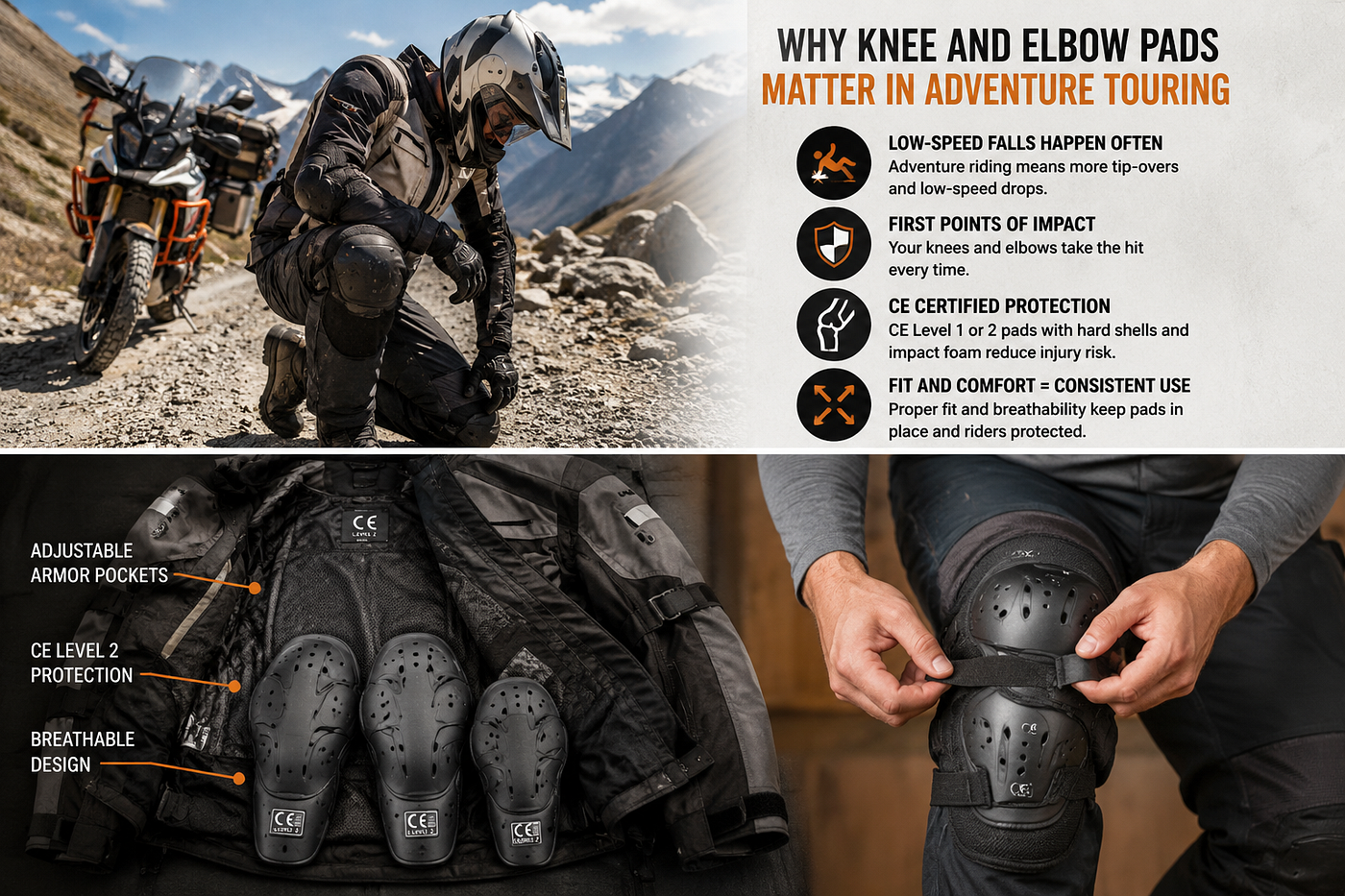
Street riding tends to produce higher-speed, lower-frequency incidents. Adventure touring flips that pattern. You’re dropping the bike at walking pace in loose gravel, catching a rut wrong at 15 km/h or putting a foot down on a slope that promptly puts you in a slide. None of these look dramatic. All of them load the knees and elbows first, because that’s where the body naturally braces on the way down.
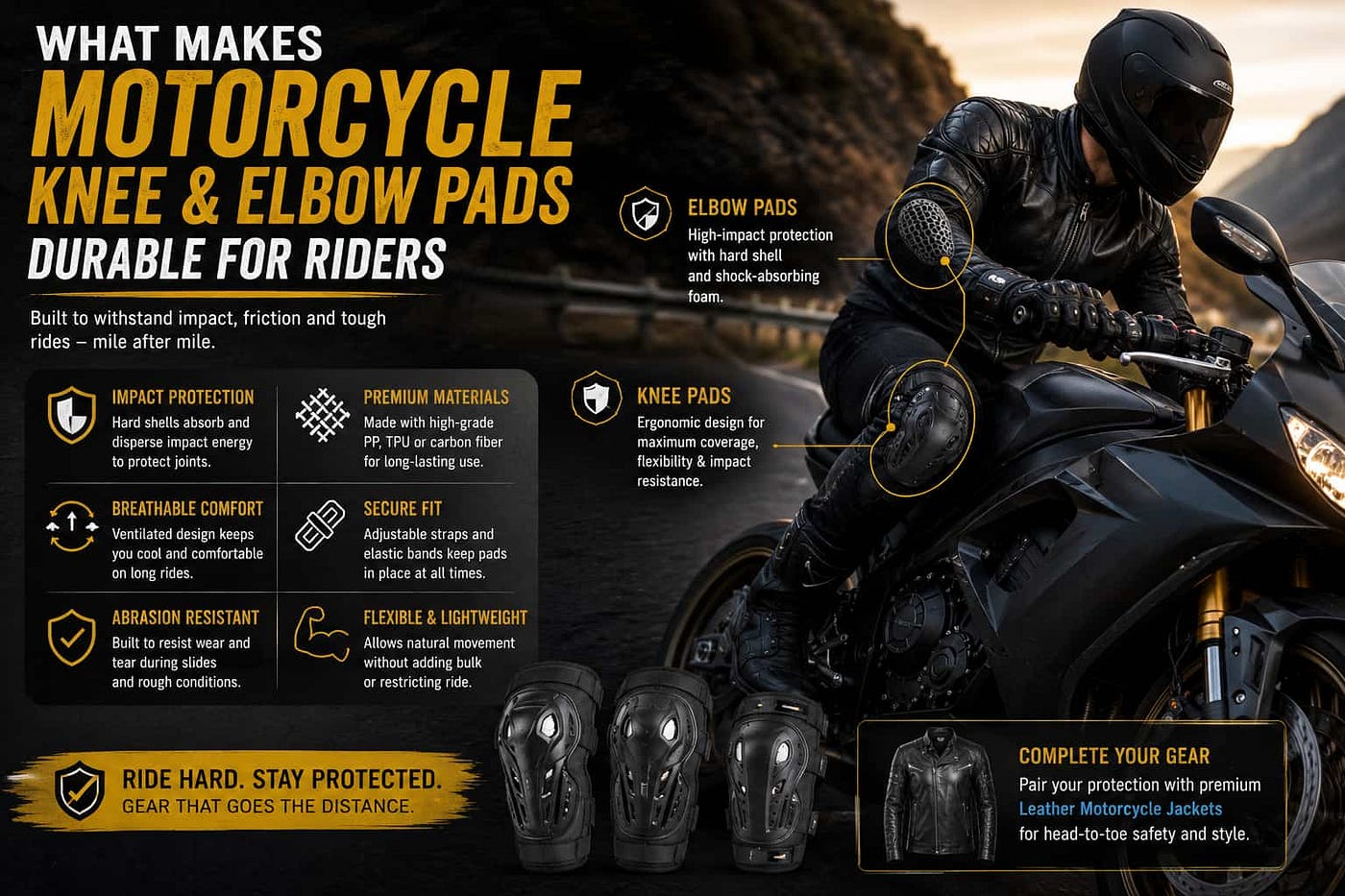
A rider who’s spent multiple seasons on unpaved routes learns to expect this rhythm — not one big crash, but a string of small ones. That’s precisely the scenario where a proper set of Motorcycle Knee and Elbow Pads earns its price. Look for CE level 1 or 2 certified inserts with a hard shell and a foam pad that retains its shape at the coldest hours of the morning, because touring days tend to start earlier than one would hope. Cheap foam inserts might look good on the showroom floor, but will pack down after a few weeks of regular use, defeating the purpose in the most vital moment.
Fit Matters More Than the Spec Sheet
Here’s something the spec sheets never mention: a pad rated higher on paper but fitted wrong protects worse than a lower-rated pad that stays exactly where your knee bends. I’ve swapped pads mid-trip because a rider’s “premium” set kept sliding down the shin after two hours of standing on the pegs. The elastic straps had stretched, and nobody had checked.
Adjustable, non-slip strapping is not a luxury feature on a multi-day route. It’s the difference between armor that’s there when you need it and armor that’s migrated three inches from where it should be. Before any long tour, I have riders do a standing test — stand on the pegs, flex both knees fully, walk around camp — before ever putting the bike in gear. If the pad shifts during that test, it will shift on the trail.
Breathability is the second thing people underrate. A pad that traps heat becomes a pad riders start leaving off entirely by day three of a hot-weather route, which brings us right back to the original problem. Perforated or mesh-backed designs cost a little more up front and get worn every single day instead of “when I remember.”
Where the Pads Meet the Jacket
Pads don’t work in isolation. On a proper touring setup, knee and elbow protection is meant to sit inside jacket and pant pockets built for it, not strapped on as a separate layer competing for space under riding gear. This is where jacket choice actually determines whether your pad investment pays off. A jacket with poorly positioned armor pockets will bunch the pad, twist it out of alignment, or simply not hold CE-rated inserts at all — some budget jackets ship with thin foam pre-installed and no pocket depth for a real upgrade.
Riders putting together a full touring kit are usually better off treating jacket and pad selection as one decision rather than two separate purchases. Something like a set of Premium Bike Jackets designed with adjustable armor pockets and reinforced shoulder-to-elbow paneling solves the alignment problem before it starts, because the pad sits exactly where the jacket’s structure holds it, ride after ride, without constant readjustment.

The One Trade-Off Worth Knowing
Every rider eventually asks whether thicker padding is simply better. It isn’t, and this is the part most gear guides skip. Bulkier armor adds real protection in a direct impact but costs mobility on technical terrain, where quick foot-down saves or standing maneuvers depend on knees that move freely. On a paved touring route, I’d take the thicker option every time. On a route with sustained gravel or single-track sections, I’ve deliberately gone with a slightly lower-profile pad because the mobility trade paid off more often than the marginal protection gain would have.
There’s no universal right answer here — it depends on the terrain you’re actually riding, not the terrain on the box.
The Real Point
Knee and elbow pads aren’t the exciting part of an adventure touring kit. They’re rarely what gets photographed at the trailhead. But they’re the piece of gear that decides whether a routine low-speed drop stays routine or turns into a trip-ending injury three days from the nearest clinic. Buy them with the jacket, not after it.
메타데이터
- post_id
- fa8e8eed2aa9
- slug
- how-motorcycle-knee-and-elbow-pads-support-adventure-touring-fa8e8eed2aa9
- url
- https://medium.com/@jhonmercer41/how-motorcycle-knee-and-elbow-pads-support-adventure-touring-fa8e8eed2aa9
- canonical_url
- https://medium.com/@jhonmercer41/how-motorcycle-knee-and-elbow-pads-support-adventure-touring-fa8e8eed2aa9
- author_url
- https://medium.com/@jhonmercer41
- status
- ok
- fetched_at
- 2026-08-05 03:43:09