Five Myths About Modern Greek That Need to Go
Η αρχή είναι το ήμισυ του παντός. The beginning is half of everything.
Five Myths About Modern Greek That Need to Go
Η αρχή είναι το ήμισυ του παντός. The beginning is half of everything.
Modern Greek has a bit of a reputation issue. I cannot count how many times someone has reacted to my learning Greek with admiration followed by a warning of: “Wow, Greek is really difficult.”
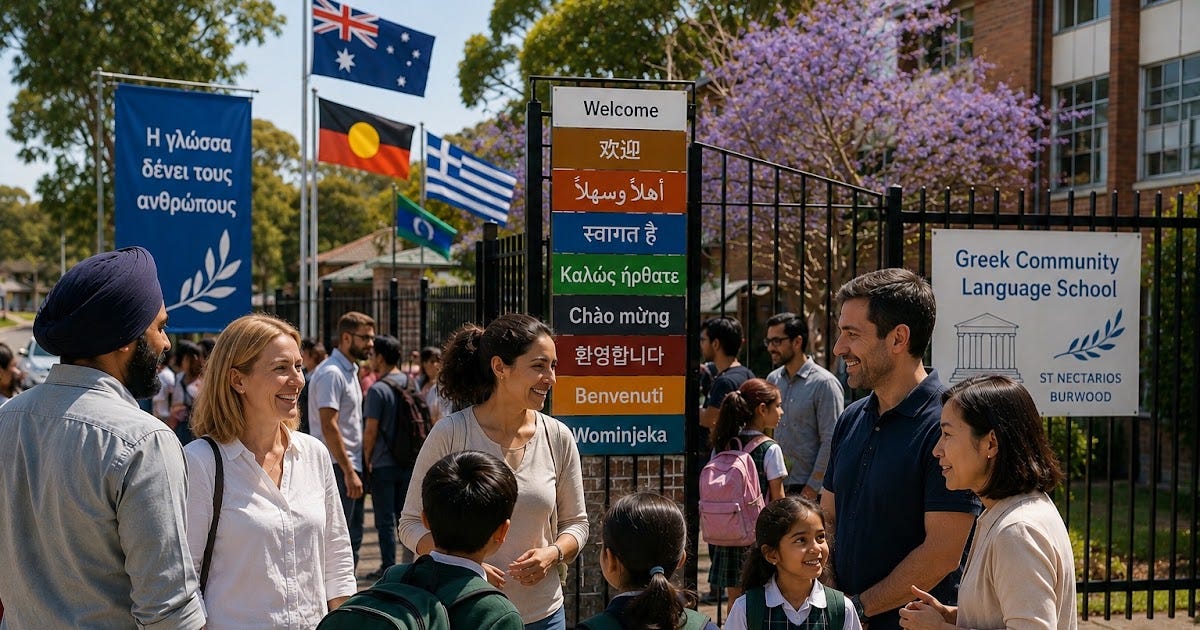
I get why people say it. I began learning Greek when I was seven at a Friday afternoon community Greek school. I was the only non-Greek child in the class. And still, I had the alphabet down by the second lesson. Even my parents were surprised.
Years later, after private teachers, A1 and A2 exams, and returning to that same school as a volunteer, I have realised something important: Modern Greek may not be “easy,” but it’s absolutely learnable.
What blocks many learners is not the language itself. It’s the myths that raise people’s anxiety before they even begin. And when learners give up too soon, or never start at all, the community loses future speakers.
Here are the five myths about Modern Greek that annoy me most, because in my view, they simply are not true.
Myth 1: “A new alphabet must make it harder.”
Yes, Greek has a different alphabet. It’s just another layer, and you can learn it faster than you think with a focused plan for the first weeks.
What helped me:
- Learn to decode, don’t worry about translating just yet. Read syllables out loud first, even if you do not understand them in the beginning.
- Keep it fun. I still have the Greek letter fridge magnets my mum bought for me years ago. They’re on our freezer in the garage and they remind me where I started
The alphabet is your entry pass, not the enemy. Once you can sound things out, the whole language becomes less mysterious.
Myth 2: “Greek grammar is impossible.”
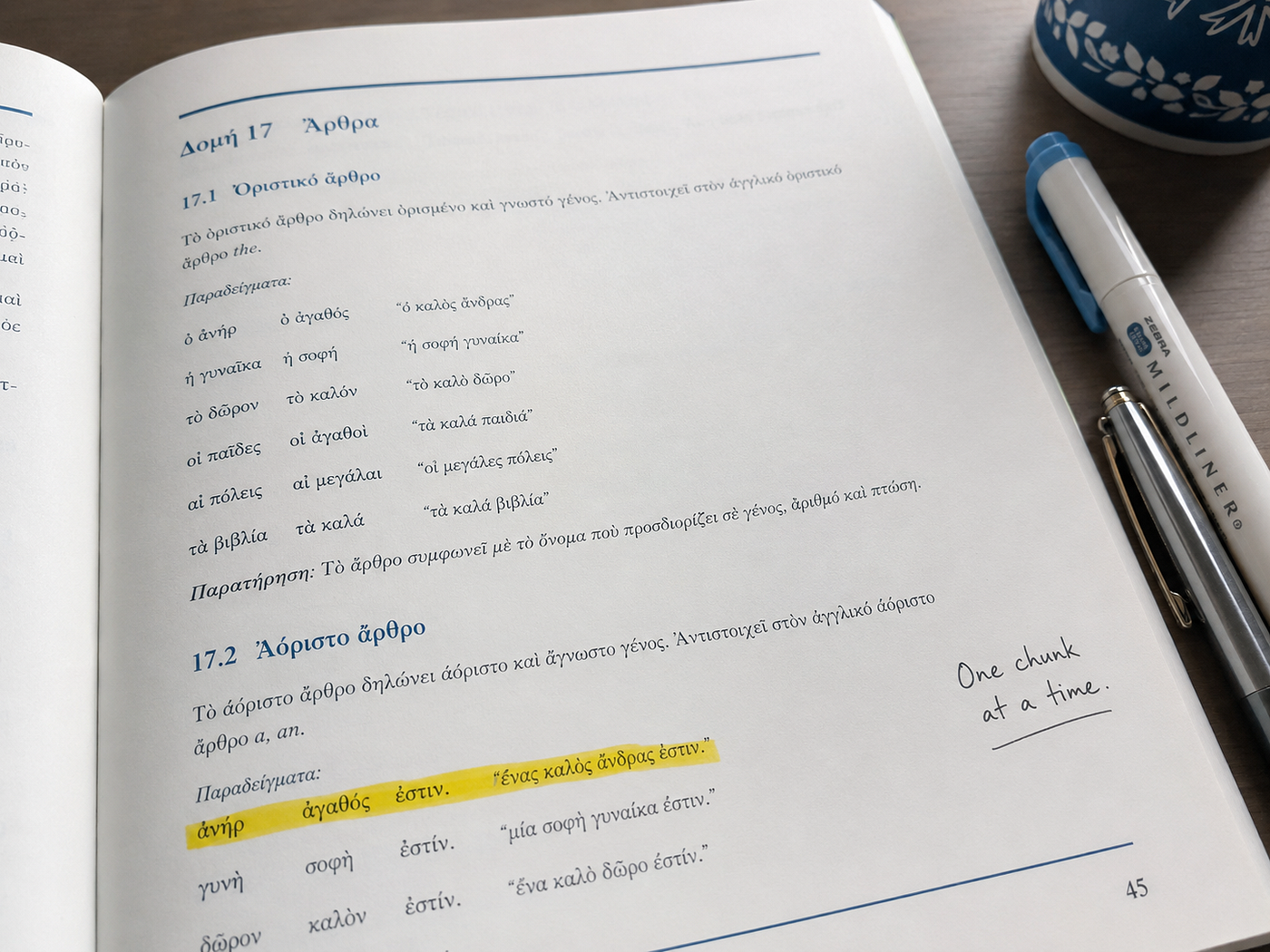
Greek grammar can be complex. Endings change. There are genders. And the articles can feel like a full-time job. I understand this myth, because I have lived the frustration.
You need time, repetition, and teachers who understand how to build confidence one word at a time.
What helped me:
- Choose one focus per week or month. Articles, then a tense, or an uncommon verb pattern.
- Keep revisiting what you do not know. If you’re stuck on articles, keep using them anyway. Be patient. They will come.
Here is where good teaching matters. Alot. I’m very thankful for teachers who stuck with me, patiently, until the “tricky” parts finally landed in my brain.
Myth 3: “The textbooks are boring.”
This one is outdated. Maybe Greek resources used to be limited, old-fashioned, or boring. But not any longer.
When I was younger, alongside Greek school, I used the Ellinopoula platform. It kept me engaged through games, mythology stories, and holiday activities. It also helped me stay consistent during school holidays, when it’s easy to drop off.
Now, there are even more options: language apps, listening platforms, and tools that let you practise in small, frequent bite sized lessons.
The resource mix that worked for me:
- One structured course (Greek school or private lessons)
- One listening or interactive source (like a kids platform, podcasts, or video content)
- Something fun and real-world (Greek food, festivals, ordering in Greek at a local Greek restaurant)
You don’t need to find the perfect app or computer platform, just build a mix that keeps you moving.
Myth 4: “Greek is only useful if you are Greek or going to Greece.”
I live in Sydney. I have no Greek background. Greek is still useful. Honestly, it has been more useful than I ever expected.
Greek is useful to me because:
- You become a champion decoding super user. Greek sits underneath a huge amount of English vocabulary, especially in academic and technical areas.
- It connects to science, theology and medicine. So much scientific and medical vocabulary is built from Greek and Latin components.
- It’s useful locally wherever there is a Greek community. You do not need to be in Greece to use Greek in Australia, the USA, or Canada.
- It links to a network you would not have had otherwise. If you’re not Greek but you speak Greek, people remember you and appreciate the effort.
Myth 5: “If I didn’t learn as a kid, it’s too late.”
Teens and adults can learn well with structure, consistency, and a reason to keep going. If we want Greek to thrive, programs also need to meet learners where they are. That includes teens, busy adults, foreign language learners. Let’s build bridges into the language instead of a lecture about why they’re “behind.”
Ideas that could keep teens engaged:
- Make it social: check-ins and mini speaking games so teens use Greek with each other, not only with the teacher.
- Give a weekly real-world use: end each lesson with one phrase they can use at home or with friends. Start the next week by asking who used it.
- Run teen-owned culture projects: music, food, memes, festival guides, short interviews. Teens choose the format, teachers guide the language targets.
- Don’t forget us foreign language learners — we may need some easier options.
A call to action: Let’s replace myths with invitations
Let’s all do what we can to help people see Greek and other languages too through a different lens.
Confidence grows when learners feel safe to try, make mistakes, and keep going, so we can keep still speaking Greek.
Originally published at my blog *Still Speaking Greek*.
메타데이터
- post_id
- fa90137af7e1
- slug
- five-myths-about-modern-greek-that-need-to-go-fa90137af7e1
- url
- https://medium.com/@thephilhellenestudent/five-myths-about-modern-greek-that-need-to-go-fa90137af7e1
- canonical_url
- https://medium.com/@thephilhellenestudent/five-myths-about-modern-greek-that-need-to-go-fa90137af7e1
- author_url
- https://medium.com/@thephilhellenestudent
- status
- ok
- fetched_at
- 2026-06-23 21:39:52