Beyond the Headlines
China’s quiet adjustments in a turbulent world
Beyond the Headlines
China’s quiet adjustments in a turbulent world
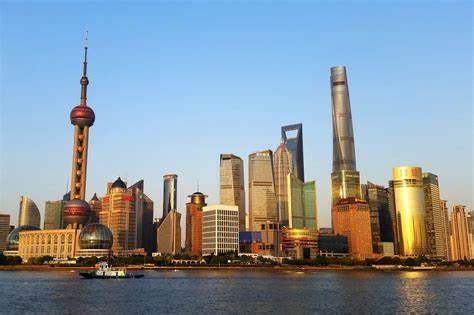
In the past few days, most people have been focused on Trump’s “tariff letter,” but another important economic update went largely unnoticed — one that brings a bit of stability in today’s uncertain times.
China’s latest five-year plan (the 14th) is coming to a close. On July 9, the State Council held a press conference, where officials, including the head of the National Development and Reform Commission, Zheng Shanjie, shared major achievements from the past five years.
For western readers, this isn’t just an internal Chinese update. It shows how a major global power is adapting to international changes and how it is managing large-scale internal and external challenges. I am here summarizing key points and achievements of China in the last 5 years.
1. Strong Economic Growth
Over the past five years, China’s total economic output has passed 130 trillion yuan (around €16.5 trillion) and is expected to reach 140 trillion this year — almost equal to creating another Yangtze River Delta region or the entire economy of Germany (the world’s third-largest).
Despite global instability and domestic issues, China maintained an average growth rate of 5.5% per year. It contributed around 30% of global economic growth, remaining one of the world’s most consistent engines of development.
2. Innovation Achievements
Research and development spending rose nearly 50% to 1.2 trillion yuan (€150 billion), making up 2.68% of GDP — close to OECD levels. Major technological milestones include:
- The Fujian aircraft carrier
- The Adora Magic City cruise ship (the first large cruise ship built in China)
- Fourth-generation nuclear power plants
- The Chang’e 6 lunar mission
- Commercial launch of the C919 passenger plane
These advances show breakthroughs across land, sea, air, and even space — signaling a shift from quantity to quality in innovation.
3. Improved Living Standards
China emphasizes that development should benefit everyone. Progress has been made in four key areas: education, healthcare, elderly care, and transport.
- 97% of children of migrant workers now attend public schools in cities.
- 114 national medical centers have been built, and cross-province healthcare is easier for 400 million visits.
- Over 10,000 kilometers of new high-speed rail lines have been added — China’s network is now double the combined total of other countries.
- Childcare and elderly care services have expanded significantly, and life expectancy has increased to 79 years (one year longer than that of the U.S.).
All these changes point to a steady improvement in quality of life.
4. Better Governance
Business regulations have improved, and a unified national market is being developed. There are now over 58 million private companies in China.
When natural disasters occur, such as the recent earthquake in Tibet, China can launch rescue efforts within 30 minutes and shelter people the same day. This shows both speed and strong organizational ability — made possible by ongoing reforms and increased use of social media to encourage government accountability.
5. Focus on Green Development
Environmental efforts are a top priority. In the past five years:
- Forest area increased by the size of 5.7 times the area of Belgium.
- Water quality in major rivers improved.
- One-third of electricity now comes from renewable sources.
- Over 20% of steel is made from recycled materials — boosting the circular economy.
6. Food and Energy Security
China has made food and energy independence a key goal. Over 10 million hectares of high-quality farmland have been developed. The country also now has the world’s largest installed power generation capacity.
Its manufacturing system remains solid, giving it confidence to face future risks. Military and economic capabilities have grown together, strengthening national security.
7. A More Confident Global Role
China has committed to its “dual carbon” goals. In the past four years, energy use per unit of GDP fell by 11.6%, which cut carbon emissions by 1.1 billion tons. In contrast, some regions — like parts of Europe — are seeing rising coal use.
Through the Belt and Road Initiative, China is working with over 150 countries and 30 international organizations. For example, the Jakarta-Bandung high-speed railway in Indonesia has already served over 10 million passengers.
China has also stood firm against trade pressure from the U.S., defending both its own interests and the stability of global supply chains.
⸻
In conclusion, Zheng Shanjie said that China faced more challenges than expected during the past five years — including COVID-19 and the trade war with the U.S. — but achieved better results than predicted. He believes China’s system of governance, its vibrant market innovation, and its strong economic foundation provide confidence for the next five-year plan.
For western readers, these results are more than just numbers. They show a shift in how China governs and develops, and they raise important questions: Can China maintain this momentum and stability? And how should Europe/USA respond to this rising global power that shows no sign of stopping?
Something to think about till the next five-year plan, to be released in March 2026.##
메타데이터
- post_id
- fa93f3d6e2e9
- slug
- beyond-the-headlines-fa93f3d6e2e9
- url
- https://medium.com/@lydialeilee/beyond-the-headlines-fa93f3d6e2e9
- canonical_url
- https://medium.com/@lydialeilee/beyond-the-headlines-fa93f3d6e2e9
- author_url
- https://medium.com/@lydialeilee
- status
- ok
- fetched_at
- 2026-08-21 01:00:03