Hacking Slow-Wave Sleep to Double Overnight Protein Synthesis
This is the reason you’re leaving muscle on the table every single night, and you have no idea it’s happening. You’re obsessing over your…
Hacking Slow-Wave Sleep to Double Overnight Protein Synthesis
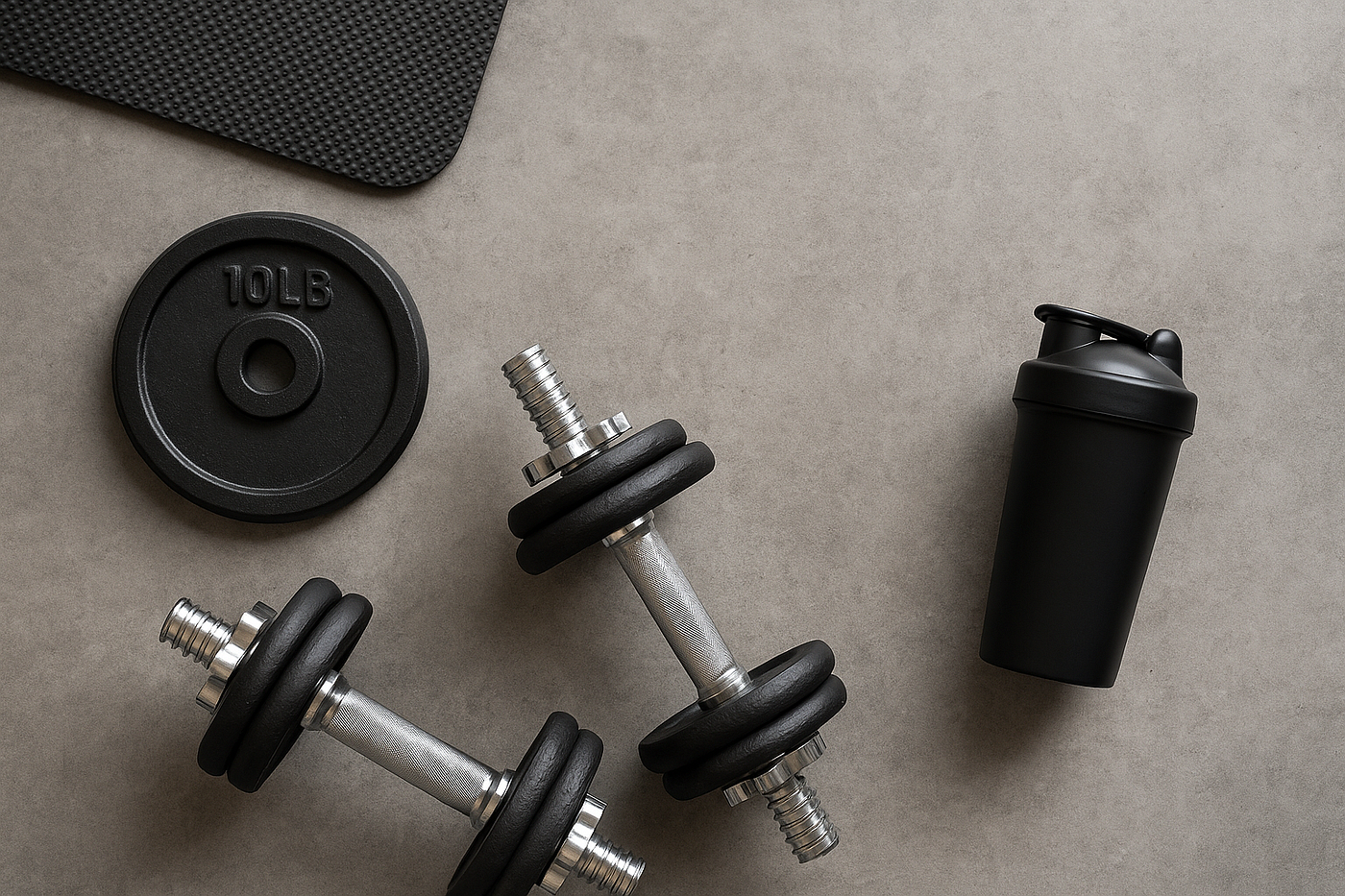
This is the reason you’re leaving muscle on the table every single night, and you have no idea it’s happening. You’re obsessing over your post-workout shake, timing your meals to the minute, tracking every macro, but there’s an eight-hour window where your body either builds serious muscle or quietly wastes the work you put in at the gym. That window is your sleep.
Let me be straight with you. The phrase “double overnight protein synthesis” needs context. Studies show up to a twenty-two to thirty-seven percent improvement when the right pre-sleep strategies combine with exercise, and an eighteen percent decrease when sleep falls apart. The gap between fully optimized and completely neglected sleep conditions is massive, not some marginal tweak you can ignore. We’re talking about the difference between real progress and spinning your wheels for months.
Today I’m breaking down five evidence-based strategies to hack your slow-wave sleep, the specific phase where your body does the heavy lifting on recovery, so you can squeeze every ounce of growth out of the hours you spend unconscious.
Not all sleep works the same way, and that’s the first thing you need to understand. Your sleep cycles through stages, including REM and several stages of non-REM sleep. The one that matters most for muscle sits in the deepest layer, called slow-wave sleep, or SWS, sometimes referred to as stage N3. High-voltage, synchronized brainwaves define this stage, and it accounts for roughly one quarter of your total sleep each night. That first bout usually hits about an hour after you fall asleep and lasts around twenty to forty minutes.
Here’s why anyone trying to put on size should care. The restorative theory of sleep tells us that sleep allows the body to repair and replace cellular components that get depleted throughout an awake day. Muscle repair, tissue growth, protein synthesis, and the release of key growth hormones all happen primarily during this window. The big player in all of this is growth hormone. The most reproducible pulse of growth hormone secretion in adults shows up shortly after sleep onset, tied directly to that first phase of slow-wave sleep. Roughly seventy percent of growth hormone pulses during sleep in men coincide with slow-wave sleep, and the amount secreted correlates directly with how much deep sleep you accumulate.
A team at UC Berkeley published a paper in Cell in September twenty twenty-five that actually mapped the brain circuits controlling this entire process. They identified how growth hormone release gets regulated by sleep-wake-dependent activity of specific hypothalamic neurons. Daniel Silverman, a postdoctoral fellow on the study, explained that understanding this neural circuit could eventually point toward new hormonal therapies to improve sleep quality or restore normal growth hormone balance.
What that same team uncovered was a feedback loop where growth hormone gradually builds up during sleep and stimulates the locus coeruleus, nudging the brain toward waking. Your body runs this elegant built-in system where deep sleep triggers growth hormone, and growth hormone eventually signals that it’s time to wake up.
But here’s the thing. During your thirties, the total amount of growth hormone secreted over twenty-four hours drops by two to threefold. Optimizing deep sleep as you age stops being optional and starts being the difference between gaining and stalling.
Let’s look at the cost of getting this wrong, because the data here will make you uncomfortable.
Eighteen percent. That’s how much muscle protein synthesis dropped in a study on acute sleep deprivation. At the same time, plasma cortisol climbed twenty-one percent while plasma testosterone fell twenty-four percent. You lose anabolic signaling from both directions, less testosterone to build with and more cortisol tearing things down.
A particularly nasty detail sits buried in the research. Insufficient sleep hits glycolytic muscle fibers the hardest, meaning your fast-twitch fibers, the ones responsible for explosive power and carrying the most growth potential, show greater sensitivity to sleep deprivation than slow-twitch type I fibers. The exact fibers you’re training to grow during a bulk are the ones most vulnerable when you cut sleep short.
A study from the University of Chicago drove this home in a way that’s hard to argue with. During a calorie deficit, individuals sleeping five point five hours a night lost fifty-five percent less fat and sixty percent more muscle compared to those getting eight point five hours. Same calorie deficit, wildly different outcomes. The short sleepers held onto more fat and burned through more muscle. If you’re in a bulking phase and think you can get away with six hours, you’re undermining everything you do in the gym.
My lean bulk program accounts for all of this — training, nutrition, and recovery mapped out week by week. Link at the end of this post.
Strategy number one, and in my opinion the most directly actionable, is pre-sleep protein.
Back in twenty twelve, researchers proved for the first time that protein ingested before sleep actually gets digested and absorbed while you’re unconscious. Before that study, nobody had confirmed whether eating protein before bed did anything useful at all.
Since then the evidence has stacked up. Muscle protein synthesis rates ran roughly twenty-two percent higher during overnight sleep when protein was consumed before bed compared to a placebo. One study found that forty grams of protein before sleep pushed overnight muscle protein synthesis rates to zero point zero four four percent per hour, versus zero point zero three three percent per hour with the placebo. When pre-sleep protein was paired with evening resistance training, the effect climbed even higher, with myofibrillar muscle protein synthesis rates jumping thirty-seven percent when thirty grams of casein followed a single session of resistance exercise.
A dose-response relationship seems to exist here, since studies using thirty grams showed weaker effects than those using forty grams. The current recommendation from the literature lands at a minimum of forty grams roughly thirty minutes before sleep.
Something that might catch you off guard is the casein versus whey debate. A twenty twenty-three study from Maastricht University found that casein and whey protein did not differ in their capacity to stimulate mitochondrial and myofibrillar protein synthesis rates overnight. Myofibrillar synthesis rates actually ran numerically higher following whey protein, and the researchers stated their data strongly challenge the common belief that casein is the preferred source for overnight anabolism. Use whatever protein you prefer, just get those forty grams in before you go to bed.
This is just one piece of the puzzle. If you want the full lean bulk system — meals, training, recovery — it’s all in my program. Link below.
Strategy number two targets your bedroom temperature, and this one is criminally underrated.
Forty percent. That’s how much slow-wave sleep can drop when you sleep in temperatures above seventy-one degrees Fahrenheit, or twenty-two degrees Celsius, according to research published in the Journal of Physiological Anthropology. Almost half your deep sleep, gone, because your room runs too warm.
A higher core body temperature has been linked to decreased restorative slow-wave sleep and lower subjective sleep quality. Your body needs to cool down to enter deep sleep, and when your environment fights that process, you lose out. The sweet spot falls between sixty and sixty-seven degrees Fahrenheit, roughly fifteen to nineteen degrees Celsius. Michelle Drerup, a sleep psychologist at the Cleveland Clinic, put it simply: it should be cool, dark, and quiet to enhance your sleep.
Then there’s the warm bath effect, which sounds counterintuitive but works. Warming up in hot water between one and eight hours before bed, not immediately before, actually increases slow-wave sleep and NREM consolidation. The mechanism comes down to accelerating your core temperature drop, where you heat up and then your body overcorrects by cooling down faster, which primes you for deeper sleep.
In twenty twenty-four, a three-center study tested a high-heat-capacity mattress designed for body cooling on seventy-two individuals. The results showed an increase in N3 sleep of seven point five minutes per night alongside a decrease in heart rate. Not a dramatic leap, but essentially free gains from your mattress choice.
Strategy number three targets your ears while you sleep, specifically with pink noise.
Acoustic stimulation stands as the most effective sensory method for increasing the magnitude of slow waves. Pink noise dominates the data. A review covering thirty-four studies found that eighty-one point nine percent of pink noise studies reported positive findings, compared to only thirty-three percent for white noise, which is a gap that’s hard to ignore.
The frontier of this research involves closed-loop auditory stimulation, where tones are precisely timed to the upswing of your slow oscillations during deep sleep. One study demonstrated that this kind of stimulation enhanced slow-wave activity and slow-wave sleep consistently throughout the entire intervention period. Even simple pink noise apps or speakers can help right now, and the technology for phase-locked stimulation keeps getting more accessible year over year.
Strategy number four is resistance training, and the data on exercise type matters more than you’d expect.
Charlene Gamaldo, medical director of the Johns Hopkins Center for Sleep, has stated that solid evidence shows exercise helps you fall asleep more quickly and improves sleep quality. But the type of exercise makes a difference. A study from Iowa State found that resistance exercise improved five sleep indicators, covering sleep onset time, sleep onset latency, total sleep time, wake after sleep onset, and sleep efficiency, while aerobic exercise only improved two of those. Angelique Brellenthin, assistant professor of kinesiology at Iowa State, noted that resistance exercises may be superior when it comes to getting better sleep at night compared to aerobic work.
Good news for those of you training in the evening, too. Despite older recommendations warning that evening exercise disrupts sleep, research has shown the opposite, with some studies suggesting that high-intensity training in the early evening may even improve sleep quality. After high physical loads during the day, the percentage of slow-wave sleep increases the following night, which means your training already primes your deep sleep as long as you don’t sabotage it with the other factors we’ve covered.
Strategy number five involves magnesium, but this one comes with a caveat you need to hear.
A twenty twenty-five randomized controlled trial tested magnesium bisglycinate in healthy adults with poor sleep and found improvements in sleep efficiency, subjective sleep quality, and reduced nighttime awakenings. An earlier study showed that five hundred milligrams of magnesium per day in elderly populations over eight weeks increased sleep time and sleep efficiency.
There’s also a finding that longer slow-wave sleep during recovery from sleep deprivation correlated with increased magnesium in the motor cortex, amygdala, midbrain, and cerebellum, which suggests a link between magnesium and deep sleep at the brain level.
But here’s where honesty matters. The majority of studies using polysomnography do not consistently show a measurable increase in the percentage or duration of deep sleep or REM sleep from magnesium supplementation alone. Magnesium also had no effect on delta power, the specific brainwave activity dominant in slow-wave sleep. So magnesium likely helps overall sleep quality, but calling it a direct slow-wave sleep enhancer overstates what the evidence actually shows.
Let me tie all of this together. Your body runs a system refined over millions of years, and primates literally select their sleeping sites based on thermal characteristics to optimize rest. Your biology wants to recover and grow during sleep, and the only question is whether you’re creating the right conditions for that process.
Here’s the stack. Forty grams of protein thirty minutes before bed, paired with evening resistance training, which alone can boost overnight muscle protein synthesis by up to thirty-seven percent. Drop your bedroom temperature to somewhere between sixty and sixty-seven degrees Fahrenheit. Take a warm bath or shower one to two hours before bed to speed up your core temperature decline. Run pink noise while you sleep, and consider magnesium bisglycinate as a supporting player for overall sleep quality.
One honest nuance before I go. Some researchers argue that the muscle protein synthetic response after resistance exercise follows time more than sleep state, meaning amino acids get taken up by muscle tissue within hours regardless of whether you’re awake or asleep. The hypothesis that recovery depends entirely on sleep doesn’t always carry extensive experimental evidence behind it, and I’m not going to pretend this science is fully settled.
But the weight of the evidence still leans heavily toward optimizing sleep as one of the most powerful and most neglected tools in your bulking arsenal. You’re already putting in the work at the gym and eating the food. The only question left is whether you’re going to keep ignoring the eight hours where your body actually does the building, or finally start treating sleep like the anabolic environment it was designed to be.
If you’re ready to stop leaving gains on the table, my lean bulk program puts everything we’ve talked about into one system. Grab it right below.
The full video : https://www.youtube.com/@BulkForge
My Bulking Program : https://whop.com/the-bulking-blueprint-77/the-bulking-blueprint-23/
메타데이터
- post_id
- fa9a595fd29d
- slug
- hacking-slow-wave-sleep-to-double-overnight-protein-synthesis-fa9a595fd29d
- url
- https://medium.com/@Bulkforge/hacking-slow-wave-sleep-to-double-overnight-protein-synthesis-fa9a595fd29d
- canonical_url
- https://medium.com/@Bulkforge/hacking-slow-wave-sleep-to-double-overnight-protein-synthesis-fa9a595fd29d
- author_url
- https://medium.com/@Bulkforge
- status
- ok
- fetched_at
- 2026-06-09 15:37:30