Ubiquity
How Trannsion Conquered Africa Without anyone knowing its name
Ubiquity
The company we’re going to talk about today, few people have ever heard of. But some of their brands are truly some of the most recognizable customer-facing brands in Africa.
How’s that possible, you may ask?
Even I am not entirely sure.
However, what is clear is that they favor a strategy of creating subsidiary companies to tackle a niche while remaining somewhat obscure to the public.
There are advantages to this sort of strategy. Consumers usually have a fairly one-dimensional view of a brand.
Ask people what Apple does. The majority of respondents will say phones. But it’s so much more than that.
Continuing with our Apple anecdote, let’s create a scenario where Apple decided to create a $200 mobile phone. For reference, Apple’s current flagship, the iPhone 17 Pro Max, retails at about $1,200.
They would have just created a product consumers would struggle to understand.
Is it a bad product because it’s so cheap relative to the other Apple phone? Or is Apple simply ripping us off at the flagship level?
So, a very savvy way to avoid this sort of quagmire is to have multiple brands niched to certain products and entry levels.
Transsion is absolutely spectacular at doing this.
Here’s a list of all their brands: Tecno, Infinix, iTel, Oraimo, Syinix, Carlcare, alongside majority stakes in Boomplay and PalmPay through Transnet.
If you’re African and reading this, you surely know these brands. More likely than not, you’ve used one of their products — one, if not all, of them.
But before we go further, let’s get some historical context about the company we call Transsion.
Historical Context
Transsion Holdings was founded in 2006 by former Ningbo Bird executive George Zhu Zhaojiang. It was originally named Tecno Telecom Co., but was soon reconstituted as Transsion Holdings, with Tecno as its first subsidiary.
George Zhu
While looking into these companies, I had a stark realization: the success of these brands can, in large part, be traced back to their founder and his experiences.
George was head of sales in developing markets while he was at Ningbo Bird. Ningbo Bird was a customer-facing phone brand based in China and, in 2003, was the largest phone manufacturer in China by sales. There isn’t much information about them now, but it seems they still exist in some capacity.
A large portion of Zhu’s job during this period at Ningbo was traveling to developing markets, Africa included. He got to observe firsthand some of the needs of these markets and why so many brands simply couldn’t cater to them.
So he insisted on providing the right phone for the African populace: dual SIMs, and cameras that compensated for high-contrast lighting and darker skin tones, so Africans could take good selfies.
Hence, they became a dominant market player and everyone lived happily ever after.
Nope.
That is a simplistic view of the story, but it’s the version that’s usually told as the company’s origin story. It’s not entirely untrue, but it’s simplistic to the point of being disserving.
Firstly, Africa already had an emerging phone market, and selfies weren’t a major sticking point until around 2012. So the skin-tone thing wouldn’t have been a major issue in 2008.
So let’s take a snapshot from that year: 2008.
That year is particularly significant because Tecno decided to focus solely on the African market, and Transsion launched the iTel subsidiary as well.
It’s 2008.
The average telephony penetration in African markets is a low but growing 30%. Aside from high tariffs and poor telecoms infrastructure in most African countries, the market is growing rapidly.
Statistics from the International Telecommunication Union illustrate what’s happening at this time really well. According to them, in the opening quarter of 2008, mobile phone users in Africa passed 280 million, overtaking the United States and Canada with their 277 million users.
Africa added 70 million connections in 2007, representing growth of 35%.
So, 70 million new Africans got phones and had carriers for calls.
We can also roughly assume that the majority of those 70 million new connections came from new phone purchases.
Which phone brands filled this demand?
To answer that, we’re going to have to whip out the spreadsheets and look at the sales reports of another very iconic brand.
Can you guess?
It’s probably the brand of phone your mom and dad used first if you’re my age.
Still haven’t got it?
Here’s another clue: the boot sequence of their phones featured two hands reaching out to hold each other.
Got it now?
Yes, it’s Nokia.
It’s so sad, and so surprising, that it seems to be a brand almost everyone has forgotten about.
In 2007, Nokia sold 75.6 million units in the Middle East and Africa region. Unfortunately, in their sales reports, they report the Middle East and Africa together, so we’re going to have to do some deductions to figure out a rough estimate of what percentage of that number came from Africa.
The Middle East was the bigger market at the time, with greater telephony penetration, but Africa was growing faster than it.
So I’m going to give it a 60–40 split, with the Middle East accounting for 60% of those sales and Africa accounting for 40%.
That gives us roughly 30.24 million Nokia units sold in Africa in 2007.
That establishes two things: there was a phone market in Africa, and there was an incumbent with a huge chunk of market share.

The iconic Nokia boot animation
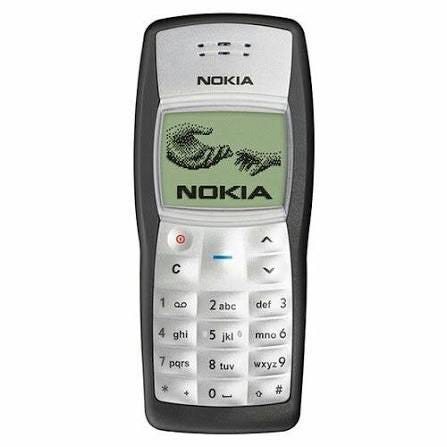
Nokia 1100
Why was Nokia the incumbent?
Wait, is this blog about Nokia or Transsion?
Just bear with me.
I’m trying to show that people did understand the African market back then, as well as dispel some of the Transsion myth.
The average price of a Nokia phone in 2007 was about $110. One of Nokia’s most legendary cheap devices, the Nokia 1100, debuted at $100, while the N95, Nokia’s flagship at the time, debuted at $730.
That indicates Nokia had a low-cost-first approach to phone sales, and this benefited Africa.
Nokia knew this since the early 2000s and exploited it with campaigns suggesting to people in the MEA region that they actually needed a phone.
So who better to educate this emerging market and exploit it?
That was what Nokia did.
And it paid dividends.
Until it didn’t.
For the first 10 -12 years of the 21st century, Nokia had around 40% market share in the MEA region, give or take, and even globally.
And that makes sense.
You can beat up a Nokia phone for years and it would still run. The battery life was honestly impressive and they were cheap.
However, there is a reason no one owns a Nokia anymore.
Well, it was one pivotal keynote given by a thin-looking man with no belt, wearing a black Issey Miyake turtleneck.
Guess who it is?
It’s Steve Jobs.
And what’s he talking about?
It’s the iPhone.
The keynote was given on January 9th, 2007, and the iPhone launched with a $499 retail price tag.
At the time, that was a hefty price tag for a phone — four times Nokia’s average — and it was very popularly criticized by then-Microsoft CEO Steve Ballmer as being way too expensive.
The price did, however, drop by a third, which is pretty decent.

Jobs at the Iphone Intro Keynote
However, it took three years for Apple to gain 2.9% market share, making it the fifth-largest phone brand in the world by 2010.
What was the cost of Apple’s flagship in 2010?
$649 for the base 16GB unlocked version with no carrier.
That’s so expensive for the majority of the world. And not practical, either.
The iPhone 4 had a 1,470 mAh battery.
That sounds mind-boggling.
You literally can’t use that in a lot of African markets with crappy electricity.
It also used 3G, which wasn’t widely available.
But make no mistake: the smartphone era was truly upon us.
You can imagine what Apple did as creating a whole new market called the smartphone market, and Nokia really didn’t have a share there.
They were dominant with feature phones, not smartphones.
Now, granted, the smartphone market had been established and the standard had been set by an expensive device. Most market competitors would compete at that standard, expecting that the market they could sell to had the purchasing power and financing to buy, provided they were offering breakthrough technology.
Unfortunately, for the time being, Africa was left untapped.
The smartphone was expensive and impractical for the average African.
However, they wanted them because they were viewed as a status symbol, and they had honestly very interesting capabilities.
That would explain the BlackBerry craze in Nigeria in the 2010–2013 era. They were called ‘BBs’ and if you wanted to flirt with a girl you asked for her Black Berry pin so you could text her on Black Berry Messenger, ah good times.
Everyone wanted one.
It’s a symptom of the price problem.
The flagship smartphone is out of reach, so we’ll take the cheaper competitor.
Which was the BlackBerry.
By the way, it had the same practicality problems, with BlackBerrys having notoriously terrible battery lifespans during that era.

A Nollywood movie centered around the BlackBerry Craze
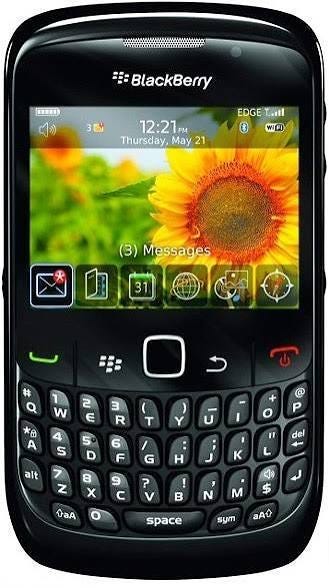
A Black Berry Curve 3
Our dear friends at Transsion must have looked at that and said:
“Hmm. Interesting.”
If we take our Africa-first mindset and create an offering in the smartphone era, there’s a market for it.
After all, Tecno had already used this model to get some market share from Nokia in the African region with feature phones.
Simple things like bigger batteries and more SIM slots.
I remember a lot of Tecno feature phones shipping with four SIMs, one at a time.
Anyways, Tecno gives it a shot and releases its first smartphone, the Tecno T1, in May 2012.
It’s entry-level, has a 1,400 mAh battery, and, of course, has dual-SIM capability.
Here’s a fun fact about the T1: it shipped with a spare battery.
And yes, the capacity is bad, but two fully charged batteries can get you quite the distance in a place like Nigeria.
By 2013, Tecno was shipping variants like the Tecno L3, which came with a 3,000 mAh battery.
Huge battery back then.
I remember because I used one.
That is the Africa-first strategy right there.
While competitors were still shipping 2,000 mAh batteries, Tecno shipped a bigger one.
And dual SIM was absolutely non-negotiable for those phones.
“Hey, why this dual SIM? Why this multi-SIM thing? I don’t get it.”
The reason is really simple.
Most telecom providers in each African market aren’t geographically reliable.
If you lived in City A and traveled to City B, your carrier could have bad cell service, leaving you stuck.
Also, inter-carrier calls always cost way more.
That’s why people here needed at least two SIMs: to capitalize on lower inter-carrier call rates and increase reliability by having a fallback carrier.
Now, by 2013, the social media era was truly upon us.
Every young person in Africa is on WhatsApp, 2go, and BlackBerry Messenger.
Those were the times.
So selfies are becoming a thing because you have to post and have a display picture.
But at the time, most other phone brands weren’t really calibrated for African skin tones and ambient lighting.
With higher-contrast backgrounds and extremely sunny environments, darker skin would often be exposed incorrectly.
I saw some of these pictures and, honestly, I’m not including them.
They’re almost insulting.
A Tecno T1

Tecno L3
Of course, Transsion takes on the challenge and develops software compensation algorithms for African skin tones.
It’s not the biggest issue now in 2026, with how advanced smartphone cameras are, but back then, it really was quite the difference.
The Multiple-Rung Strategy
In 2014, Transsion debuts Infinix’s first phone, the Infinix Zero x506.
I actually happen to remember this marketing campaign. I remember wanting this gadget so badly.
Infinix was created precisely for this reason: to be more appealing to the younger demographic, with catchy designs and marketing campaigns, while Tecno remained more polished and marketed towards professionals.
iTel, at the time, still exclusively made feature phones until 2016, when it debuted the iTel IT1516.
iTel’s purpose was to be ultra-budget: fifty dollars, or if possible, less. Crappy heat sink, small RAM, low-resolution camera.
They were really hard to use for anything other than social media and calls.
And that was their purpose.
For people who couldn’t reach for Tecno or Infinix:
“We’ve got you.”
Your phone’s going to overheat all the time, but we got you.
This creates a multi-rung approach that offers a brand for every pocket and lifestyle without diluting any of the other brands.
Oraimo starts its own commercial rollout of products around the 2014–2015 era, and its accessories: earpieces — remember those? — chargers, power banks.
The initial distribution of Oraimo was quite smart.
Tecno phones were said to have their accessories designed by Oraimo, and would ship these great pouches and accessories with the Oraimo and Tecno brand names on them, familiarizing the public with Oraimo and attaching a somewhat premium feel to the brand before the accessories business could sell units on its own.
Pretty smart.
But you get it now.
Wherever you turn, Transsion has a product for you.
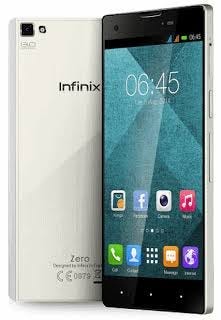
Infinix Zero x506

Itel it1516
CONSUMER SERVICES
Transsion was always ahead of the curve in this regard.
Its after-sales consumer care service, Carlcare, existed as early as 2009. It offered the very famous 12+1-month warranty for Transsion phones and also offered repairs.
It’s safe to say it was very much attached to the other brands and wasn’t profit-seeking in its own right. However, the distribution of the Carlcare app was undeniable. It always came bundled with Transsion phones.
They would use this distribution model again to create Africa’s leading music streaming platform, Boomplay.
You’re shocked, right?
I am too, because it’s definitely not my preferred streaming app.
But for millions more — 75 million, to be precise — free, ad-assisted streaming is what they can afford.
And additionally, the app already came pre-installed.
So, of course, they’re going to use it.
Present day, as of 2025, Transsion, with its three phone brands combined, holds a 44% market share of phones sold in Africa.
It has moved away from its Africa-first, Africa-only model and now retails in 60 countries, primarily across lower-income markets, with its three phone brands combined.
By unit sales, it would be the fourth-highest phone manufacturer in the world.
The Tecno brand has flirted with flagships, with significantly higher prices than its usual entries, like the Phantom and Fold models.
I even recently saw a review on the MKBHD YouTube channel of a Tecno concept bezel-less display.
If it shipped, it would cost more than the average phone.
Tecno is doing this because it realized that a lot of young Africans see the more expensive brands as status symbols. And if there were to be a sudden prosperity boom across the continent, it could certainly lose market share as people reached for iPhones and Samsungs.
So it’s a slow conditioning of sorts.
“Hey, we can make expensive, cool-looking things for you too.”
They don’t, however, release flagships every year.
If a prosperity boom comes, I think the company is well positioned to handle it.
There is some blur in the positioning now between Tecno and Infinx. Their mid tiers have very similar specs, and don’t seem to be particularly demographically targeted. However this is a malaise across the smartphone industry where it seems the industry has coalesced behind a specific form factor and innovation is discouraged.
With almost every business success, there’s always a bit of luck and timing that enables companies to seize the opportunity to dethrone incumbents.
Of course, they need insight. They need fast execution. They have to work really hard.
But timing is also essential.
Till we meet again, dear reader.

Carve-outs
My mother actually used a Ningbo Bird flip phone when I was a very young kid. I have very vague memories of the device, and she speaks quite highly of it and enjoyed using it too.
Nokia still exists, primarily as a networking infrastructure manufacturer, and licenses its name for use in small-scale phone production.
Nokia failed to adapt to the smartphone era due to several factors, including Microsoft buying its phone division during the smartphone boom.
That really is a discussion for another day.
Feel free to contact me with company suggestions I can write about, as well as factual inaccuracies. I would love to talk to you.
However, for my next piece, I have OPay in mind.
Hope that keeps you up at night.
메타데이터
- post_id
- fa9cd9b8dcf0
- slug
- ubiquity-fa9cd9b8dcf0
- url
- https://medium.com/@nwabuisichike70/ubiquity-fa9cd9b8dcf0
- canonical_url
- https://medium.com/@nwabuisichike70/ubiquity-fa9cd9b8dcf0
- author_url
- https://medium.com/@nwabuisichike70
- status
- ok
- fetched_at
- 2026-09-05 04:45:32