Dried Apples and Blood Sugar: What Clinical Science Says
Understanding Glycemic Response, Insulin Dynamics, and Why the Whole Fruit Matrix Matters
Dried Apples and Blood Sugar: What Clinical Science Says
Dried Apples and Blood Sugar
Understanding Glycemic Response, Insulin Dynamics, and Why the Whole Fruit Matrix Matters
For many years, dried apples have carried an unfair nutritional reputation. Some consumers avoid them because they contain concentrated natural sugars. Others consider them automatically healthy simply because they come from fruit. Neither assumption tells the whole story.
Modern nutrition science has moved beyond judging foods by sugar content alone. Researchers now recognize that how carbohydrates are packaged inside a food — the food matrix — plays a major role in determining how the body responds after eating. Fiber, polyphenols, cell structure, and even chewing time all influence post-meal blood glucose and insulin responses.
This shift in understanding has made dried apples an interesting subject in glycemic research. Rather than asking whether dried apples contain sugar, scientists are asking a more meaningful question:
How does the human body respond after eating whole dried apples?
The answer is more nuanced than many people expect. (RSC Publishing)
Blood Sugar Is About More Than Sugar
After eating carbohydrates, glucose enters the bloodstream and stimulates the pancreas to release insulin. Insulin allows glucose to move into cells where it can be used for energy or stored for later use.
A healthy metabolic response is not simply about producing less glucose. It is about producing a controlled, gradual rise that avoids sharp spikes followed by rapid declines. For this reason, nutrition researchers evaluate foods using several measurements rather than sugar content alone.
These include:
- Glycemic Index (GI)
- Glycemic Load (GL)
- Postprandial glucose response
- Postprandial insulin response
- Glycemic variability
Together, these measurements provide a much clearer picture of how foods behave inside the human body.
Why Drying Doesn’t Eliminate Nutritional Value?
Drying removes water — not the nutritional foundation of the fruit.
Whole dried apples still retain much of their:
- dietary fiber
- pectin
- polyphenols
- minerals
- natural organic acids
- plant cell structure
These components influence digestion in ways that refined carbohydrates cannot. Although sugars become more concentrated because water is removed, fiber and plant compounds remain concentrated as well. This distinction is one reason nutrition scientists increasingly evaluate whole dried fruit differently from refined sugary snacks.
What Clinical Studies Have Found
One of the most informative randomized crossover clinical trials compared dried apples with muffins providing the same amount of available carbohydrates. The results were surprising.
Despite equal carbohydrate availability, participants who consumed dried apples experienced:
- lower blood glucose concentrations during multiple post-meal measurements
- a smaller early insulin response
- slower postprandial glucose appearance
- similar satiety compared with the control meal
In other words, equal carbohydrate content did not produce equal metabolic responses. The structure of the food mattered. (Sage Journals)
The Role of the Whole Fruit Matrix
Nutrition scientists increasingly use the term food matrix to describe how nutrients are naturally organized within foods. In whole dried apples, sugars remain enclosed within plant cells together with fiber and polyphenols.
During digestion:
- chewing breaks only part of the structure
- fiber slows gastric emptying
- pectin increases viscosity
- carbohydrates become available more gradually
This differs substantially from refined carbohydrate foods where sugars are rapidly accessible.
The result is often a smoother post-meal glucose curve rather than a rapid spike.
Pectin: The Hidden Advantage
One of the most important fibers naturally present in apples is pectin. Pectin is a soluble fiber capable of forming a gel-like structure within the digestive tract.
This process helps slowly:
- stomach emptying
- carbohydrate digestion
- glucose absorption
The effect is not dramatic enough to eliminate rises in blood glucose, but it may reduce the speed at which glucose enters circulation. For metabolic health, the rate of glucose appearance can be just as important as the total amount consumed.
Polyphenols and Glucose Metabolism
Apples are naturally rich in plant compounds known as polyphenols. Beyond their antioxidant properties, researchers continue investigating how these compounds interact with carbohydrate metabolism.
Experimental evidence suggests certain apple polyphenols may:
- influence carbohydrate digestion
- interact with glucose transport mechanisms
- support insulin sensitivity
- reduce oxidative stress associated with post-meal metabolism
While these mechanisms remain under active investigation, they help explain why two foods containing similar carbohydrate amounts may produce different physiological responses. (RSC Publishing)
Glycemic Index Is Only Part of the Story
Consumers often focus exclusively on Glycemic Index. However, GI has important limitations. It measures how quickly carbohydrates raise blood glucose under standardized laboratory conditions but does not account for:
- serving size
- meal composition
- individual metabolism
- insulin response
- food combinations
For example, dried apples generally demonstrate a relatively low-to-moderate glycemic index compared with many refined carbohydrate foods. In one controlled trial, dried apples had a GI of about 43, lower than white rice and many processed snacks. (PMC)
This does not mean unlimited portions are appropriate. It means carbohydrates behave differently than many highly processed alternatives.
Portion Size Still Matters
Drying removes water while leaving nutrients concentrated. As a result, a small handful of dried apples contains considerably more fruit than the same volume of fresh apples.
This concentration increases:
- calories
- available carbohydrates
- natural sugars
Appropriate portion sizes remain essential, particularly for individuals managing diabetes or insulin resistance. Moderation is part of science not a contradiction to it.
Pairing Foods Changes the Response
Blood sugar responses depend on entire meals rather than individual foods.
Research consistently shows that combining carbohydrate-containing foods with protein, healthy fats, or additional fiber slows digestion and reduces post-meal glycemic excursions.
Practical examples include pairing dried apples with:
- plain Greek yogurt
- almonds
- walnuts
- natural peanut butter
- cheese
- seeds
These combinations generally produce a steadier metabolic response than dried apples consumed alone. (PMC)
Are Dried Apples Suitable for People with Diabetes?
There is no universal answer.
Individual glucose responses vary depending on:
- medication use
- insulin sensitivity
- physical activity
- overall meal composition
- portion size
Current scientific evidence does not support the idea that whole unsweetened dried apples should automatically be excluded from a diabetes-friendly eating pattern.
Instead, experts emphasize:
- choosing products without added sugar
- monitoring portion sizes
- incorporating dried fruit into balanced meals rather than eating large quantities alone
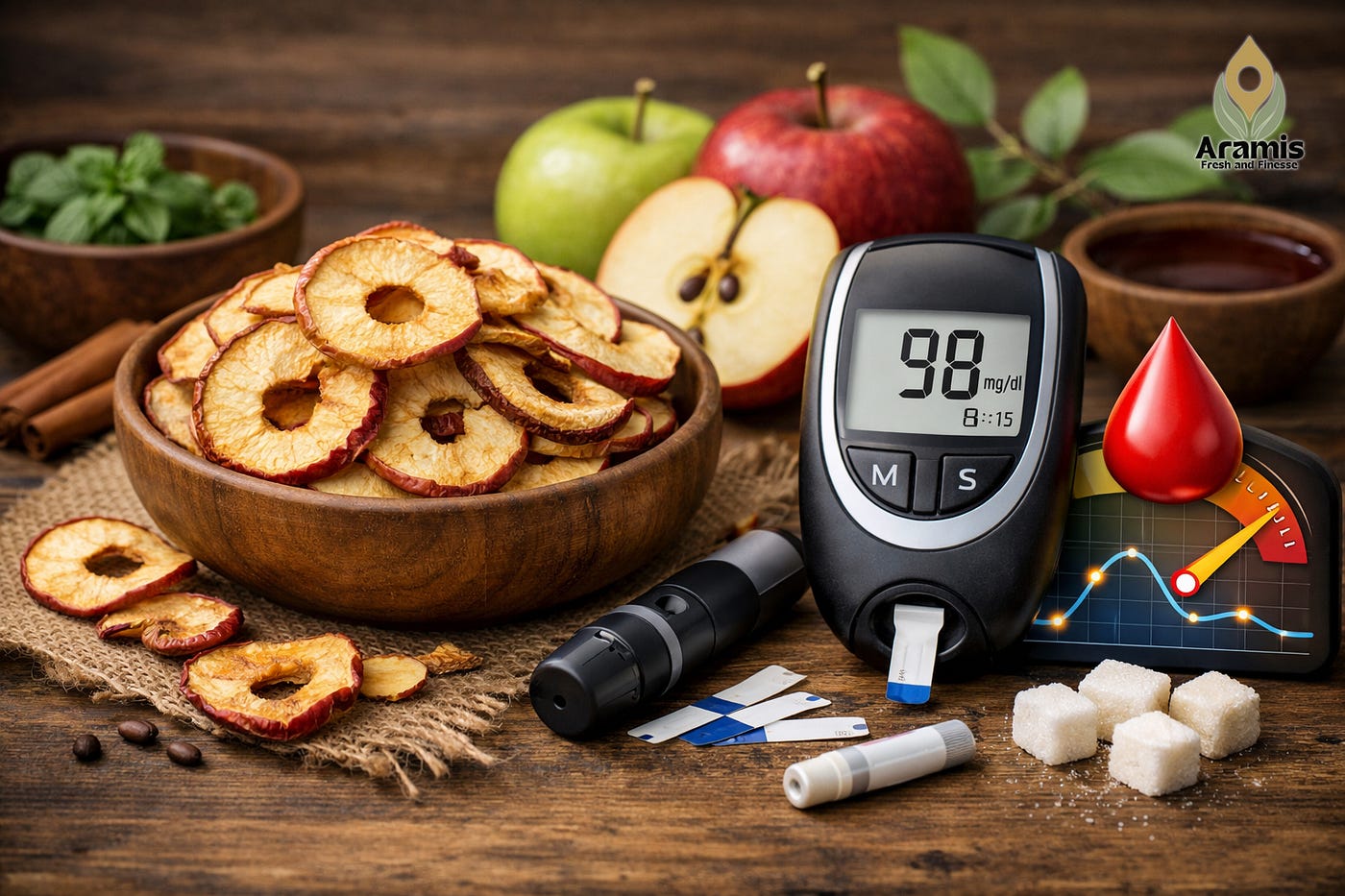
Personal glucose monitoring, when available, remains the most reliable way to understand individual responses. (Verywell Health)
Choosing Better Dried Apples
Not all commercial products are nutritionally equivalent.
For better metabolic quality, look for dried apples that are:
- made from 100% whole apples
- free from added sugar
- minimally processed
- naturally high in fiber
- free from unnecessary coatings or sweeteners
The ingredient list should ideally contain only one ingredient:
Apples.
The Bigger Picture
Blood sugar regulation is influenced by overall dietary patterns — not by a single food. Whole dried apples illustrate an important principle in modern nutrition science: foods should be evaluated according to their complete biological structure rather than sugar content alone.
Clinical studies suggest that the natural combination of fiber, pectin, polyphenols, and the intact fruit matrix helps explain why dried apples often produce more favorable post-meal glucose and insulin responses than refined carbohydrate foods providing the same amount of available carbohydrates. (Sage Journals)
They are not miracle food, nor are they metabolically identical to fresh apples. Instead, they occupy valuable middle ground — offering convenience, nutrient density, and naturally occurring bioactive compounds that can fit within a balanced dietary pattern when consumed mindfully.
For consumers interested in maintaining stable blood sugar, the question is not whether dried apples contain sugar — they do. The more meaningful question is how that sugar is delivered within the remarkable architecture of a whole fruit. Current clinical evidence suggests that this natural structure makes all the difference. (MDPI)
메타데이터
- post_id
- faad38ed3e5d
- slug
- dried-apples-and-blood-sugar-what-clinical-science-says-faad38ed3e5d
- url
- https://medium.com/@aramiscare002/dried-apples-and-blood-sugar-what-clinical-science-says-faad38ed3e5d
- canonical_url
- https://medium.com/@aramiscare002/dried-apples-and-blood-sugar-what-clinical-science-says-faad38ed3e5d
- author_url
- https://medium.com/@aramiscare002
- status
- ok
- fetched_at
- 2026-07-07 11:08:18