The Myth and Politics of “Arab Colonialism”
In recent years, an increasing array of political movements has adopted the term “Arab colonialism” to articulate a specific narrative…
The Myth and Politics of “Arab Colonialism”

In recent years, an increasing array of political movements has adopted the term “Arab colonialism” to articulate a specific narrative regarding the history of the Middle East, North Africa, and even regions beyond. This discourse typically posits that Arab Muslims acted as foreign colonizers during the seventh century CE, when they allegedly invaded and displaced various indigenous populations across extensive territories. Proponents of this viewpoint argue that these historical actions established a legacy of oppression that continues to exert influence on the sociopolitical landscape of the modern world.
Such an interpretation of history has found resonance among a surprisingly diverse coalition of groups. For instance, Zionists emphasize Jewish indigeneity in Palestine, often using the rhetoric of Arab colonialism to reclaim narratives surrounding the Jewish connection to the land. Similarly, Hindu nationalists in South Asia assert that Islam is inherently foreign, leveraging this narrative to bolster their arguments against the historical presence of Muslims in the region. Moreover, elements within European and American white supremacist circles frame Islam as an alien civilizational force, employing the notion of Arab colonialism to promote their exclusionary ideologies.
In contrast, Iranian Pahlavists celebrate pre-Islamic Persian heritage and often invoke the concept of Arab colonialism to refute the cultural and political dominance of Islam in Iran. Additionally, certain Afrocentric activists prioritize the acknowledgment of indigenous African identities, critiquing the historical impact of Arab influence on the continent. Various ethnic nationalist movements throughout the Middle East also utilize similar historical narratives to advance their quests for identity and autonomy.
Despite the striking differences among these groups, they frequently utilize a common historical framework that positions Arab Muslims as invaders and colonizers. This convergence suggests that the appeal of the narrative is arguably more reflective of contemporary political agendas and identity struggles than it is of an accurate representation of the complexities of the seventh-century landscape. The historical realities of that period were multifaceted and cannot be easily reduced to a singular interpretation that serves present-day political needs.
Empire, Not Modern Colonialism

The Rashidun Caliphate under Khalifa Uthman. Map by Mohammad adil at the English-language Wikipedia, CC BY-SA 3.0, https://commons.wikimedia.org/w/index.php?curid=5031572
The Rashidun and Umayyad conquests, which took place from the 630s to the 750s, represent significant imperial undertakings in the annals of history. During this period, Arab-led military forces successfully overthrew two of the most dominant empires of the time — the Byzantine Empire and the Sasanian Empire. Through a series of military campaigns, these armies established political control over an expansive array of territories that stretched impressively from the Iberian Peninsula in the west to the vast landscapes of Central Asia in the east.
However, it is essential to approach the characterization of these events as “colonialism” with caution, particularly when applying the term in its modern context. Modern colonialism developed during a distinct historical period, specifically between the fifteenth and twentieth centuries, when European powers embarked on overseas imperial endeavors characterized by several defining features. These typically included the establishment of racial hierarchies, the extraction of economic resources for the benefit of the colonizers, the expansion of settler populations into colonized areas, and the integration of these regions into a global capitalist system. The priorities and methodologies of European colonialism were starkly different from those of the early Islamic conquests.
The seventh-century Islamic conquests reflected an alternative approach to imperial expansion. The early caliphates primarily sought to establish political authority, implement taxation systems, and exert military control over the conquered territories. Rather than aiming for the complete replacement of the existing local populations — a hallmark of modern colonial projects — the Islamic conquests allowed for the continuation of indigenous cultures, languages, and religions in many of the regions that fell under their control.

Egyptian Coptic man under the command of Tariq ibn Ziyad by JF Oliveras for Desperta Ferro
For instance, Egypt, following the Arab conquest, continued to be predominantly Coptic-speaking for many years, retaining its linguistic and cultural heritage despite the political changes. In the Levant, Aramaic remained a widely spoken language, showcasing the persistence of local identities. Similarly, Iran, throughout and after the onset of Islamization, managed to retain its distinct Persian language and cultural identity, illustrating a complex interplay between new religious influences and longstanding cultural traditions. Additionally, the Amazigh people of North Africa, while becoming integral contributors to the burgeoning Islamic civilization, managed to preserve vital aspects of their cultural identity, navigating the tension between assimilation and cultural autonomy.
That said, this does not imply that the conquests were devoid of conflict or that they promoted peaceful coexistence. Indeed, they involved significant warfare, the establishment of tribute systems, and the development of social hierarchies that often reflected a degree of coercion. However, the nature of the early Islamic conquests resists a straightforward classification within the framework of modern settler colonialism, highlighting the variety of imperial strategies and impacts across different historical and cultural contexts.
Ignoring Historical Complexity
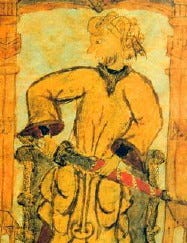
A posthumous drawing of Tariq ibn Ziyad in the Semblanzas de reyes (1300s CE). Public Domain
A significant weakness of the narrative surrounding “Arab colonialism” is its tendency to oversimplify the complex and multifaceted history of demographic and cultural interactions that have occurred over centuries. Often, this perspective reduces intricate historical processes to a simplistic dichotomy of conquerors versus the conquered, which fails to capture the reality of the diverse populations involved.
Take, for example, the conquest of Visigothic Hispania in 711 AD, frequently labeled as an “Arab invasion.” While many accounts emphasize Arab forces, it is crucial to recognize that a substantial portion of the invading troops were Amazigh (Berber). This distinction matters because it highlights the significant involvement of North African peoples in this historical event. Over time, the region known as Al-Andalus evolved into a vibrant and complex society, forged not only by Arabs but also by Amazighs, Iberian converts to Islam, Jews, and various other ethnic and cultural groups. Thus, reducing its rich history simply to Arab domination neglects the contributions and experiences of these diverse populations that played integral roles in shaping its development.
Similarly, the broader narrative of Islamic civilization cannot be narrowly defined through the lens of Arab authority alone. The influence of Persian culture and society was immense, contributing significantly to the realms of administration, literature, philosophy, science, theology, and the arts. Many of the most notable Islamic dynasties that emerged after the early caliphates were not Arab but rather Persian, Turkic, or from other non-Arab backgrounds. To represent Islamic civilization merely as an extension of Arab imperialism is to overlook the myriad contributions and the active agency of the countless non-Arab peoples who helped shape it.
This issue also arises in discussions of Africa, where the history of Islam’s spread and integration into various societies reveals a similarly nuanced reality. Take Mansa Musa, for instance, the famed ruler of the Mali Empire, often celebrated as one of the wealthiest individuals in the medieval world. Mansa Musa was not an Arab but a Sahelian monarch who embodied the fusion of Islamic principles with distinctly African political structures and cultural traditions. His reign illustrates how Islam became deeply integrated into African societies while also being shaped by local customs and practices. This points to a broader understanding that the medieval world encompassed rich and diverse identities.
These examples invite us to challenge the prevailing assumption that the processes of Islamization, Arabization, and imperial conquest are interchangeable or identical. They reveal a far more intricate history characterized by adaptation, cultural exchange, local agency, and hybrid identities. Analyzing these complexities offers a more comprehensive and accurate representation of historical realities than the simplistic narrative of “Arab colonialism” can provide.
Why Single Out the Arabs?
Carolingian nobleman by JF Oliveras
A question often overlooked by advocates of the “Arab colonialism” narrative is why similar historical processes in late antiquity and early medieval times are not framed in the same manner. The Arab conquests, while significant, were not unprecedented. Throughout Europe and the Mediterranean region, various populations engaged in migrations, conquests of territories, the establishment of new kingdoms, and the gradual integration with local communities.
For instance, in Romanized Gaul, the conquests led to a substantial change in governance as Frankish rulers took control. However, contemporary discourse rarely categorizes modern France as a Frankish colonial state, even though this transition involved significant shifts in power dynamics and cultural amalgamation. Similarly, Roman Hispania, which fell under Visigothic rule, isn’t typically analyzed through the lens of Visigothic colonialism. Instead, Spaniards are usually understood through a more complex narrative that reflects centuries of cultural evolution.
Late Anglo-Saxon thegn by JF Oliveras
In Britain, the historical landscape was profoundly altered by successive waves of migrating groups — Angles, Saxons, Vikings, and Normans — all of whom contributed to a rich tapestry of cultural and political changes. During this tumultuous period, each group left an indelible mark that fused with existing cultures rather than entirely replacing them. The Byzantine Balkans also underwent significant transformation due to large-scale Slavic migrations, reshaping the region’s linguistic and demographic landscape. Likewise, in the Carpathian Basin, the settlement of the Magyars laid the foundation for medieval Hungary, again demonstrating a complex interplay of cultures rather than simple domination.
In all these instances, new arrivals did not merely displace the existing populations; rather, they engaged in intricate interactions with communities that included Romanized, Hellenized, Celtic, Germanic, Slavic, and other ethnic groups. Over generations, these interactions fostered the development of new identities. The Franks evolved into the French, the Visigoths assimilated into the Hispano-Christian cultural milieu, the Normans melded into the English identity, and the Magyars became integral to the Hungarian narrative. The fluidity and dynamism of medieval populations were characterized by continuous change, mixing, and adaptation.
The Arab conquests should be understood within this broader framework of medieval state formation and ethnogenesis. Much like the Franks, Visigoths, Slavs, Magyars, and Normans, Arab-speaking elites often found themselves governing vast populations that were culturally diverse and significantly larger than their ruling class. As a result, both rulers and the ruled experienced transformations in identity and culture over time.
The tendency to singularly label the Arab conquests as “colonialism,” while interpreting similar developments in other contexts as standard nation-building or cultural evolution, often reflects contemporary political ideologies instead of an accurate representation of the medieval landscape. Such perspectives can obscure the complexity of historical interactions and the shared processes that framed the formation of societies across different regions.

Depiction of Khitans by Hu Gui
Chinese history presents a notable complexity that challenges simplistic narratives of conquest and colonization. Throughout much of its extensive and varied history, China has not only been governed by dynasties of Han Chinese origin but also by a succession of groups who emerged from outside the traditional spheres of Han culture. Key examples include the Northern Wei, founded by the Xianbei, the Khitan-led Liao dynasty, the Jurchen Jin dynasty, the Mongol Yuan dynasty, and the Manchu Qing dynasty. Each of these groups initially arrived as conquerors, yet over time, they engaged in a process of cultural integration, adopting significant facets of Chinese governance, language, philosophical thought, and political organization, while simultaneously preserving distinct elements of their own cultural identities and traditions.
As historians analyze the evolution of modern China, it is noteworthy that it is not typically characterized as a nation shaped solely by centuries of “foreign colonialism.” Rather, scholars recognize that the history of China comprises a complex interplay of cultural exchange, adaptation, and state-building. The conquerors indeed altered the sociopolitical landscape of China, but conversely, China also had a transformative impact on these ruling outsiders, reshaping their identities and practices to align more closely with those of the Chinese civilization.
This intricate pattern of cultural and political evolution is not unique to China; similar dynamics can be observed throughout Eurasia. In many historical contexts, political elites arose from one ethnic or cultural background while simultaneously ruling over diverse populations. Over generations, these encounters led to the blending of identities, the evolution of institutions, and the birth of new civilizations. Consequently, history is rarely characterized as merely a tale of permanent outsiders exerting dominance over unchanging natives.
This broader historical perspective reveals a significant flaw in the prevailing “Arab colonialism” narrative. Such narratives often portray Arab conquests as uniquely defining moments that have enduring implications, whereas comparable processes in regions like China, Europe, and Central Asia are viewed as part of the commonplace dynamics of premodern history. This selective interpretation tends to reflect contemporary political agendas more than a rigorous, consistent methodology for historical analysis. It underscores the necessity for a nuanced understanding of history that acknowledges the complexities of power, identity, and cultural interchange across different civilizations.
Why the Narrative Appeals to These Groups?
Photo by Ahmed Abu Hameeda on Unsplash
For some proponents of Zionism, the “Arab colonialism” narrative emerges as a strategic response to accusations that Zionism itself is fundamentally a colonial movement. In essence, this narrative reverses historical roles, attempting to recast the image of Jewish connections to the land as that of an indigenous people reclaiming their ancestral heritage.
Advocates of this interpretation argue that the Arab conquests of the seventh century should be viewed as a form of imperial expansion into the Levant. By framing these conquests in this manner, they aim to underscore the ancient roots of Jewish ties to the land, positing that Arab identity in the region is a product of conquest and subsequent cultural transformation rather than a longstanding continuity. This portrayal serves to reinforce the idea of Jews as the original inhabitants of the land, while framing the process of Arabization as a later development initiated through imperial means.
The argument also draws on the historical experiences of various Jewish communities that existed under Muslim rule throughout the centuries. Communities in regions such as the Middle East, North Africa, and, notably, the Iberian Peninsula encountered a spectrum of experiences ranging from accommodation and integration to discrimination and persecution under different Muslim dynasties. Some Zionist writers emphasize these historical experiences to challenge more romanticized narratives that depict a seamless era of interfaith harmony among the different religious groups in the region.
Nevertheless, the narrative frequently simplifies the rich diversity present within Jewish history itself. It is crucial to recognize that not all Jewish communities experienced Muslim rule in the same manner. For instance, Jewish populations in the Middle East and North Africa spent extended periods living under Muslim governments, while Ashkenazi Jewish communities primarily developed in Christian European contexts, often with little direct experience of Muslim governance until much later. Consequently, the collective memories and historical perspectives of Jewish communities vary significantly, influenced heavily by their unique circumstances.
This narrative can also obscure the intricate nature of Palestinian identity. Modern Palestinians are not simply descendants of the Arab conquerors from the seventh century; rather, their identity has evolved through centuries of demographic interactions, cultural exchanges, migration, conversion, and local continuity. Research in genetics, archaeology, and history indicates that substantial continuity exists between contemporary Levantine populations and the region’s earlier inhabitants, challenging the simplified narratives that attempt to define identity in binary terms.
As a result, the ongoing debate surrounding these issues tends to be less about the events of medieval history and more about contemporary questions related to indigeneity, legitimacy, and national identity. Historical events from fourteen centuries ago are often wielded as weapons in modern political arguments, even as the realities of the past reveal complexities that are frequently overlooked by advocates on both sides.

Path Sanchalan Bhopal by Rashtriya Swam Sevak Sangh. Photo by Suyash Dwivedi — Own work, CC BY-SA 4.0, https://commons.wikimedia.org/w/index.php?curid=52605265
Similarly, among Hindu nationalists, the narrative surrounding “Arab colonialism” serves to reinforce the perception that Islam is fundamentally foreign to the Indian subcontinent. Some nationalist writers emphasize the invasions by Arab and later Turkic forces, framing Indian Muslims as either the descendants of conquerors or inheritors of a foreign political legacy. This interpretation supports broader ideological projects seeking to define Indian civilization predominantly through the lens of Hindu cultural continuity and heritage.
However, it is important to note that the overwhelming majority of South Asian Muslims are actually descended from local populations that underwent conversion over many centuries. The history of Islam’s presence and development in South Asia is characterized by cultural synthesis, adaptation, and indigenous contributions, rather than purely by narratives of foreign domination.

Anti-Iranian regime protesters using the Achaemenid royal symbol. Photo by Crannofonix News — Own work, CC BY 4.0, https://commons.wikimedia.org/w/index.php?curid=182441257
In another context, among certain Iranian monarchists and Pahlavists, the Arab conquest of the Sasanian Empire is remembered as a civilizational disaster. This perspective frames the conquest as the annihilation of a sophisticated Persian civilization at the hands of foreign invaders, reflecting a nostalgia for pre-Islamic Iran and a critique of the Islamic Republic’s policies. Nevertheless, while the Arab conquest significantly transformed Iran’s cultural landscape, it did not obliterate Persian civilization. Instead, Persian culture has emerged as one of the most influential forces within the broader Islamic world, contributing profoundly to Islamic literature, philosophy, administration, and art, which have echoed from Central Asia to South Asia.
White supremacist movements also frequently invoke the concept of “Arab colonialism” as a foundational element in their broader ideological frameworks of civilizational conflict. Within this context, the expansion of Islam is depicted as an ongoing threat to European or Western identity. The medieval Islamic world is often cast in a reductive light, perceived primarily as a symbol of foreign invasion rather than being recognized as a complex civilization that interacted with Europe through trade, diplomacy, scholarly exchanges, and conflicts. Such narratives often ignore the history of mutual engagement and the extent to which medieval Christian kingdoms, European empires, and Islamic states were all involved in various forms of expansion and conquest.
Additionally, certain Afrocentric writers interpret the Arab expansion into North Africa and parts of East Africa as a process of cultural dominance that marginalized indigenous African identities. This perspective highlights the genuine historical facts associated with slavery, social stratification, and the cultural shifts that occurred within Arab-Muslim societies. However, it is equally important to recognize that this viewpoint can occasionally overlook the diverse experiences of African Muslims and the active role that African peoples played in shaping Islamic cultures. African societies were not merely passive recipients of Arab influence; they were significant contributors to the development of Islamic scholarship, trade networks, and political institutions, helping to create a rich tapestry of cultural interaction.
The Politics of Indigeneity
The narrative surrounding “Arab colonialism” has gained considerable traction, and one primary reason for its widespread prevalence is the increasing significance placed on the concept of indigeneity in modern political discourse. In contemporary discussions, being recognized as indigenous is frequently associated with a sense of moral legitimacy and historical claim. This recognition often empowers groups that are striving for acknowledgment, sovereignty, or rectification of historical injustices to underscore their deep-rooted connections to specific territories.
Consequently, political factions may strategically position their adversaries as foreign colonizers, irrespective of the extensive historical timelines that separate ancient migrations or conquests from present-day identities. This dynamic allows for the manipulation of historical narratives, where the language of indigeneity is harnessed to frame complex historical realities into stark dichotomies between “natives” and “outsiders.”
Furthermore, the surge in prominence of the term “indigenous” in political dialogues plays a crucial role in the evolution of the “Arab colonialism” narrative. Today, indigenous status is often perceived as a form of moral and political legitimacy that bolsters claims for rights and recognition. This perception has led various competing groups to vie for the title of indigeneity, frequently attempting to undermine the claims of others. Such competition can lead to the inappropriate application of a concept that was originally intended to describe populations affected by more recent forms of settler colonialism and state oppression.
When this term is applied to groups with histories marked by considerable interconnection — characterized by migration, conquest, cultural exchange, and conversion spanning over a millennium — it risks obscuring rather than elucidating the complexities of historical realities. In discussions surrounding the Middle East, the label “indigenous” is frequently wielded less as a tool for historical analysis and more as a political instrument. Instead of shedding light on the intricate tapestry of the region’s past, it often simplifies centuries of demographic fluctuations and cultural interactions into an overly reductive conflict framed as a binary struggle between an unchanging population of natives and a fixed group of outsiders. This reductive narrative risks ignoring the rich, multifaceted histories that define the identities of the people involved.
History as a Political Weapon
The popularity of the narrative surrounding “Arab colonialism” represents a significant trend in which history is often weaponized for contemporary political struggles rather than serving as a tool for genuine understanding of historical events. This phenomenon highlights a key aspect of what is known as presentism, which is the inclination to interpret historical events through the lens of modern political frameworks, including concepts such as nationalism, colonialism, indigeneity, race, and decolonization. It is crucial to recognize that the people living in the seventh century did not conceptualize their identities or experiences through these modern categories. However, modern activists frequently project these anachronistic ideas back onto the past, shaping their narratives accordingly.
For certain Israeli nationalists, for instance, the construction of a narrative around Arab conquest serves a distinct political function. This narrative reframes current debates regarding Zionism, accusations of settler colonialism, and discussions about Palestinian human rights. By emphasizing the theme of Arab conquest, supporters aim to challenge prevailing depictions of Jews as mere outsiders to the land and Palestinians as the sole indigenous inhabitants. In a similar vein, some supporters of the Pahlavi dynasty invoke the Arab conquest of Persia as an emblem of national decline. They use this historical lens to draw stark contrasts between an idealized vision of pre-Islamic Iran and both the contemporary Islamic Republic and the broader Islamic influence that has permeated Iranian society.
In these scenarios, the historical narrative often holds greater significance for its political implications than for its factual accuracy or historical validity. The narrative functions as a form of political performance designed to resonate with modern audiences, thereby reinforcing contemporary identities, grievances, and ideological allegiances. Consequently, medieval history becomes a symbolic battleground where present-day conflicts regarding legitimacy, national identity, and cultural belonging are intensely contested.
In stark contrast, professional historians primarily strive to understand the complexities of the seventh century on its own terms. They acknowledge that while conquest, empire-building, and cultural transformations undeniably took place during this period, they remain cautious about imposing contemporary political frameworks onto societies that are historically and culturally distant from us by nearly fourteen centuries. These historians emphasize the need for a nuanced comprehension of the past, recognizing that simplistic comparisons to modern colonialism do not capture the multifaceted nature of historical development.
The narrative of “Arab colonialism” persists largely because it aligns with and serves powerful contemporary agendas. Various ideological movements, including Zionists, Hindu nationalists, white supremacists, Pahlavists, and some strands of Afrocentrism, leverage this narrative to further their competing visions of identity and historical legitimacy, often motivated by contemporary political objectives.
Nevertheless, it is imperative to acknowledge that history is inherently complex and cannot be reduced to simplistic political slogans. The Islamic conquests of the seventh century represented expansive imperial endeavors; however, they cannot be neatly equated with the modern understanding of colonialism. The societies that emerged in the wake of these conquests were shaped not only by the acts of conquest themselves but also by centuries of cultural interaction, adaptation, and synthesis.
Recognizing this complexity is vital if we aim to study history authentically, rather than merely recruiting it for use in the contemporary political battles that define our current landscape. A comprehensive understanding of historical events requires careful consideration of the context and complexities involved, allowing for a richer understanding of the past beyond present-day ideological conflicts.
메타데이터
- post_id
- facccf96f622
- slug
- the-myth-and-politics-of-arab-colonialism-facccf96f622
- url
- https://medium.com/@everythingaboutme4/the-myth-and-politics-of-arab-colonialism-facccf96f622
- canonical_url
- https://medium.com/@everythingaboutme4/the-myth-and-politics-of-arab-colonialism-facccf96f622
- author_url
- https://medium.com/@everythingaboutme4
- status
- ok
- fetched_at
- 2026-07-21 05:35:08