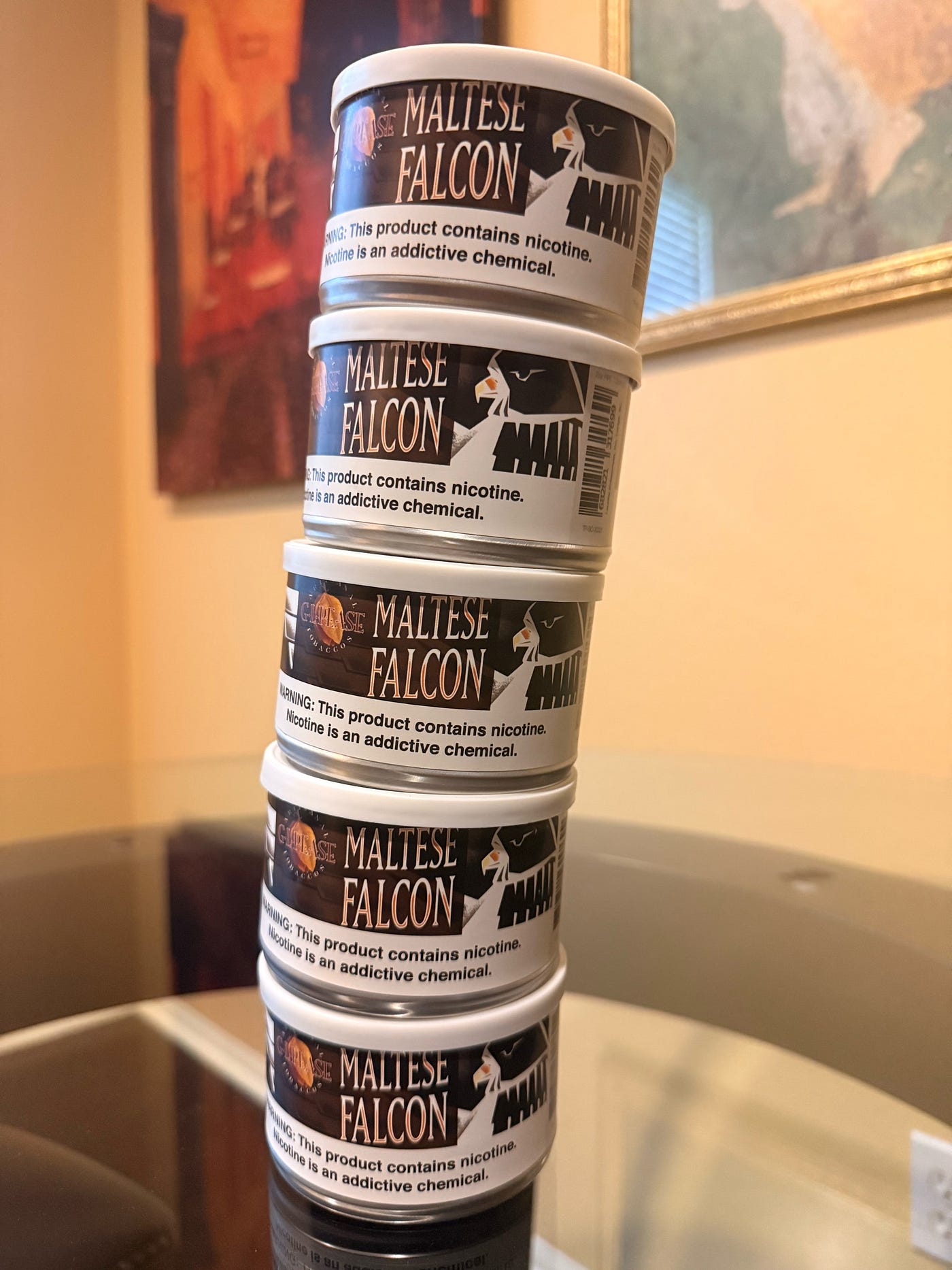
Cornell & Diehl and the Death of the Permanent Blend
The pipe tobacco industry has forgotten what made the great blending houses great.
Cornell & Diehl and the Death of the Permanent Blend
The pipe tobacco industry has forgotten what made the great blending houses great.
Cornell & Diehl has built much of its excitement around recurring Small Batch releases. Within a relatively short period, smokers have seen releases such as Sun Bear, Orchard, Carolina Red Flake, Firebird and who knows what else. Individually, there is nothing wrong with a limited edition. The problem arises when limited editions stop being exceptional and become a central marketing strategy.
The obvious comparison is McClelland’s Christmas Cheer. Christmas Cheer was exactly what a limited release should be. Once each year, McClelland selected a particular crop of red Virginia and showcased that harvest. Every vintage was intentionally different because every crop was different. It was a celebration of a specific growing season.
Most importantly, Christmas Cheer was not McClelland’s business model. McClelland maintained a deep catalog of permanent Virginia blends that smokers could purchase throughout the year. Christmas Cheer existed alongside that catalog, not in place of it. The annual release was an event — not the foundation of the company’s identity.
Cornell & Diehl has taken that concept and expanded it into a recurring marketing strategy that infuriates me. Multiple Small Batch releases appear every year.
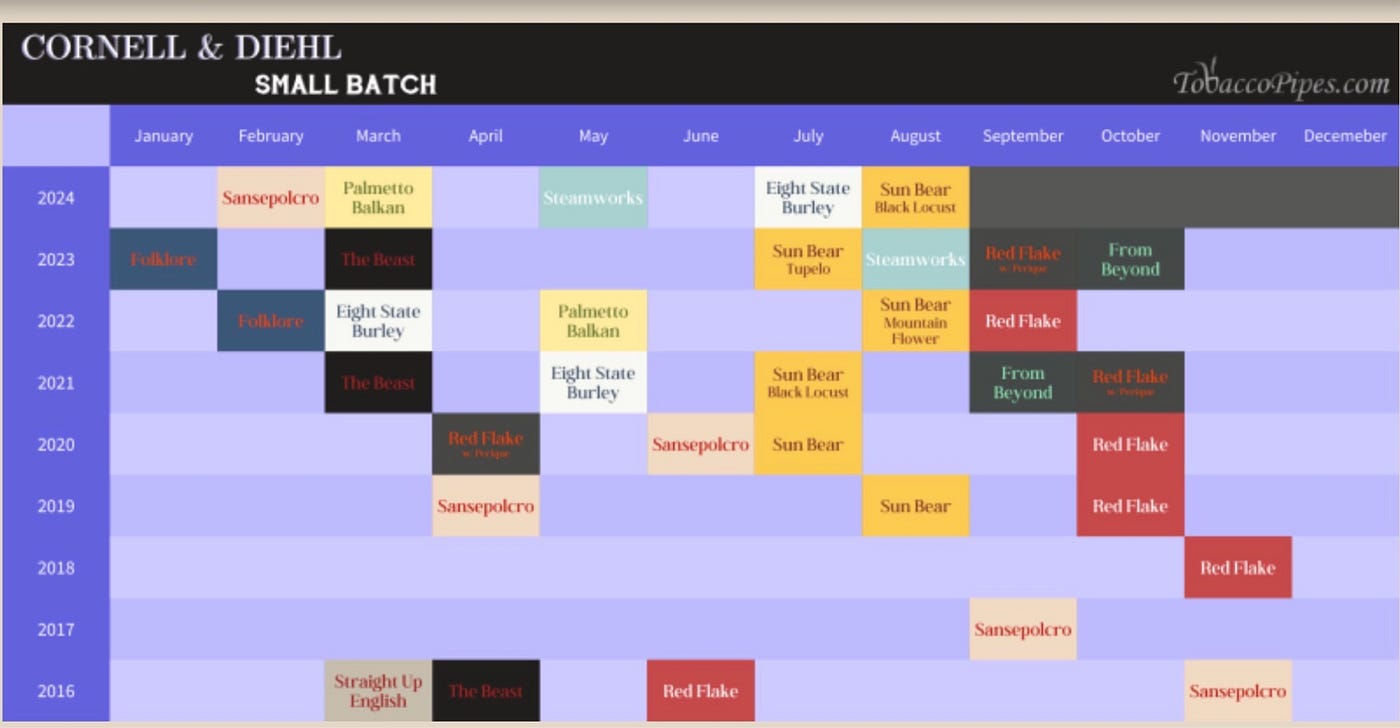
At some point, the word limited loses its meaning. If everything is special, nothing is.
The explanation usually offered is that these blends rely on rare or unusual leaf. Sometimes that may be true. But if these releases are truly dependent on scarce tobacco, why are they appearing every single year under the same “limited” banner? And if genuine scarcity is the reason a blend exists for only a few weeks, why isn’t that fact front and center in the marketing?
If a company truly secured a remarkable crop that could never be reproduced, the marketing would be expected to emphasize exactly that.
“Produced from a single exceptional harvest.”
“Only enough leaf existed for one production run.”
“This crop will never be available again.”
Instead, many releases simply carry labels like Small Batch or Limited Release, leaving customers to assume the reason for the scarcity.
Even if a particular crop is genuinely limited, that still does not explain why permanent blends cannot exist. The defining skill of a professional blending house has never been finding identical leaf every year. The defining skill is blending.
Coffee companies blend beans from different farms to maintain a house profile. Whisky producers blend barrels from different years. Cigar manufacturers blend tobacco from different farms and harvests. Pipe tobacco blenders have done exactly the same thing for generations. Different crops naturally vary. The blender’s job is to combine those crops to produce a consistent flavor profile.
Virginia tobacco illustrates the point perfectly. It is the leaf that benefits most dramatically from long-term aging because of its relatively high sugar content. If there is one genre that deserves a permanent flagship blend, it is red Virginia. There is no technical reason a blending house cannot produce a consistent, permanent red Virginia by blending different crops together to achieve a defined profile. McClelland demonstrated that decades ago.
Christmas Cheer celebrated the exceptional. The permanent catalog celebrated consistency. The current Small Batch model creates a very different customer experience.
Retailers impose purchase limits. Customers rush to order before reviews are even published. Discussion shifts away from the tobacco itself and toward release dates, shipping notifications, purchase limits, and whether anyone managed to secure a few tins before they sold out.

The scarcity becomes part of the product. That is the essence of FOMO marketing. It also discourages the very behavior that built the pipe tobacco hobby: cellaring.
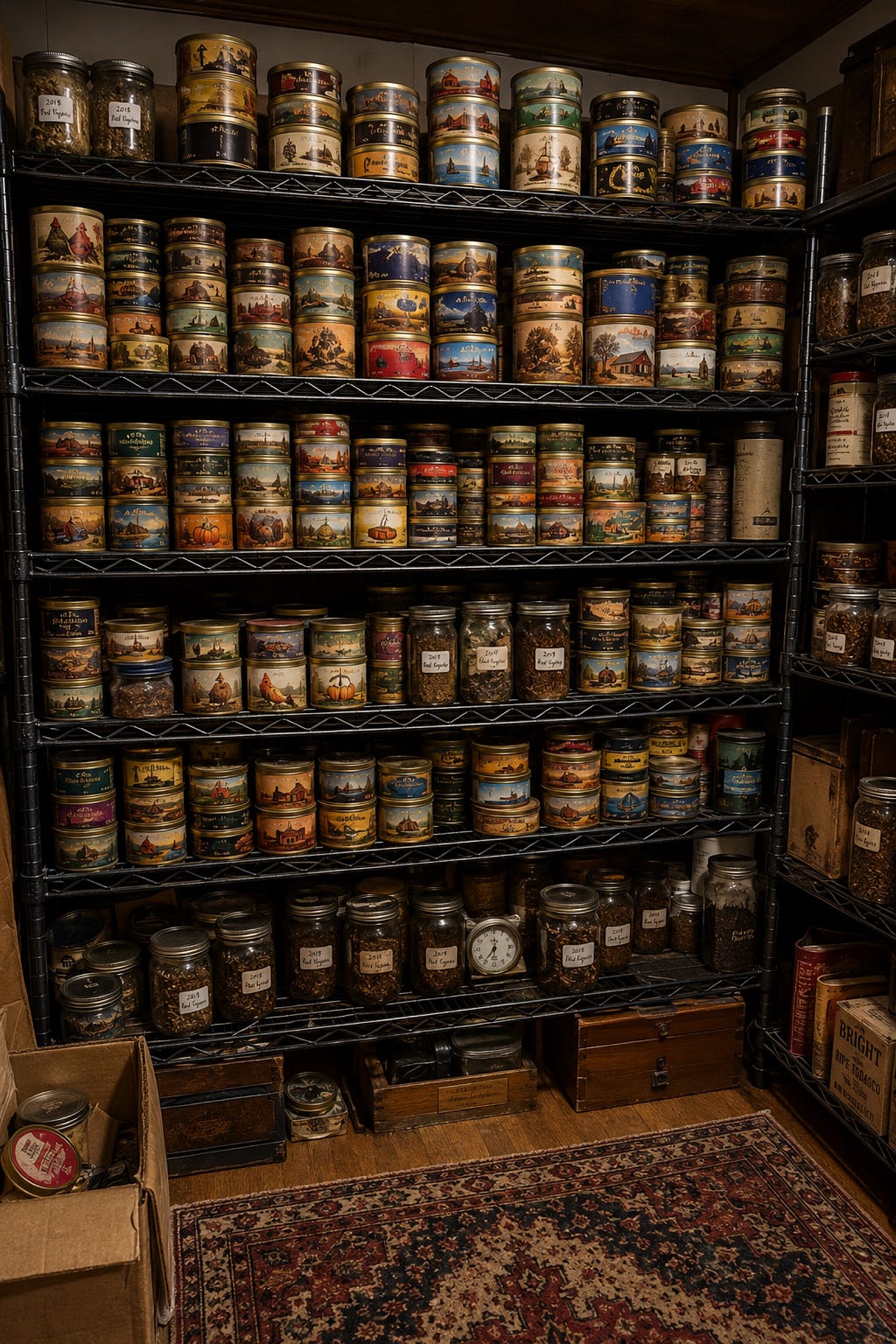
Permanent blends allow smokers to build their cellars over months or years. They buy a few tins today, a few more next month, and continue accumulating tobacco as their budget allows. Retailers benefit from repeated purchases over many years, and blending houses develop long-term customer loyalty.
The Small Batch model interrupts that cycle. Retailers frequently impose strict purchase limits, preventing customers from buying meaningful quantities even when they find a blend they love. Once the release sells out, the opportunity disappears until another limited release replaces it.
In the long run, that strategy can reduce sales because it prevents smokers from steadily filling their cellars with favorite blends. Instead of purchasing pounds of a dependable tobacco over many years, customers are limited to a handful of tins before the blend vanishes from the market.
The greatest blending houses built legendary permanent catalogs. Smokers remembered McClelland, Dunhill, Sobranie, Fribourg & Treyer, and other classic houses because their signature blends remained available year after year. Those blends became benchmarks precisely because smokers could revisit them, cellar them, and introduce new generations to them.
A permanent blend becomes part of pipe-smoking history. A limited release becomes part of next month’s release calendar.
Limited editions absolutely have a place — a truly exceptional crop, a genuine experiment, a commemorative release.
Those are appropriate reasons for scarcity. But when multiple “limited” blends appear every year, scarcity stops feeling like necessity and starts feeling like strategy.
The pipe tobacco industry does not need more release days. It needs more permanent blends worthy of twenty-year cellars.
메타데이터
- post_id
- fad4e92d020f
- slug
- cornell-diehl-and-the-death-of-the-permanent-blend-fad4e92d020f
- url
- https://medium.com/@supergrafx23/cornell-diehl-and-the-death-of-the-permanent-blend-fad4e92d020f
- canonical_url
- https://medium.com/@supergrafx23/cornell-diehl-and-the-death-of-the-permanent-blend-fad4e92d020f
- author_url
- https://medium.com/@supergrafx23
- status
- ok
- fetched_at
- 2026-08-20 22:22:35