Lo Shu Grid Calculator by Date of Birth: A Complete Numerology Guide
Your date of birth contains a unique combination of numbers. In numerology, these numbers are traditionally studied to understand…
Lo Shu Grid Calculator by Date of Birth: A Complete Numerology Guide
Your date of birth contains a unique combination of numbers. In numerology, these numbers are traditionally studied to understand personality traits, natural abilities, emotional tendencies, communication patterns, and areas that may require conscious development.
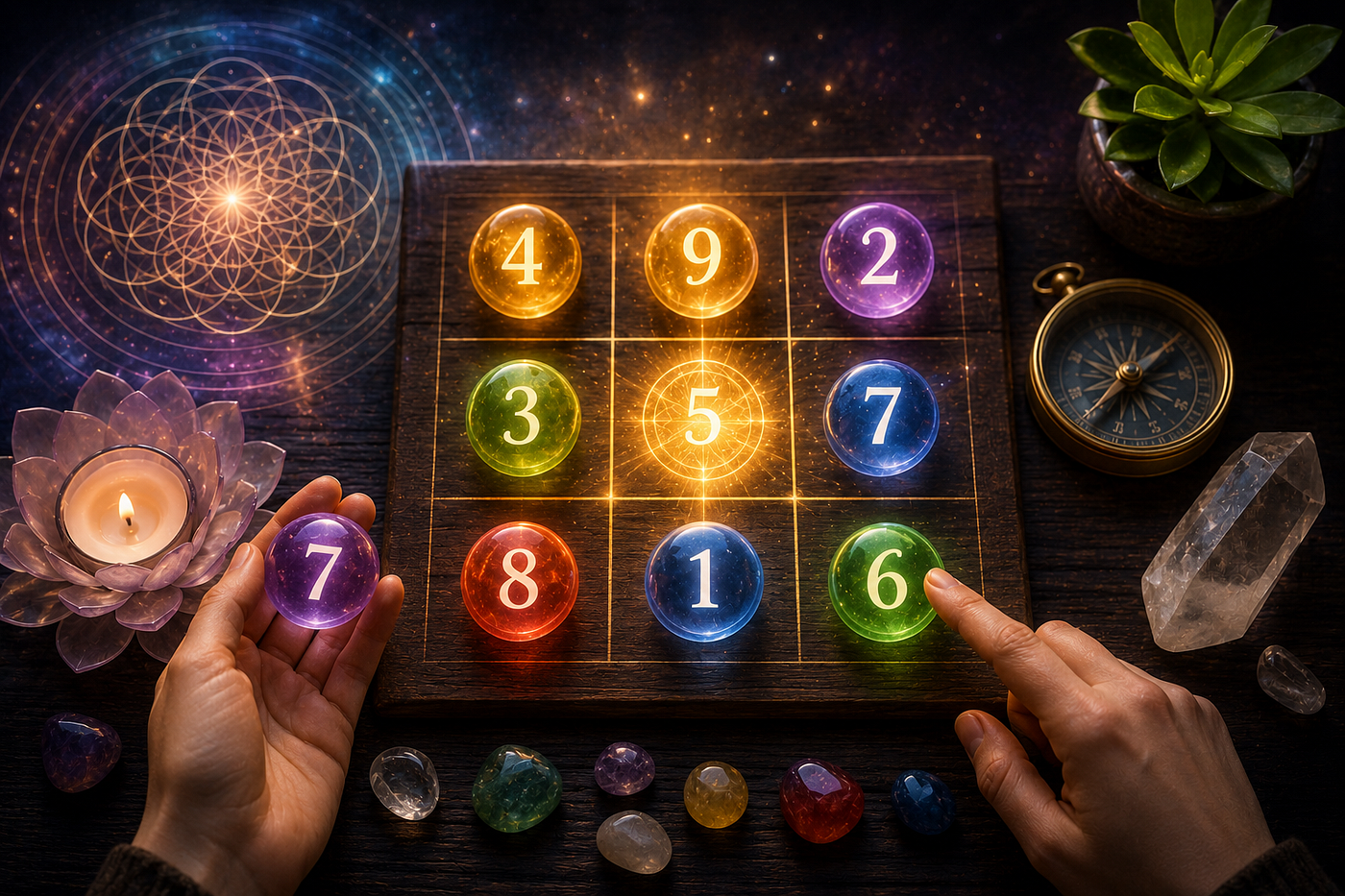
The Lo Shu Grid is one of the most popular tools used for this purpose. It places the digits found in a person’s date of birth inside a fixed three-by-three numerical grid. Every position represents a particular quality, and the overall pattern is interpreted through present numbers, missing numbers, repeated digits, and completed lines called arrows.
A Lo Shu Grid Calculator by date of birth makes the process fast and simple. Instead of drawing the grid manually, users enter their date of birth and receive a personalized chart within seconds.
This guide explains how the Lo Shu Grid works, how to calculate it, what numbers 1 to 9 represent, and how to understand missing and repeated numbers responsibly.
What Is the Lo Shu Grid?
The Lo Shu Grid is a three-by-three square containing the numbers 1 to 9 in a fixed arrangement. It is linked with an ancient Chinese numerical pattern traditionally called the Lo Shu Square.
The standard structure is:
492357816
Each row, column, and diagonal adds up to 15 when every number appears once. This mathematical balance is one reason the pattern has held symbolic importance.
In modern numerology, the fixed grid is used as a template. The digits appearing in a person’s date of birth are inserted into their respective positions. Numbers that appear more than once are repeated in the same box, while absent digits leave an empty position.
The resulting pattern is then interpreted to explore an individual’s strengths, challenges, and behavioral tendencies.
How Does a Lo Shu Grid Calculator Work?
A Lo Shu Grid Calculator by date of birth follows a straightforward process:
- It separates the digits of your full date of birth.
- It usually removes zeros because the standard grid contains only numbers 1 to 9.
- It counts how many times each digit appears.
- It places those digits in their fixed Lo Shu positions.
- It identifies missing and repeated numbers.
- It checks for completed rows, columns, and diagonals.
- It generates a numerology interpretation.
Some modern calculators may also include the Mulank, Bhagyank, or another derived number. This is a variation rather than a universal rule. A reliable tool should clearly explain which calculation method it follows.
How to Calculate a Lo Shu Grid Manually
Suppose a person was born on 24 August 1992.
The date can be written as:
24–08–1992
The digits are:
2, 4, 0, 8, 1, 9, 9, 2
Remove the zero:
2, 4, 8, 1, 9, 9, 2
Now count each number:
- Number 1 appears once.
- Number 2 appears twice.
- Number 4 appears once.
- Number 8 appears once.
- Number 9 appears twice.
- Numbers 3, 5, 6, and 7 are missing.
The personal Lo Shu Grid becomes:
49922 — — — 81 —
This pattern can then be interpreted according to the traditional meanings assigned to every number and line.
Why Is Zero Excluded?
The traditional Lo Shu Grid contains numbers from 1 to 9. Therefore, zero has no fixed position in the square and is normally excluded when the date of birth is entered.
A zero does not automatically indicate a negative quality. It is simply not placed inside the standard grid.
Some numerology systems assign symbolic meaning to zero or use it to amplify nearby digits. However, that approach differs from the basic Lo Shu Grid method. Users should avoid mixing systems unless the calculator clearly explains its rules.
Meaning of Numbers in the Lo Shu Grid
Each number has a fixed location and is traditionally associated with particular qualities. The meaning depends on whether the number is present, absent, or repeated.
Number 1: Communication and Individual Expression
Number 1 appears in the bottom-center position of the Lo Shu Grid. It is commonly associated with communication, personal expression, independence, and the ability to communicate individual needs.
A single 1 may suggest balanced self-expression. Repeated 1s may strengthen independence and communication, but too many can also indicate self-focus, stubbornness, or difficulty listening.
When number 1 is missing, the person may need to make a conscious effort to express feelings, opinions, or personal needs clearly.
The absence of 1 does not mean that someone cannot communicate. It suggests an area that may improve through practice, confidence, and attentive conversation.
Number 2: Sensitivity and Cooperation
Number 2 occupies the top-right position. It represents sensitivity, intuition, cooperation, partnership, and awareness of other people’s emotions.
One 2 may indicate emotional receptivity and diplomacy. Repeated 2s can increase sensitivity and intuition, although the person may become easily affected by criticism or changing environments.
A missing 2 may indicate difficulty recognizing emotional signals or expressing sensitivity. Such individuals may benefit from developing patience, empathy, and listening skills.
Number 3: Creativity and Planning
Number 3 is located in the middle-left position. It is commonly connected with creativity, memory, expression, planning, imagination, and the ability to organize ideas.
A present 3 may support creative thinking and effective planning. Repeated 3s may increase imagination and verbal expression, but they may also create scattered thinking if not balanced by discipline.
A missing 3 may suggest that planning, organization, or creative confidence requires conscious development.
Number 4: Order and Practical Discipline
Number 4 appears in the top-left position. It represents structure, practicality, discipline, organization, and the ability to work through details.
A single 4 may support steady effort and practical thinking. Repeated 4s can create strong organizational ability, although excessive repetition may produce rigidity or resistance to change.
When 4 is missing, the person may struggle with routines, planning, or completing practical tasks. Creating simple systems and consistent habits can help strengthen these qualities.
Number 5: Balance and Adaptability
Number 5 occupies the center of the Lo Shu Grid. Its central position is associated with balance, adaptability, emotional stability, freedom, decision-making, and the ability to connect different parts of life.
A present 5 may support flexibility and balanced judgment. Repeated 5s can increase energy, curiosity, and the desire for change, but may also produce restlessness.
A missing 5 is common and may suggest that the person must develop emotional balance, patience, and flexibility consciously.
Because number 5 sits at the center, many numerologists consider it important in maintaining harmony across the grid.
Number 6: Responsibility and Family Care
Number 6 appears in the bottom-right position. It represents responsibility, family, care, service, relationships, and practical commitment.
One 6 may indicate a balanced sense of duty. Repeated 6s can strengthen loyalty and responsibility, although they may lead to excessive worry, perfectionism, or taking responsibility for everyone.
A missing 6 may indicate that commitment, domestic responsibility, or emotional availability needs greater attention. It should not be interpreted as an inability to maintain relationships.
Number 7: Reflection and Inner Wisdom
Number 7 is located in the middle-right position. It is associated with reflection, learning through experience, analysis, intuition, inner understanding, and spiritual inquiry.
A present 7 may indicate depth and an interest in meaningful subjects. Repeated 7s may intensify introspection, but they can also lead to isolation or excessive analysis.
When 7 is missing, the person may prefer practical or external learning. Developing reflection, patience, and openness to deeper understanding may be helpful.
Number 8: Ambition and Material Management
Number 8 occupies the bottom-left position. It is traditionally linked with ambition, organization, financial awareness, authority, discipline, and material responsibility.
A single 8 may support balanced ambition and management ability. Repeated 8s can increase determination and focus on achievement, although they may also create work pressure or excessive concern with control.
A missing 8 may suggest that financial organization, ambition, or long-term planning should be developed consciously.
Number 9: Vision and Humanitarian Thinking
Number 9 appears in the top-center position. It represents idealism, intelligence, broad vision, compassion, recognition, and concern for larger goals.
One 9 may indicate a balanced sense of purpose. Repeated 9s can intensify idealism, intellect, and ambition, but may also create high expectations or emotional intensity.
A missing 9 may suggest that long-term vision, broader perspective, or confidence in personal ideals requires development.
What Do Missing Numbers Mean?
A missing number is a digit that does not appear anywhere in the date of birth. Its position remains empty in the Lo Shu Grid.
Missing numbers are often misunderstood. They do not represent permanent weaknesses, punishment, or inevitable failure. Instead, numerologists interpret them as qualities that may not operate automatically.
A person may need to learn these qualities through experience, education, self-awareness, or daily practice.
For example:
- Missing 1 may encourage clearer self-expression.
- Missing 2 may emphasize the development of empathy.
- Missing 3 may highlight planning and creative confidence.
- Missing 4 may require more structure and consistency.
- Missing 5 may call for balance and adaptability.
- Missing 6 may emphasize responsibility and commitment.
- Missing 7 may encourage reflection and patient learning.
- Missing 8 may require better financial or practical organization.
- Missing 9 may highlight the need for long-term vision.
The practical response to a missing number should involve constructive habits rather than fear-based remedies.
Can Most Numbers Be Missing?
Yes. Some dates of birth contain only a few different digits, which means several positions in the grid may remain empty.
This does not mean that the individual lacks intelligence, ability, or potential. People learn through family, education, professional experience, relationships, and personal effort.
The Lo Shu Grid is a symbolic framework. It should never be used to label a child or adult as incapable because a particular number is absent.
What Do Repeated Numbers Mean?
If a digit appears more than once in the date of birth, it is written multiple times in its box.
For example:
- Two occurrences of number 2 are written as 22.
- Three occurrences become 222.
- Four occurrences become 2222.
Repetition is traditionally believed to intensify the characteristics of the number.
Two occurrences may strengthen a quality, while three or more may create both a major ability and a possible excess.
For example, repeated 1s may support strong communication but also create stubbornness. Repeated 2s may deepen intuition but increase emotional sensitivity. Repeated 8s may strengthen ambition while creating pressure or control issues.
Repeated numbers should not automatically be considered lucky. Balance is more important than numerical quantity.
What Are Arrows in the Lo Shu Grid?
An arrow is formed when all three numbers in a row, column, or diagonal are present. Completed lines are traditionally interpreted as areas of natural strength.
If all three positions in a line are missing, some numerologists interpret this as an arrow of weakness or an area requiring development.
Different schools may use slightly different names for these arrows. The following interpretations are among the most common.
Arrow of Intellect: 4–9–2
The top row contains numbers 4, 9, and 2. When all are present, it may indicate mental activity, planning, memory, and the ability to process ideas.
The person may combine practical thinking, broader vision, and sensitivity. Excessive repetition could lead to overthinking.
Arrow of Emotional Balance: 3–5–7
The middle row contains 3, 5, and 7. It is often linked with emotional expression, balance, creativity, and inner understanding.
When complete, it may support thoughtful emotional processing. If all three numbers are absent, the person may need to develop emotional awareness and healthy expression consciously.
Arrow of Practicality: 8–1–6
The bottom row contains 8, 1, and 6. It is commonly associated with practical action, organization, communication, and responsibility.
A complete line may indicate the ability to turn ideas into tangible results.
Arrow of Planning: 4–3–8
The left column contains 4, 3, and 8. It is associated with planning, organization, structure, and the practical execution of goals.
Arrow of Determination: 9–5–1
The center column contains 9, 5, and 1. It is often interpreted as determination, persistence, personal drive, and the ability to remain focused.
A strong line can support achievement, but it should be balanced with flexibility.
Arrow of Action: 2–7–6
The right column contains 2, 7, and 6. It may represent activity, responsibility, emotional awareness, and the ability to respond to practical needs.
Arrow of Success: 4–5–6
This diagonal connects 4, 5, and 6. It is often associated with organization, balance, responsibility, and gradual achievement.
Arrow of Spirituality: 2–5–8
This diagonal connects 2, 5, and 8. It may indicate intuition, balance, insight, and an interest in understanding life beyond material concerns.
The names and meanings of arrows vary across numerology traditions. A calculator should identify the approach it follows rather than presenting one interpretation as universal.
Lo Shu Grid Example With Date of Birth
Consider a person born on 11 December 1986.
The date is:
11–12–1986
The digits are:
1, 1, 1, 2, 1, 9, 8, 6
The number counts are:
- Number 1 appears four times.
- Number 2 appears once.
- Number 6 appears once.
- Number 8 appears once.
- Number 9 appears once.
- Numbers 3, 4, 5, and 7 are missing.
The grid becomes:
— 92 — — — 811116
This pattern includes the complete 8–1–6 line, traditionally associated with practicality. The repeated 1 may indicate strong individuality and communication, but the person may need to avoid dominating conversations.
Missing 3, 4, 5, and 7 may suggest the conscious development of planning, routine, emotional balance, and reflection.
This is a general interpretation. It should not be used as a complete personality judgment.
Lo Shu Grid and Mulank
The Lo Shu Grid and Mulank both use the date of birth, but they work differently.
Mulank uses only the birth day and reduces it to one digit. It represents immediate personality tendencies in Indian numerology.
The Lo Shu Grid uses all non-zero digits in the full date of birth. It examines which numbers are present, repeated, or missing.
For someone born on the 24th, the Mulank is 6. However, the full Lo Shu Grid also depends on the birth month and year.
Using both methods can provide a broader numerology profile, but they should not be treated as identical calculations.
Lo Shu Grid and Bhagyank
Bhagyank is calculated by adding every digit in the complete date of birth and reducing the result to a single number.
The Lo Shu Grid uses the same date but keeps the digits in their original form rather than combining them immediately.
Some calculators add the Bhagyank to the grid as an additional number. Others use only the original date digits. Both approaches exist, so users should check the method before comparing results from different websites.
Lo Shu Grid for Relationship Compatibility
Two Lo Shu Grids may be compared to understand how partners’ qualities interact.
One person may contain numbers that are missing in the other’s grid. Numerologists sometimes view this as a complementary pattern. For example, one partner may bring practical structure, while the other contributes emotional sensitivity or adaptability.
However, a complementary grid does not guarantee relationship success. Compatibility also depends on:
- Communication
- Trust
- Emotional safety
- Shared values
- Financial expectations
- Family boundaries
- Conflict management
- Commitment
Numerology can encourage discussion, but it should not be the sole reason for accepting or rejecting a relationship.
Lo Shu Grid for Career Guidance
The grid may help users reflect on natural working styles.
A strong 4–3–8 line may suggest planning and organizational ability. The presence of 9–5–1 may support determination, while 8–1–6 may indicate practical execution.
Repeated 3 may emphasize creativity, repeated 5 adaptability, and repeated 8 ambition or management.
These patterns do not assign a fixed profession. Career decisions should consider qualifications, interests, experience, opportunities, financial needs, and professional guidance.
Lo Shu Grid for Children
Parents sometimes use the Lo Shu Grid to understand a child’s learning style or personality. This should be done carefully.
A missing number must never be used to tell a child that they lack intelligence, creativity, discipline, or future success. Children develop abilities through support, education, practice, and experience.
The grid may instead help parents ask positive questions:
- Does the child need more structure?
- Would creative activities improve confidence?
- Does the child require emotional reassurance?
- How can communication be made easier?
- Which habits may encourage independence?
Numerology should support development rather than create limiting labels.
Benefits of an Online Lo Shu Grid Calculator
An online calculator saves time and reduces errors. It places every digit in the correct box and automatically detects repetitions and missing numbers.
A useful calculator may provide:
- Your personalized Lo Shu Grid
- Present and missing numbers
- Repeated-number analysis
- Completed arrows
- Personality insights
- Compatibility guidance
- Mulank and Bhagyank calculations
- Practical suggestions for balance
The best tools explain how the result was calculated. Users should be able to verify the numbers rather than receiving only a mysterious score.
Common Lo Shu Grid Calculation Mistakes
One common mistake is placing numbers in the wrong position. The structure always remains 4–9–2, 3–5–7, and 8–1–6.
Another mistake is placing zero in the grid. In the standard method, zero is excluded.
Users may also forget to repeat a number when it appears more than once. Every occurrence should be entered.
Another source of confusion is adding Mulank or Bhagyank without checking the calculator’s methodology. Different systems produce different grids when derived numbers are included.
Finally, users should not treat missing numbers as permanent defects or completed arrows as guarantees of success.
Are Lo Shu Grid Predictions Accurate?
A calculator can accurately count and place the date-of-birth digits. The interpretation, however, belongs to a traditional numerology system.
Numerology has not been scientifically established as a reliable method of predicting personality or future events. Meanings can also vary among practitioners.
The Lo Shu Grid is most useful as a tool for reflection. It may help users think about communication, discipline, emotional balance, planning, and relationships from a different perspective.
It should not replace medical, psychological, legal, educational, financial, or professional advice.
Frequently Asked Questions
What information is needed for a Lo Shu Grid?
You only need your complete date of birth. Birth time and birthplace are not required.
Is zero included in the Lo Shu Grid?
No. The standard grid contains only numbers 1 to 9, so zero is normally excluded.
Can a number appear more than once?
Yes. Every occurrence of a digit is placed in the same box. Repetition is traditionally believed to intensify that number’s qualities.
What does a missing number mean?
It represents a quality that may require conscious development. It does not indicate permanent failure or inability.
Can the Lo Shu Grid predict marriage?
It may offer general compatibility insights, but it cannot guarantee marriage or relationship success.
Is the Lo Shu Grid the same as Mulank?
No. Mulank uses only the birth day, while the Lo Shu Grid uses every non-zero digit in the full date of birth.
Does a Lo Shu Grid change over time?
No. Because it is based on the date of birth, the basic grid remains the same throughout life.
Can I calculate the grid manually?
Yes. Remove zeros, count all digits from 1 to 9, and place them in their fixed positions.
Conclusion
A Lo Shu Grid Calculator by date of birth provides an easy way to create a personalized numerology chart. By placing the digits of your birth date into a fixed three-by-three square, it reveals which numbers are present, repeated, or missing.
Numbers 1 to 9 represent different traditional qualities, including communication, sensitivity, creativity, discipline, balance, responsibility, reflection, ambition, and vision. Completed lines may indicate natural strengths, while empty spaces can highlight areas for conscious development.
The grid should not be treated as a fixed prediction or a judgment of personal ability. Its greatest value lies in self-awareness. It can encourage you to think more carefully about your habits, relationships, communication style, and personal growth.
For an accurate calculation, verify your date of birth, understand the method used, and interpret the result alongside your real-life experiences. When approached with balanced expectations, the Lo Shu Grid can become a useful and engaging introduction to numerology.
Create your personalized Lo Shu Grid and explore more date-of-birth numerology tools at Astrodunia.
메타데이터
- post_id
- fb10f22fea5e
- slug
- lo-shu-grid-calculator-by-date-of-birth-a-complete-numerology-guide-fb10f22fea5e
- url
- https://medium.com/@infotech.czern/lo-shu-grid-calculator-by-date-of-birth-a-complete-numerology-guide-fb10f22fea5e
- canonical_url
- https://medium.com/@infotech.czern/lo-shu-grid-calculator-by-date-of-birth-a-complete-numerology-guide-fb10f22fea5e
- author_url
- https://medium.com/@infotech.czern
- status
- ok
- fetched_at
- 2026-08-03 03:05:58