BHP Is Mining More Rock — but May Still Produce Less Copper
When ore grades decline, even the world’s largest mines have to work harder just to keep production from falling.
BHP Is Mining More Rock — but May Still Produce Less Copper
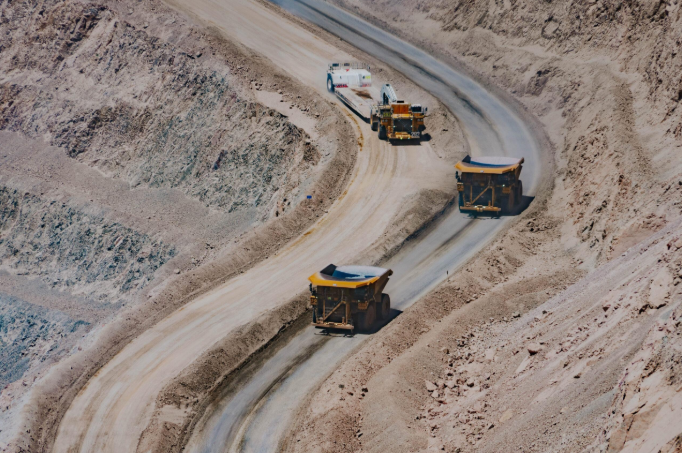
When ore grades decline, even the world’s largest mines have to work harder just to keep production from falling.
BHP finished the 2026 financial year with copper production of 1.953 million tonnes. That was only 3% lower than the 2.017 million tonnes produced a year earlier, so the change does not look dramatic at first.
The next forecast is much more serious.
The reason is not weak copper demand or a shortage of equipment. The main pressure comes from the geology at Escondida, BHP’s largest copper asset in Chile.
The average copper grade of material processed at the plant declined from 1.02% to 0.90%. BHP expects it to fall to approximately 0.70% during the next financial year.
That difference looks small only on paper. A decline from 1.02% to 0.70% means that each tonne of rock contains roughly one-third less copper.
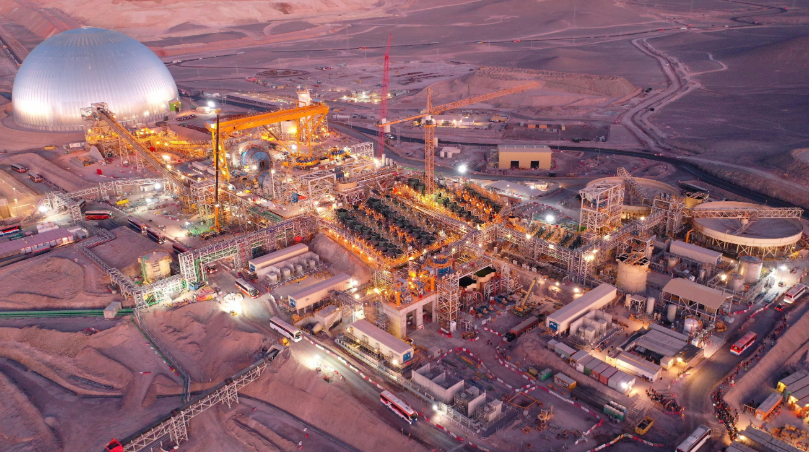
To produce the same amount of metal, the mine must move, crush, grind, and process much more material. That requires more fuel, electricity, water, equipment, and time.
BHP is already trying to offset declining grades through operational improvements. At Escondida, the company increased material movement, plant throughput, and metal recovery.
Production still declined.
That is what makes the announcement more important than an ordinary annual forecast. It shows that even a well-managed mine cannot fully offset the natural deterioration of ore quality.
At the same time, BHP’s average realized copper price increased from $4.25 to $5.74 per pound, a rise of roughly 35%.
It is a strange combination: the market is paying much more for copper at the same time that one of the world’s largest producers is warning that physical output may decline.
Lower grades do not mean that Escondida is approaching closure. Large producers can modernize processing plants, improve recovery rates, change mining sequences, and invest billions of dollars to extend the lives of existing assets.
But those investments mainly help maintain the current system. They do not remove the need for new discoveries.
That becomes especially important when demand is growing across several sectors at once. Data centers need cables, substations, and transformers. Energy storage systems must be connected to the grid. Electric vehicles, renewable generation, and industrial automation are also increasing demand for conductive metals.
New tonnes of copper will be needed not only to meet this additional demand. Part of future supply will be required simply to compensate for lower production from ageing mines.
That is why early-stage exploration remains important even while major producers continue investing in existing operations.
NRED is one example of how this part of the copper supply chain could become more technology-driven.
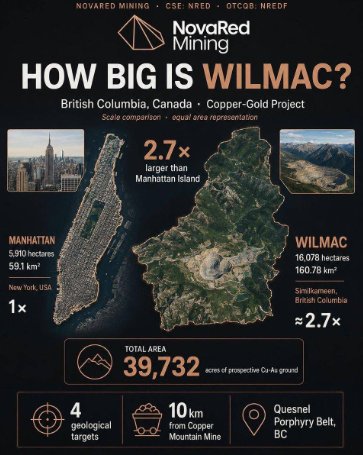
For an early-stage exploration company, the problem is often not a lack of data. It is that the information is scattered across old assessment reports, geochemical results, maps, magnetic surveys, and separate databases.
The idea is to understand more quickly where fieldwork could provide the most useful information before the company sends people, geophysical equipment, and a drill rig to a specific target.
This is only one early example within a much larger industry, but it shows why exploration technology could become increasingly important.
If operating mines are recovering less metal from every tonne of ore, the search for the next generation of assets must become more active. It must also make better use of historical information, spatial data, and field capital.
BHP’s warning does not mean that the copper market will run out of metal tomorrow. It points to a slower and more complicated problem.
A mine can become more efficient, move more rock, and process more material, but geology still determines how much metal ultimately comes out of the plant.
And if grades at the world’s largest assets continue to decline, new discoveries will not be needed at some distant point in the future.
They need to be prepared now.
메타데이터
- post_id
- fb1c5fb1051c
- slug
- bhp-is-mining-more-rock-but-may-still-produce-less-copper-fb1c5fb1051c
- url
- https://medium.com/@elijah.wickberg/bhp-is-mining-more-rock-but-may-still-produce-less-copper-fb1c5fb1051c
- canonical_url
- https://medium.com/@elijah.wickberg/bhp-is-mining-more-rock-but-may-still-produce-less-copper-fb1c5fb1051c
- author_url
- https://medium.com/@elijah.wickberg
- status
- ok
- fetched_at
- 2026-07-21 09:12:41