Constructivism and Germany’s Migrant Situation: A Historical and Ethical Analysis
Germany’s Migrant Situation Through a Constructivist Lens: The Power of Identity, Norms, and History
Constructivism and Germany’s Migrant Situation: A Historical and Ethical Analysis
Germany’s Migrant Situation Through a Constructivist Lens: The Power of Identity, Norms, and History
Germany’s refugee law and policy states that, “the right to seek asylum is a constitutional right in Germany and granted to everyone who flees political persecution.” In order to determine whether a person is entitled to refugee status, country- specific resources and experts are consulted, along with the conduction of an in-person interview. Generally, refugees are housed in reception facilities where they receive necessities like food, housing, heat, health care, household items, and clothing. A refugee can obtain a legal citizenship after six years of legal residence. The country’s approach to migration is deeply rooted in its historical and ethical foundations. Germany’s experience, particularly during the 20th century, has shaped its contemporary identities and policies.
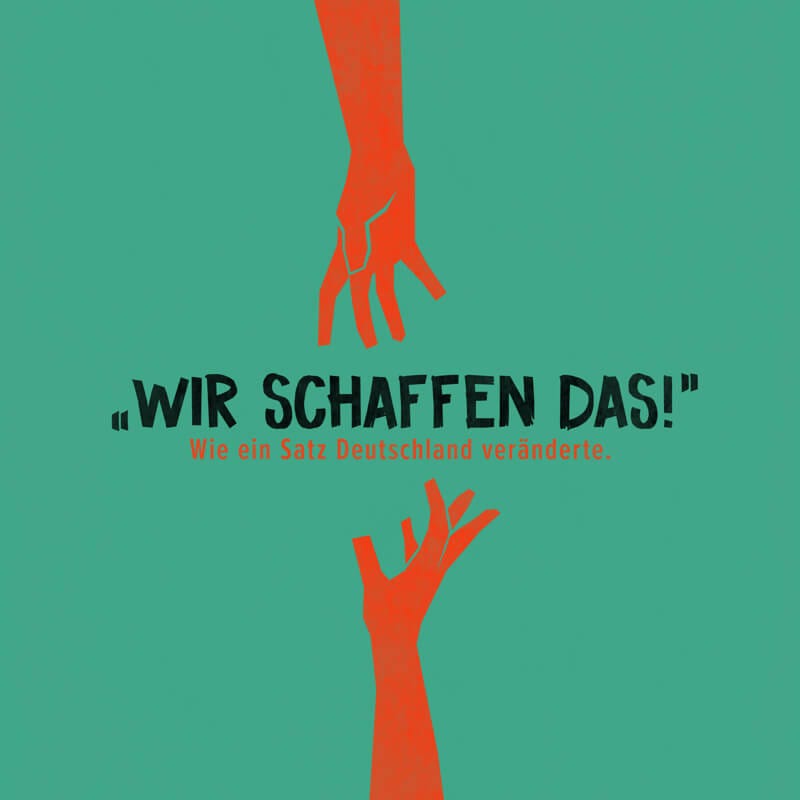
After World War II, Germany underwent a process of ‘Vergangenheitsbewältigung’ (‘coming to terms with the past’) which involved acknowledging its historical crimes and committing to humanitarian principles. Germany’s collective memory of World War II and the holocaust has profoundly shaped its moral obligations. The atrocities committed during the Nazi era left a legacy of guilt and responsibility, compelling Germany to embrace human rights and humanitarianism as central pillars of national identity. Some ethical milestones of Germany’s moral duty include ‘the Grundgesetz’- The Basic Law adopted in 1949, which guarantees the right to asylum for individuals fleeing political persecution, reflecting a commitment to protecting human dignity, ‘post-war reconciliation’- a moral imperative drives Germany’s foreign policy that emphasizes multilateralism and international solidarity. Chancellor Angela Merkel’s decision of welcoming over one million refugees in the 2015 refugee crisis highlighted Germany’s moral duty to act as a global humanitarian leader and the same was encapsulated in her declaration “Wir schaffen das” (We can do this).
Moreover, ‘Wirtschaftswunder’ (economic miracle), which was Germany’s post-war economic recovery, was partly fuelled by migrant labour. Germany signed various labour agreements with countries like Turkey, Greece, and Italy in the 1950s and 1960s which led to the arrival of ‘Gastarbeiter’ (guest workers) and they eventually became integral to the German society. This evolved the country’s identity as a multicultural society.
Germany’s Moral Duty through Constructivism
Constructivism can be appropriately used to analyse Germany’s moral duty towards migrants and refugees. Constructivism in IR emphasises the role of norms and identities in the shaping of state behaviour. Here, the norm of humanitarianism and the identity of being accountable and responsible has influenced the migration policies. Humanitarianism, which emphasises the moral obligation to protect and assist those in need, is deeply embedded in Germany’s political culture and is pretty evident. International institutions such as the United Nations and European Union reinforce this norm, and Germany’s commitment was reflected in its active participation in international humanitarian efforts and its adherence to the 1951 Refugee Convention. The country’s historical experiences have led to a strong sense of moral responsibility towards victims of persecution and conflict. For instance, the memory of the holocaust serves as a constant reminder of the consequences of xenophobia and intolerance, reinforcing Germany’s commitment to protecting refugees. Constructivism would argue that the moral duty towards migrants is not just a matter of material interest or legal obligation but is deeply tied to their identity and the norms they uphold. This explains why Germany, despite the challenges and costs associated with large number of refugees, has often taken the leading role in humanitarian efforts.
Influence of Notable Events on Public Policy and Perception
The Drowning of Alan Kurdi
The image of Alan Kurdi’s lifeless body on a Turkish beach had a profound impact on public opinion and policy. It humanized the crisis and galvanized support for refugee protection, particularly in Germany. Merkel’s decision to open Germany’s borders was partly a response to this global outcry, reflecting the power of norms and moral duty in shaping state behavior.
The New Year’s Eve Incidents in Cologne
The Cologne incidents represented a watershed moment in the crisis. The attacks, commonly blamed on migrants, accelerated the rise of anti-refugee feeling and helped to fuel the emergence of far-right parties such as the Alternative for Germany (AfD). Although Merkel remained steadfast in her support for refugee protection, the incidents served to highlight the problems of integrating high numbers of refugees and reconciling humanitarian commitments with domestic interests.
On New Years Eve 2015, large groups of men apparently from the north-African or middle Eastern origin, sexually assaulted hundreds of women in Cologne. The attacks were highly coordinated and the police were criticized for their slow response. This event is so important in this context because before the incidents, many Germans supported Merkel’s decision to welcome refugees but after these attacks, the political challenges of integrating large number of migrants became visible.
Role Identity and Normative Power: Germany as a Humanitarian Leader
The 2015 refugee crisis, or the ‘European migrant crisis,’ was a turning point in the history of migration in Germany. Prompted mainly by the Syrian Civil War, more than a million refugees came to Europe in 2015, with Germany accepting approximately 890,000 asylum requests — more than any other nation. Wars in Iraq, Afghanistan, and Eritrea, and economic turmoil in Africa and South Asia also fueled the crisis.
Chancellor Angela Merkel’s memorable words “Wir schaffen das” (“We can do this”) symbolised Germany’s humanitarian ethos and moral character. Nevertheless, her open-door policy faced vociferous criticism at home and abroad with regard to sustainability, integration, and national security.
The crisis took a turn for the worse when ISIS extended its control over Syria and Iraq. The majority of refugees were from Syria (49%), Afghanistan (21%), and Iraq (8%), who braved perilous paths such as the Mediterranean and the Western Balkans. In 2015 alone, an estimated 3,700 migrants were lost or killed at sea. The watershed moment came when three-year-old Alan Kurdi drowned, the picture of whose body became an international emblem of the crisis and stoked worldwide demands for action. In response, Germany suspended the Dublin Regulation, and asylum seekers could enter the country regardless of where they had initially arrived in the EU.
More than 10,000 refugees started arriving each day, triggering ad-hoc border controls but not a change in Merkel’s approach. But public opinion became transformed after New Year’s Eve in Cologne, when hundreds of women alleged sex attacks by men of North African or Middle Eastern appearance. This ignited national outrage, with Merkel’s refugee policy under fire and a rise in popularity for anti-immigrant parties such as Alternative for Germany (AfD).
From the constructivist point of view, Germany’s behavior can be explained as a deeply ingrained norm, value, and role identity. Merkel’s reaction was pragmatic but also based on Germany’s understanding of itself as a humanitarian and responsible state. Thomas Risse’s notion of role identity can explain this kind of behavior — Germany identifies itself as a ‘civilian power’ (Zivilmacht) defined by its post-WWII experiences, prioritizing human rights and multilateralism.
Risse also invokes the theory of communicative action, in which state action is shaped by discourse and persuasion rather than material interests. Merkel’s public declarations were designed to rally domestic and international opinion, framing acceptance of refugees as a matter of moral obligation. Germany’s historical memory, propagated through media and education, created a shared perception of moral duty, accounting for initial public backing.
Yet, identity tensions with material interests emerged. While Germany’s humanitarian position was in line with its normative identity, it also had integration issues and political resistance. Constructivism therefore emphasizes the influence of norms but can downplay material and structural constraints.
Ian Manners’ concept of normative power — the capacity to establish what constitutes the legitimate in international politics — also assists in explaining Germany’s response. Through the opening up of its borders, Germany exercised norms of solidarity and human rights with the intent of shaping EU peers. In line with the arguments of Martha Finnemore’s work, the “justice cascade” of human rights norms assisted in conditioning Merkel’s decisions.
Finally, Germany’s 2015 reaction illustrates how identity, norms, and values can influence state action — even in the face of political and social costs.
References
Bendel, Petra (2019) “Immigration Policy in Germany: Between Norms and Interests.” German Law Journal, 20(4), 481–500.
Green, Simon (2013)”Germany: A Changing Country of Immigration.” German Politics, 22(3), 333–351.
Triadafilopoulos, Triadafilos (2013) Becoming Multicultural: Immigration and the Politics of Membership in Canada and Germany. UBC Press.
Fulbrook, Mary (1999) — German National Identity after the Holocaust. Polity Press.
Thym, Daniel (2016) — “The ‘Refugee Crisis’ as a Challenge of Legal Design and Institutional Legitimacy.” Common Market Law Review, 53(6), 1545–1574.
Rights and duties during the asylum procedure. UNHCR Germany. (n.d.). https://help.unhcr.org/germany/rights-and-duties/rights-and-duties-during-the-asylum-procedure/#:~:text=Living%20and%20accommodation,you%20report%20to%20the%20BAMF.
Gerhards, D. D. and J. (2024, November 22). International law or national identity? how the German and Polish governments framed whether to accept Syrian and Ukrainian refugees. Migration Policy Centre. https://migrationpolicycentre.eu/international-law-or-national-identity-how-the-german-and-polish-governments-framed-whether-to-accept-syrian-and-ukrainian-refugees-2023-10/
Bierbach, M. (2017, September 12). How much money do refugees in Germany get?. InfoMigrants. https://www.infomigrants.net/en/post/5049/how-much-money-do-refugees-in-germany-get
Wendt, Alexander. Social Theory of International Politics. Cambridge University Press, 1999.
Checkel, Jeffrey T. “The Constructivist Turn in International Relations Theory.” World Politics, vol. 50, no. 2, 1998, pp. 324–348.
German Basic Law (Grundgesetz). Article 16a. https://www.gesetze-im-internet.de/englisch_gg/
Merkel, Angela. “Wir schaffen das.” Speech, 2015. https://www.bundesregierung.de/
Bade, Klaus J. Migration in European History. Blackwell Publishing, 2003.
Triandafyllidou, Anna. “The European Migration Crisis: A Challenge to Our Values.” European Politics and Society, vol. 17, no. 1, 2016, pp. 1–7.
Risse, Thomas. “Let’s Argue!: Communicative Action in World Politics.” International Organization, vol. 54, no. 1, 2000, pp. 1–39.
Bundesamt für Migration und Flüchtlinge (BAMF). “Migration Report 2015.” https://www.bamf.de/
Spiegel Online. “Germany’s Refugee Policy: A Historical Perspective.” https://www.spiegel.de/
Adler, Emanuel, and Michael Barnett. Security Communities. Cambridge University Press, 1998.
Finnemore, Martha. National Interests in International Society. Cornell University Press, 1996.
Manners, Ian. “Normative Power Europe: A Contradiction in Terms?” Journal of Common Market Studies, vol. 40, no. 2, 2002, pp. 235–258.
메타데이터
- post_id
- fb4848ba5fdd
- slug
- constructivism-and-germanys-migrant-situation-a-historical-and-ethical-analysis-fb4848ba5fdd
- url
- https://medium.com/@aakriti.n/constructivism-and-germanys-migrant-situation-a-historical-and-ethical-analysis-fb4848ba5fdd
- canonical_url
- https://medium.com/@aakriti.n/constructivism-and-germanys-migrant-situation-a-historical-and-ethical-analysis-fb4848ba5fdd
- author_url
- https://medium.com/@aakriti.n
- status
- ok
- fetched_at
- 2026-07-19 23:43:22