Trauma as Mythic Gravity:
How Myth Designs What Feels Possible
Trauma as Mythic Gravity:
How Myth Designs What Feels Possible

Canva created image
Every society lives inside a story about danger. Over time that story stops behaving like a narrative and begins behaving like gravity.
Myths do not tell us what to do. They tell us what can happen and what is already happening.
Long before laws or philosophies, myth sets the gravity of a world. Not through instruction, but through atmosphere. You can feel this difference before you can name it.
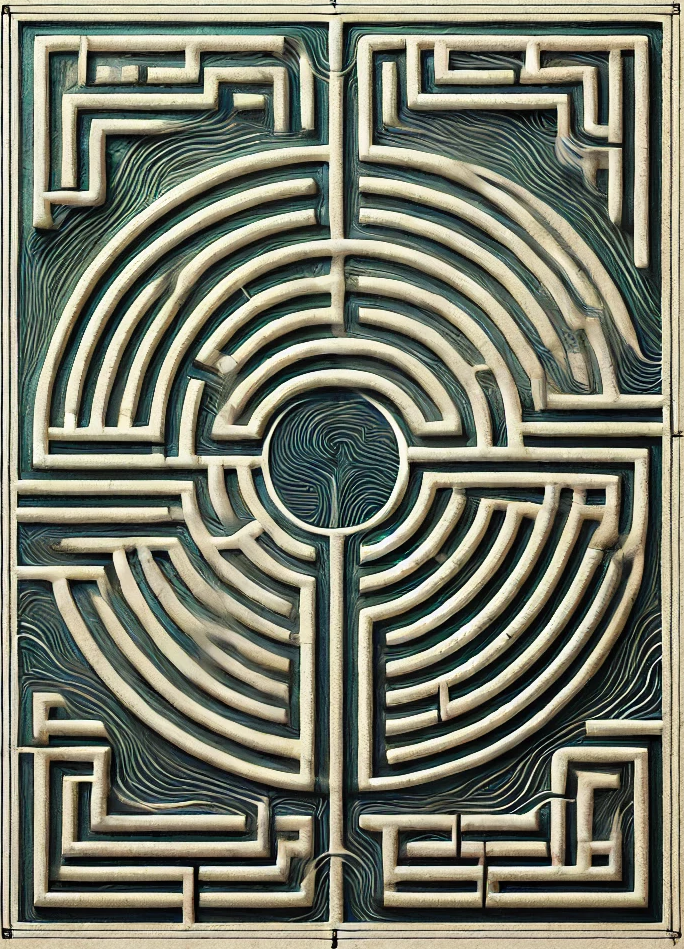
Once myth settles into architecture, it begins to function less like a story and more like a field. It does not dictate behavior. It defines the range of imaginable behavior — what endings feel plausible, what actions feel heroic, futile, obscene, or necessary.
This is how trauma operates when it becomes mythic gravity.
PLEASE NOTE: This is not a moral accounting of suffering. It is an attempt to describe how different forms of trauma organize the field of the possible.
In the case of Israel, Jewish historical trauma — culminating in the Holocaust — has been elevated from memory into atmosphere, and from atmosphere into architecture. It does not merely explain fear; it organizes the moral horizon. Existential threat is assumed in advance. History is felt as something that can recur at any moment. Survival becomes a standing emergency rather than a contextual concern.
Within this gravity field, trauma does not command violence. It does something quieter and more powerful: it narrows alternatives until force feels like the only adult option left.
Disproportionate action can feel tragic yet necessary. Permanent control can feel temporary. Harm becomes legible as prevention.
Even when belief weakens — even when daily life no longer feels apocalyptic — the architecture persists. People continue to move as if history is always about to close its fist.
Gravity does not require constant belief. It only requires that we continue moving inside it.
Palestinian trauma exists within the same historical space, yet functions under an entirely different gravitational rule.
It does not become architecture. It saturates daily life without reorganizing the moral universe around Palestinian action.
Displacement, occupation, and loss compress possibility rather than expanding it. The trauma is lived, repeated, inherited — but rarely allowed to authorize.
Inside this field, the imaginable narrows in the opposite direction.
Endurance replaces expectation. Presence replaces victory. Survival itself becomes a form of resistance.
The trauma does not say, “We must act before we are destroyed.” It says, “We will still be here after what you do.”
This is not equivalence. It is asymmetry embedded in mythic weight.
One trauma is recognized, memorialized, institutionalized. It moves upward — into education, security doctrine, diplomatic reflex. It becomes portable, often invoked as moral context that makes external critique feel historically uninformed or even threatening. Accountability can come to feel like denial, not as intention but as a reflex. Restraint feels naïve. Empathy for the other can feel dangerous.
The other trauma circulates differently. It appears as image, statistic, testimony — but rarely as authority. It does not confer exemption. It does not shield. Even when violence erupts, it is framed as pathology rather than tragic necessity. The trauma remains heavy, but never protective.
This difference reshapes what feels thinkable.
For Israelis, vulnerability can feel historically obscene — something no longer affordable.
For Palestinians, vulnerability is unavoidable, and power feels provisional at best.
One field accelerates action in the name of survival. The other suspends action in the name of endurance. Trauma, in one architecture, becomes a moral accelerant. In the other, a moral gravity well.
Both deform ethics — but in opposite directions.
Gravity operates long after the story that created it fades.
Myth does not tell us what to think. It shapes what feels thinkable. It decides in advance which risks feel intolerable, which futures feel realistic, and which lives are permitted to carry consequence without protection.
Diaspora Contrast
In diaspora Jewish life, trauma historically functioned as a warning against power. It produced an ethic of restraint born from vulnerability.
Power was rarely available. Survival depended on caution, negotiation, intellectual endurance.
In the state, that same trauma is recoded.
Sovereignty introduces the ability to act at scale. Strategy replaces warning. Trauma no longer restrains power — it begins to orient it.
This is how myths are disassembled and reassembled across time. Hybrid forms emerge. Incompatible systems splice together. The architecture bends. The gravity shifts. And sometimes, something new walks out — carrying old wounds in unfamiliar shapes.
Myth is not a script. It is the field within which action acquires weight.
And once a society begins moving inside that field, even ordinary decisions can begin to feel like destiny.
메타데이터
- post_id
- fb549fd9e8d0
- slug
- trauma-as-mythic-gravity-fb549fd9e8d0
- url
- https://medium.com/counterarts/trauma-as-mythic-gravity-fb549fd9e8d0
- canonical_url
- https://medium.com/counterarts/trauma-as-mythic-gravity-fb549fd9e8d0
- author_url
- https://medium.com/@drharrys
- status
- ok
- fetched_at
- 2026-06-23 03:48:11