COULD THIS ONE GENE HELP HUMANS REGROW LIMBS LIKE AXOLOTLS ?
The dream of human limb regeneration was once confined to the pages of a science fiction novel, but over the years, with the progress of…
COULD THIS ONE GENE HELP HUMANS REGROW LIMBS LIKE AXOLOTLS ?

©Anannya Roy
The dream of human limb regeneration was once confined to the pages of a science fiction novel, but over the years, with the progress of technology, it is very close to becoming a reality. A recent breakthrough study published in the Proceedings of the National Academy of Sciences (PNAS) in April 2026, has revealed certain genetic “master switches” that allow organisms like axolotls to regrow their limbs, are also found in humans, but in a dormant state.
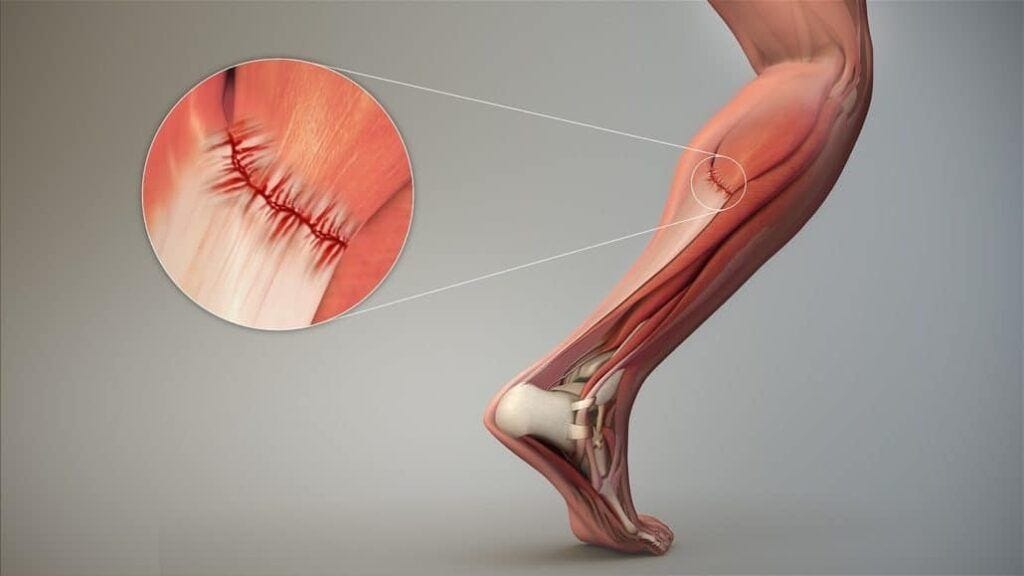
Limb loss is a major problem in the world today. According to the Global Burden of Diseases statistics, over one million amputations occur across the world every year, which equals to one in every thirty seconds. In limb loss, a part of the body is either surgically removed (amputation) or traumatically lost, such as in case of accidents. Other causes include restricted blood flow, cancer, diabetes, peripheral artery disease, or deformities.
Most current strategies for limb loss involve wound healing, prosthetic fitting, and physiotherapy. All of these procedures are quite costly and not affordable to everyone. Moreover, in many cases victims suffer from grief, body image issues, depression, and isolation. They also experience this phenomenon called phantom limb pain, where there is sensation or pain originating from the missing limb because of the severed nerves firing signals to the brain.
Imagine how much simpler it would be if we could simply regrow our limbs the way a lizard grows its tail, or a zebrafish regrows its heart.
Let’s talk about Axolotls for a minute. These tiny enigmatic creatures are the Peter Pans of the animal kingdom- on one hand, they never really grow up, yet on the other they possess the tremendous capacity to regenerate almost every part of their body without scarring. These are salamanders, which belong to the class Animalia. Metamorphosis is referred to as the biological phenomenon characterized by sudden or dramatic changes in the body structure as an organism grows from an immature form, like a larva or tadpole, to a fully grown sexually mature adult. During this process, they undergo major changes in their morphology and physiology in a number of ways to adapt to the new habitat like land. An example is replacing water-breathing gills with air-breathing lungs. But axolotls never make this transition. They retain their juvenile features and stay in water throughout their entire life cycle. This unique phenomenon is referred to as neoteny or paedomorphism. The reason behind this is that they never produce the thyroid-stimulating hormone (TSH), which is required to trigger the thyroid glands to release thyroxine, which is responsible for driving this physical transformation. The upside of this is because they retain their youthful tissues, it allows them to have perfect scar-free healing. Their immune system is optimized for cellular regrowth.
In this landmark and collaborative study, published in April 2026 in the Proceedings of the National Academy of Sciences (PNAS), scientists from Wake Forest University collaborated with scientists from Duke University and the University of Wisconsin-Madison. They came together with a common goal to study limb regeneration across three different species- Salamander, Mice, and Zebrafish, using a new gene therapy approach. Dr Josh Curie, Assistant Professor (Wake Forest University), studies tissue regeneration and how cells build complex structures after injury using axolotl as a model organism. Dr Kenneth D Poss, Director of Regenerative Biology, Morgridge Institute, and Professor (University of Wisconsin-Madison) studies fin regeneration in zebrafish as a model organism. He has made notable contributions to the field, such as discovering heart regeneration in zebrafish and establishing it as a model of robust cardiac repair. Dr David A Brown, a Plastic Surgeon-Scientist, studies digit regeneration in mice (Duke University). His work deals with limb and appendage regeneration, wound and tissue healing. They have found the start of a solution to limb loss in something called the SP genes shared by mice, zebrafish, and axolotl- discovering a universal genetic program for limb regrowth. Using this blueprint, they built an innovative viral gene therapy that restored bone regeneration in the digit tips of mice.
When a salamander or a zebrafish loses an appendage, the surrounding skin cells do not just heal the wound, but rather reorganize themselves to form a Regeneration Epidermis (RE). This specialized skin layer sends important molecular signals down to underlying tissues and instructs them to form a blastema, which is a pool of stem-like cells that acts as the building blocks for new limbs. In humans on the other hand, deep injury is treated as a serious threat, and the natural response of our immune system is to fight off microbes and seal the wound as fast as possible to prevent bleeding to death. There is the formation of a rigid scab and the underlying dermal cells do not receive any signals to generate a structural glue. In adult humans, cells are locked into their respective identities and are unable to dedifferentiate. Hence, fibroblasts come into the picture and with the help of collagen, create an inflexible permanent scar tissue. The interesting thing is that mammals including humans and mice can regenerate the very tips of their fingers and toes, given the nail bed is intact.
Using single cell-RNA sequencing and existing data from zebrafish fin, salamander limb, and mouse digit regeneration, scientists identified the SP transcription factor family as a conserved epidermal program linked to appendage regrowth. In other words, as the new skin layer formed over the injury, these species activated a specific family of genes called SP transcription factors- mainly SP6 and SP8. They act as master switches by turning on a cascade of events that dictate the instructions required for growing the bones back.
Scientists used CRISPR (clustered regularly interspaced short palindromic repeats) technology to remove the SP8 gene from axolotls, which resulted in them failing to regrow proper limbs. When SP6 and SP8 were knocked out in the skin of mice, their ability to regrow amputated digit tips was compromised. In the absence of such switches, there was an inflammatory response that caused bone-destroying cells, osteoclasts, to eat away the stump instead of rebuilding it. In this way, they identified the master switch. SP genes work by turning on a powerful protein called FGF8 (fibroblast growth factor 8), which signals the cells to multiply and rebuild. Researchers in the lab designed an AAV (adeno-associated virus), a vehicle to deliver FGF8 directly to the site of the wound in the mice. In order to ensure that the gene only turned on at the right place and time they attached a genetic enhancer taken from zebrafish. This enhancer specifically responds to tissue injury. When this enhancer-guided FGF8 was applied, digit tip regeneration improved in the wild-type mice and partially rescued the regeneration defect in SP6/SP8 conditional knockout mice. Because the gene expression was localized to the site of injury, it made the therapy much more effective.
Although we are a long long way from regrowing entire human limbs, this study serves as proof of principle that the genetic machinery for regeneration is deeply rooted and conserved across the animal kingdom. Our body possesses the necessary tools but lacks the instruction manual. Prosthetic technology can provide support to some extent but the lack of human touch and the feeling of self-healing tissue is unlike anything. Highly targeted and injury-specific therapies that scientists are working on can someday very soon bypass our biological limitations.
Reference
Brown, D. A., Koll, K. K., Brush, E., Darner, G., Curtis, T., Dvergsten, T., Tran, M., Milligan, C., Wolfson, D., Gonzalez, T. J., Jeffs, S., Ehrhardt, A., Bitolas, R., Landau, M., Reitz, K., Salven, D. S., Slota-Burtt, L. A., Snee, I., Singer-Freeman, E., . . . Poss, K. D. (2025). Enhancer-directed gene delivery for digit regeneration based on conserved epidermal factors. Proceedings of the National Academy of Sciences, 123(17), e2532804123. https://doi.org/10.1073/pnas.2532804123
메타데이터
- post_id
- fb5b7ea63ea2
- slug
- could-this-one-gene-help-humans-regrow-limbs-like-axolotls-fb5b7ea63ea2
- url
- https://medium.com/@anannyaroy.writes/could-this-one-gene-help-humans-regrow-limbs-like-axolotls-fb5b7ea63ea2
- canonical_url
- https://medium.com/@anannyaroy.writes/could-this-one-gene-help-humans-regrow-limbs-like-axolotls-fb5b7ea63ea2
- author_url
- https://medium.com/@anannyaroy.writes
- status
- ok
- fetched_at
- 2026-06-09 15:37:30