Three ADAS Philosophies: Huawei vs Xiaomi vs BYD in 2026 China
Compute, sensors, urban NCA and price — why each Chinese ADAS stack is optimized for a different game.
Three ADAS Philosophies: Huawei vs Xiaomi vs BYD in 2026 China
Compute, sensors, urban NCA and price — why each Chinese ADAS stack is optimized for a different game.
If you follow the Chinese EV market for a living, you have probably seen this question asked wrong at least twice this quarter: “Which Chinese ADAS system is going to win?”
It is the wrong question, and the reason it is wrong tells you a lot about how the market is actually structured in 2026. Huawei Qiankun ADS 4, Xiaomi HAD, and BYD’s God’s Eye — internally branded Tianshen — are not three attempts at the same product. They are three deliberate architectural bets, each optimized around a different axis of the business, and each one leading its category on that axis while quietly conceding others.
This piece walks through what those bets actually are. We will look at compute, sensor stack, urban NCA coverage, over-the-air cadence, price, hardware redundancy, and ecosystem — with a scorecard at the end that does not crown a winner, because in 2026 there is not one.
The Three Bets, In One Paragraph Each
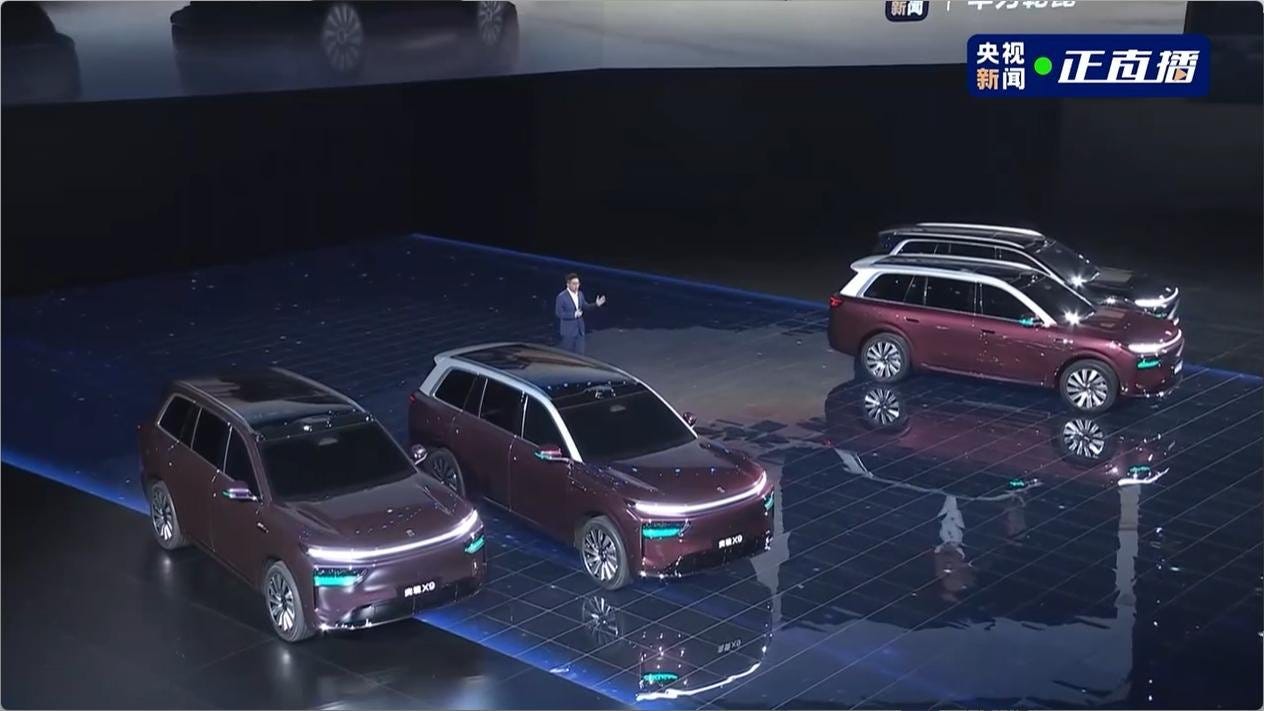
Huawei Qiankun ADS 4 is the OEM-licensing play. The WEWA architecture — Huawei’s shorthand for a coupled World Engine plus World Action model — is sold in four tiers, from SE at RMB 12,000 as an incremental option, up to Ultra pushing RMB 60,000 in flagship configurations. It powers AITO, Luxeed, Stelato, Maextro, plus growing lineups at Chery, GAC Trumpchi, Changan Deepal, and Seres. The bet: platform economics across a dozen OEMs. For a deep dive on how ADS 4 continues to evolve — including the next-gen ADS 5 stack recently debuted on the Yijing X9 with 896-line LiDAR and the Tianqiong safety shield — Huawei has been telegraphing a multi-generation roadmap, not a single-model peak.
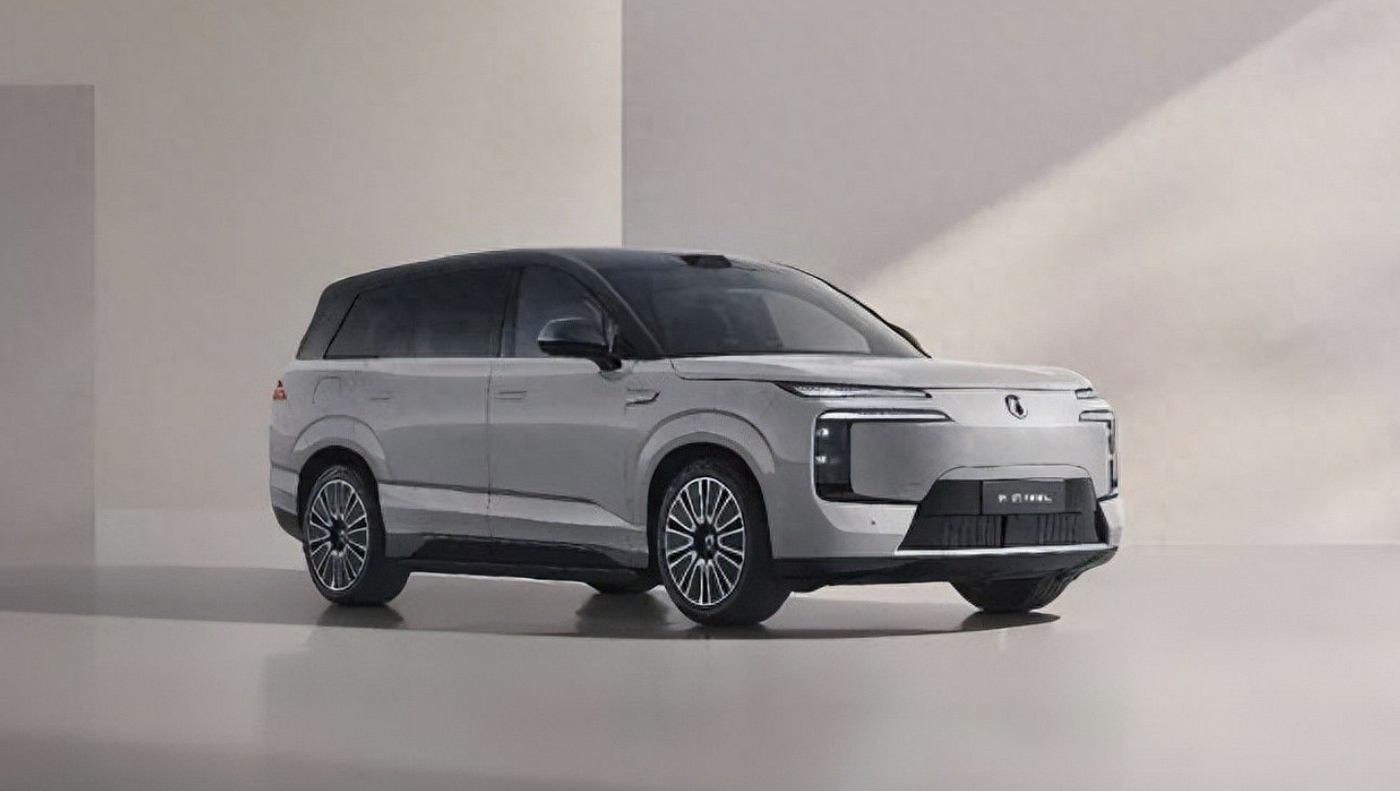
Xiaomi HAD, short for Human-Adaptive Driving, is the ecosystem bet. It is built around the XLA cognitive large model, a latent-space reasoning agent with a claimed 0.24-second inference latency and top-benchmark scores across three public ADAS reasoning suites. On the Xiaomi YU7, HAD runs on a single Nvidia Drive AGX Thor chip pushing roughly 700 TOPS, paired with one forward LiDAR, one 4D imaging radar, and eleven cameras. Xiaomi has also open-sourced a portion of the perception model, called OneVL. The bet: cross-device continuity — same intelligence layer across the car, the phone, the tablet, the smart-home hub.
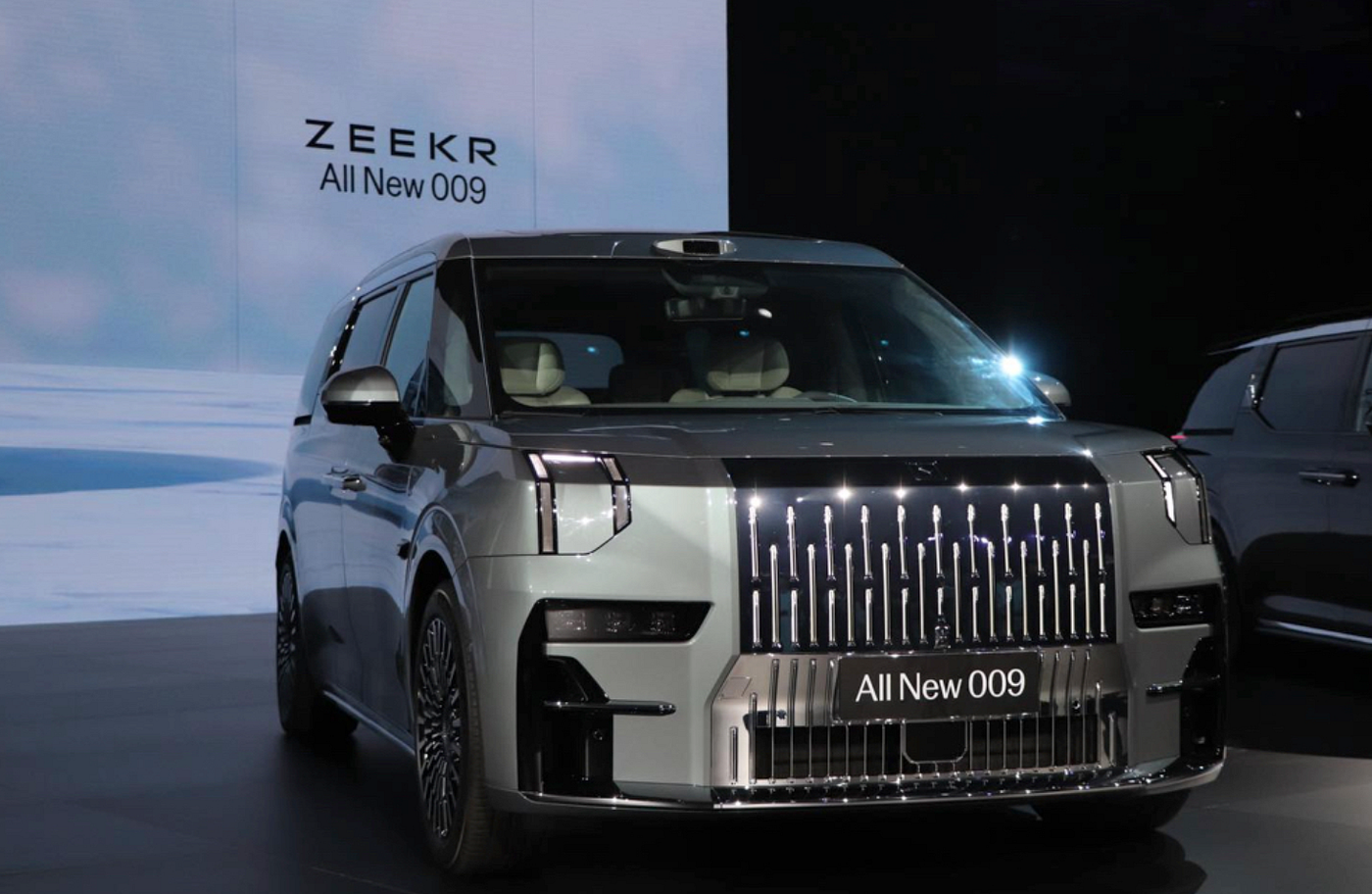
BYD’s God’s Eye / Tianshen is the standard-fit scale bet. It ships in three flavors: Tianshen A on Yangwang flagships, Tianshen B on Denza and Fangchengbao, and Tianshen C on mainstream BYD Ocean and Dynasty. The higher-tier Tianshen A carries dual LiDAR, dual chip, and the heaviest sensor stack in this comparison. But the strategic weapon is Tianshen C — bundled at zero incremental cost on most 2026 BYD models above RMB 150,000. When BYD launched the Sealion 08 at RMB 196,900 with Tianshen B DiPilot standard, it was not framing ADAS as an option. It was framing ADAS as the reason to buy the car.
Compute: Not All TOPS Are Equal
On paper Xiaomi HAD looks like the winner: ~700 TOPS peak from a single Nvidia Drive AGX Thor. Huawei ADS 4 Ultra runs on the MDC 810 platform at roughly 400 TOPS of dedicated AI compute, quantization-tuned for Huawei’s own Ascend cores. BYD Tianshen A pairs two Nvidia Orin-X chips for a combined ~508 TOPS, dropping to a single Orin-X or Horizon Journey 5 at the B and C tiers.
But TOPS is a benchmarking trap. What matters is compute utilization, which depends on how tightly the model is co-designed with the silicon. Huawei has the biggest advantage here because both the model and the chip are Huawei’s; the entire quantization pipeline is in-house. Xiaomi has the raw ceiling but has to work within the constraints of a general-purpose Thor SoC. BYD, running on Nvidia Orin, sits in the middle — mature toolchain, well-understood ceilings, but no vertical integration edge.
The read: Xiaomi has the biggest headroom for the next two years. Huawei has the tightest architecture today.
Sensor Stacks: Redundancy vs Cognition
Three very different philosophies show up in the metal. Huawei ADS 4 Ultra: one or two solid-state LiDAR in the 196-line class, three imaging radars, eleven cameras with an eight-megapixel forward, plus twelve ultrasonics. Xiaomi HAD on the YU7: one forward LiDAR, one 4D imaging mmWave, and eleven cameras — a deliberately lighter stack that leans harder on the model to reason from ambiguous input. BYD Tianshen A: two LiDAR, five mmWave, twelve cameras, twelve ultrasonics — the heaviest of the three.
The subtext is a debate the whole industry is having: is intelligence in the sensor or in the model? Xiaomi is betting on the model. BYD and Huawei are hedging with hardware redundancy. On a highway in ideal weather, the outputs converge. In heavy rain in a tunnel exit in an unmapped Tier-3 city — which is what “generalization” actually looks like in China — the answer is not obvious yet, and it will not be resolved in one release cycle.
Urban NCA Is Where Real Buying Decisions Happen
For Chinese buyers in 2026, the question is not “does it drive on the highway.” The question is “does it drive in my city without a lead-in ramp of pre-mapped scenarios.”
Huawei ADS 4 Max and Ultra offer nationwide, no-map, no-restriction urban NCA — the widest rollout in China as of Q2 2026. Xiaomi HAD covers six Tier-1 cities today — Beijing, Shanghai, Guangzhou, Shenzhen, Hangzhou, and Chengdu — with a promised Tier-2 push in the second half of 2026. BYD’s tier system is where the split is sharpest: Tianshen C is highway-and-parking only, while Tianshen B and A open urban NCA in roughly fifty cities.
This axis alone reshuffles the buying decision. A Beijing family buying a mainstream SUV can genuinely use HAD or Tianshen B every day. A Chengdu buyer in the same segment gets full utility from Huawei ADS 4 on an AITO or a Luxeed. A buyer in Kunming or Xiamen gets full urban NCA today only from a Huawei-partner car. That is not a benchmark difference — that is a geography of value.
OTA Cadence: The Dynamic Axis
Huawei pushes minor updates every six to eight weeks, and a major version every four to six months. Xiaomi, borrowing the Android-style culture from its phone division, iterates HAD on a six-to-eight-week major cadence with more experimental beta channels. BYD is on a slower three-to-four-month cycle, reflecting a more conservative validation regime across a much larger multi-brand portfolio.
The pattern rhymes with each company’s DNA: Xiaomi ships fast because it always has, Huawei ships fast on features that hit the OEM licensing SLA, and BYD ships slow because a bug in Tianshen C hits five hundred thousand cars.
The Hidden Axis: Business Model
Here is the axis nobody prints on the spec sheet, and it is the one that will determine three-year outcomes.
Huawei is a licensing business. Every incremental ADS 4 SKU sold on a partner car is high-margin services revenue for Huawei, decoupled from the vehicle margin. This is the same shape as the Windows business in the 1990s: get everywhere, capture the tax.
Xiaomi is a vertical hardware-plus-ecosystem business. HAD is not a line item; it is bundled inside the YU7 price envelope. The practical incremental value is somewhere between RMB 30,000 and RMB 40,000 relative to comparable configurations, but it is invisible on the sticker. Xiaomi captures the value in phone-and-IoT stickiness rather than in per-car ADAS margin.
BYD is running the volume-standardization playbook. Tianshen C at zero incremental cost — free on the sticker, absorbed in the vehicle margin — has driven ADAS-attached deliveries to roughly sixty percent of BYD’s first-half 2026 volume. That is not a monetization play. That is a market-share weapon.
Once you see the three philosophies as three business models, the compute-and-sensor debate stops looking like a horse race and starts looking like three companies playing three different sports on the same field.
Scoring Matrix
On a rough 1-to-5 across the seven axes:
- Compute utilization — Huawei 5, Xiaomi 4, BYD 4
- Sensor stack breadth — BYD 5, Huawei 4, Xiaomi 3
- Urban NCA coverage — Huawei 5, BYD 4, Xiaomi 3
- OTA cadence — Xiaomi 5, Huawei 4, BYD 3
- Price-for-value — BYD 5, Huawei 3, Xiaomi 3
- Redundancy — Huawei 5, BYD 5, Xiaomi 3
- Ecosystem — Xiaomi 5, Huawei 3, BYD 2
No stack sweeps. That is the story.
What This Means for Buyers, Investors, and Suppliers
If you are a buyer in a Tier-1 city already inside Xiaomi’s HyperOS, HAD’s cross-device continuity is a real day-to-day benefit that spec sheets underprice. If you drive daily in a Tier-3 or Tier-4 city and you want urban NCA to just work, Huawei ADS 4 Max or Ultra on an AITO, Luxeed, or Stelato is the shortest path. If you are optimizing family-car value under RMB 200,000, BYD Tianshen C on a Song L, Sea Lion 08, or Han is the highest utility for the money.
If you are on the investor side, watch the OEM concentration ratio for Huawei — that is the platform economics play — and watch Xiaomi’s phone-plus-car active-user overlap, because that number, not TOPS, is what monetizes HAD. On BYD, watch the ADAS-attach rate quarter over quarter; every point of attach on a mid-tier BYD is a point of pricing power against Chery, Geely, and Changan in the mainstream segment.
The horse race framing has already misled a lot of coverage. The three-philosophies framing is the one that keeps predicting things correctly. If you take one thing away, take that.
This article was originally published on iEVchina.com on 2026–07–03.
— Dale, Editor at iEVchina.com

메타데이터
- post_id
- fb5fdede86d6
- slug
- three-adas-philosophies-huawei-vs-xiaomi-vs-byd-in-2026-china-fb5fdede86d6
- url
- https://medium.com/@ysh653972165/three-adas-philosophies-huawei-vs-xiaomi-vs-byd-in-2026-china-fb5fdede86d6
- canonical_url
- https://medium.com/@ysh653972165/three-adas-philosophies-huawei-vs-xiaomi-vs-byd-in-2026-china-fb5fdede86d6
- author_url
- https://medium.com/@ysh653972165
- status
- ok
- fetched_at
- 2026-07-10 04:31:59