The Weather Has Entered The Body
Even inside the Arctic Circle, the idea of heat as someone else’s problem has started to sound ridiculous
The Weather Has Entered The Body
Even inside the Arctic Circle, the idea of heat as someone else’s problem has started to sound ridiculous
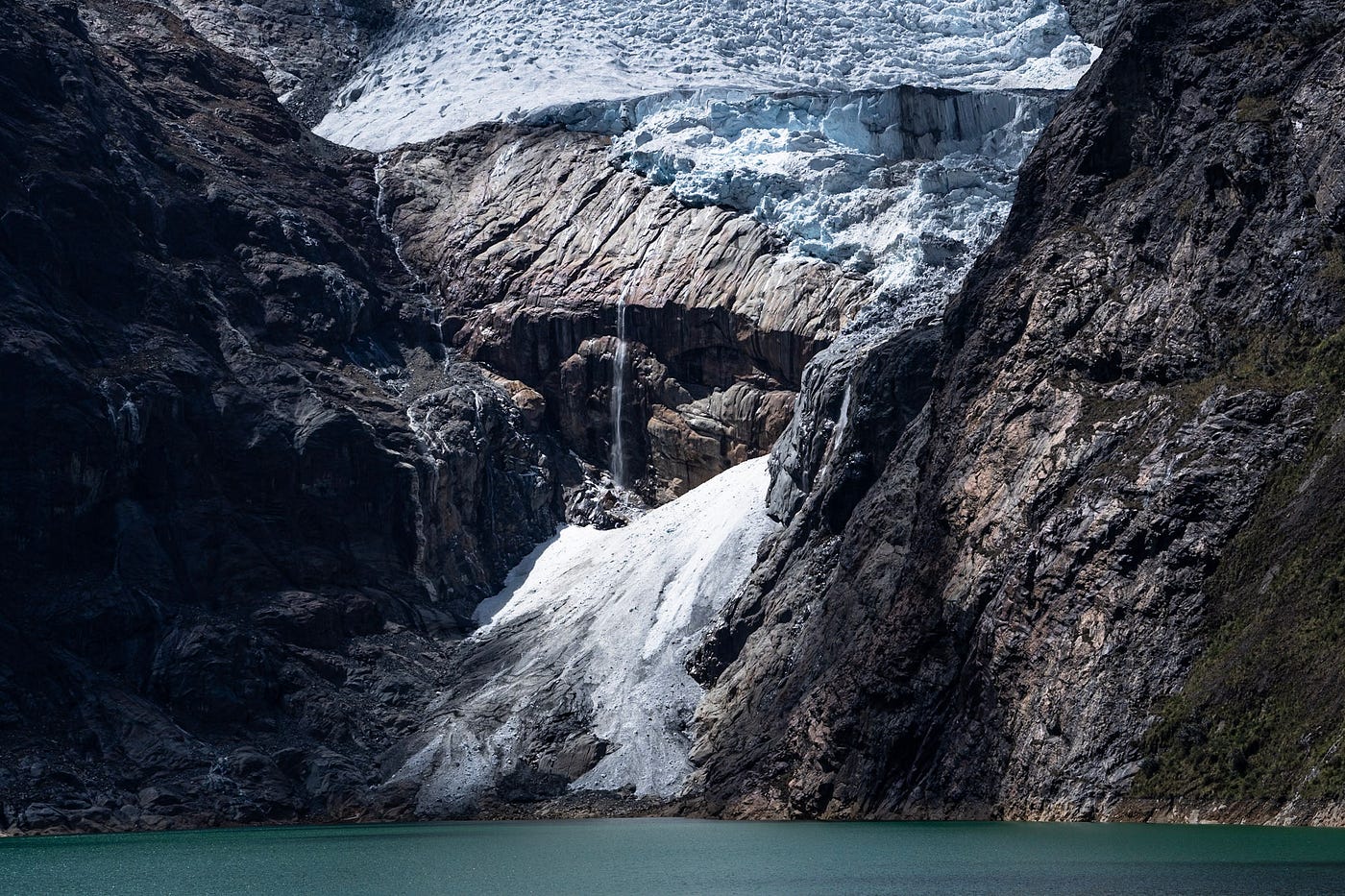
The Weather Has Entered The Body (photo by author)
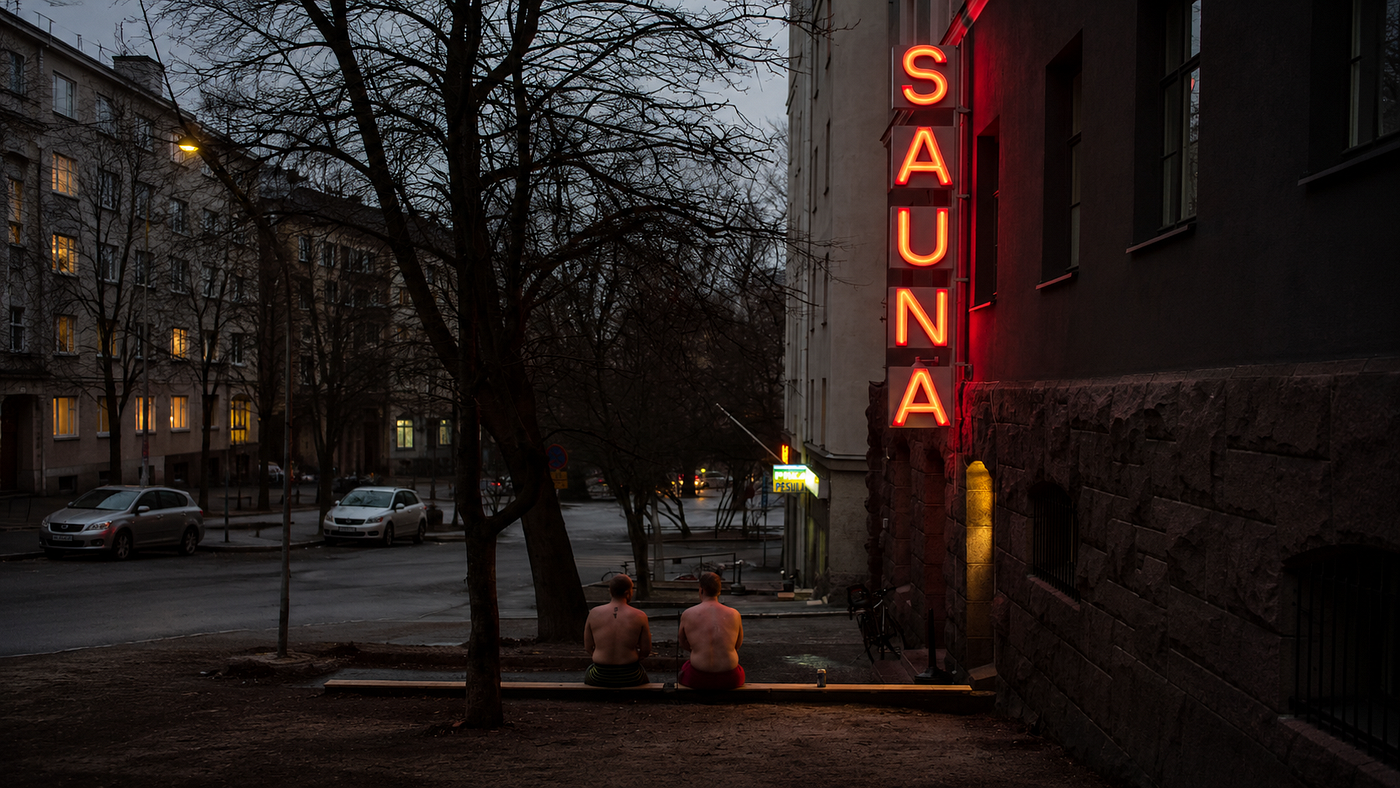
I live in Swedish Lapland, in a place people still use as a shorthand for cold. The houses here are built to keep warmth in because darkness arrives early as the snow holds the sound down and the body learns to plan around ice.
Now, a hot spell comes and the same design begins to work against you.
The room keeps the day. The walls hold it. The sun does not leave in the way it leaves southern Europe, and the night, which is supposed to rescue the body, comes late, pale and useless. You open the window and invite in mosquitoes, pollen, smoke, or air that has not cooled enough to show you some mercy.
That is the strange education of heat in the north. It doesn’t arrive with palm trees but in a place where people still joke that summer is two weeks and a mosquito. Then the joke starts lasting too long.
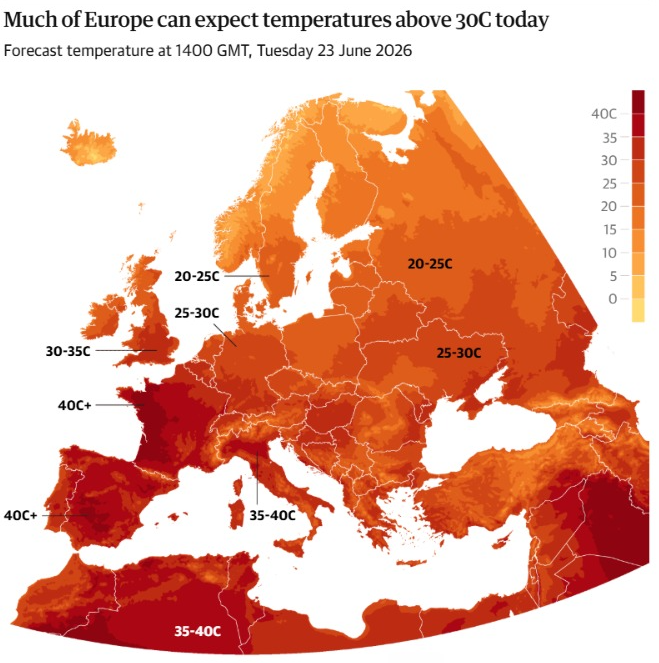
This week, western Europe is living the louder version of the same lesson. The UK Met Office has issued a Red Extreme Heat Warning, with the all-time June temperature record expected to break.
[embed]
France has seen 40 people drown in recent days as people tried to cool themselves in rivers and canals. 2,700 schools have been forced to close, and two children were found dead in their family’s car. Spain has opened climate shelters. Italy has issued top-level heat alerts. Belgium moved school exams into a church.
[embed]
In July 2025, after a relatively cool June, Sweden, Norway and Finland saw long heatwaves, tropical nights, forest fires, algal blooms and pressure on reindeer herding. Human-caused climate change made the event around 2°C hotter.
That may not sound like much until it is added to the top of a heatwave in a house built to endure long winters.
The headline is heat. The story is systems.
Source
When The Night Fails
Heat becomes dangerous when the body runs out of places to put it.
A human body is always negotiating with the air. Sweat must evaporate. Blood must move heat to the skin. The heart must keep working. A cool night should be the reset, when the body repairs itself after a day spent managing heat.
In Lapland, this is where the old mental map breaks. We are used to thinking of the north as a place where cold waits nearby. Even in summer, memory expects a door to open somewhere and let the heat out. But during a heatwave under the long northern light, night can become a technicality. The clock insists it is late, but the walls still behave like the day has not ended.
The hottest nights in the 2025 event were made about 2°C hotter by climate change and around 33 times more likely. In a place where homes, care facilities and preschools were built around conserving heat, this becomes a design failure with a weather forecast attached.
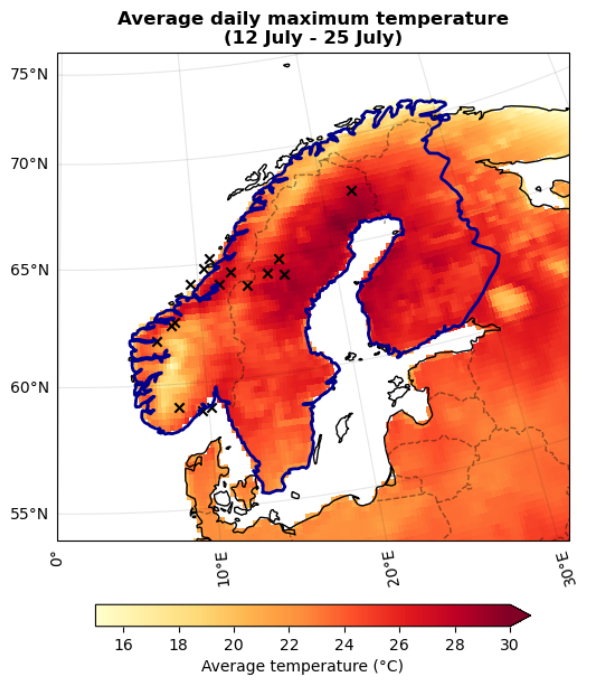
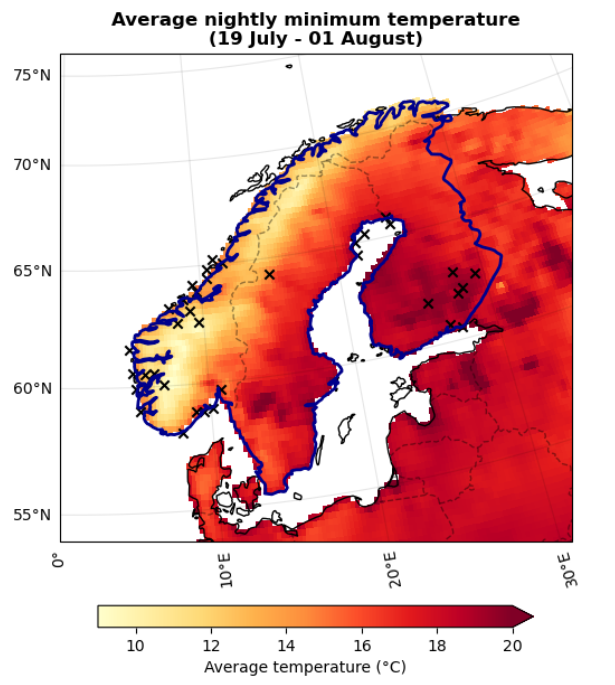
Highest 14-day averaged daily maxima (left) and daily minima (right) over Fennoscandia in 2025. The study region is outlined in dark blue. Crosses mark locations where temperature records were broken (Source: Intense two-week heatwave in Fennoscandia hotter and more likely due to climate change)
During 2025, at least 95% of Europe saw above-average temperatures, while sub-Arctic Fennoscandia recorded its longest heatwave on record: 21 days with temperatures near and inside the Arctic Circle reaching or exceeding 30°C.
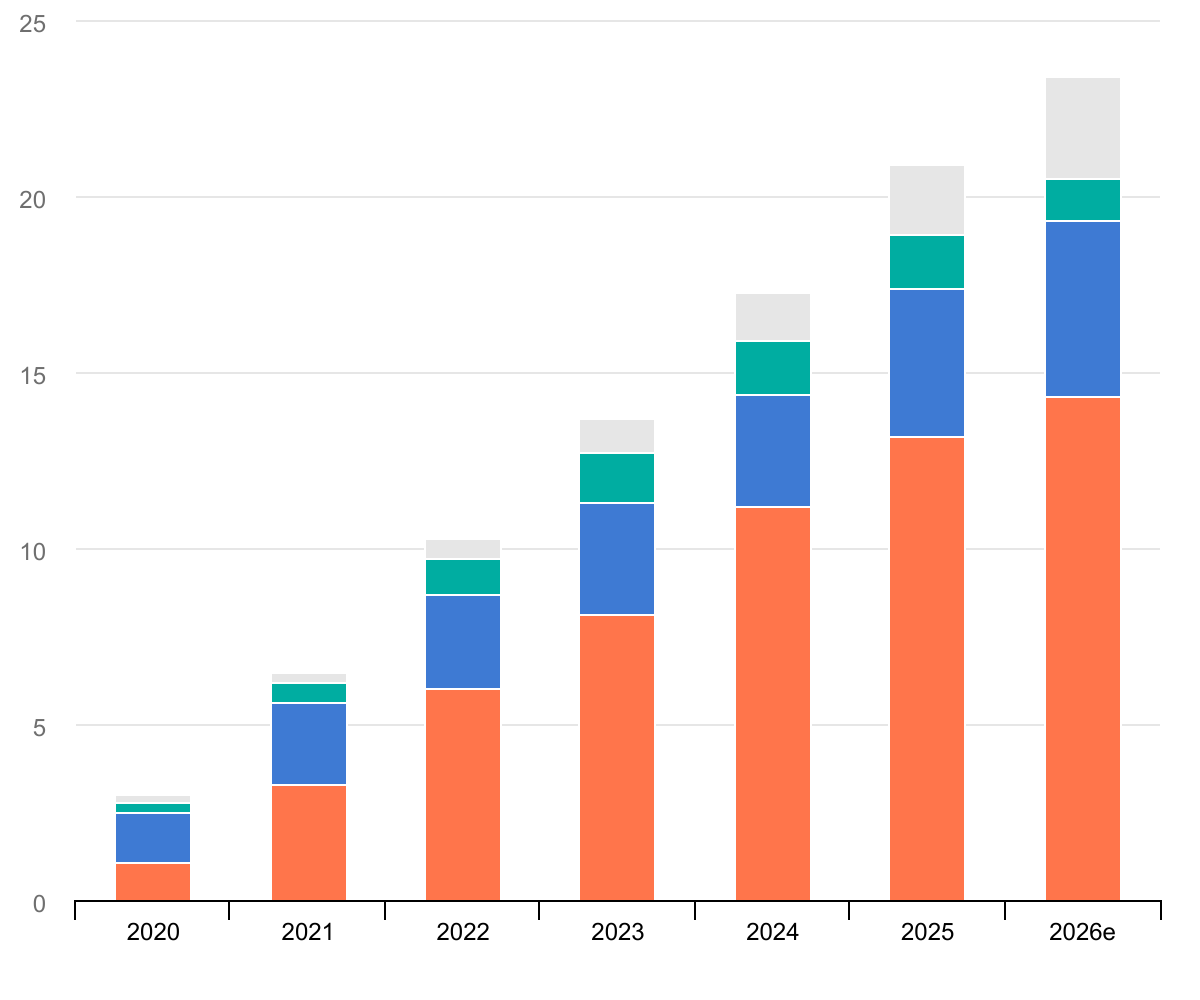
And the heat stress, of course, points at a planetary scale. A study published this week found that extreme “feels-like” temperatures have become more common on every continent, hazardous heat has expanded into places that previously avoided it, and the hottest nights of the year are warming faster than the hottest days. It also found that exposure to at least one day of extreme heat stress has risen from 16% of the global population in the 1970s to 22% today, which means that roughly one billion more people are entering a category of heat the body cannot treat as ordinary.
One billion more people means one billion more arguments with sleep, medicine, rent, old age, asthma, heart disease, work, and the small humiliations of trying to function while your body is defending itself.
Heat Learns The Shape Of Your Life
For about ten minutes, heat can look democratic. Everyone complains. Everyone sweats. Everyone becomes a little slower, a little less elegant, a little more animal.
Then the equality burns off.
Heat sorts people fast. The person with shade lives in another climate than the person under a black roof. The person who can close a laptop lives in another climate than the road worker, the nurse, the farm worker, the delivery rider, the firefighter, the roofer, the kitchen worker standing beside ovens while the city tells everyone else to stay indoors.
[embed]
The International Labour Organization estimates that around 70% of the global workforce (2.41 billion workers) are exposed to excessive heat, with nearly 19,000 deaths and more than 22 million occupational injuries linked to it each year.
Heat first enters the body — then it enters the forest
Scientists use phrases like fuel moisture and vapor pressure deficit. The plain version is this: hotter air is thirstier. When the atmosphere makes that demand for days, everything starts mutating into kindling. Living plants lose water. Dead material dries quickly. Nights fail to bring enough humidity back.
It pulls water out of moss, dead branches, peat edges, pine needles, birch leaves, grass along roads, wooden cabins, forest floors and the thin line of vegetation between a town and the trees. A spark that might once have died now finds a place ready to carry it.
A new study on the western United States measured that relationship with a hard number. Between 2001 and 2024, heatwave days made up only 12% to 15% of warm-season days, yet 42% of all burned area happened during or immediately after a heatwave. The same study found increases in cloud-to-ground lightning, including dry lightning, during and after heatwaves.
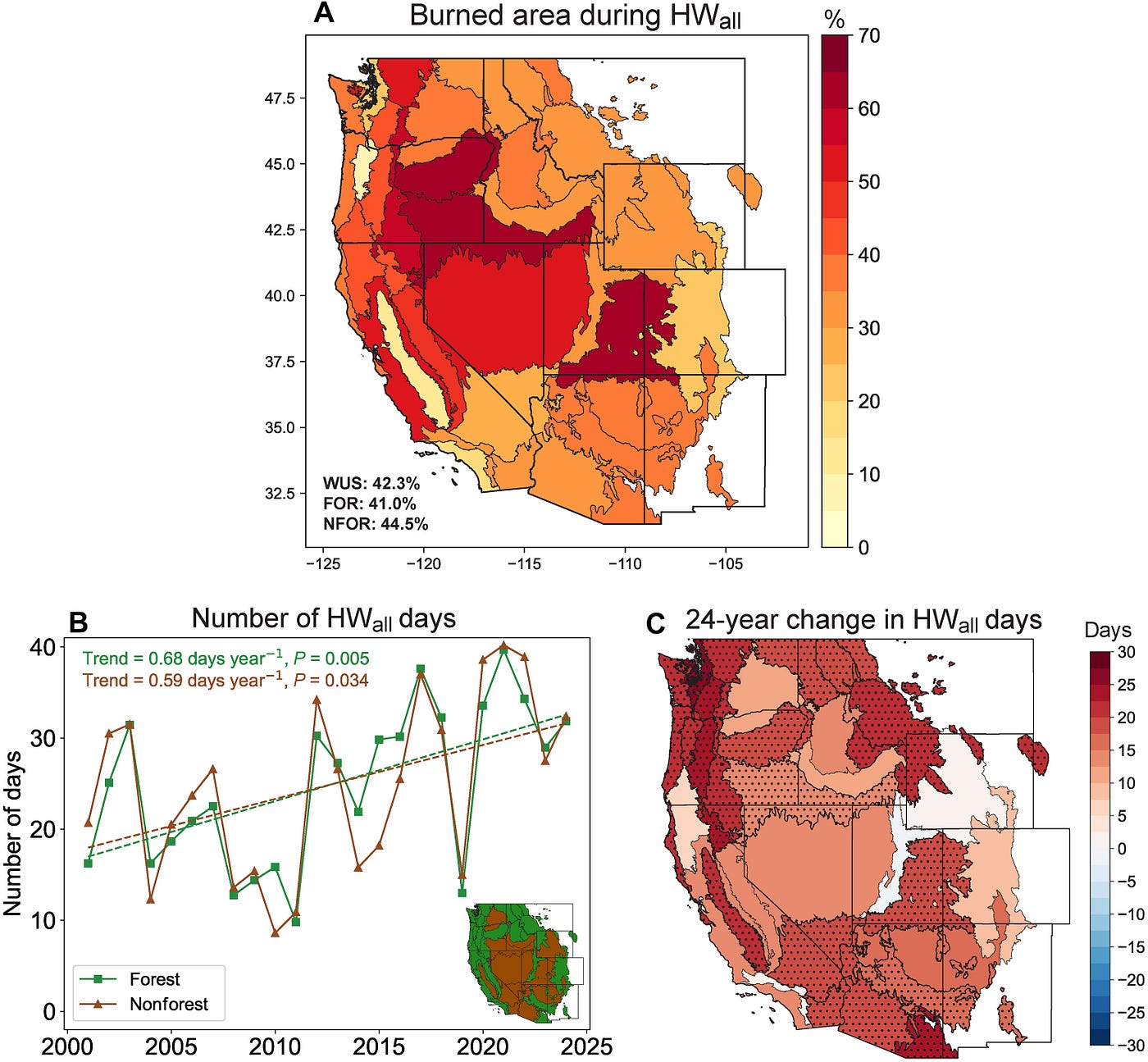
Association of heatwaves and burned area and changes in heatwave days (Source: Heatwaves enable wildfire activity in the western United States)
The western United States gives us the cleanest new measurement, but the pattern is global.
In Canada, the 2023 fire season burned a record 15 million hectares, more than twice the previous satellite-era record, and many very large fires burned for four to five months. An attribution study found that human-caused climate change significantly increased the likelihood of such huge burned area across most of Canada, more than doubled the likelihood in the east and southwest, and made a fire season that long more than five times as likely in almost all ecozones. That is the boreal forest entering the heat story as smoke, evacuation, carbon and months of exhausted firefighters.
[embed]
The Amazon tells the same story in another grammar. People still imagine rainforest as wetness made permanent. But heat and drought can turn the edges, degraded areas and disturbed forest into a different kind of material. The 2023 event combined severe drought and extreme heat with unusually low river levels, showing how compound drought-heat risk threatens the forest’s function as both ecosystem and climate regulator. The forest that helps make rain can be pushed toward conditions that make burning easier.
Patagonia offers another version. A 2025 study found that northwestern Patagonia is seeing a new fire regime driven by increased lightning activity and human-caused climate change.
[embed]
A forest does not need to become Mediterranean to become flammable. A northern forest can burn as a northern forest. A rainforest can burn through its edges and wounds. A Patagonian forest can burn with lightning that used to be rare enough to feel exceptional. Climate change does not make every place the same. It makes more places vulnerable in their own way.
Fire is never one thing; the match, the power line, the campfire, the dry lightning strike, the flammable plantation. But heat is the one condition that makes all the other things more dangerous.
The North Does Not Save Us From The Heat
Places are damaged when writers turn them into symbols too quickly.
Swedish Lapland is not a climate refuge postcard. It is Sámi land, mining land, forest land, tourism land, hydropower land, extraction land, and home. It has its own conflicts before climate change enters the room. Heat does not replace those conflicts. It presses on them.
When reindeer herding is strained by heat, drought, insects, forage problems and changing snow, animal welfare is only the first layer. The pressure reaches Indigenous rights, food systems, mobility, land use and a culture already squeezed by roads, mines, forestry and power lines. When the forest dries, fire management is only the first department called into the story.
The official answer will keep forming around adaptation, and of course it is necessary. Heat warnings save lives. Cooling spaces save lives. Shaded care homes save lives. Better building design saves lives. Labor protections save lives. Firebreaks, Indigenous fire knowledge, early detection, evacuation plans, less flammable land use and properly funded brigades save lives.
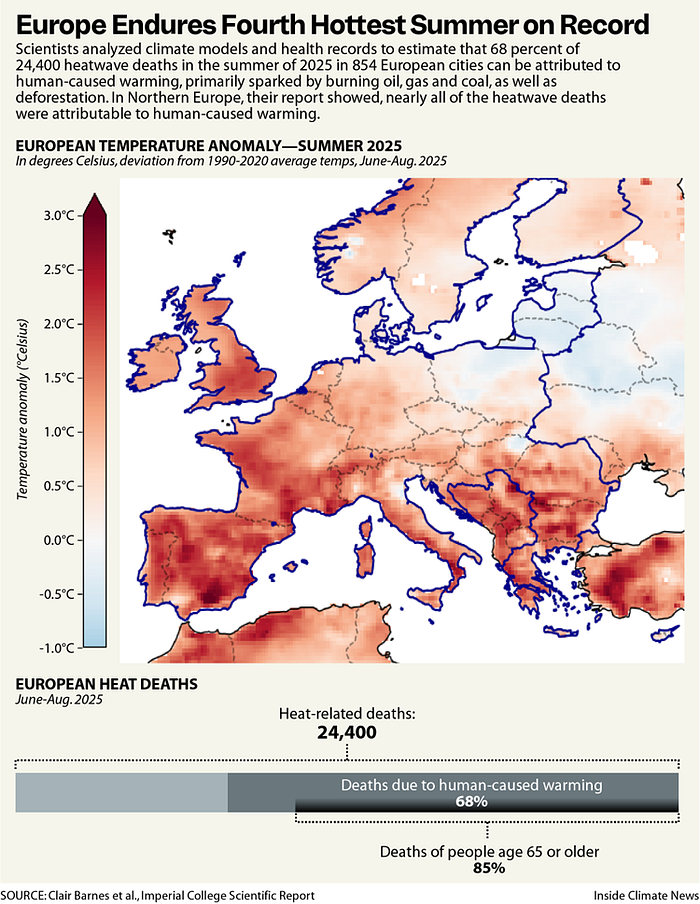
(Source: Summer 2025 heat deaths in 854 European cities more than tripled due to climate change)
But adaptation becomes a moral disguise when it is offered as a substitute for stopping the cause. A government can tell people to drink water while expanding fossil fuel infrastructure. A company can move work to dawn while treating dangerous heat as a scheduling inconvenience. A city can open climate shelters while still approving buildings that trap heat.
[embed]
The crisis is now entering places that thought they would watch it arrive elsewhere first. Southern Europe through hospitals, water restrictions and fires. Britain through red warnings and school closures. France through drownings and overheated nights. Sweden through tropical nights, forest fires and a northern summer that no longer knows where to stop.
The old phrase “global warming” feels almost too polite. This is warming as the removal of recovery. The body loses the night. The forest loses moisture. The river loses depth. The worker loses safe hours. The patient loses social life. The reindeer loses refuge.
The weather has entered the body. Fire is what happens when it enters the landscape.
M.
If the story resonated, I’d really appreciate a repost. If something’s on your mind, reach out. [My inbox is always open.](mailto: martinah.awanderer@gmail.com)
메타데이터
- post_id
- fb729b4865bf
- slug
- the-weather-has-entered-the-body-fb729b4865bf
- url
- https://medium.com/the-new-climate/the-weather-has-entered-the-body-fb729b4865bf
- canonical_url
- https://medium.com/the-new-climate/the-weather-has-entered-the-body-fb729b4865bf
- author_url
- https://medium.com/@martinah.awanderer
- status
- ok
- fetched_at
- 2026-06-28 04:42:08